
Songs of Syx race requirement matrix: who you can actually mix
A per-species matrix of food, housing, religion, aptitude and brawl risk in Songs of Syx, plus a method for deciding which demand your roster must fix first.
12 posts
A per-species matrix of food, housing, religion, aptitude and brawl risk in Songs of Syx, plus a method for deciding which demand your roster must fix first.
Maxing every conscript is correct for one threat profile and a slow bleed for the other. Match your garrison shape to what you're actually defending against.
Your world map tile decides which industries you can run and which climate you get. A feature matrix of terrain, resources and climate trade-offs in one choice.
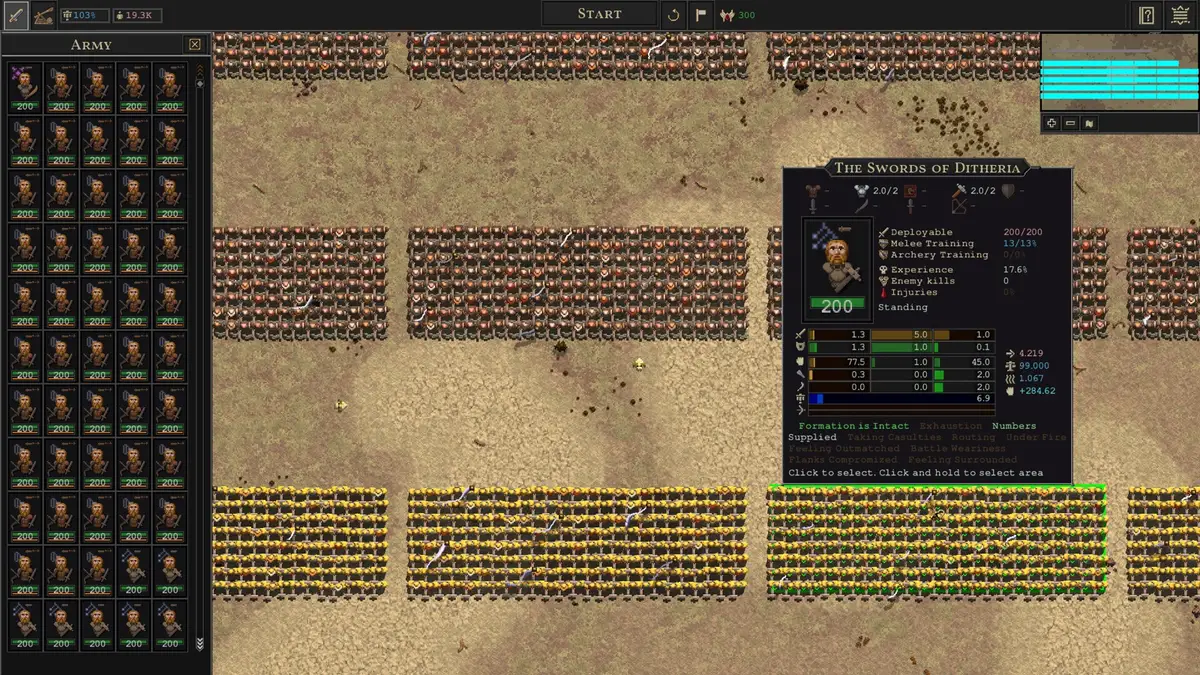
Empty training slots usually get blamed on the building. Compare your slots, eligible population and upkeep budget and find which one is actually capping you.

Room size and worker count fight each other in Songs of Syx. Enter your worker count and industry to get a starting floor size to test against your own city.
Loyalty is not the whole rebellion check in V71. Here is what the four hidden layers actually feed into, and how quickly each lever acts.
A colony rarely fails for one reason. Work through a saved checklist of the five balances, in the order that isolates the cause fastest, and keep your place.
Days of food is a ratio, not a stockpile, so it falls while your barns fill. Put your own population and field numbers in and see where the balance breaks.
Happiness follows the worst-covered need, not the average, so five good categories cannot rescue one empty one. Find your floor and what it costs to lift.

Hauling is a throughput problem, not a staffing habit. Time one walk, enter four numbers, and get the hauler count your route needs before the backlog starts.
Market prices tell you nothing until you convert them into worker-days. Price any good against your own industry and see which side of the trade you belong on.
Slaves cost guards, food and replacements before they produce anything. Price the whole arrangement in worker-equivalents and find your break-even output ratio.