With a broken leg in Project Zomboid, stop heavy bleeding first, break contact with anything nearby second, then splint before you try to move — a splint is the only thing that stops the fracture’s ongoing HP loss, and per pzwiki it also heals the fracture roughly 10x faster than leaving it unsplinted, so travelling on it first is the single most expensive mistake available. Which of those goes first can still change: a crowd in view outranks the splint, and night outranks moving at all. Replies to broken-leg questions tend not to disagree about the facts — they all know about splints — they disagree about what to do first, because the correct first action genuinely changes with the situation.
That is a scheduling problem, and scheduling problems are exactly what a written guide handles badly and a generated list handles well.
Project Zomboid broken leg field survival, at a glance
| Situation | Priority verdict | What to do about it |
|---|---|---|
| Heavy bleeding on the leg, a couple zombies nearby | Bleeding outranks the fracture. Everything below waits. | Stop the bleeding before you do anything about the fracture at all. |
| Broken leg, no kit, a crowd, out in the wilderness at night | Worst branch in the tree: no escape speed, no walls, no short route home. | Break line of sight and hole up — do not try to walk this one home. |
| Already inside, area clear, proper splint in hand | Best branch in the tree. This is a logistics problem now, not an emergency. | Splint immediately — there is no reason left to wait. |
These are outputs of this site's triage model, not values extracted from the game files — it orders your next actions, it does not claim a game threshold. Use the tracker below to build your own ordered plan.
Build the sequence
Broken leg field triage — ordered plan
Survivable, but the order below matters more than any single action in it.
Step 1 of 5
- 1Deal with the few in view while you still choose the groundTwo or three at walking pace are manageable and will not be manageable later, when you are slower, in the dark, and further from cover. Clear them now.
- 2Splint it with the sheets and branches you haveSplint before you move. Travelling on an unsplinted fracture is the single most expensive thing you can do to the recovery timeline.
- 3Bandage the woundLight bleeding is survivable but it keeps re-dirtying the wound while you travel, which is how a broken leg becomes a fever three days later.
- 4Do not try to reach base — build a holding positionA cross-map limp through forest at reduced speed is a longer exposure than the injury itself. Take the nearest structure, barricade one room, and treat it as base for two weeks.
- 5Set up for two weeks of doing nothingWater, food that does not need cooking, and a bed. The recovery is measured in in-game weeks, and the failure mode is not the fracture — it is running out of water on day nine and having to walk for it.
The order changes with your inputs: bleeding outranks everything, and a crowd outranks the splint. Your position in the list is stored in the URL, so you can paste it back to yourself between sessions.
Change the inputs and watch the order move: heavy bleeding jumps to the top and pushes the splint down, a crowd in view pushes shelter above everything, and night-time promotes stop moving above get home. Your position in the list is stored in the URL, so you can leave the tab open across a session and come back to the step you were on.
The three inversions worth knowing without the tool
Most of the tool’s output is common sense in the right order. Three rows are not, and they are the ones that get argued about:
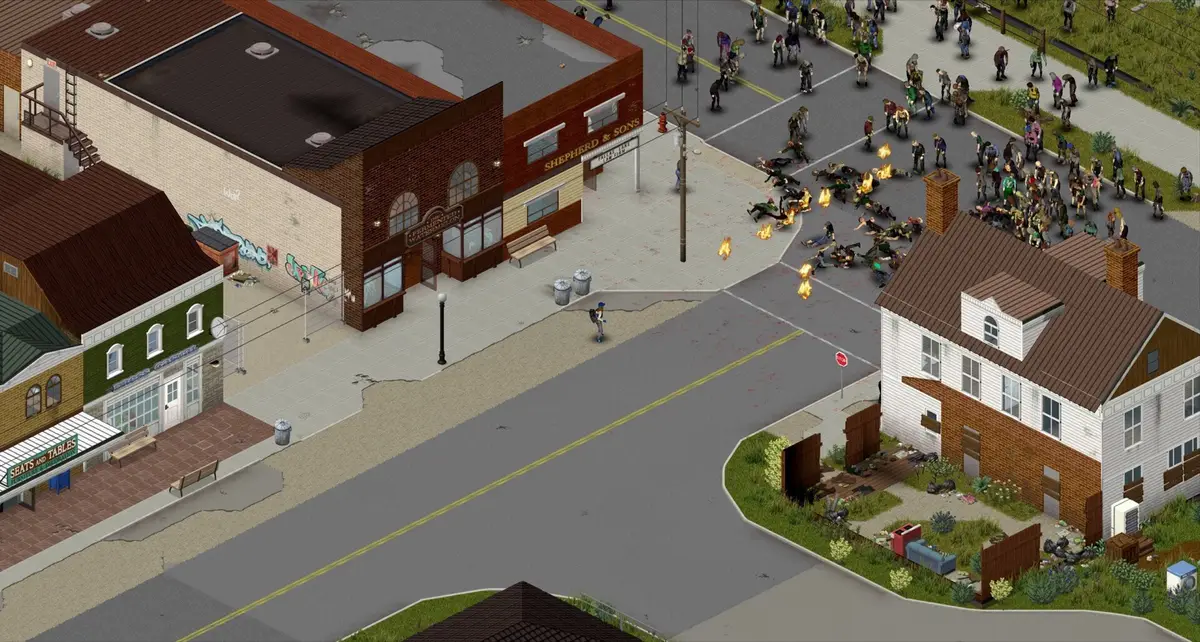
A crowd outranks the splint. The usual instinct is to fix the injury and then deal with the world. On a fracture that is backwards, because the injury has removed your ability to leave. Splinting takes time you spend stationary and audible, in the open, with no escape speed. Break line of sight first.
Distance changes the destination calculation. With a fracture, compare the route home with the nearest defensible structure, treated as base for a fortnight. A cross-map limp is a longer exposure than the two weeks of sitting still that follow it.
Night inverts movement itself. Reduced speed, reduced vision and a noise profile you cannot outrun stack badly. Any building with a door beats the right building reached at two in the morning.
What to bring so this is boring
The difference between a survivable fracture and a lost character is almost entirely what was in the bag when it happened. Four items, none of them rare:
- A sheet or two. Rippable, and enough for both the bandage and the splint tie.
- Painkillers. This page has not tested whether they change healing time. Treat visible symptom relief separately from recovery timing; we have not seen the developer publish a healing-rate figure for painkillers, so treat that part as an observation, not a rule.
- Water beyond one day’s worth. The day-nine water run is what actually kills people, and it is prevented in advance or not at all.
- A hand axe or saw. Branches for a splint are everywhere; converting them without tools is slower than you want to be.
After the emergency
Once you are behind a door with a splint on, the emergency is over and a logistics problem begins. It runs for in-game weeks, and the failure modes are boredom and thirst rather than zombies. If you want a sense of how much faster each choice makes that stretch — splint versus none, First Aid level, comfrey — the fracture healing calculator models those three against each other as relative speed, not as a day count pzwiki does not publish.
One caution about the build you are on: Build 42 makes the enforced downtime dramatically less painful, because there is real work to do sitting in one room. On Build 41 the same fortnight is mostly waiting, which is why Build 41 threads are so much more likely to recommend risky travel. Both are correct advice for their build.
Sources
- Splint — PZwiki — read in full 22 September 2026. Confirms a splint is the only way to stop a fracture’s ongoing HP loss, and that it makes fractures heal roughly 10x faster. Page stamped 42.10.0; current stable is 42.20.4.
- First Aid — PZwiki — read in full 22 September 2026. Confirms head and torso fractures cannot be splinted at all, and the per-level fracture-healing multiplier table. Painkillers are listed only as reducing pain, with no stated effect on healing speed. Page stamped 42.18.0; current stable is 42.20.4.
- Steam news, Project Zomboid news hub — checked 22 September 2026. Confirms “42.20.4 STABLE & 42.19.2 UNSTABLE & 41.78.21 LEGACY Hotfixes Released,” dated 26 August 2026, as the most recent stable release.