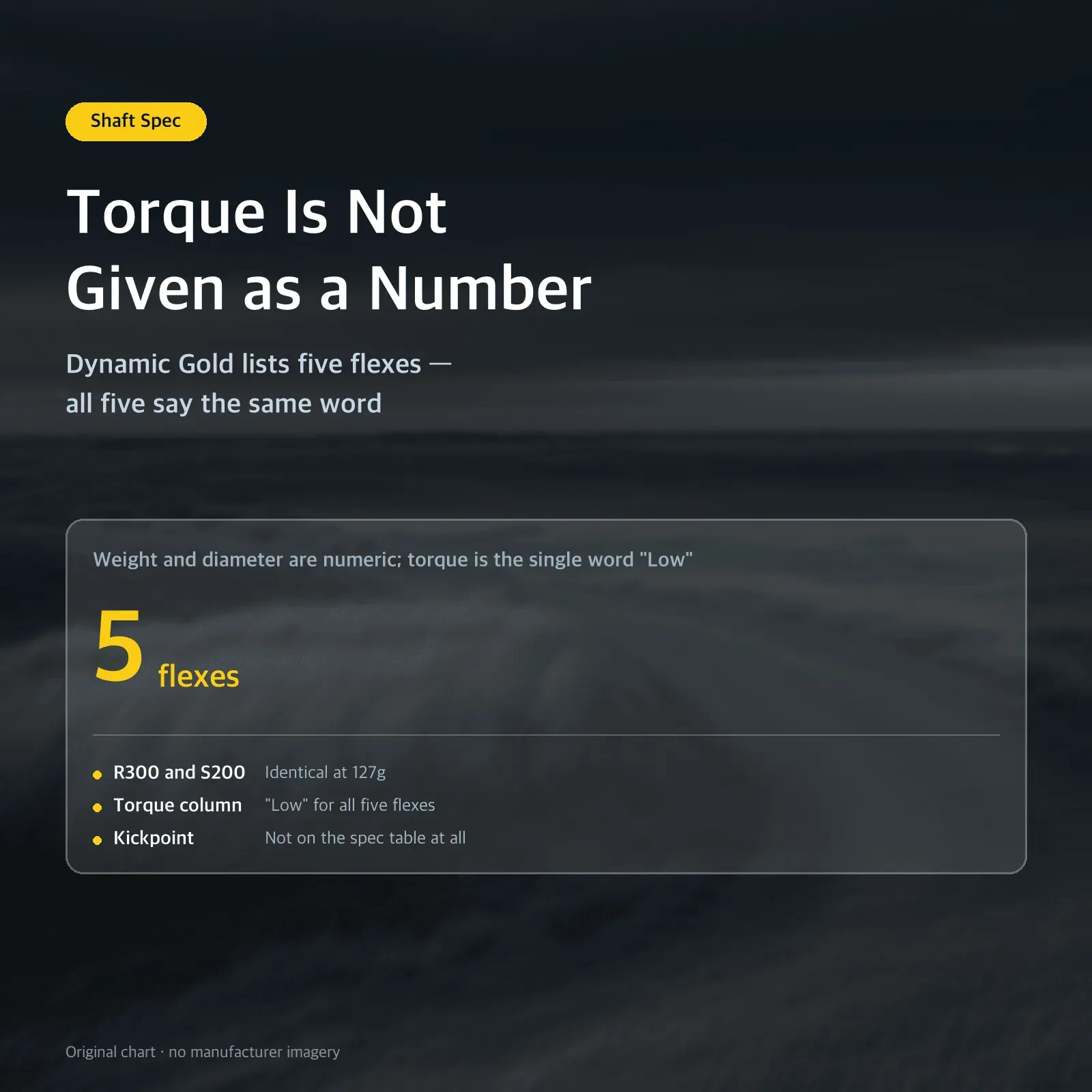
Dynamic Gold: Torque Is Just One Word
Dynamic Gold publishes weight and diameter for five flexes, but torque reads 'Low' for every one of them, and kickpoint is not on the table at all.
9 posts
Dynamic Gold publishes weight and diameter for five flexes, but torque reads 'Low' for every one of them, and kickpoint is not on the table at all.
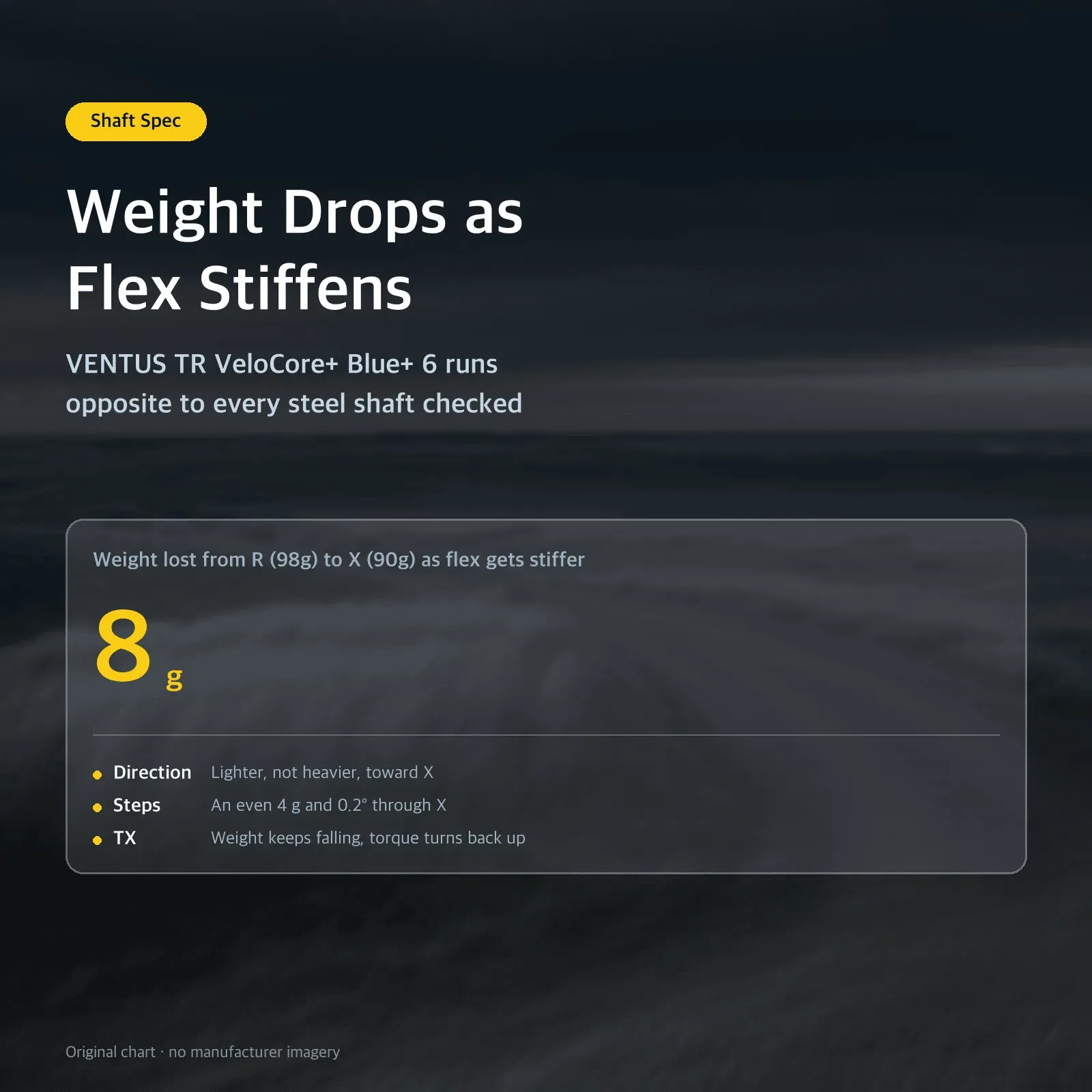
Fujikura's VENTUS TR VeloCore+ Blue+ 6 runs opposite current steel shafts: weight falls as flex stiffens, and torque reverses at the top flex.
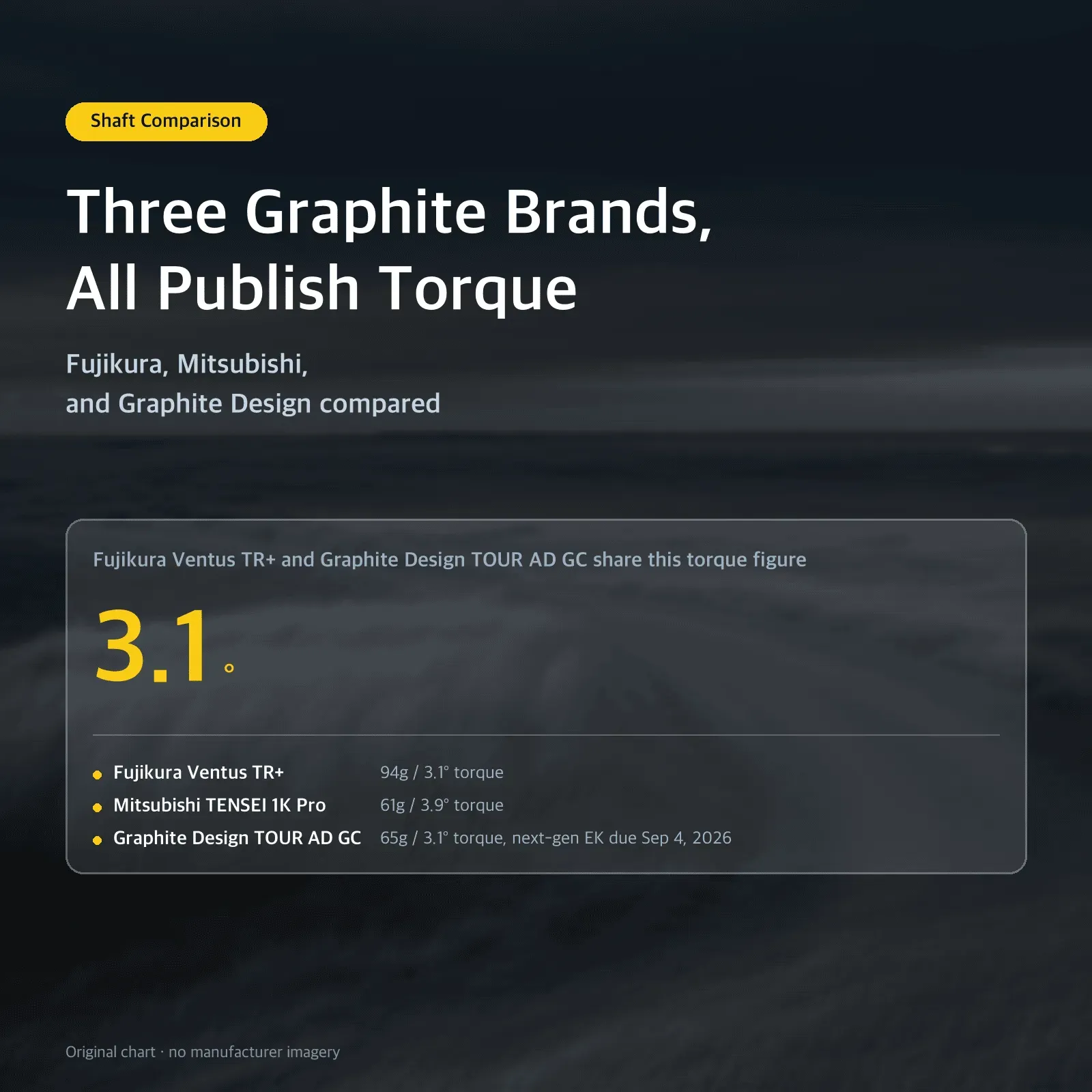
Fujikura Ventus TR, Mitsubishi TENSEI 1K Pro Blue, and Graphite Design TOUR AD GC all publish torque to a decimal point, unlike steel shaft brands.
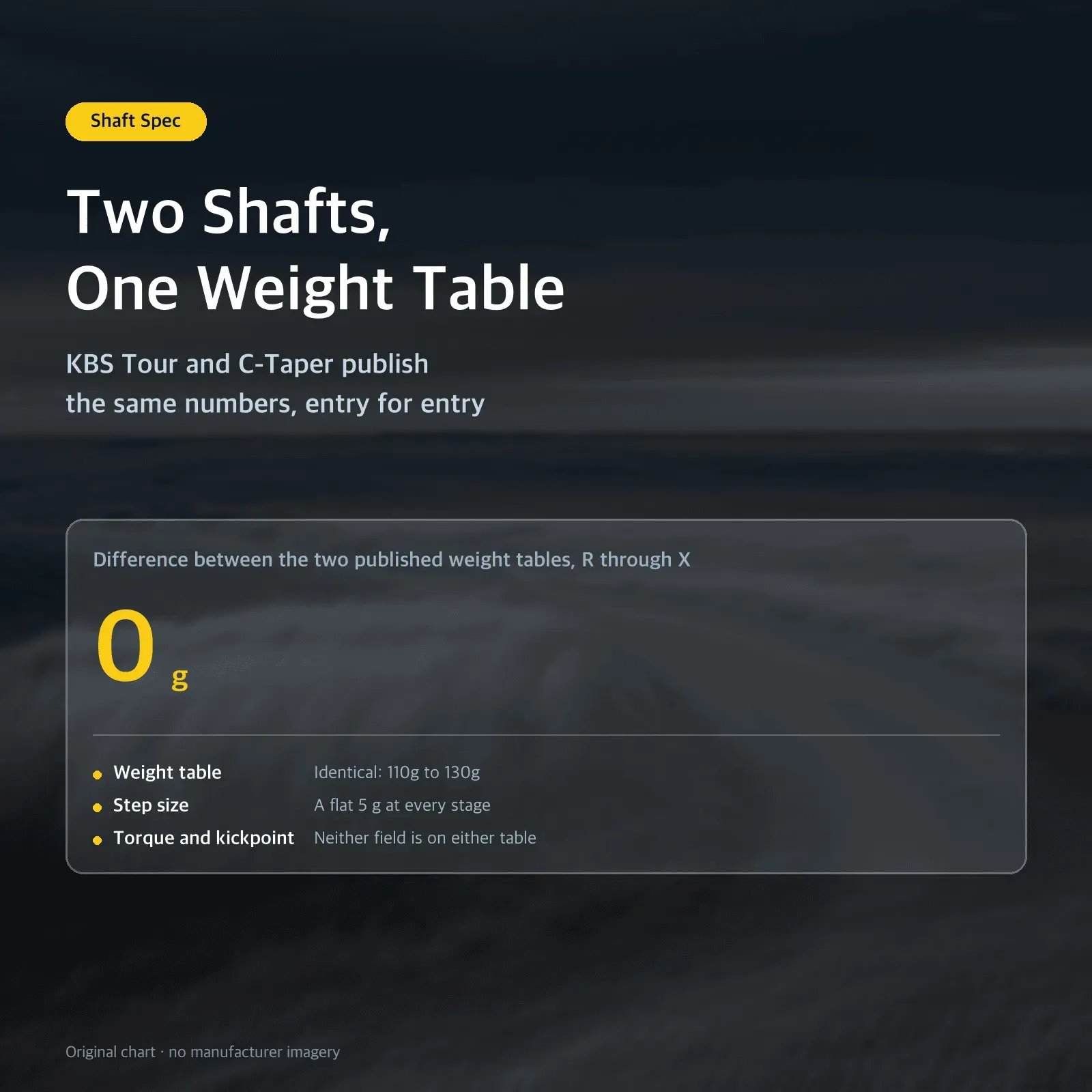
KBS sells Tour and C-Taper as distinct shafts, yet their published weight tables are identical from R to X, and neither lists torque or kickpoint.
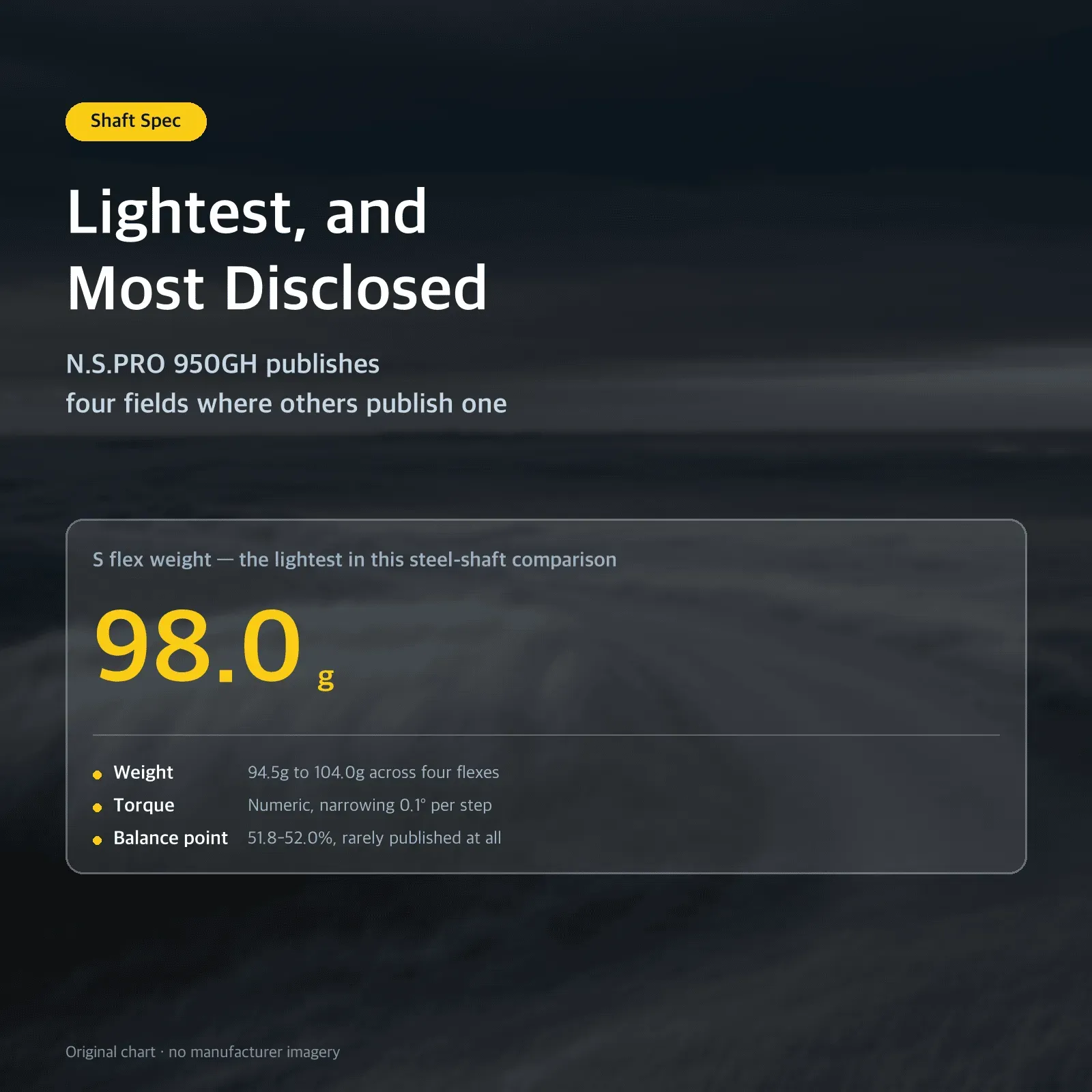
N.S.PRO 950GH is the lightest current steel shaft we checked, and the only one publishing torque, kickpoint, and balance point in full.
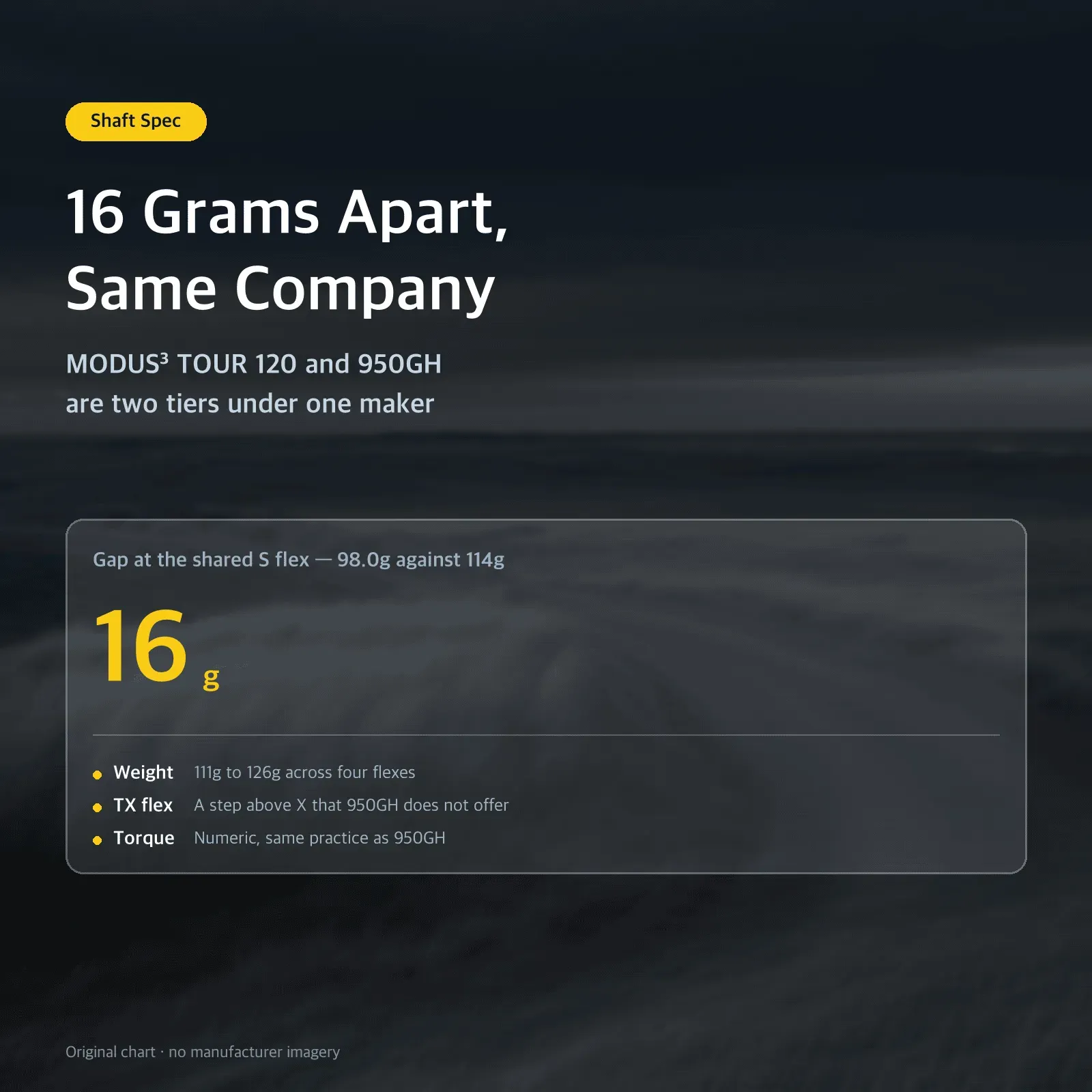
MODUS³ TOUR 120 shares a maker with N.S.PRO 950GH but sits 16 grams heavier at the same S flex, and adds a TX flex the 950GH does not offer.
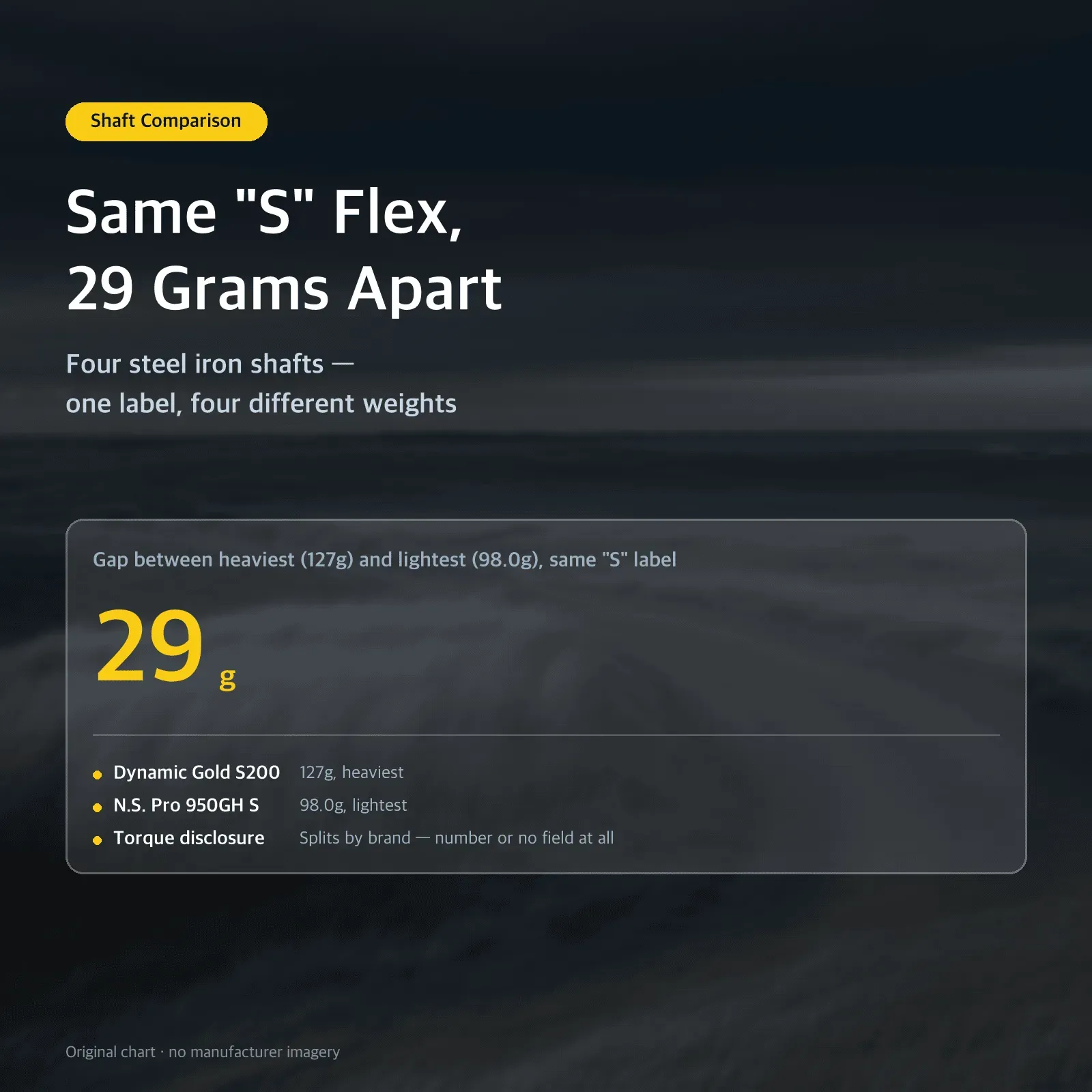
True Temper, KBS Tour, N.S. Pro 950GH, and MODUS3 TOUR 120 all carry an 'S' flex label — but their actual weights span a 29-gram range.
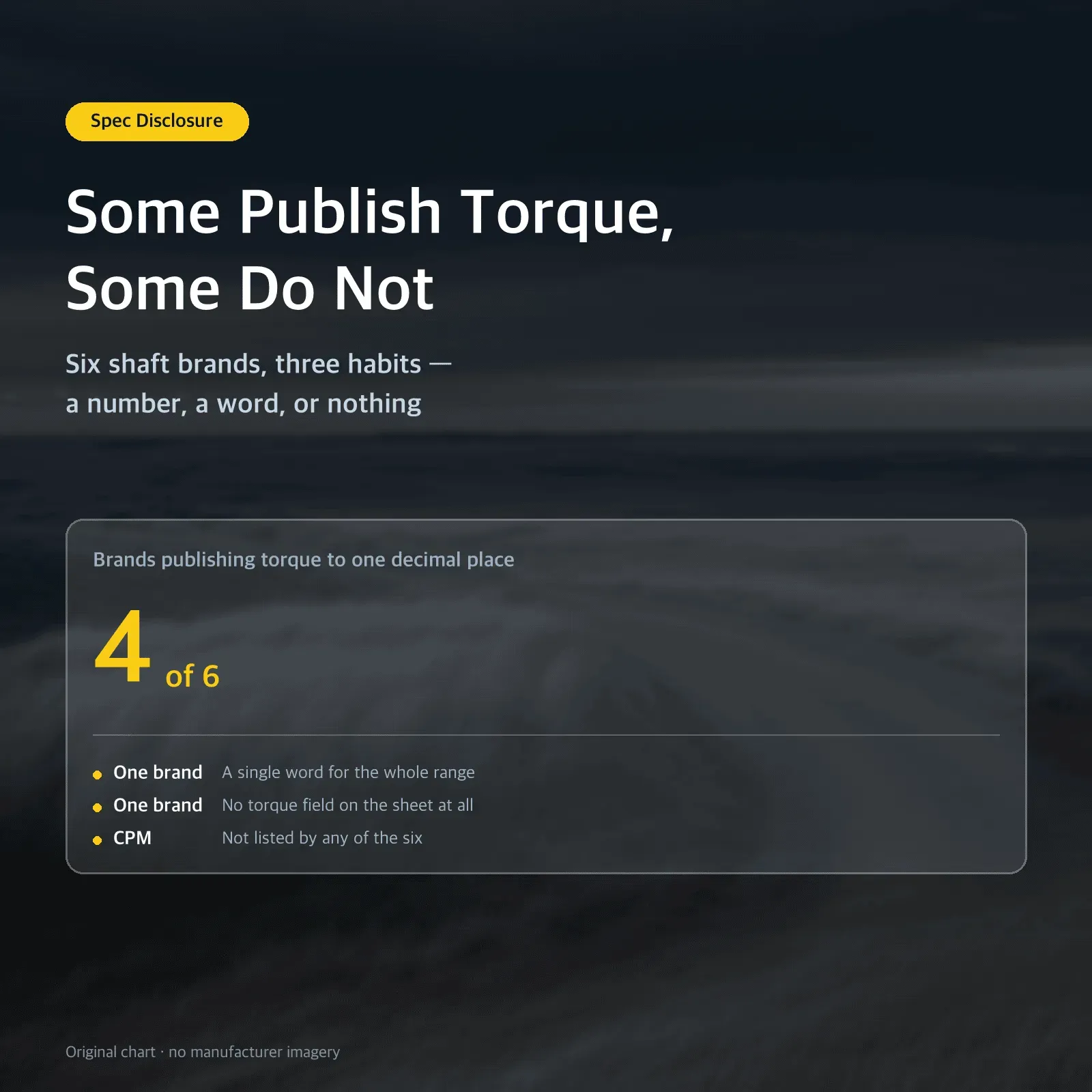
Across six shaft brands, torque is published to one decimal by four, given only as the word Low by True Temper, and left off the sheet entirely by KBS.
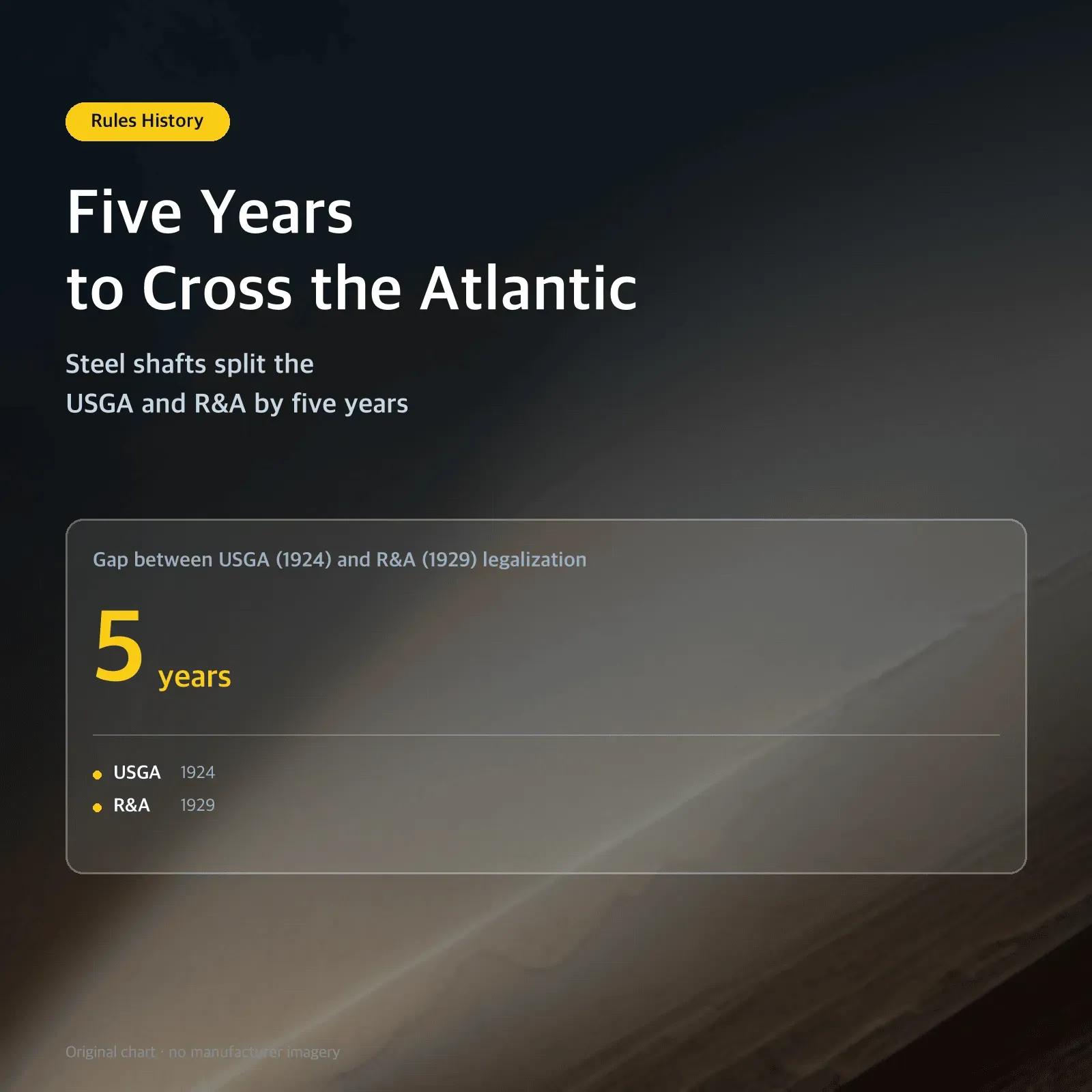
Steel shafts became legal under the USGA in 1924 but not the R&A until 1929. The five-year gap is a case study in how golf's two rule bodies diverge.