
5 Tour Ball Lines: Same Tier, Different Build
Titleist, TaylorMade, Callaway, Srixon, and Bridgestone all sell a flagship tour ball. Layer counts and compression differ more than marketing suggests.
Page 3 / 12
Titleist, TaylorMade, Callaway, Srixon, and Bridgestone all sell a flagship tour ball. Layer counts and compression differ more than marketing suggests.
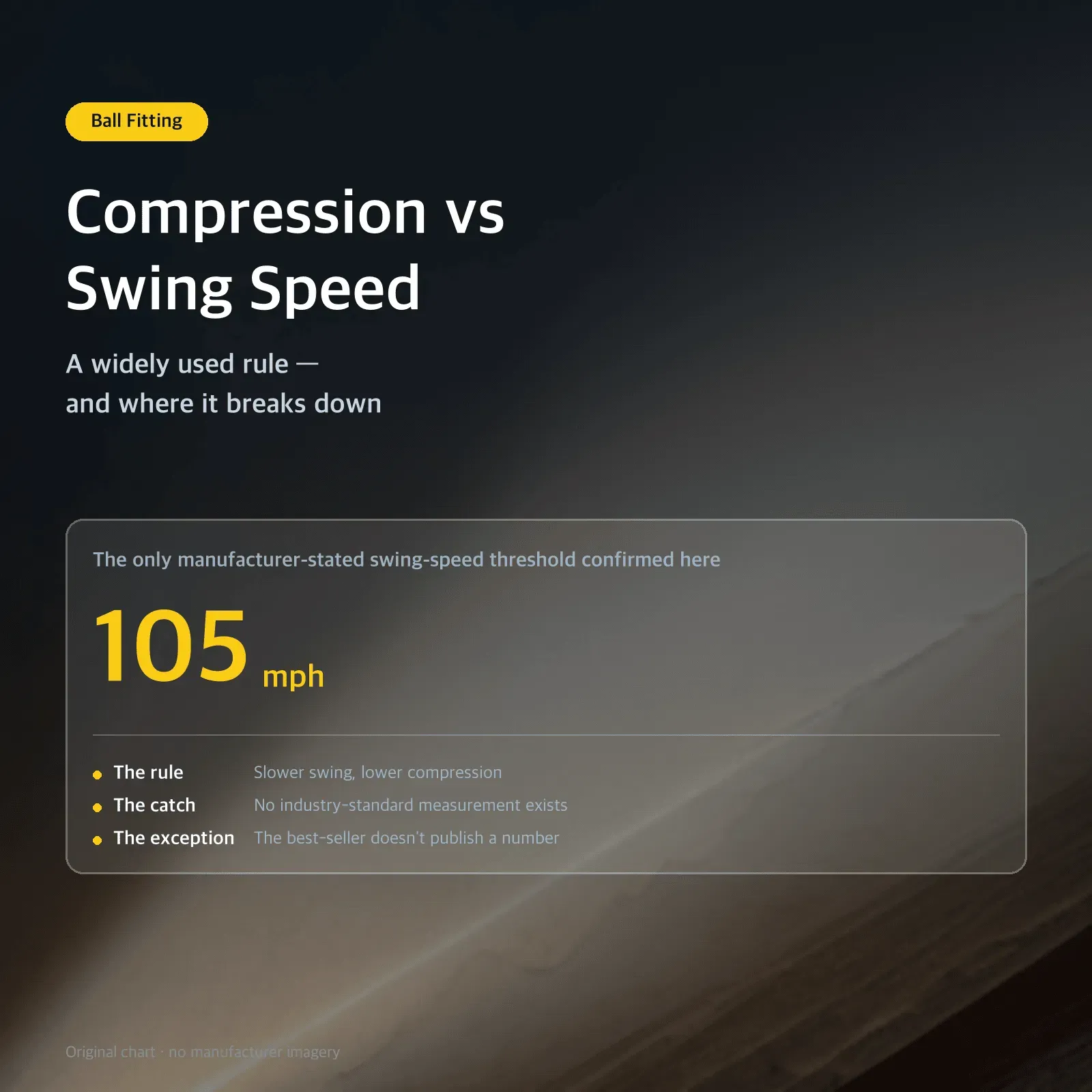
Manufacturers disagree on whether swing speed should drive compression choice. Here's where the speed-to-compression chart holds up, and where it fails.
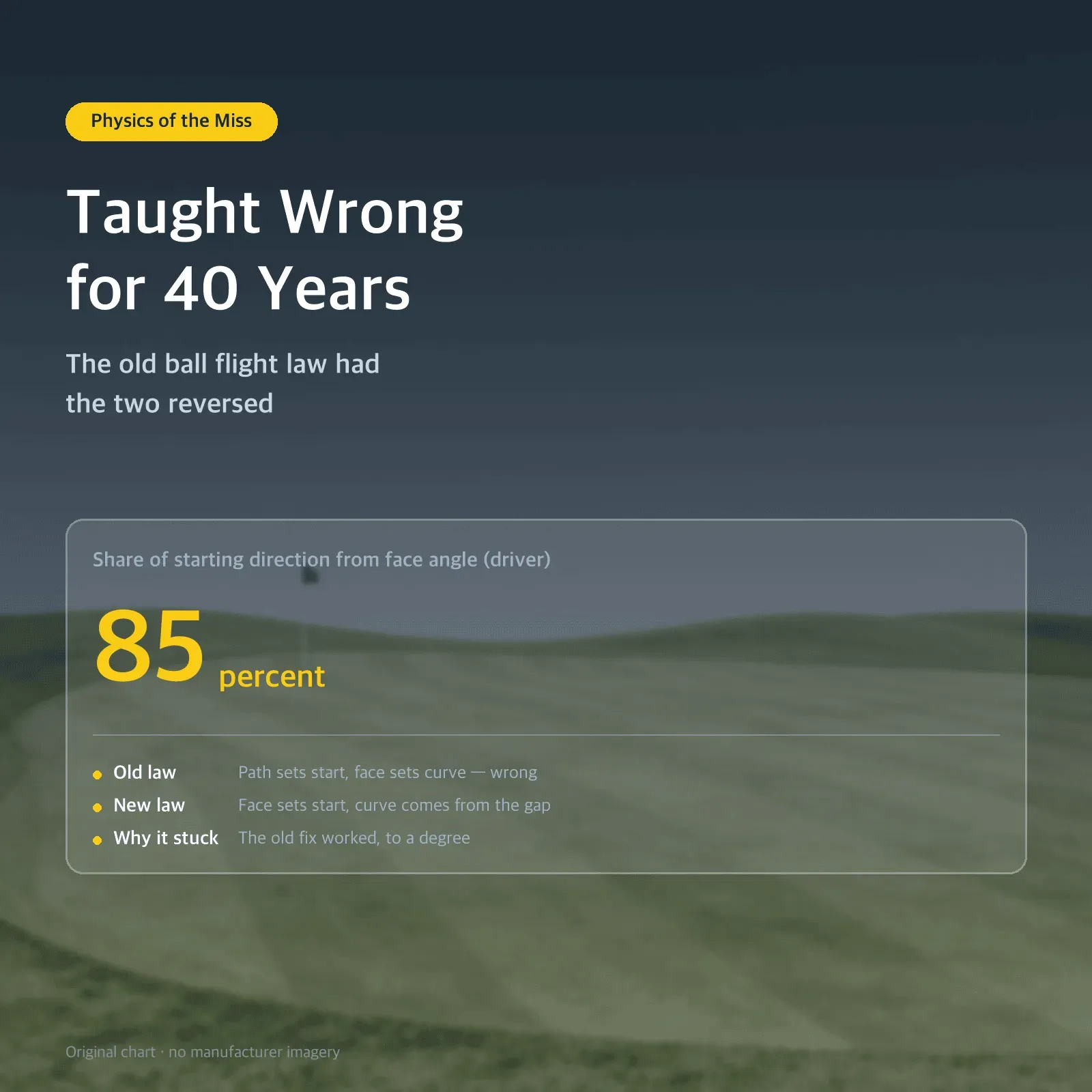
For decades, teaching held that path determines start direction and face determines curve. Measurement overturned that in the late 2000s.
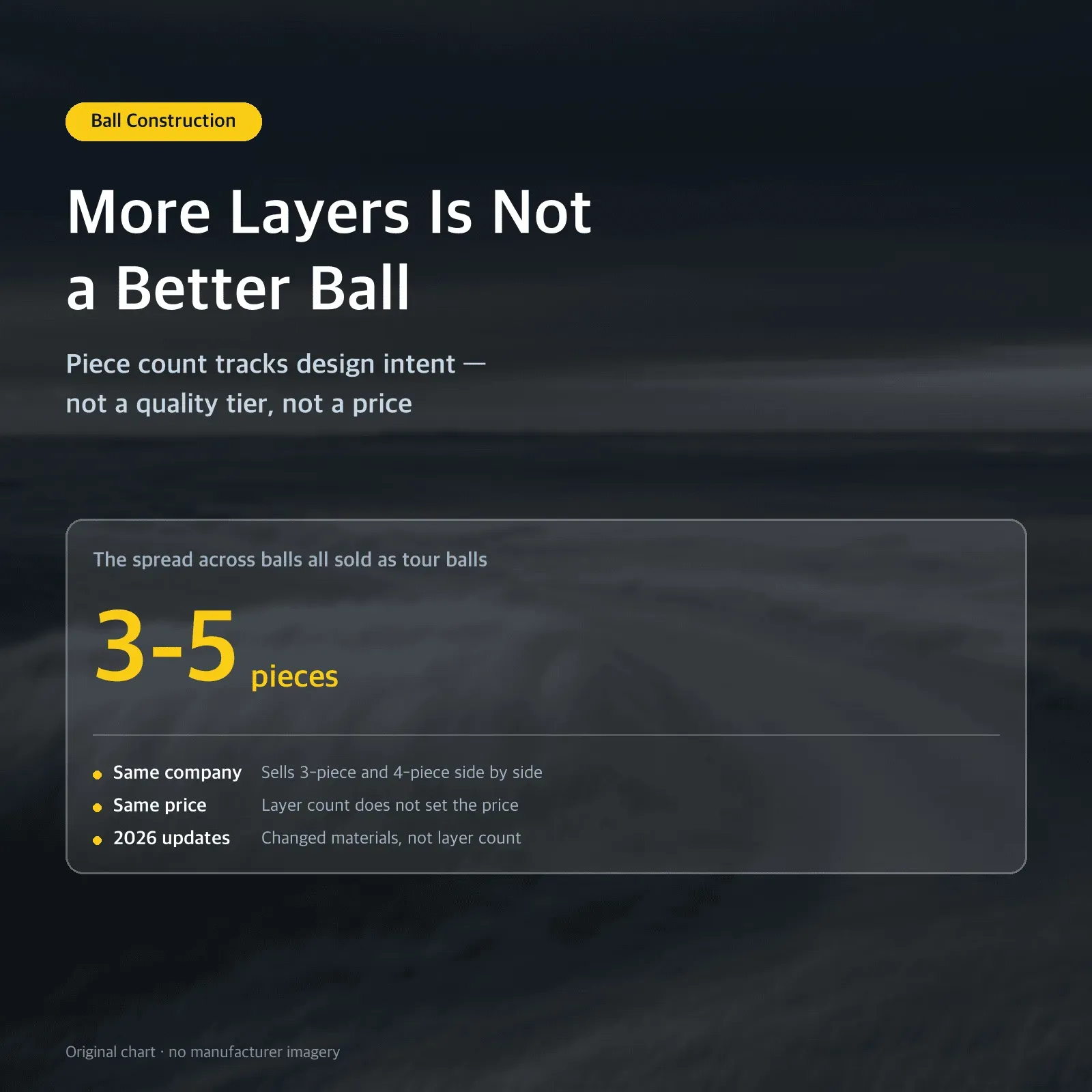
Boxes advertise 3-piece or 5-piece as a quality tier. Lining up current tour balls shows layer count tracks design intent, not price or rank.
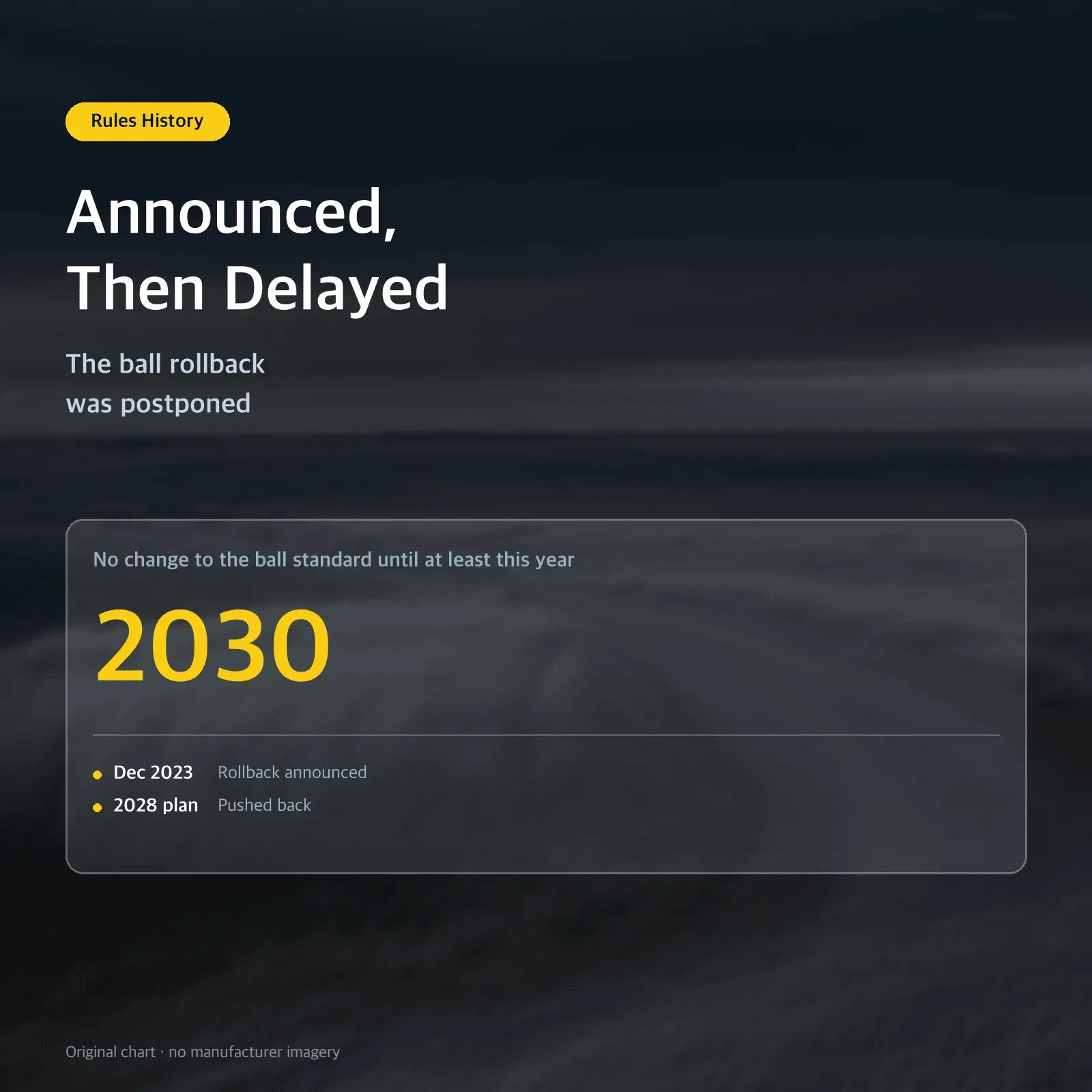
In December 2023 golf's governing bodies set a 2028 date for rolling back ball distance. In June 2026 they merged it into 2030 and reopened the question.
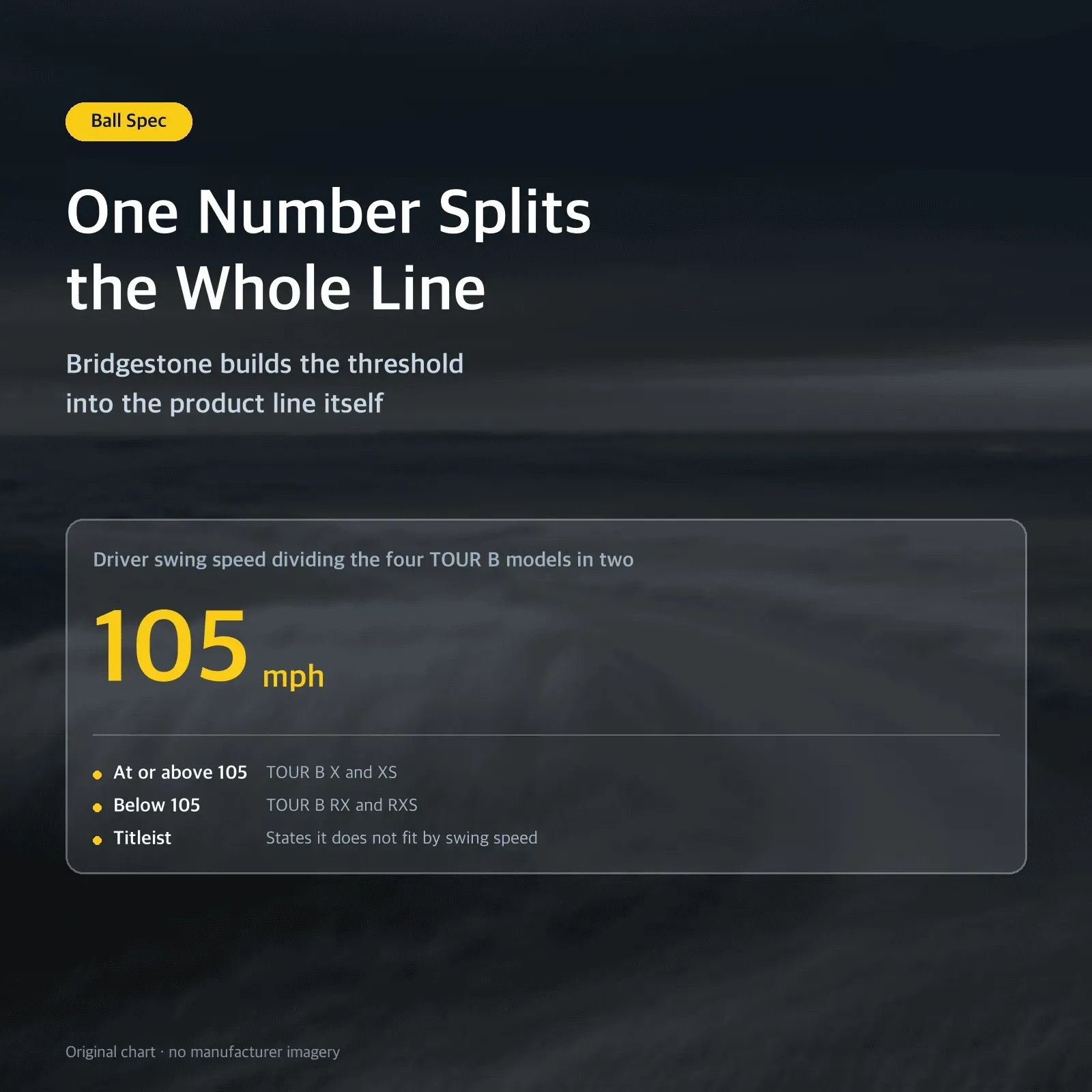
Most makers publish compression without drawing a speed line. Bridgestone splits its four-model TOUR B lineup at a stated 105 mph threshold.
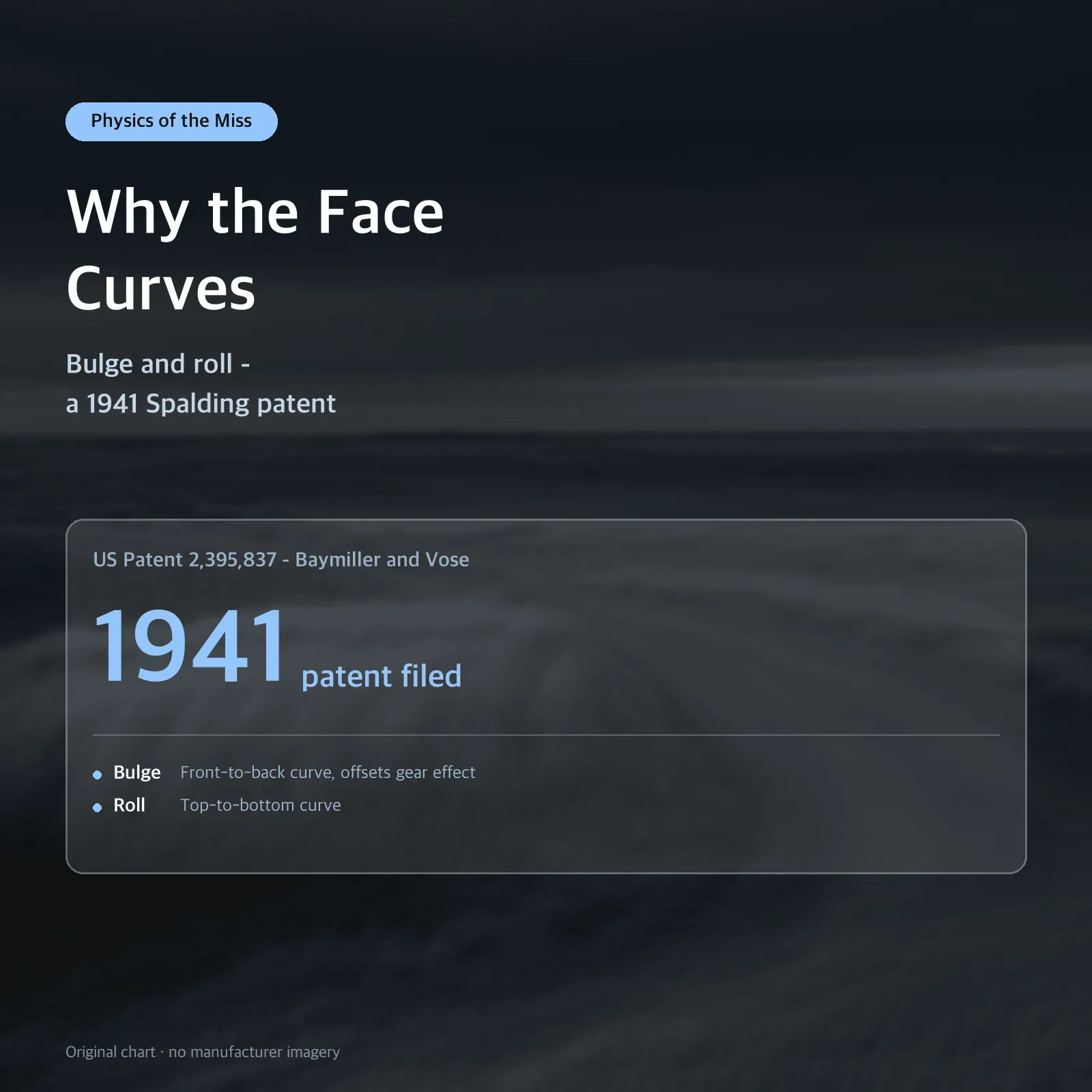
Driver faces curve while iron faces stay flat. The reason is bulge and roll, meant to offset gear effect, formalized in a 1941 Spalding patent.

Callaway's 2026 Chrome Tour stays four-piece. What changed is the mantle material, a stiffness increase the company says took over four years.
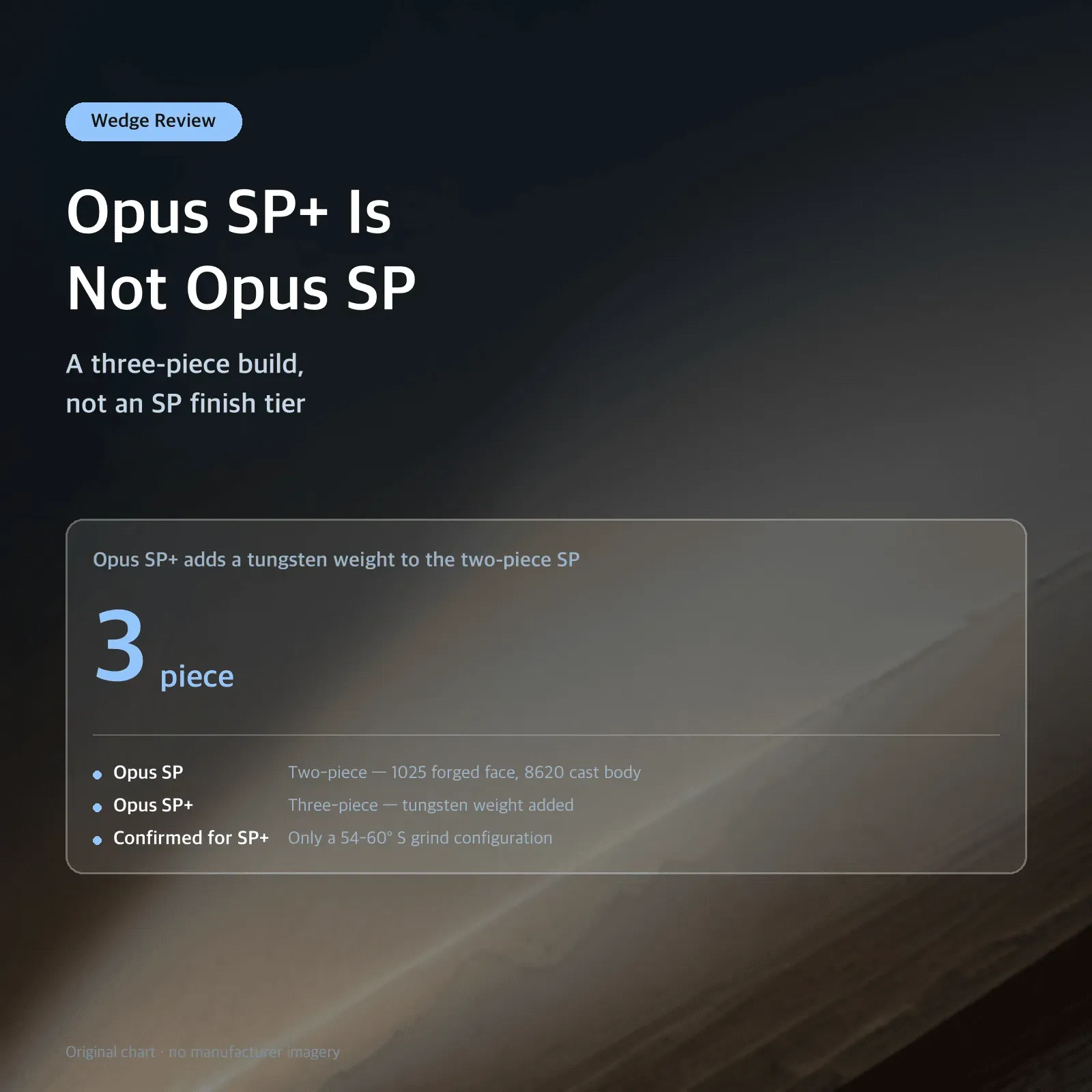
Opus SP+ sounds like an SP update but is a different three-piece build. The full spec table we found belongs to SP, not SP+.

Callaway's current driver is the Quantum. Of its five models, only Max and Triple Diamond let you move the weight; the rest are fixed or skip the system.
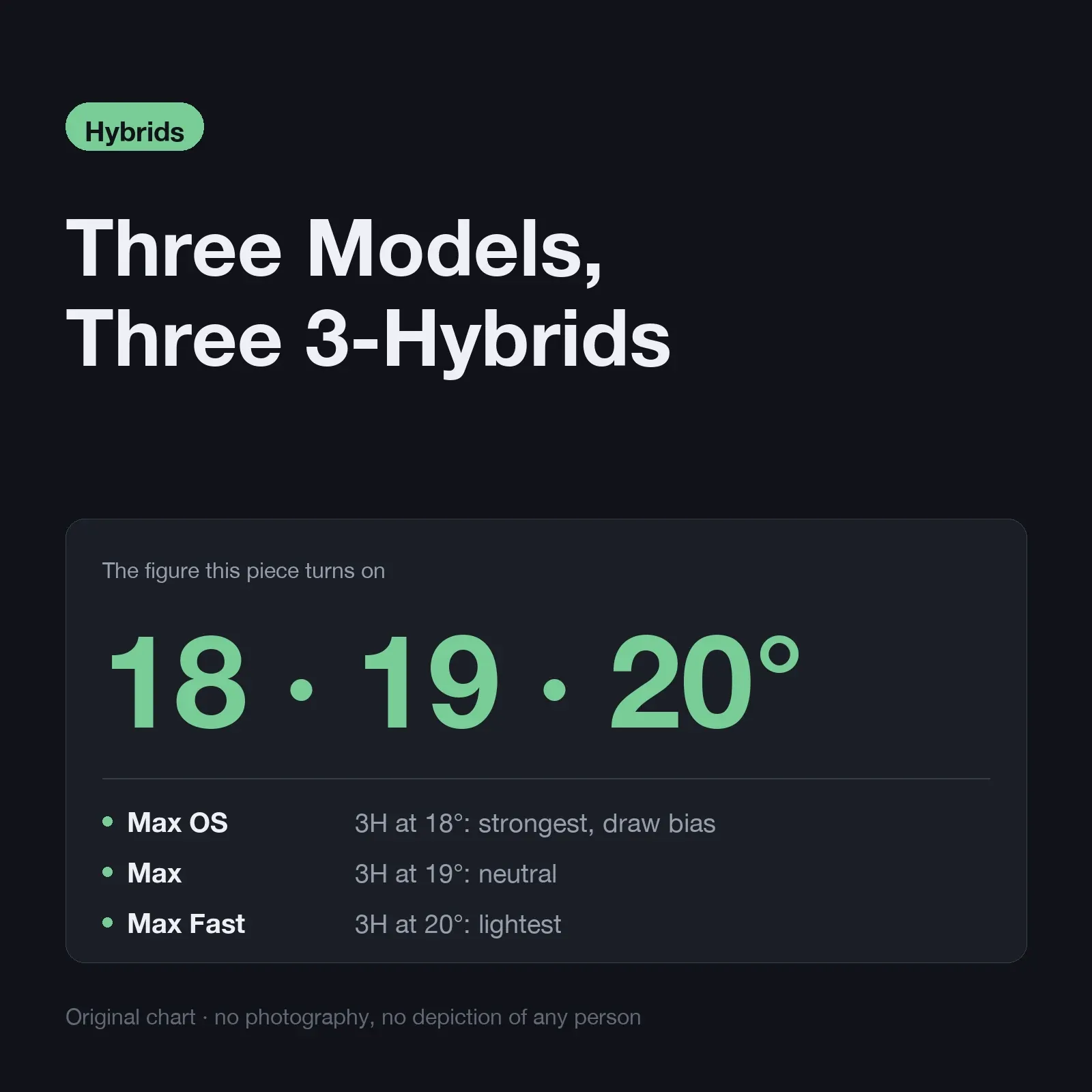
All three Quantum Max hybrids offer a 3H — at 18, 19 and 20 degrees — and that offset holds the whole way up each set. Checked against Callaway's spec sheets.
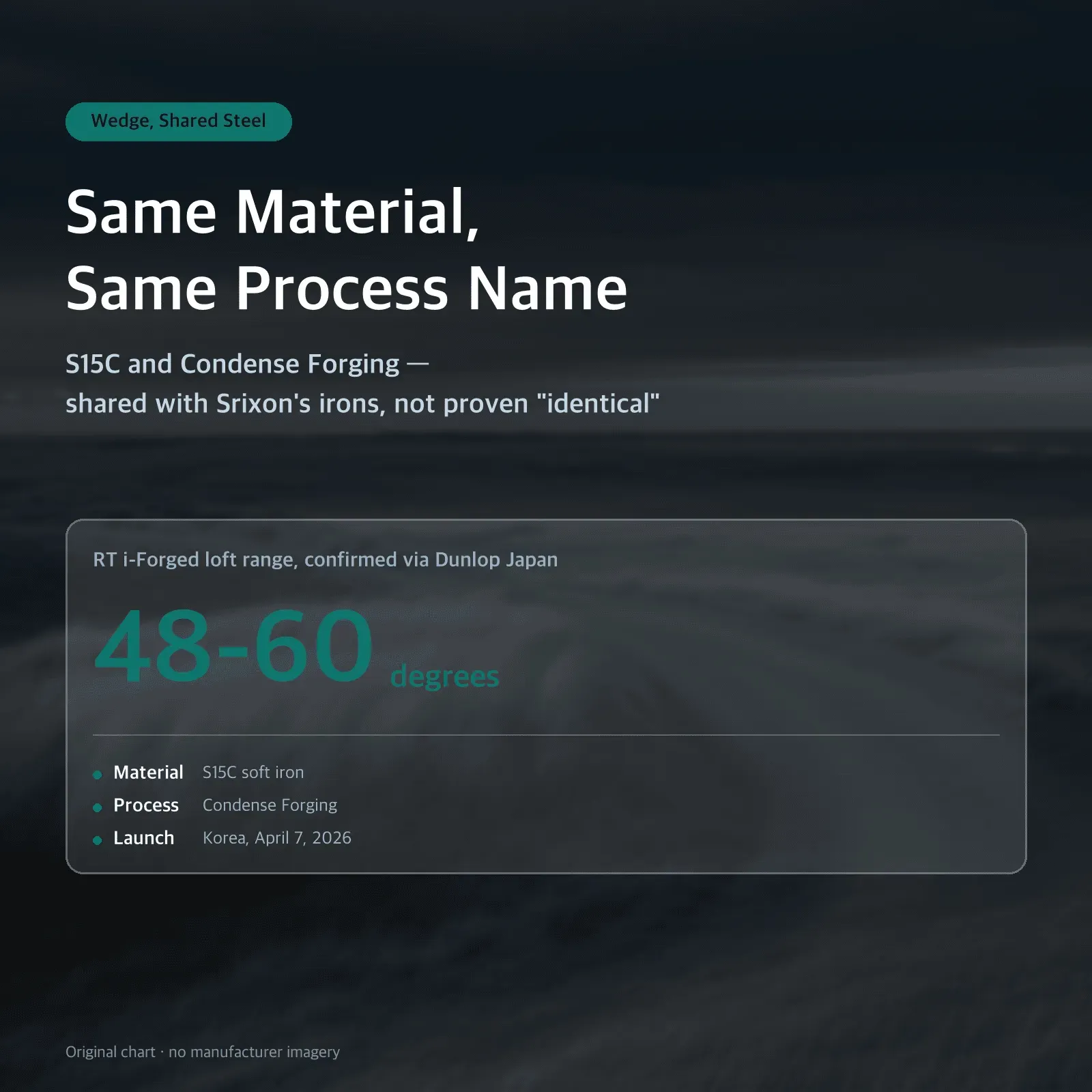
Cleveland's RT i-Forged wedge shares a material and process name with Srixon's i-Forged irons — sharing names isn't sharing technology.
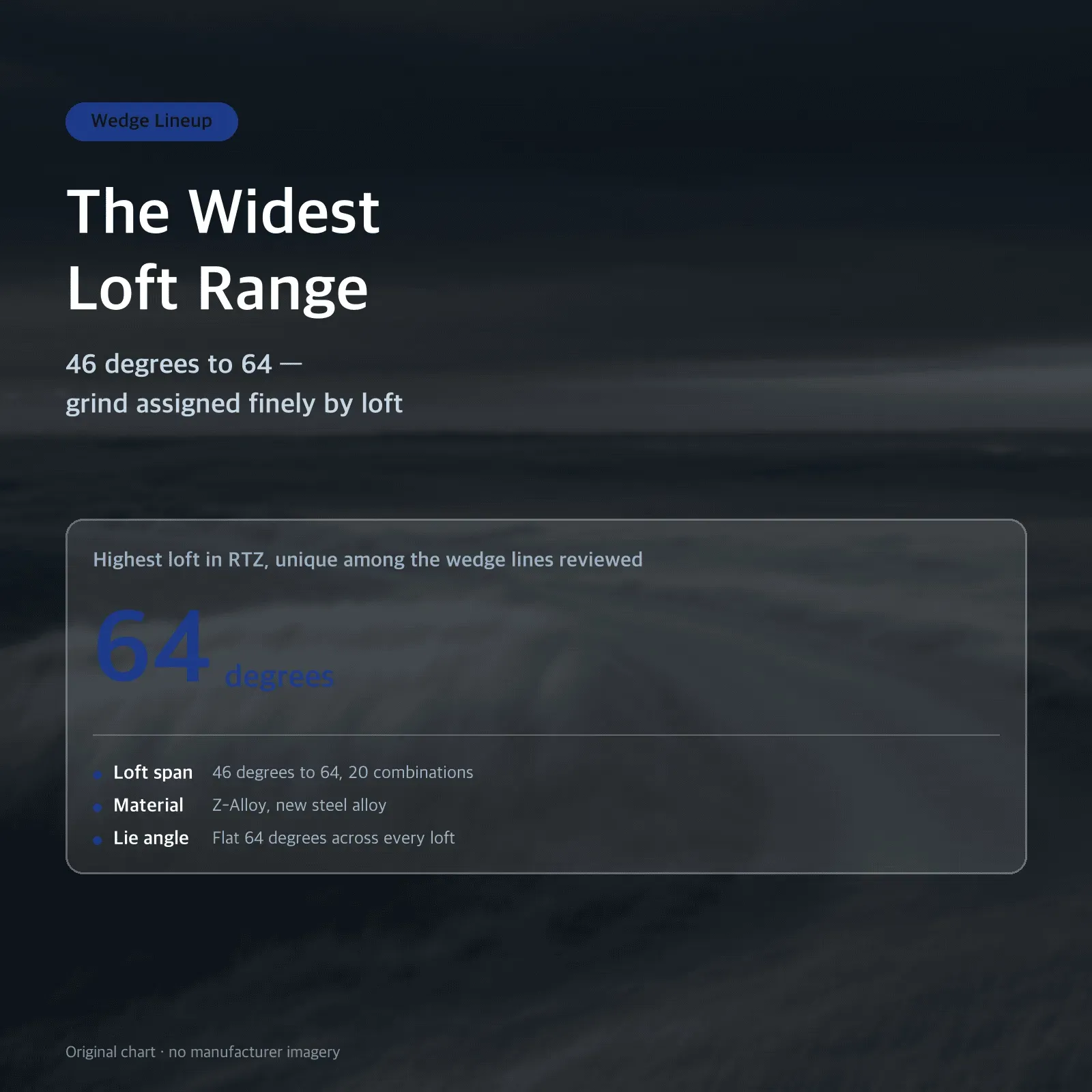
RTZ runs 46-64 degrees across 20 loft/grind combos, the widest spread here, but names on its spec table often lack supporting explanation.

Closing out thirty pieces on the physics of the miss — the patterns that recurred across the branches, and the claims that did not survive checking.
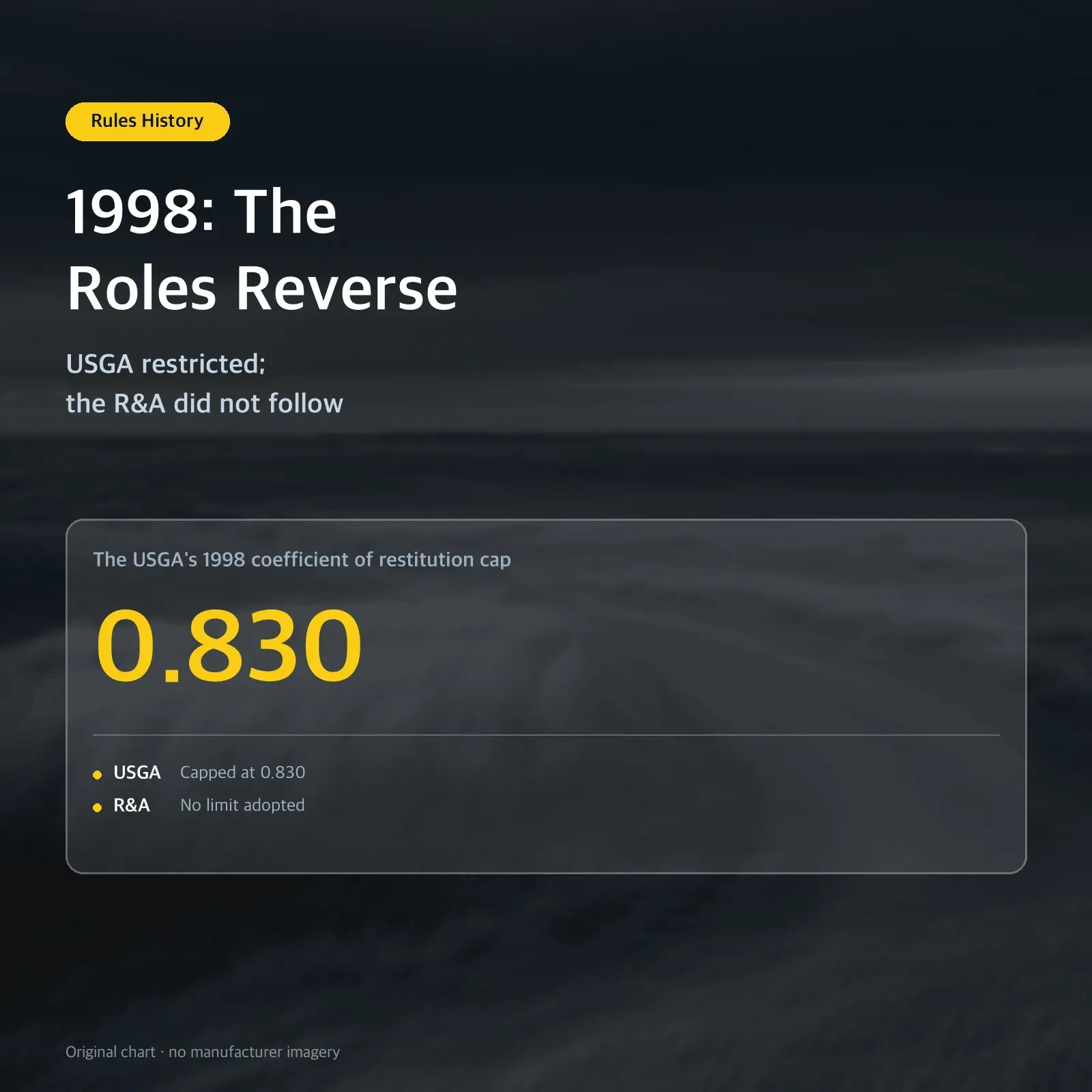
When the USGA capped driver coefficient of restitution at 0.830 in 1998, the R&A didn't follow — one driver was legal here, illegal there.

1,199 reviews from the game's first four weeks, split by playtime. Approval reaches 98% by fifty hours, then the data runs out.
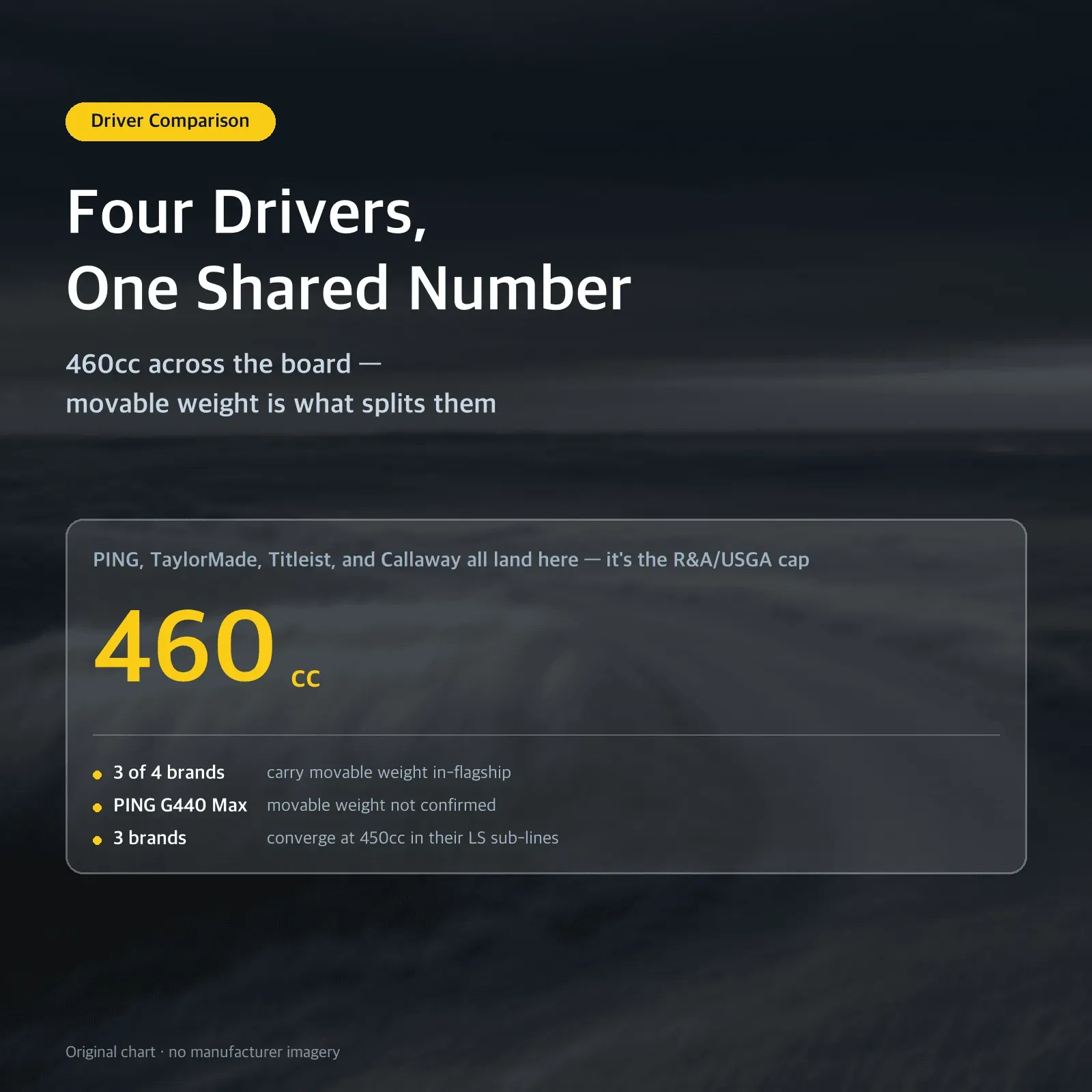
PING, TaylorMade, Titleist, and Callaway's 2026 flagship drivers all share the 460cc cap. What separates them is who lets you move weight around.
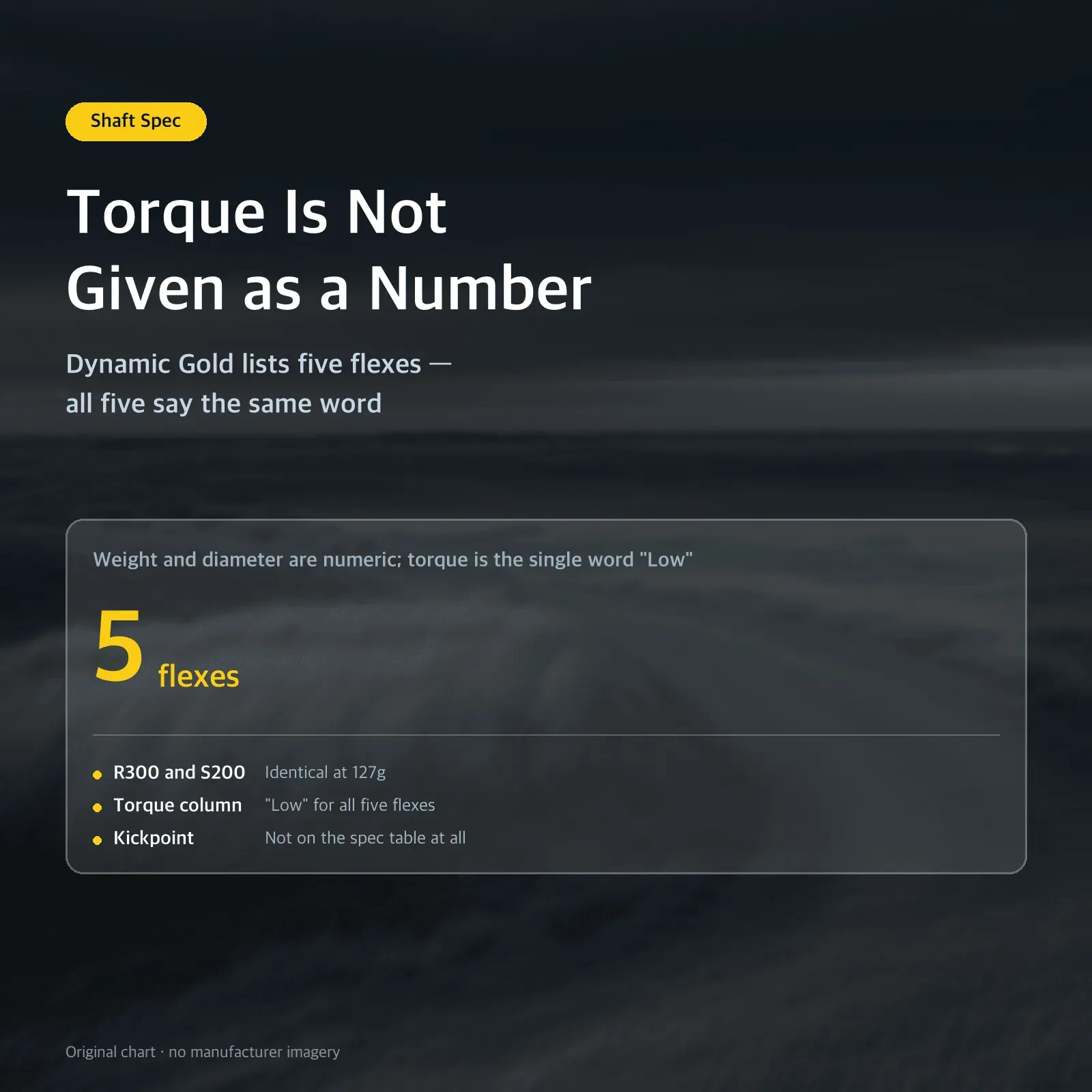
Dynamic Gold publishes weight and diameter for five flexes, but torque reads 'Low' for every one of them, and kickpoint is not on the table at all.
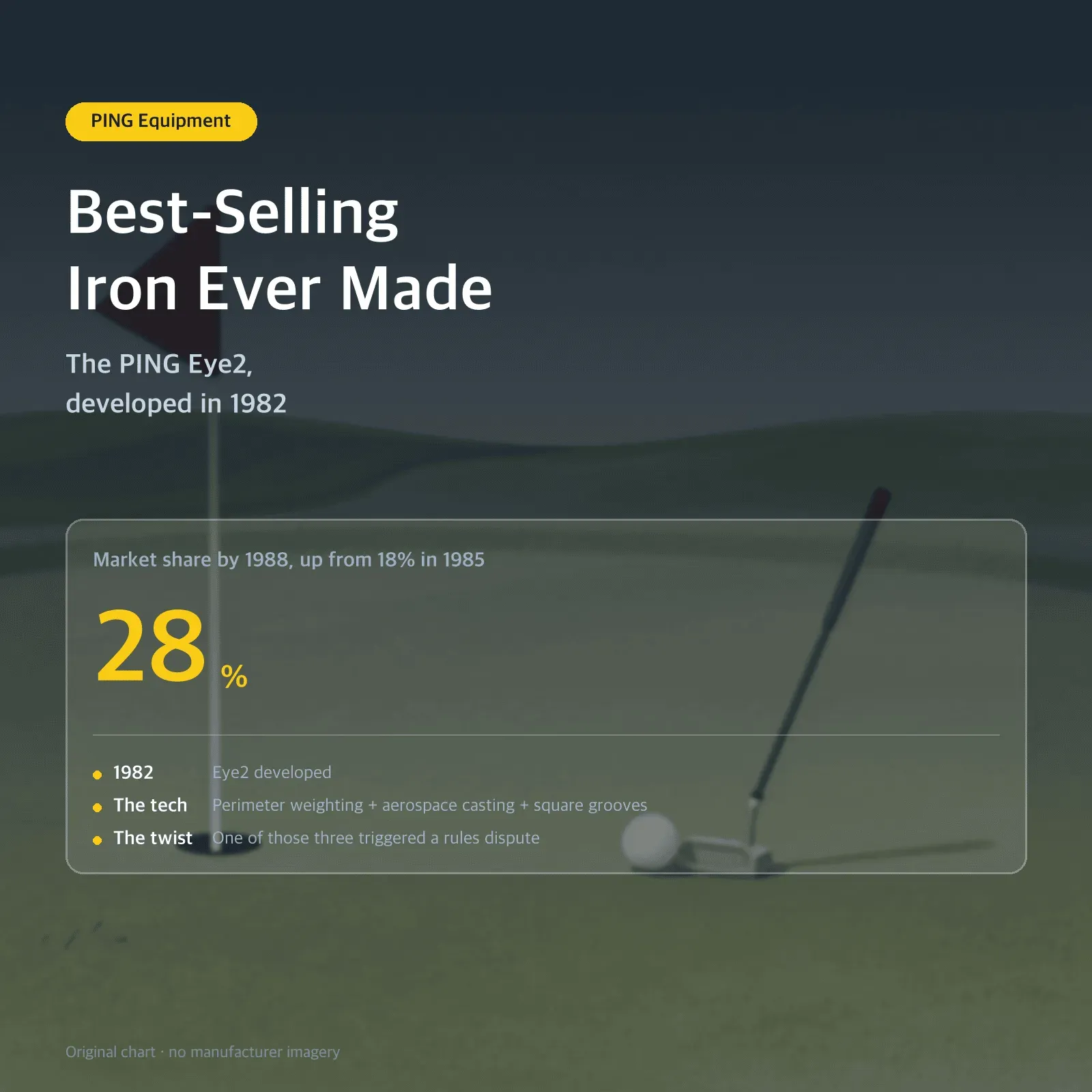
The PING Eye2 is widely cited as the best-selling iron set in history. Its square grooves also triggered a rules dispute, covered separately.
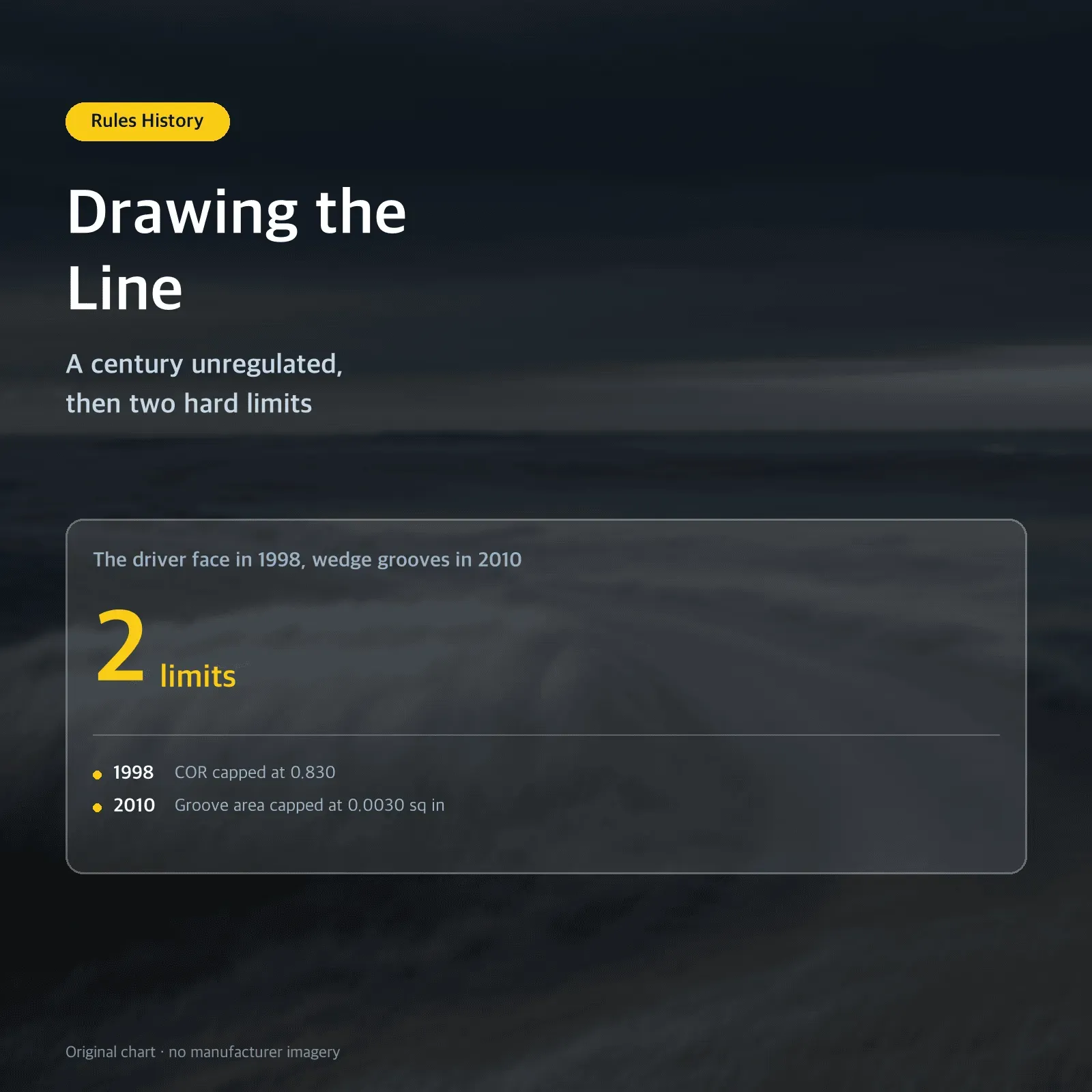
For a century equipment went unregulated. In 1998 the driver face and in 2010 wedge grooves got hard, measurable limits. Here is what changed and why.

A practical guide to reading what happened at impact from ball flight alone, using the corrected face-path relationship — no launch monitor required.