
One Golf Ball, One Top Hat Full of Feathers
Two centuries ago, a golf ball often cost more than a club. Understanding how the featherie was made explains why.
Page 4 / 12
Two centuries ago, a golf ball often cost more than a club. Understanding how the featherie was made explains why.
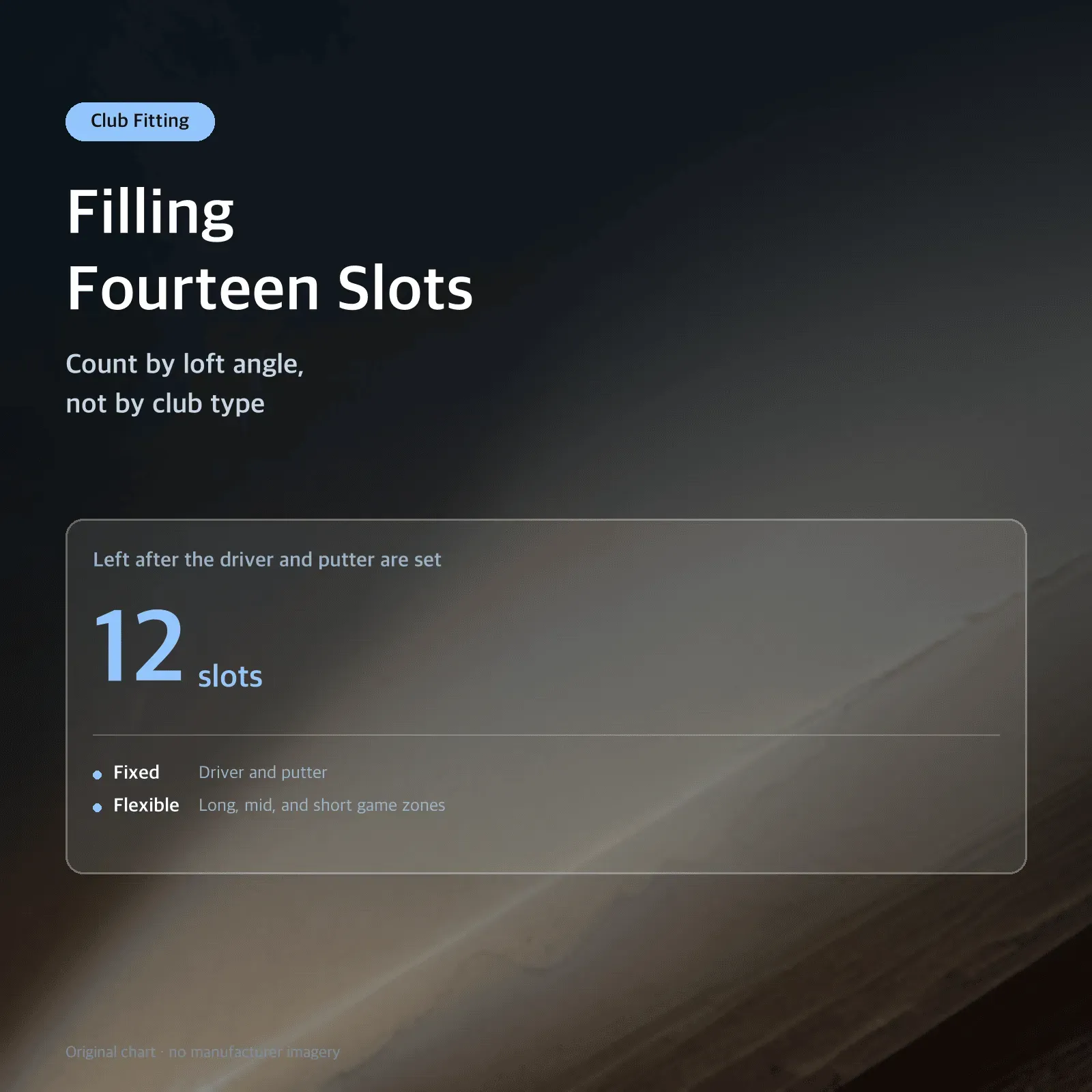
A practical method for building a 14-club setup: count by loft angle, find the gaps and overlaps, and remember fourteen is a ceiling, not a quota.
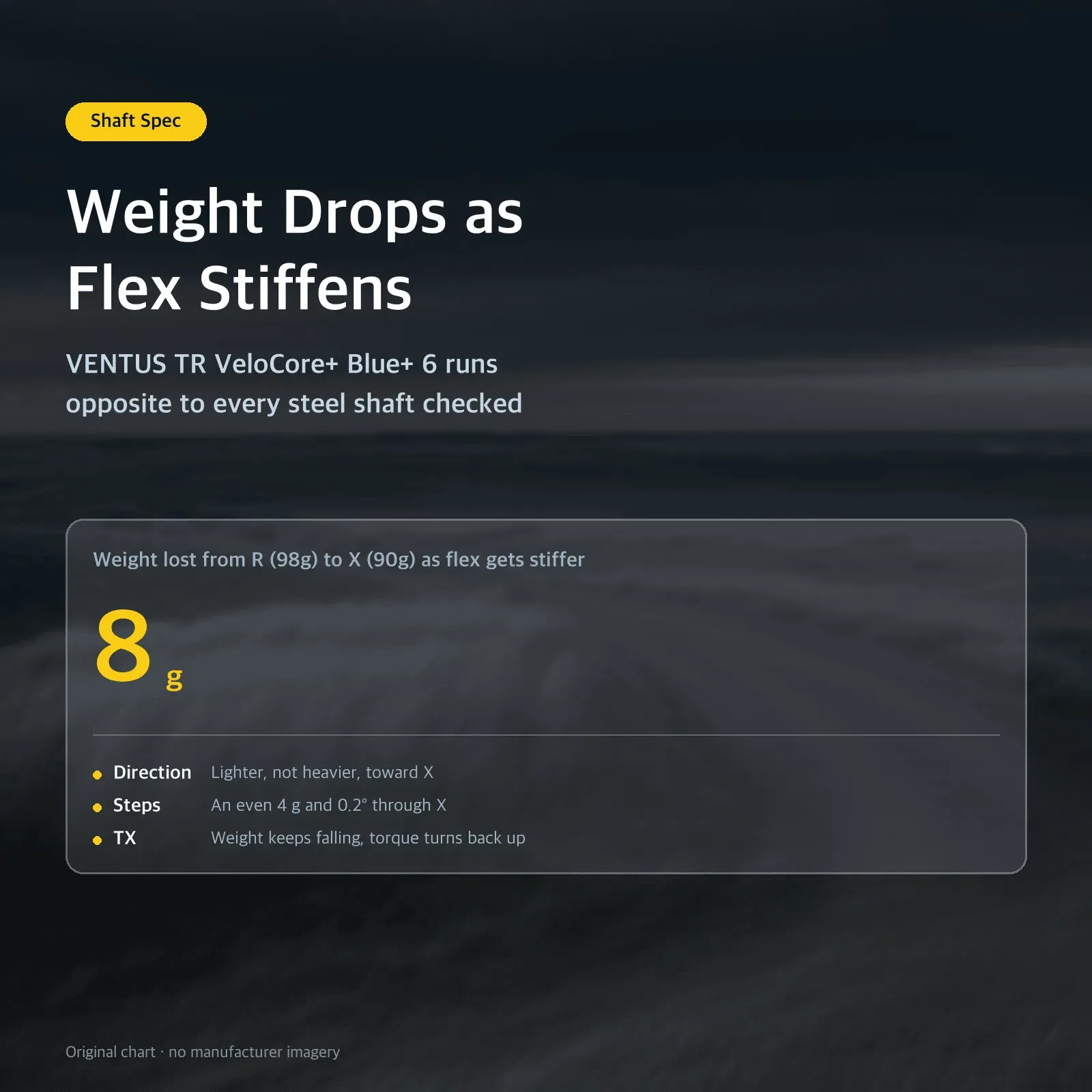
Fujikura's VENTUS TR VeloCore+ Blue+ 6 runs opposite current steel shafts: weight falls as flex stiffens, and torque reverses at the top flex.
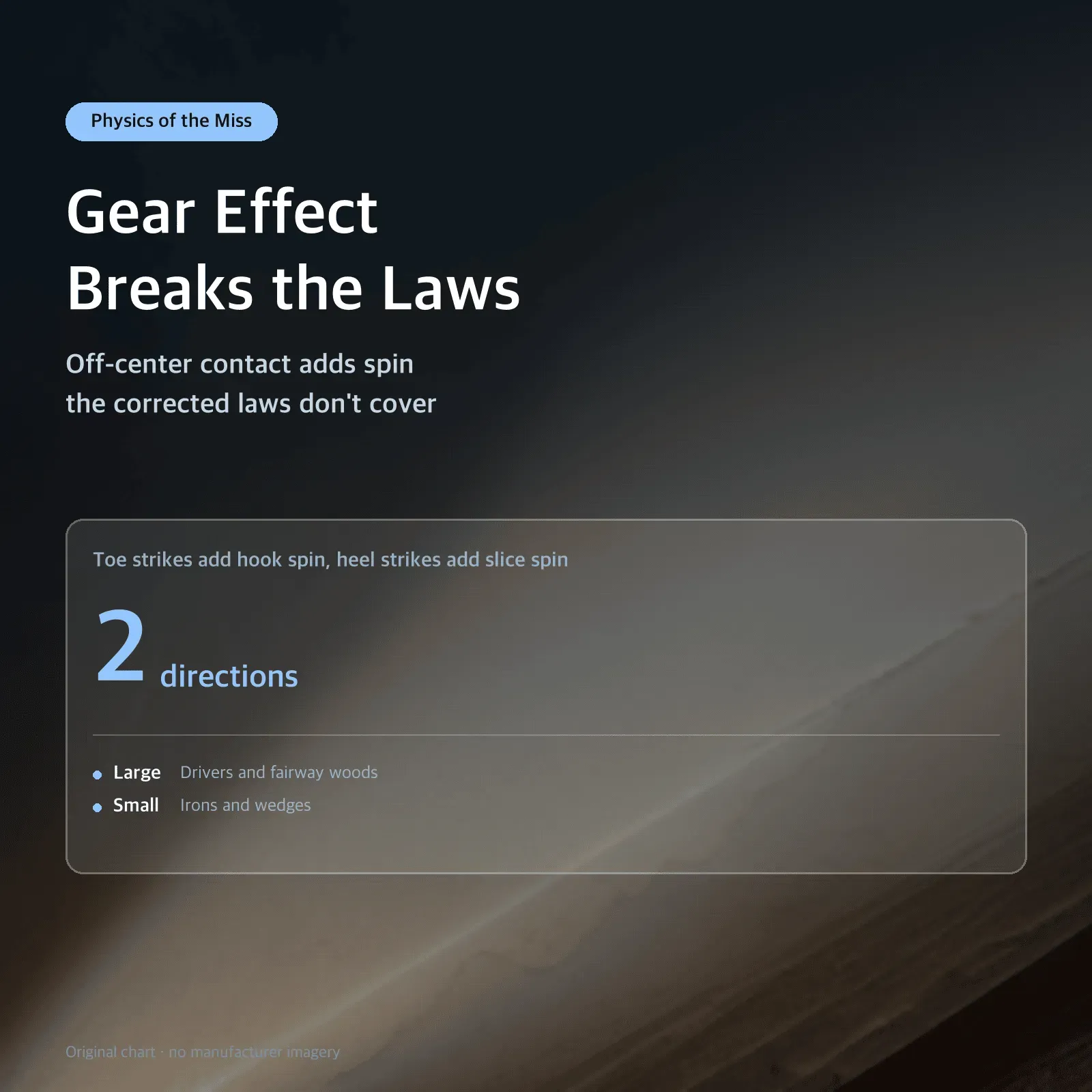
The corrected ball-flight laws assume center contact. Off-center hits add gear-effect spin the laws don't cover — far bigger with a driver than an iron.

Driving irons, hybrids, and fairway woods fill the 185-240+ yard gap, but head structure and launch behavior differ completely. A decision framework.

A golfer suspected his long irons flew too far. The real problem was gapping: two clubs overlapped almost exactly, and his set had three dead zones.

The 1990 PING-USGA settlement recognized Eye2 clubs made 1984-1990 as conforming. What grandfathering is, and why golf's rules use it.

Fujikura Ventus TR, Mitsubishi TENSEI 1K Pro Blue, and Graphite Design TOUR AD GC all publish torque to a decimal point, unlike steel shaft brands.

The gutta-percha ball cut the price of playing to roughly a quarter. What that did to who could play, and how quickly the change spread.
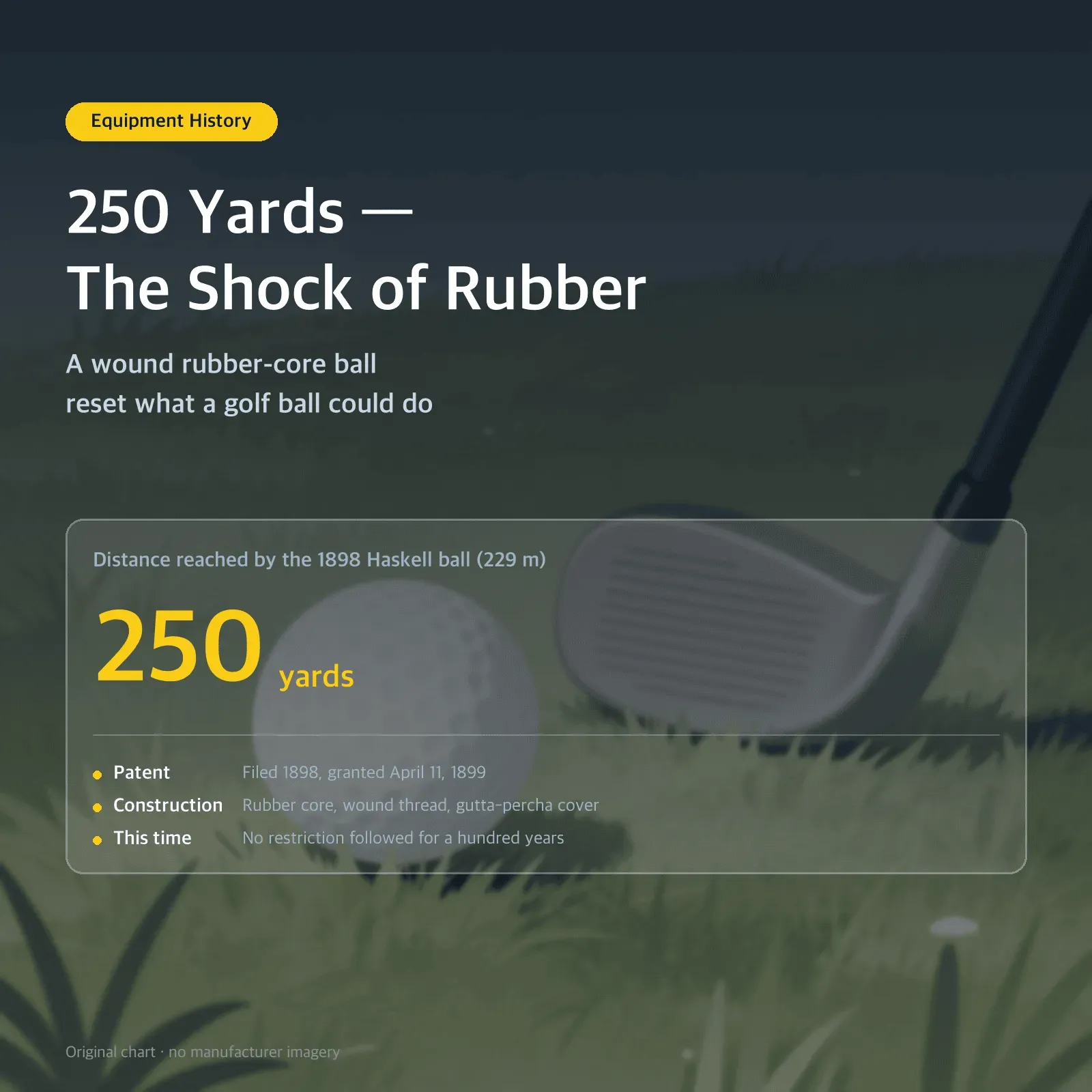
In 1898 a wound rubber-core ball flew 250 yards and reset what a ball could do — yet unlike earlier distance jumps, it drew no rule for a century.

Ben Hogan compared the hook to a rattlesnake in your pocket. Unlike other golf legends we checked, this one has a dated, verifiable source.

A draw and a hook both curve right to left, but the boundary between them isn't how much the ball curves — it's whether the face is under control.
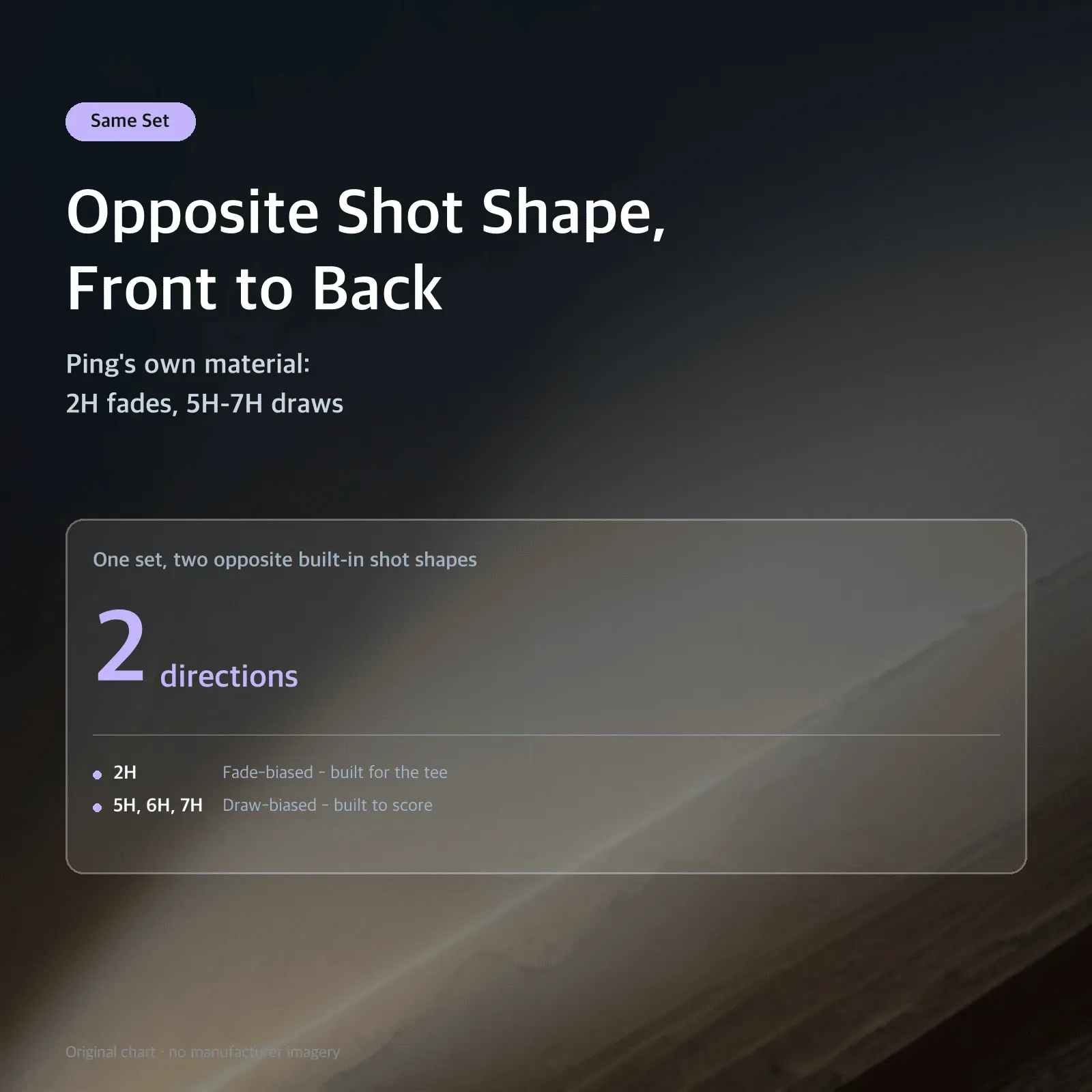
Ping states its 2-hybrid is fade-biased while the 5-, 6-, and 7-hybrids are draw-biased — one set, built in opposite directions by number.
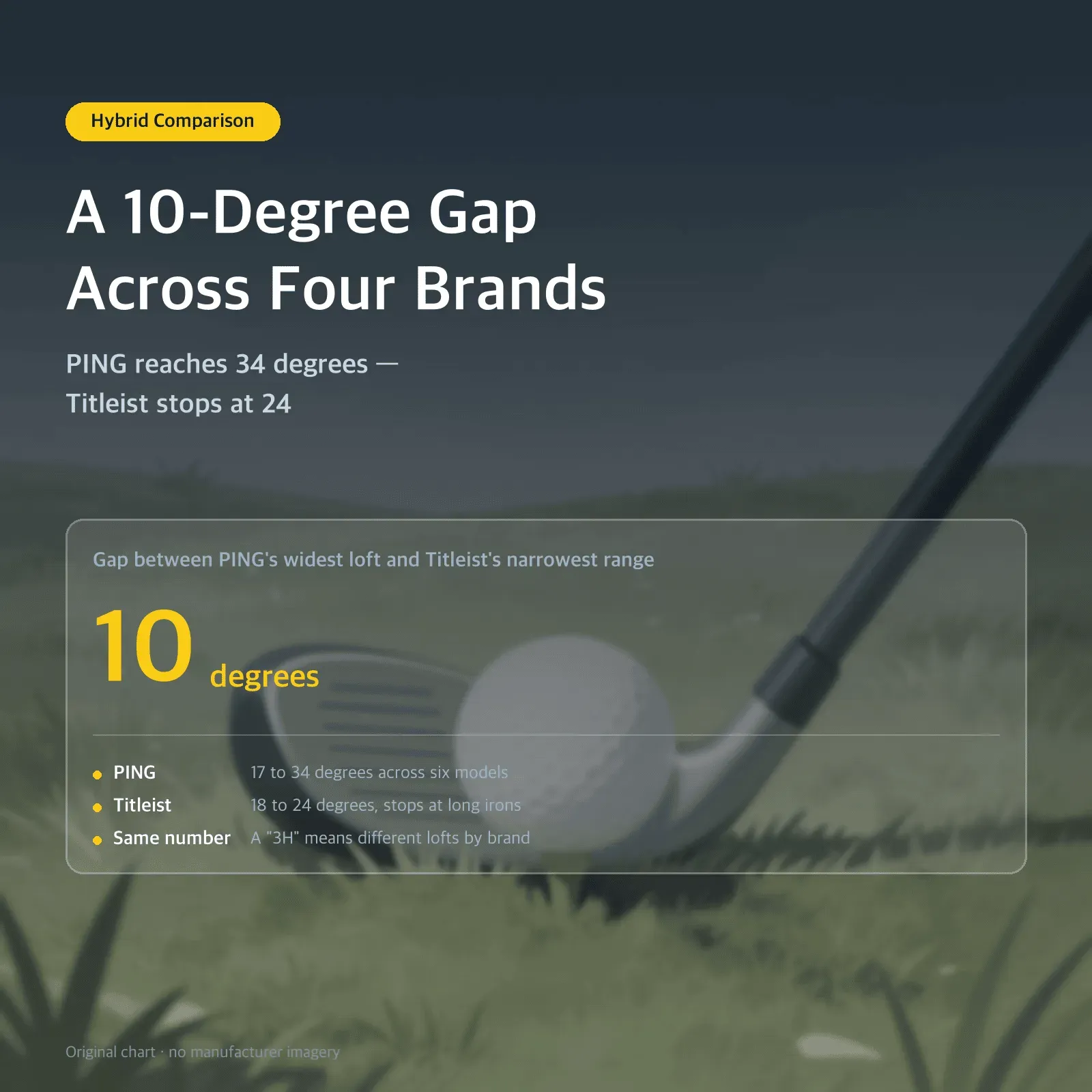
PING, Titleist, TaylorMade, and Callaway all sell hybrids, but where each brand draws the category's boundary differs by more than 10 degrees of loft.

Ping's spec sheet lists a matching wood for the 2H through 4H — then the column goes blank at 5H. Past that loft, no fairway wood exists to fill the gap.
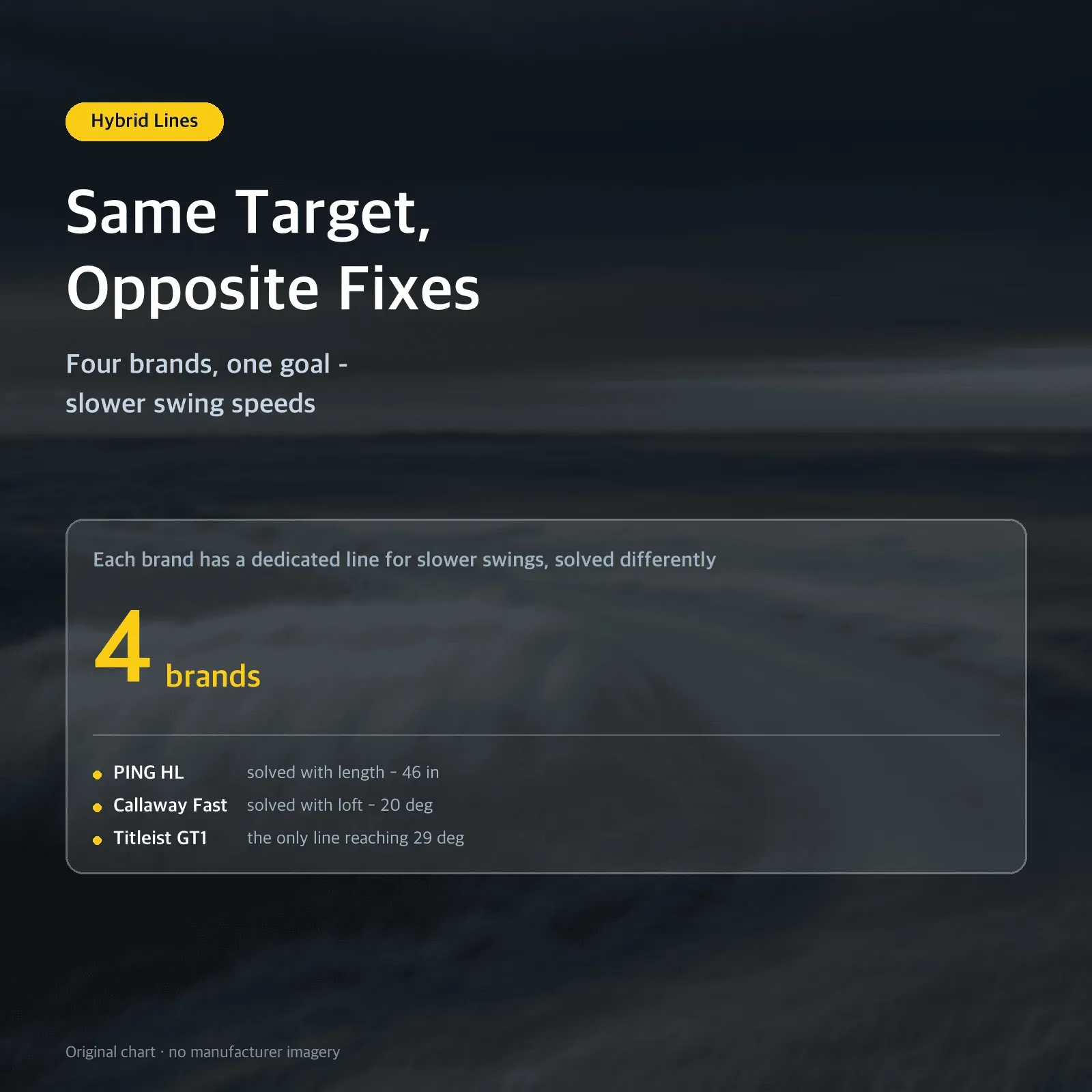
PING's HL, Callaway's Max Fast, TaylorMade's Max Lite, and Titleist's GT1 target slower swings — one adds length, another adds loft, opposite trade-offs.
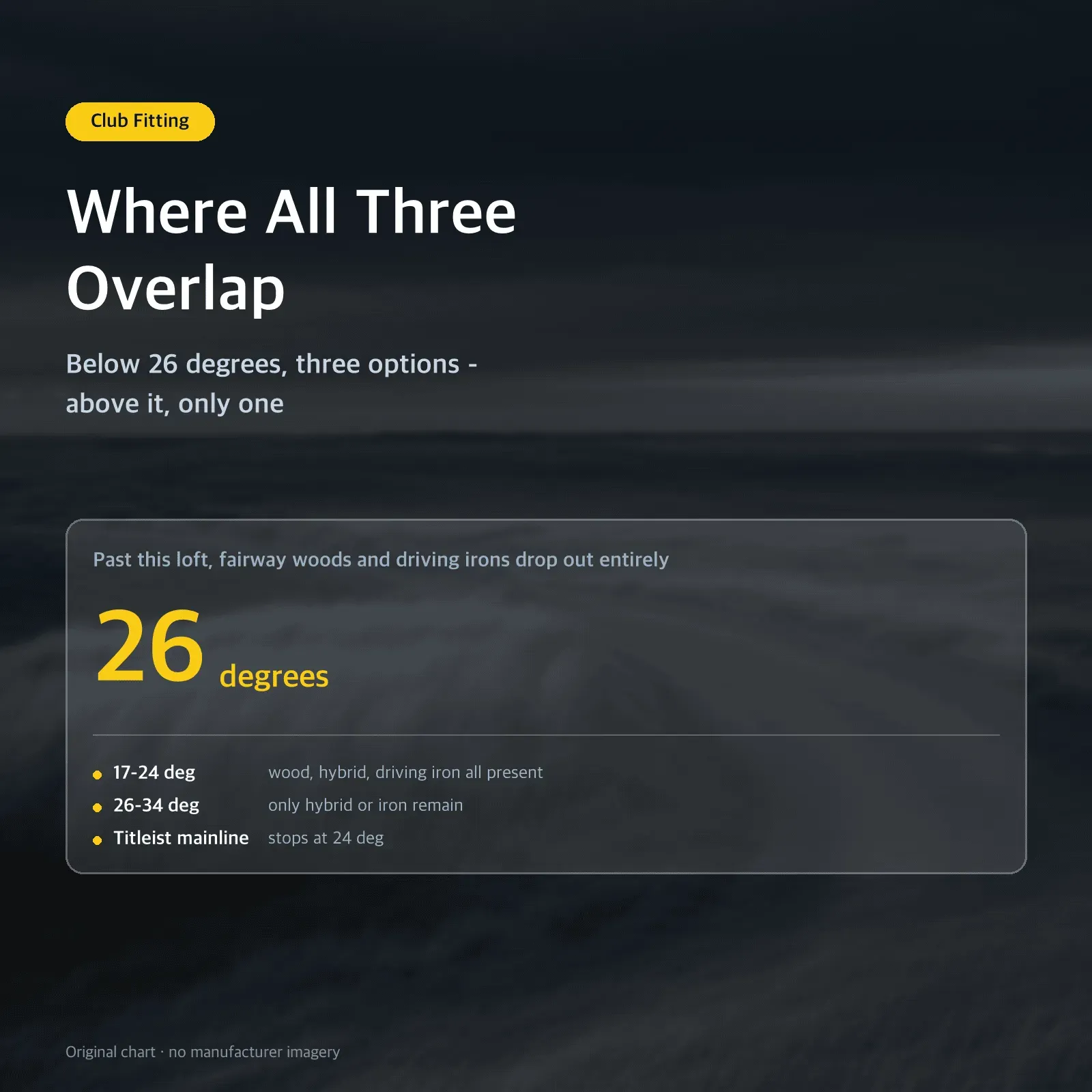
Overlaying official lofts for hybrids, fairway woods, and driving irons shows a zone all three overlap, and a higher zone where only the hybrid remains.

Golfers avoid the word because they believe it spreads. That belief is real and documented. Whether it actually spreads is a separate, unconfirmed claim.

The D-Plane model behind modern launch monitors wasn't built by TrackMan. A physicist described it in 1994, twelve years before radar could confirm it.
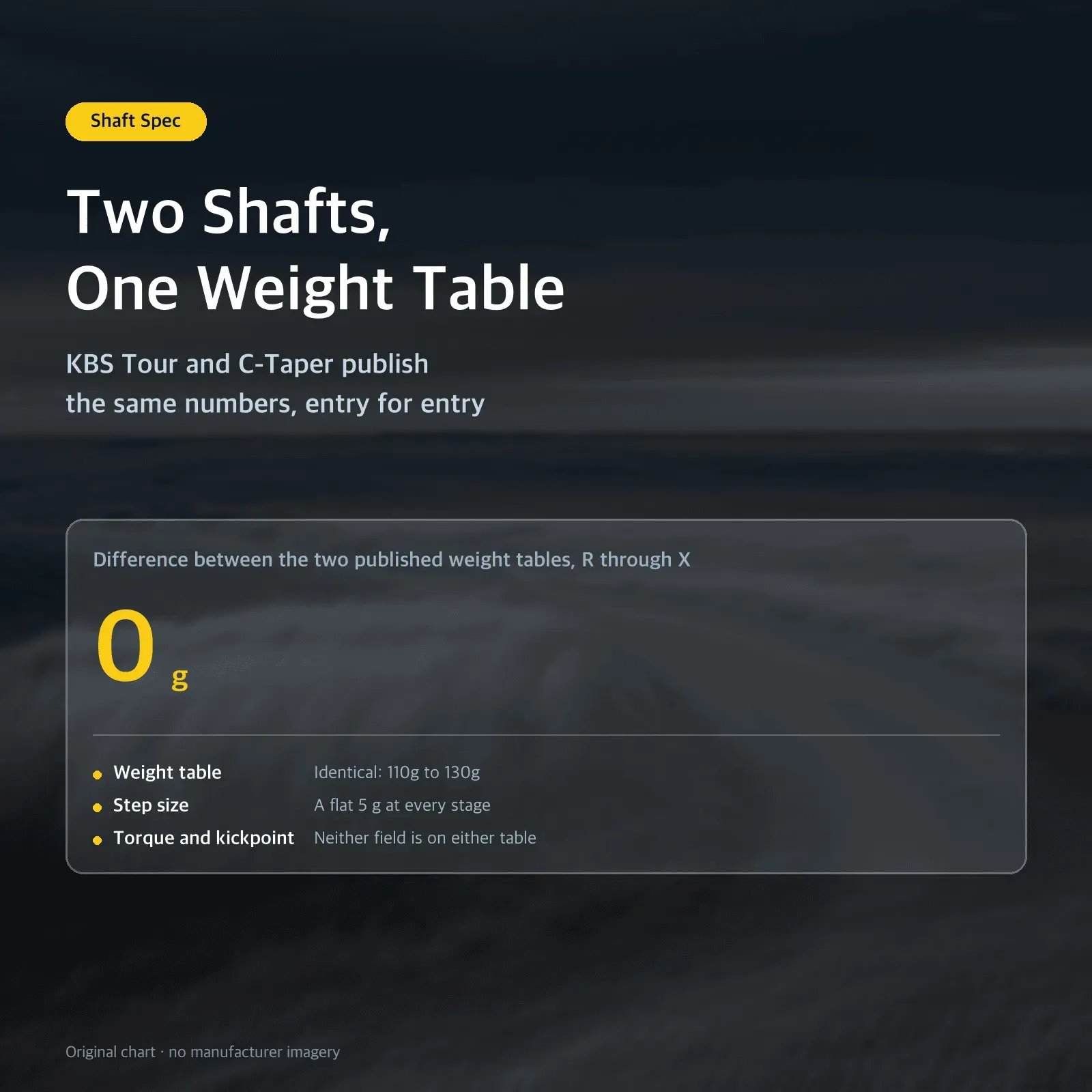
KBS sells Tour and C-Taper as distinct shafts, yet their published weight tables are identical from R to X, and neither lists torque or kickpoint.

Scotland banned golf in 1457, 1471, and 1491. In 1502 the king bought golf clubs and balls himself. Here is what the royal accounts actually show.