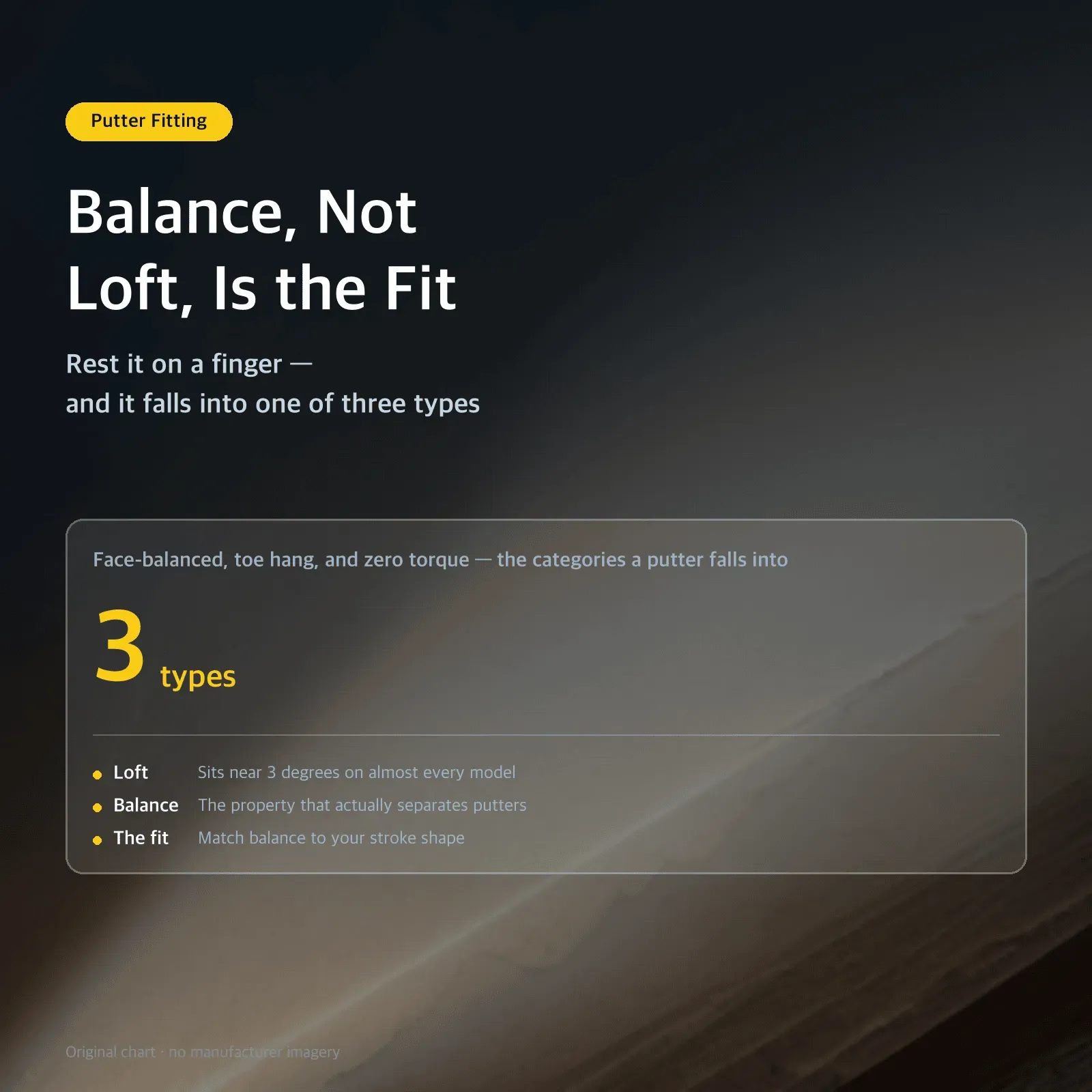
Putter Balance: Fit to Balance, Not Loft
Putters are chosen by balance type, not loft. How face-balanced, toe-hang and zero-torque putters match different stroke shapes, and how to find yours.
Page 6 / 12
Putters are chosen by balance type, not loft. How face-balanced, toe-hang and zero-torque putters match different stroke shapes, and how to find yours.
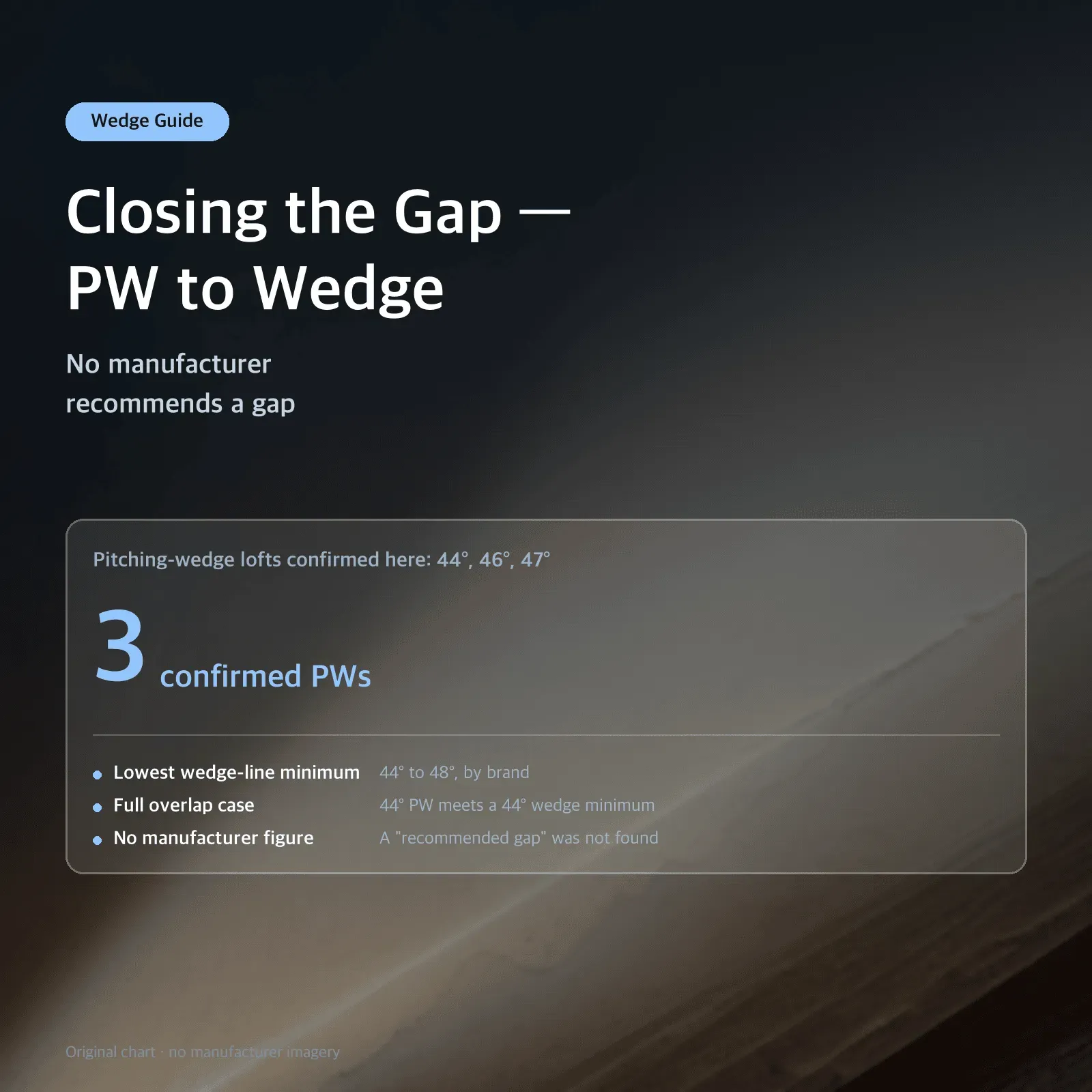
Iron sets stop at the PW and the gap to your wedges must be filled separately. Four brands publish full wedge spec tables; none of them recommends a gap.
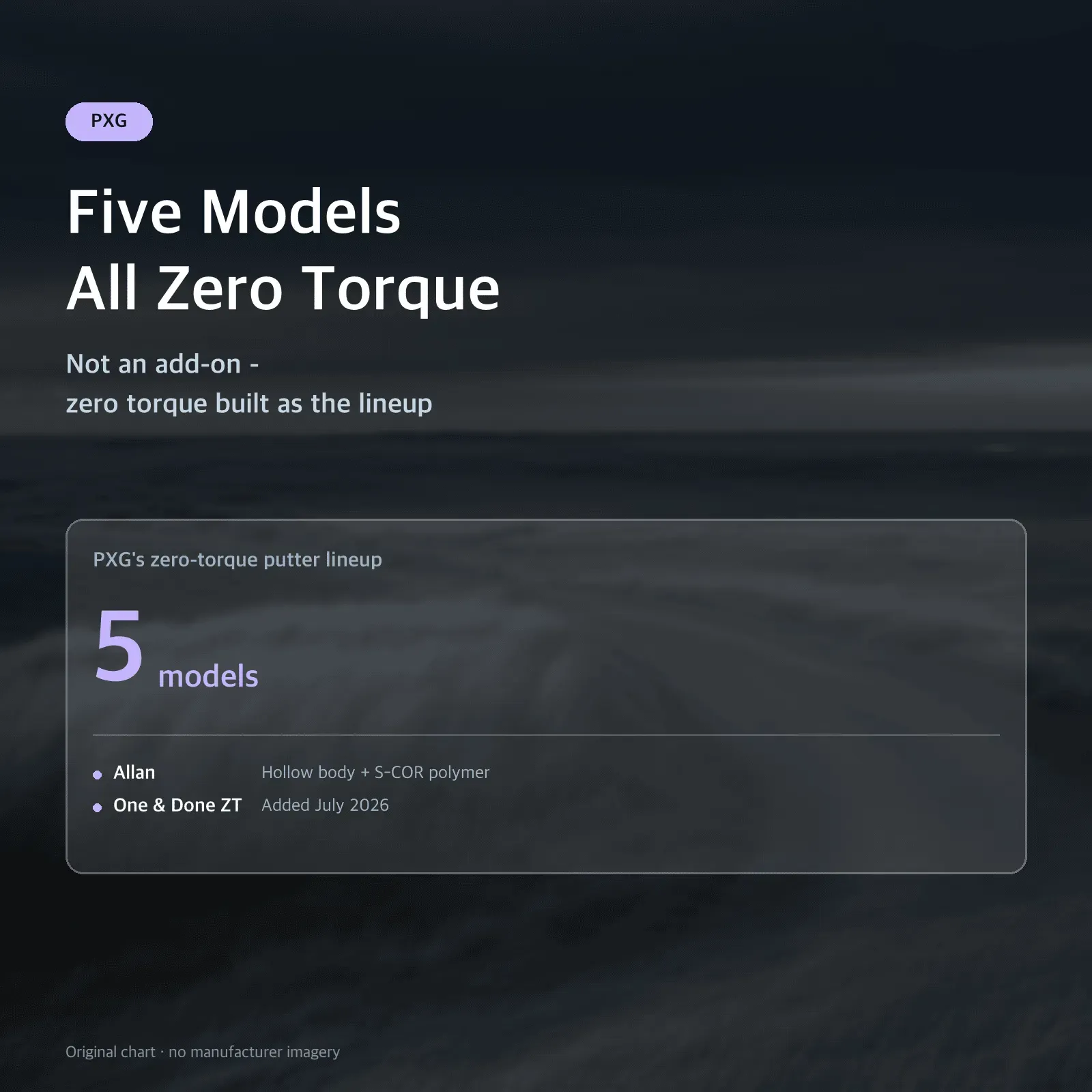
Most brands bolt one or two zero-torque models onto an existing line. PXG built six from the start, including a center-shafted Hot Rod ZT.
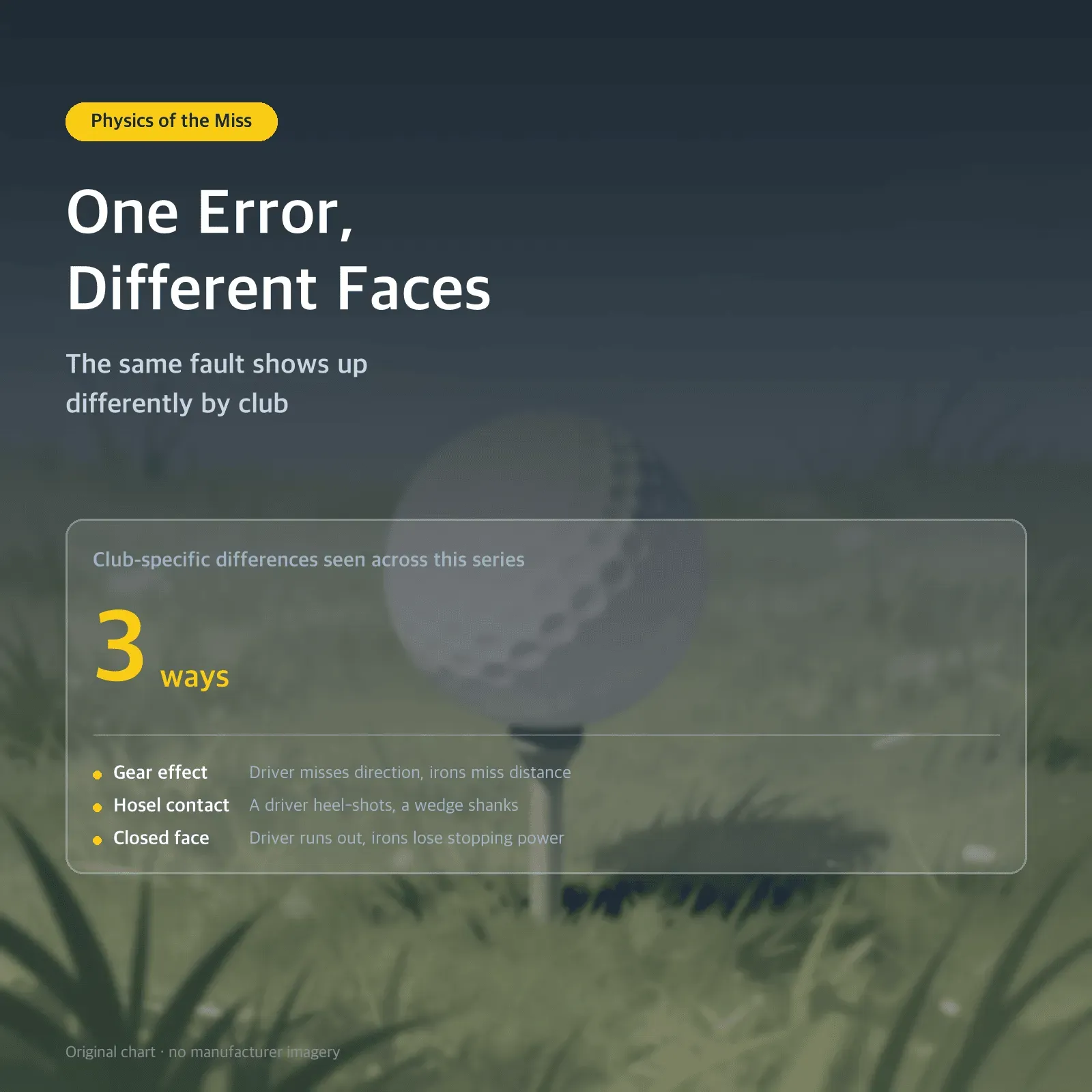
One swing fault shows up as a direction miss with a driver and a distance miss with an iron. Three earlier threads pulled together by club, not miss type.

The Schenectady putter, a center-shafted design, was banned by the R&A in 1910. The USGA refused to follow — golf's first documented rules split.
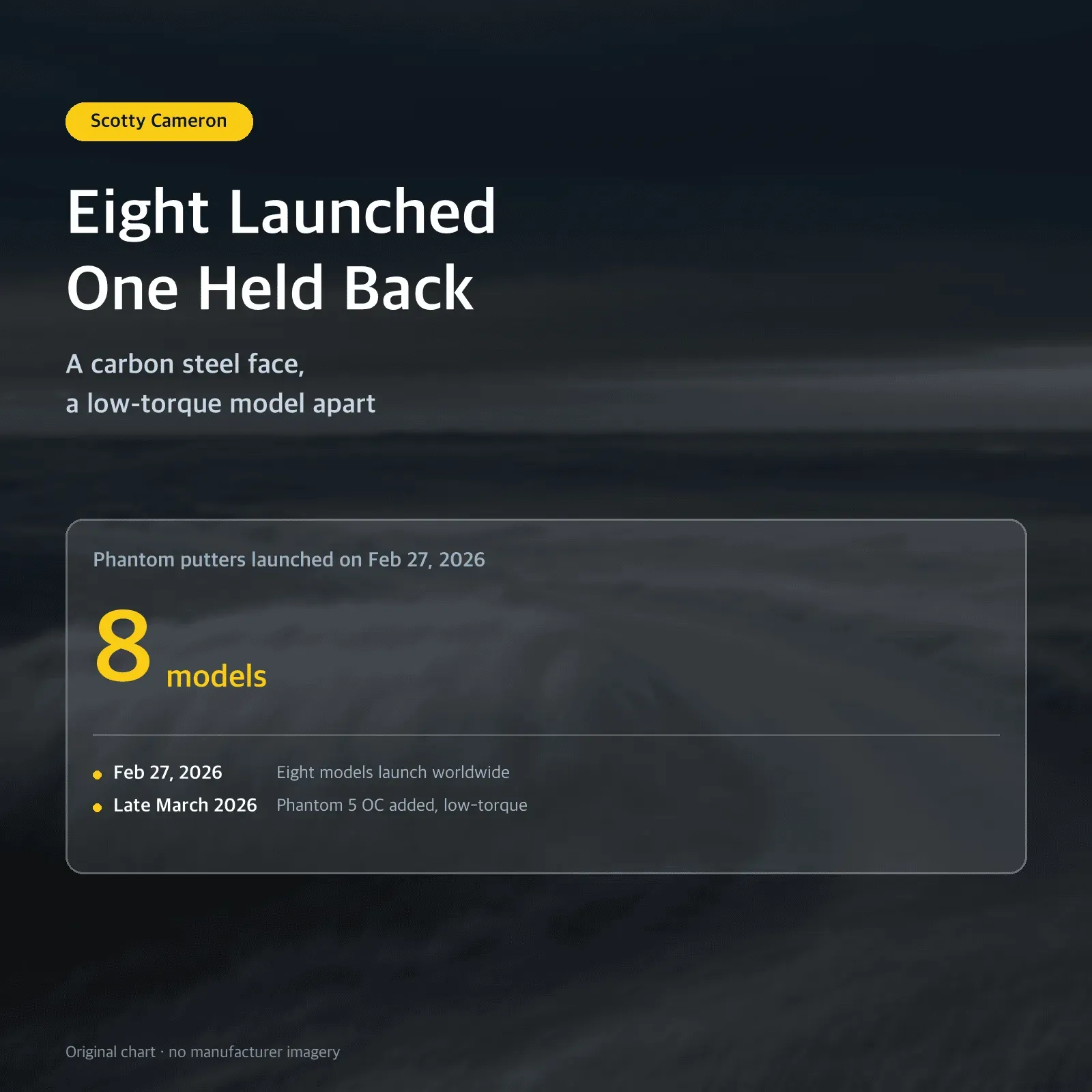
The 2026 Phantom line launched eight mallet putters worldwide on one day — except the low-torque model, which arrived a month later.
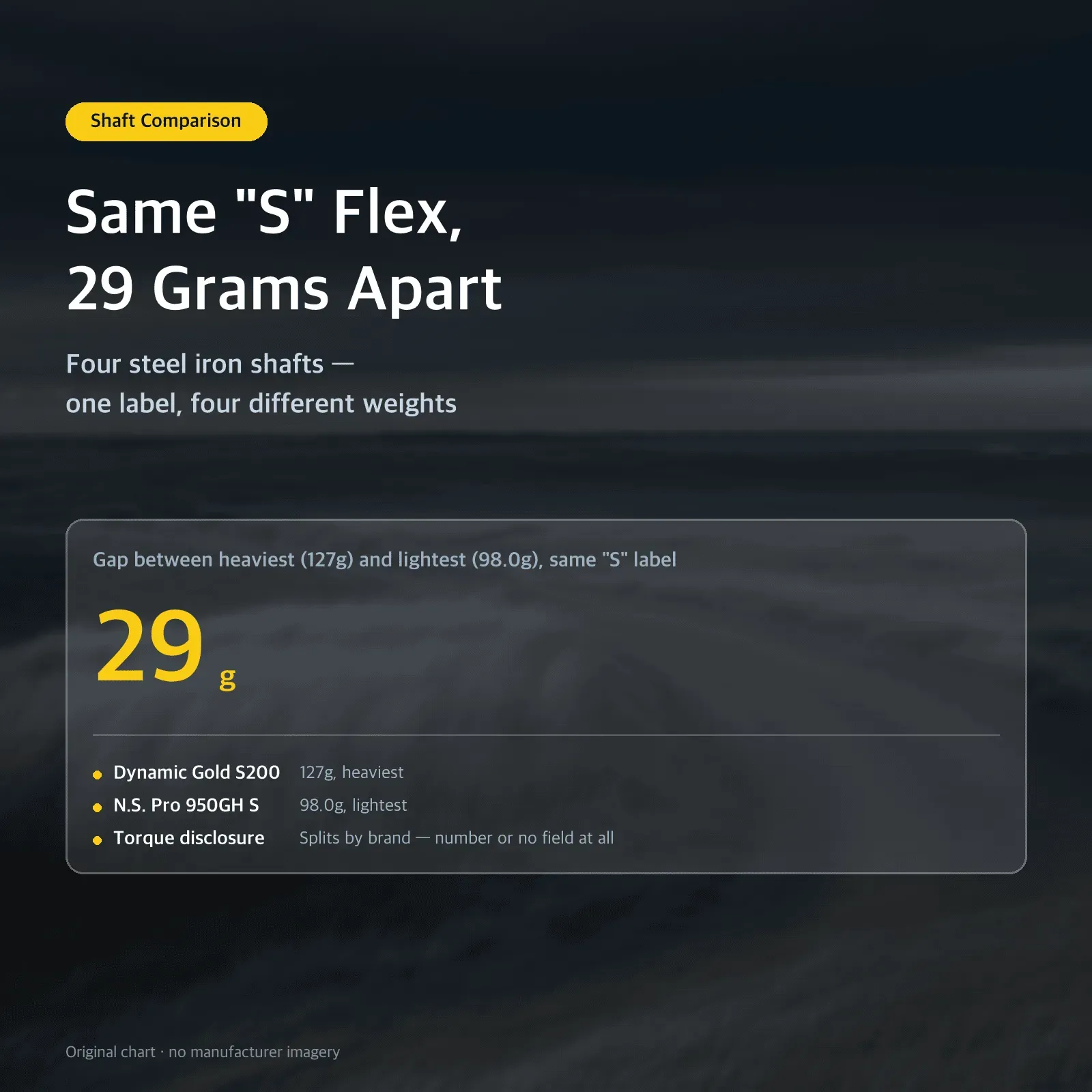
True Temper, KBS Tour, N.S. Pro 950GH, and MODUS3 TOUR 120 all carry an 'S' flex label — but their actual weights span a 29-gram range.
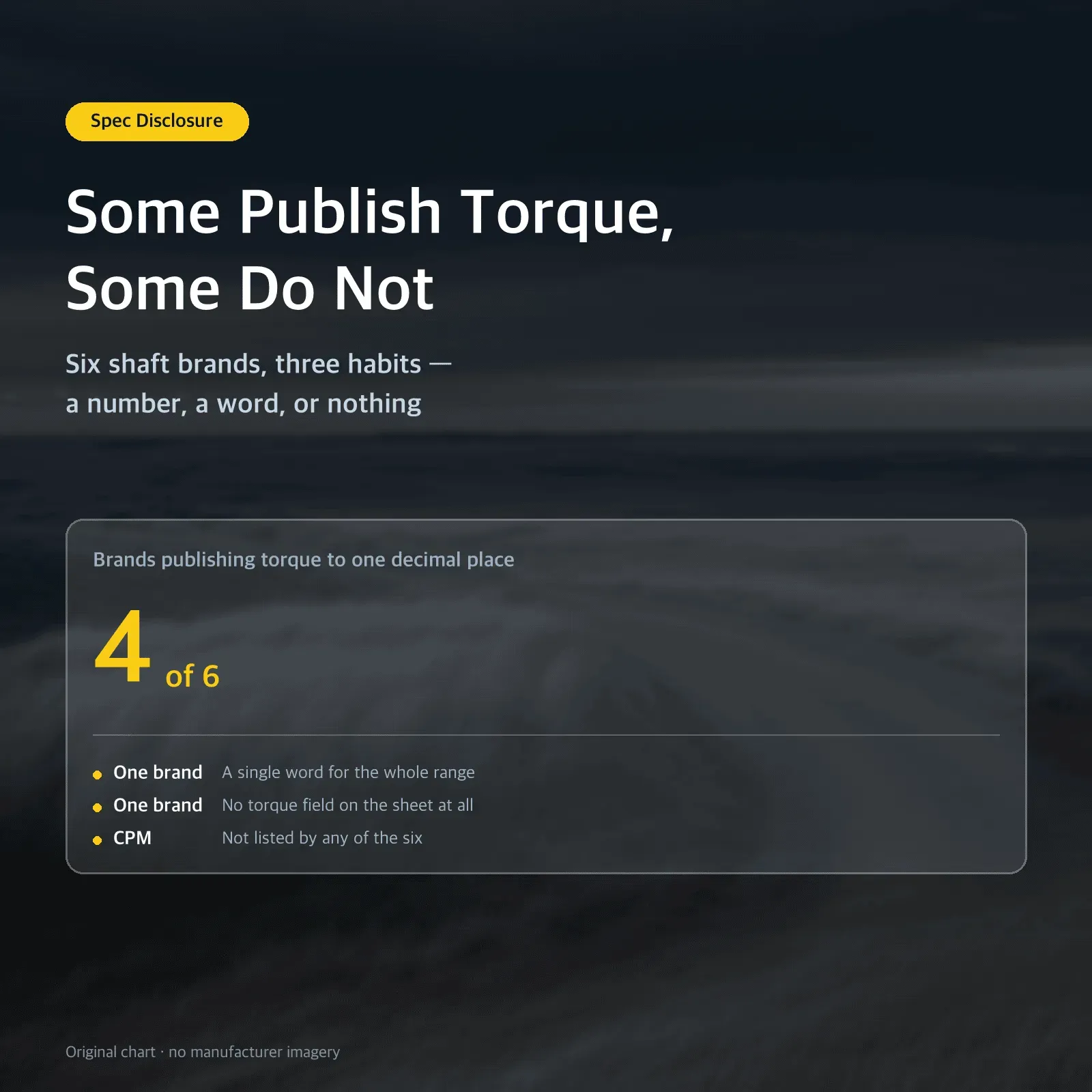
Across six shaft brands, torque is published to one decimal by four, given only as the word Low by True Temper, and left off the sheet entirely by KBS.
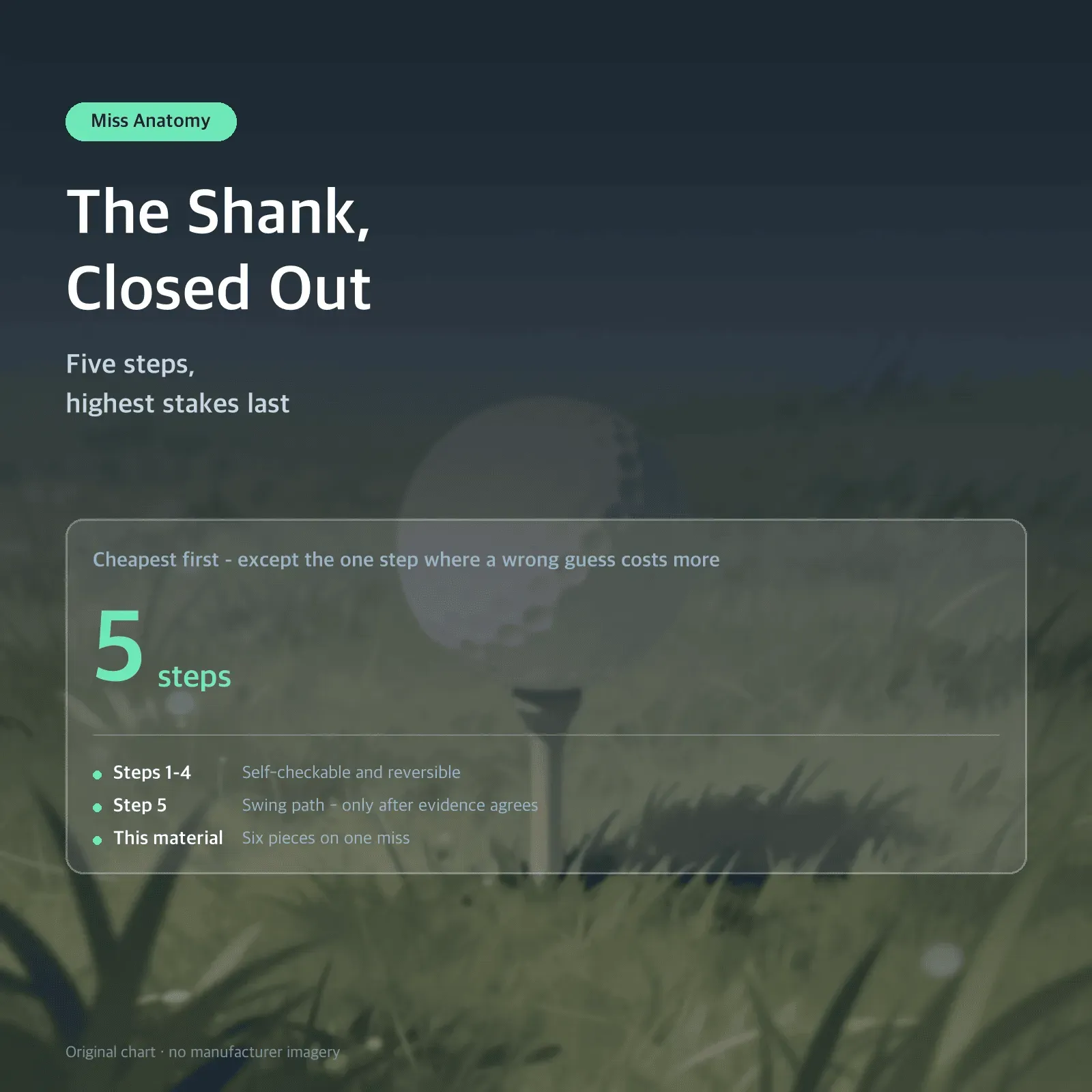
A five-step sequence for isolating a shank's cause, with a twist on 'cheapest first': the highest-stakes step comes last, on purpose.
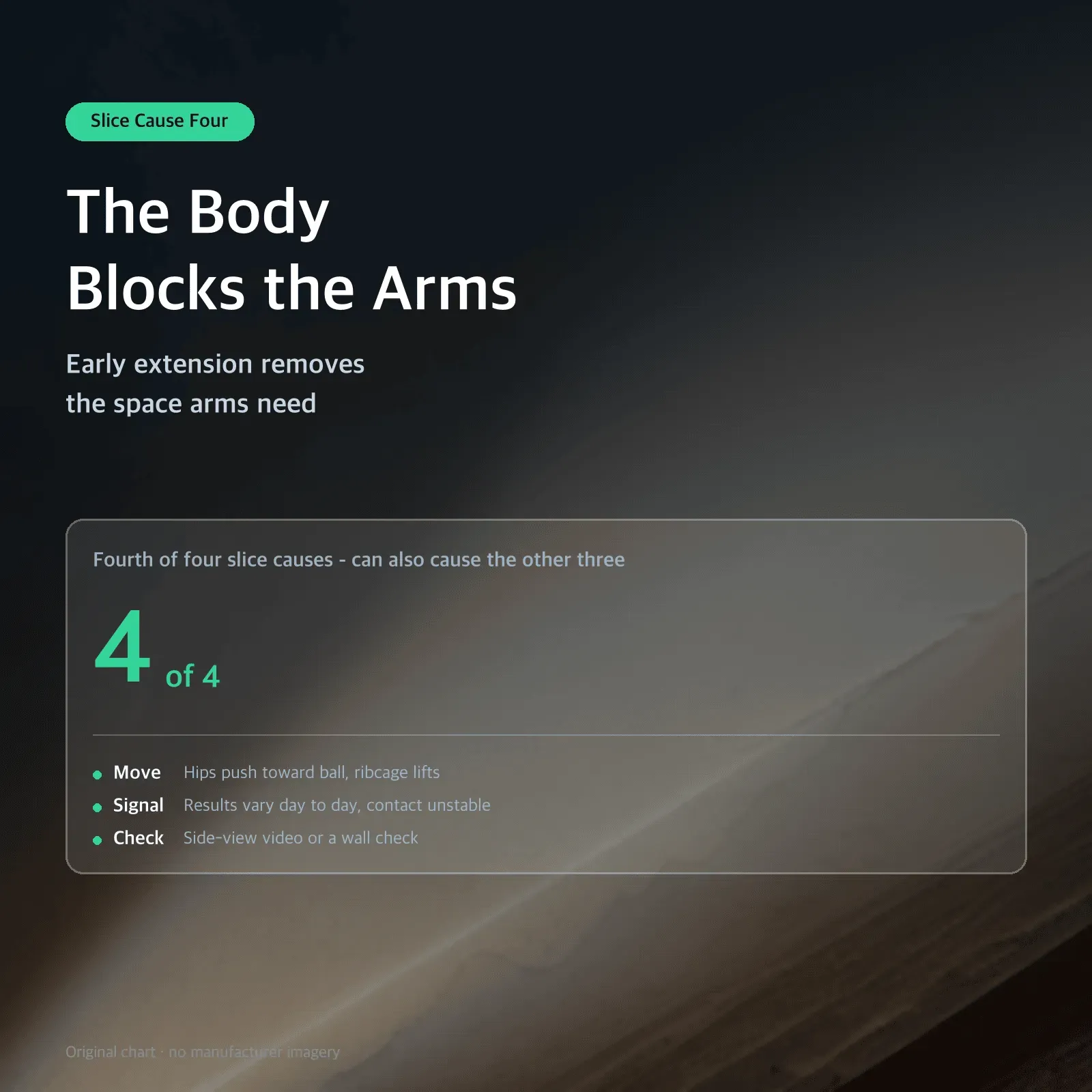
Early extension, the most common fault in amateurs, doesn't break the face or path directly — it removes the space the arms need.
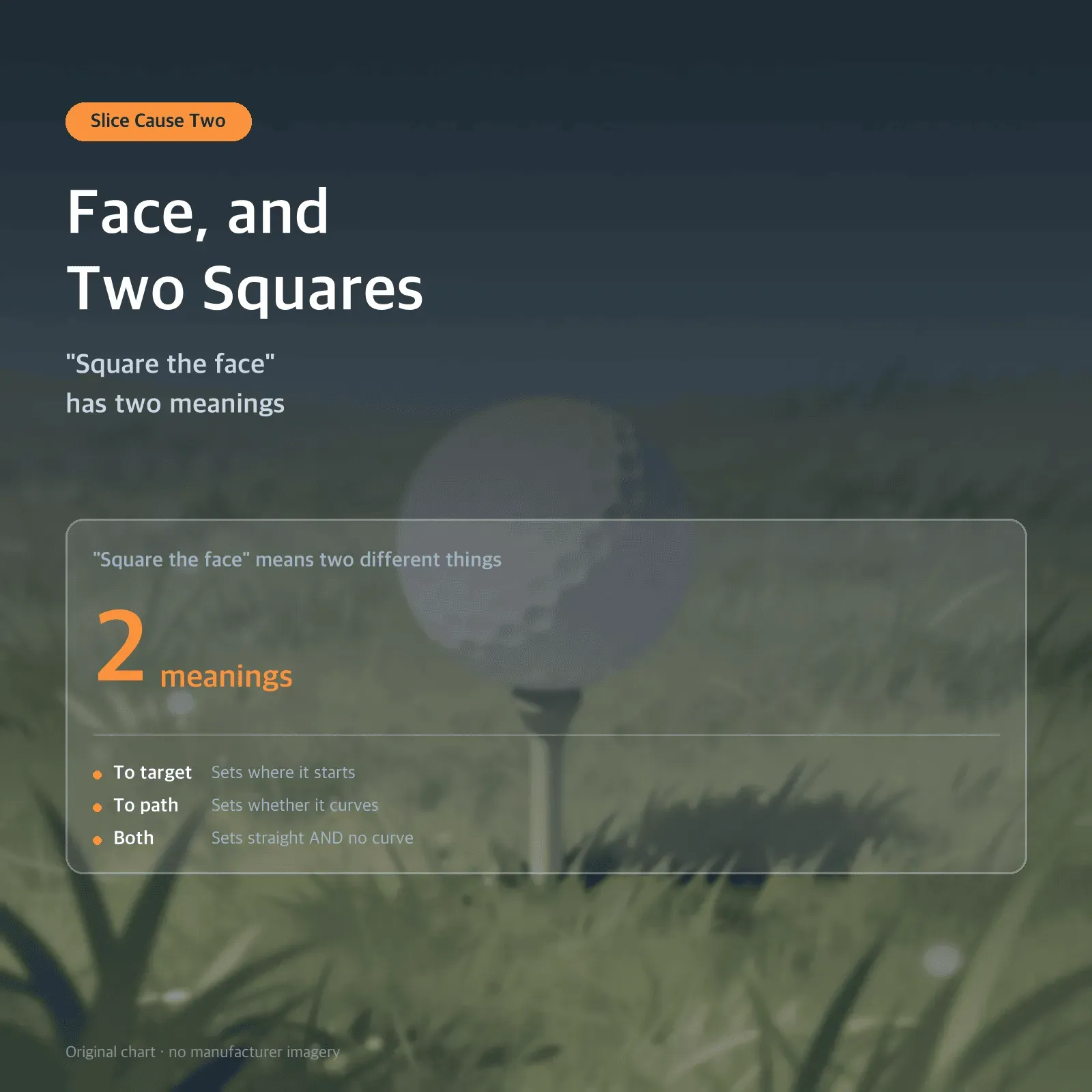
'Square the face' usually means square to the target — but the curve is set by square to the path. That distinction changes diagnosis and the fix.
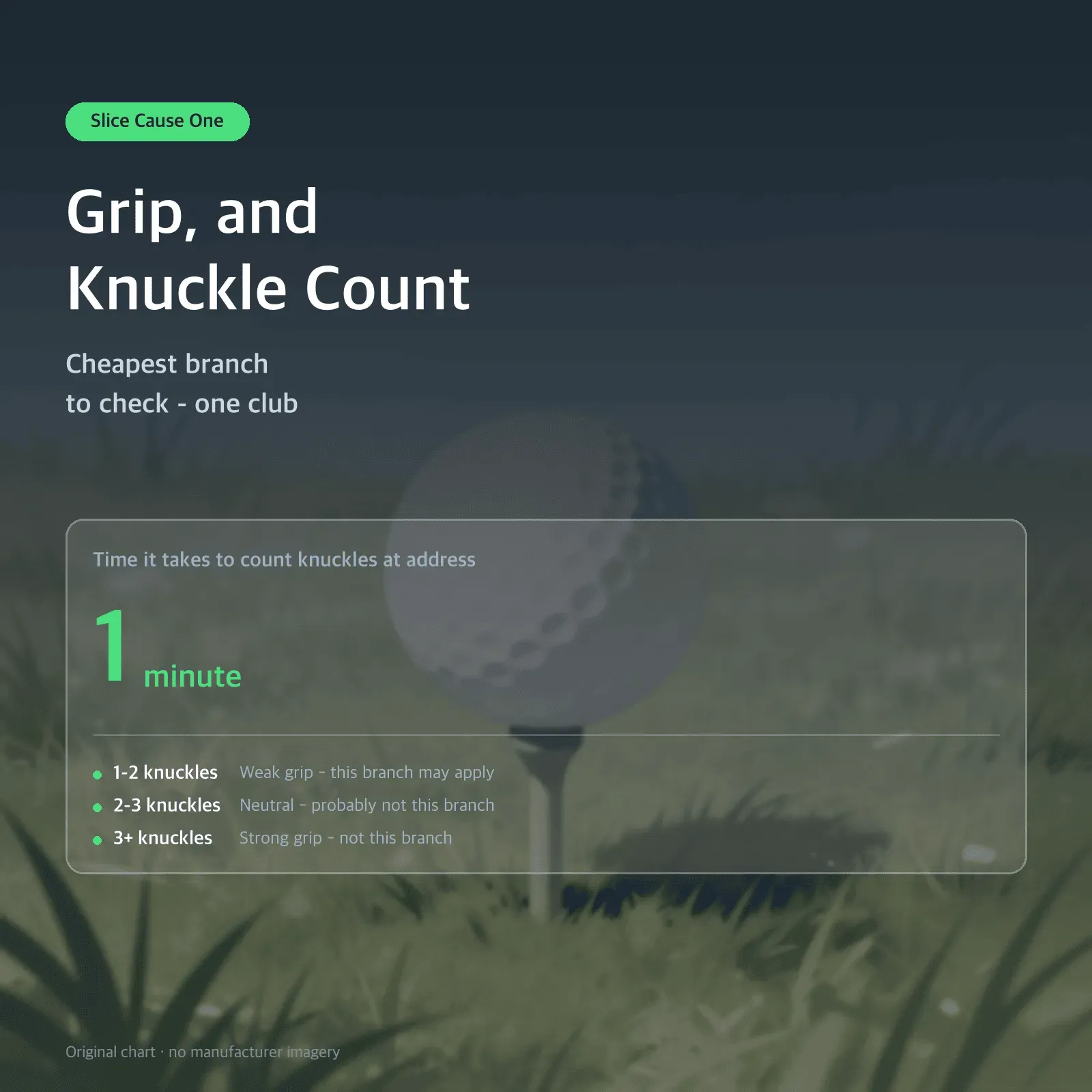
A weak grip forces the forearms to rotate more than downswing time allows, so the face often arrives open. Here's how to check it in under a minute.
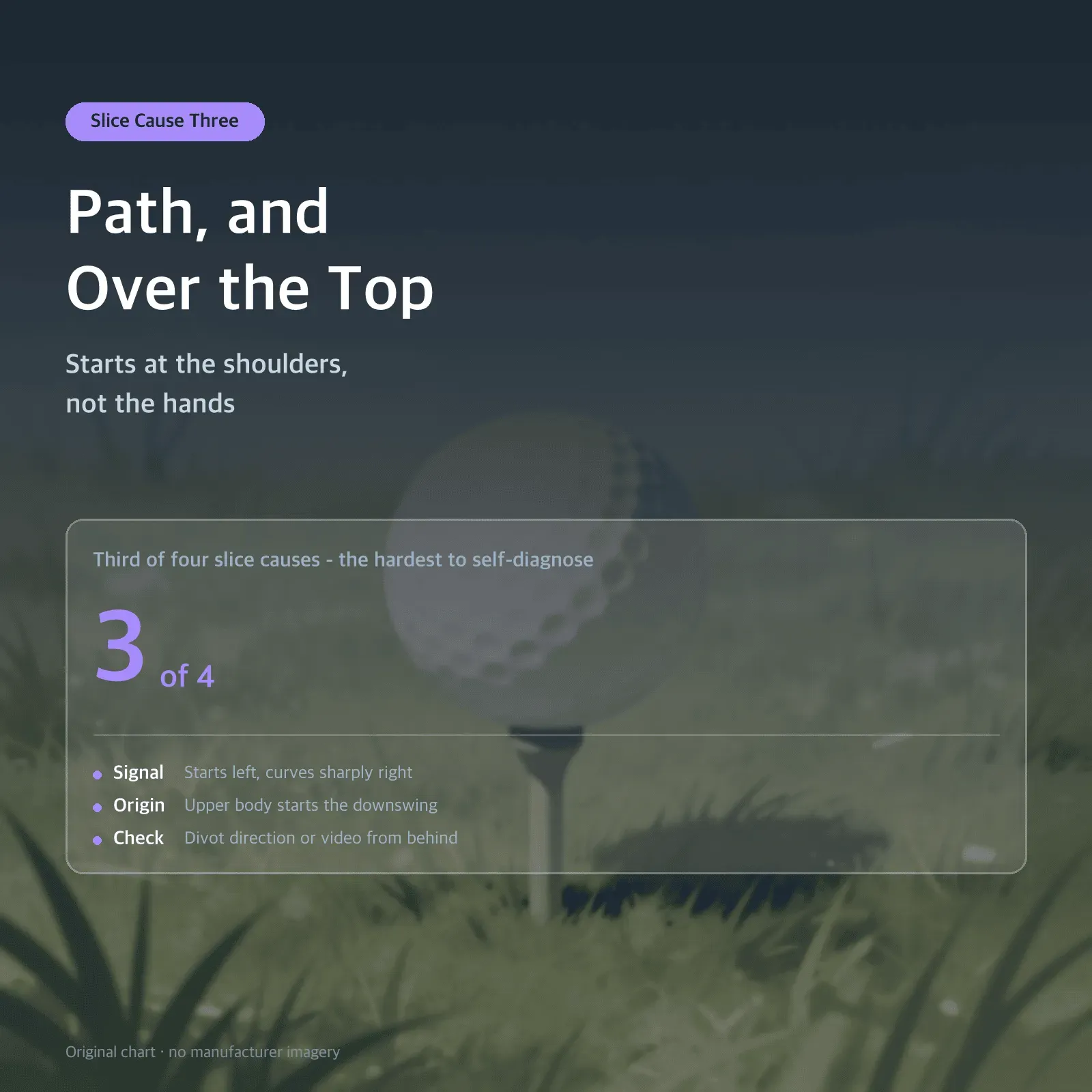
An out-to-in path isn't a slice by itself, and this branch shows the opposite starting direction from the first two. Here's how to tell, and the fix.
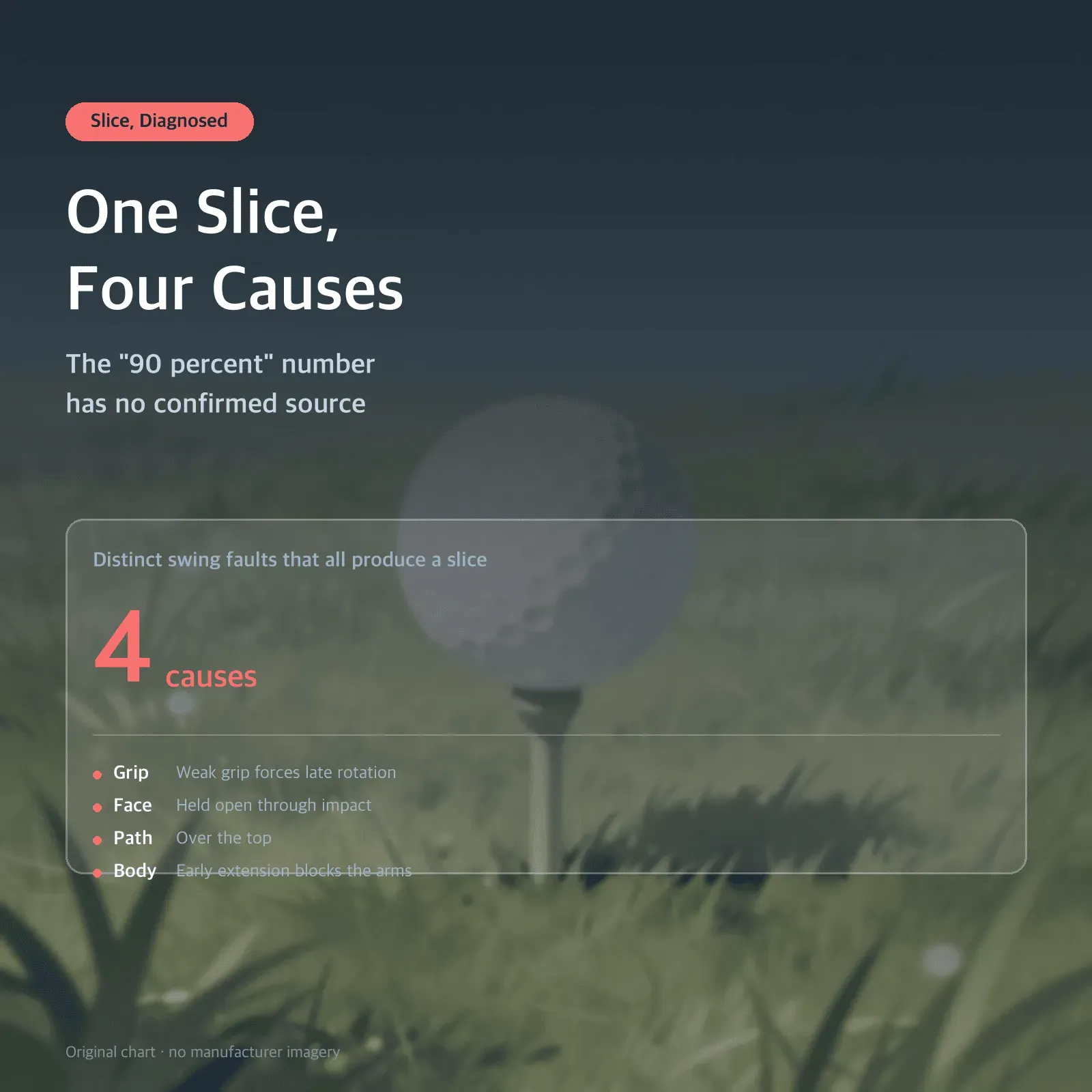
A slice always shares the same definition, but not the same cause. Four distinct faults produce it, and the '90% of golfers slice' claim doesn't hold up.
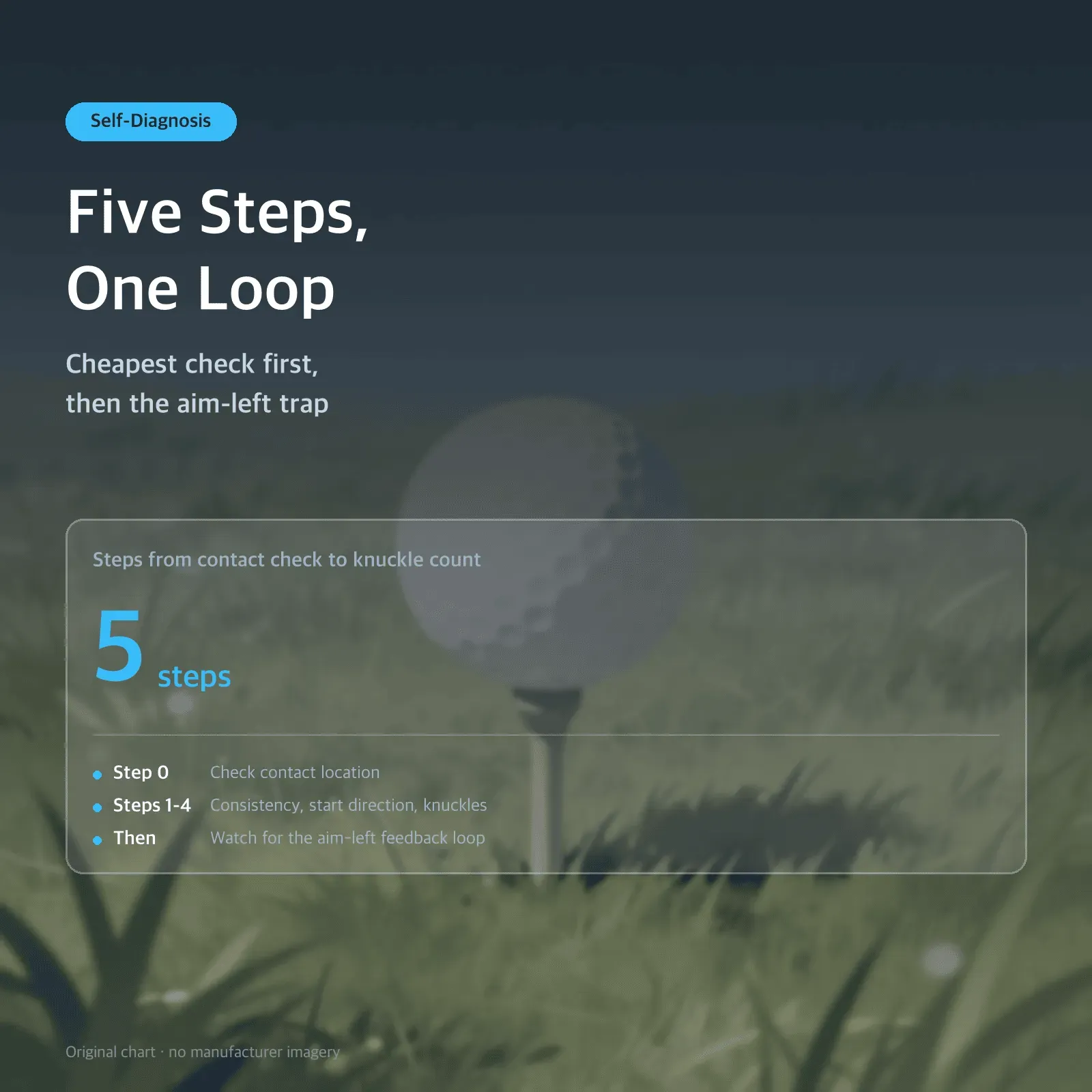
A five-step order for sorting a slice into one of four branches, plus why aiming left to survive a round quietly makes the underlying problem worse.
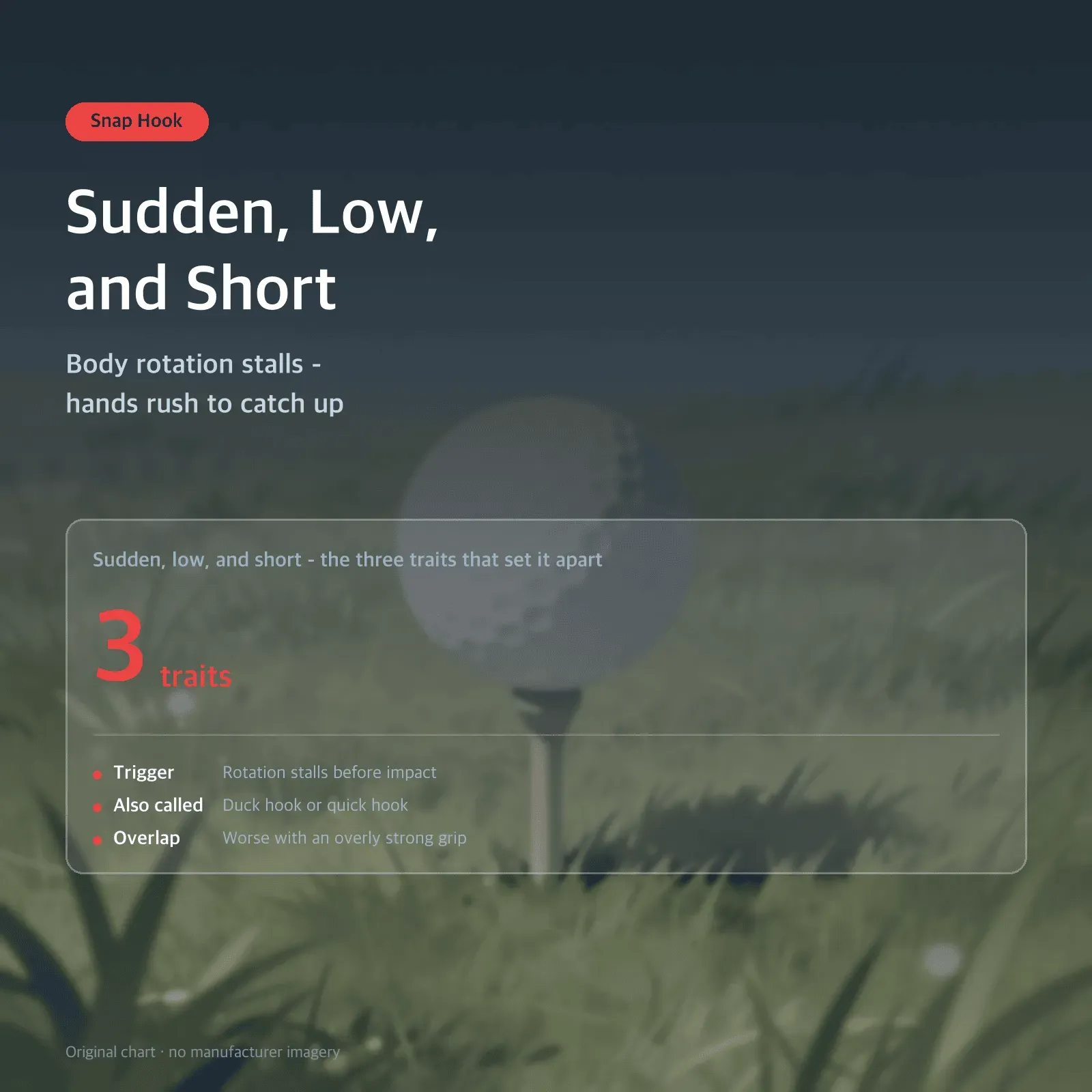
A snap hook looks different from a regular hook: sudden, low, short. The common mechanism is a rotation that stalls, forcing the hands to catch up fast.
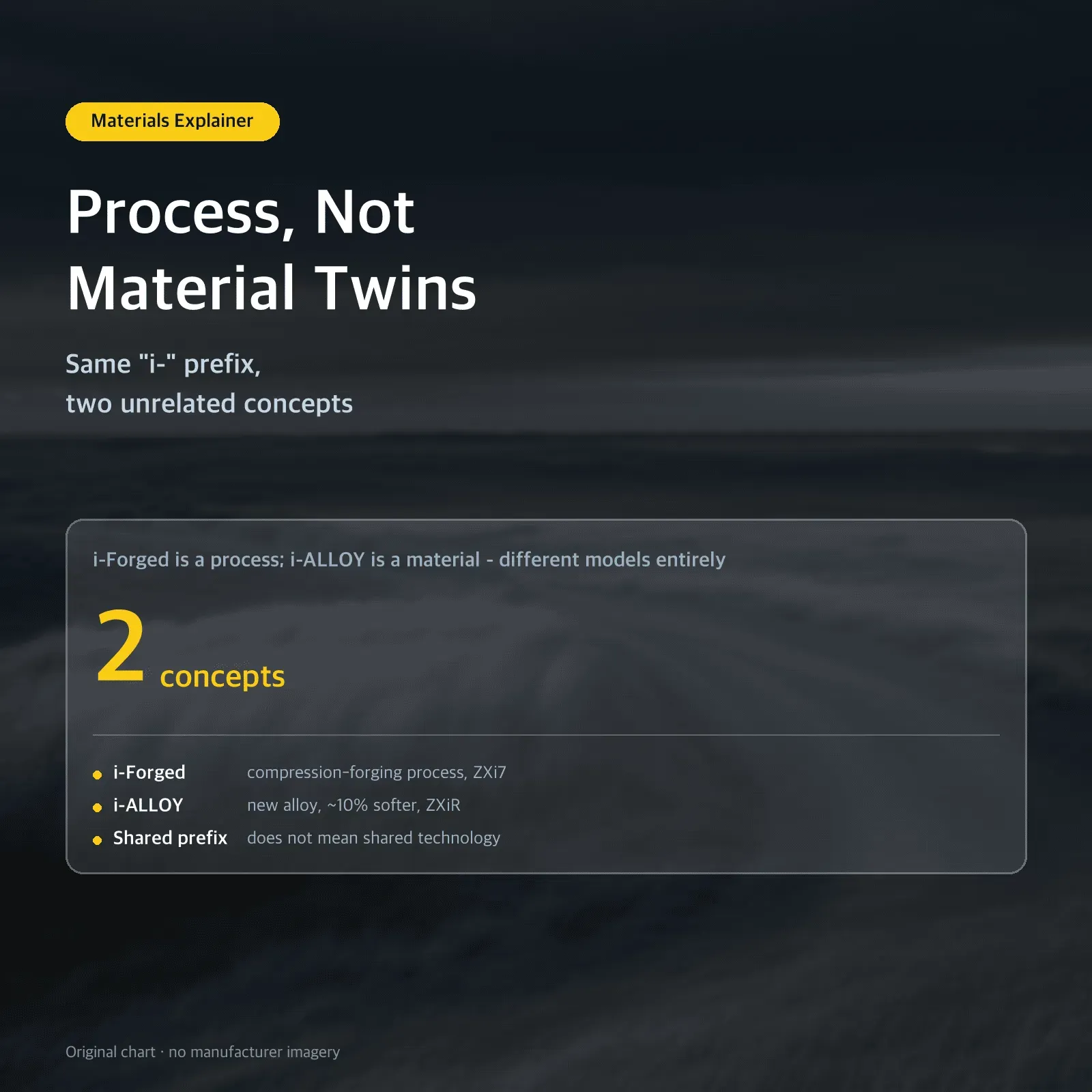
Srixon's i-Forged and i-ALLOY share an 'i-' prefix and get confused for one technology. One is a process, the other a material, applied to different irons.
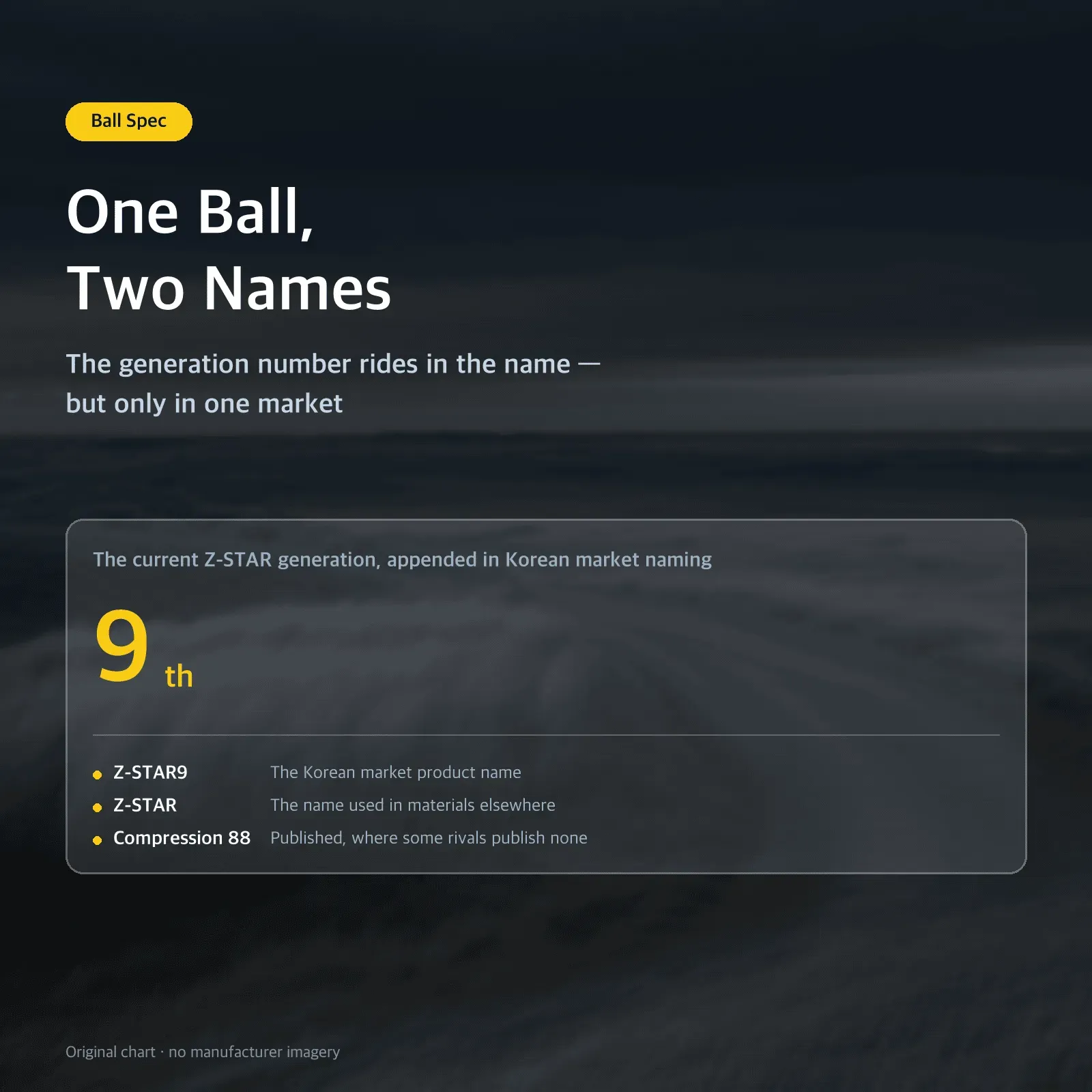
Srixon's ball is sold in Korea as Z-STAR9 and in global materials as Z-STAR. Same ball, different naming, plus what changed this generation.
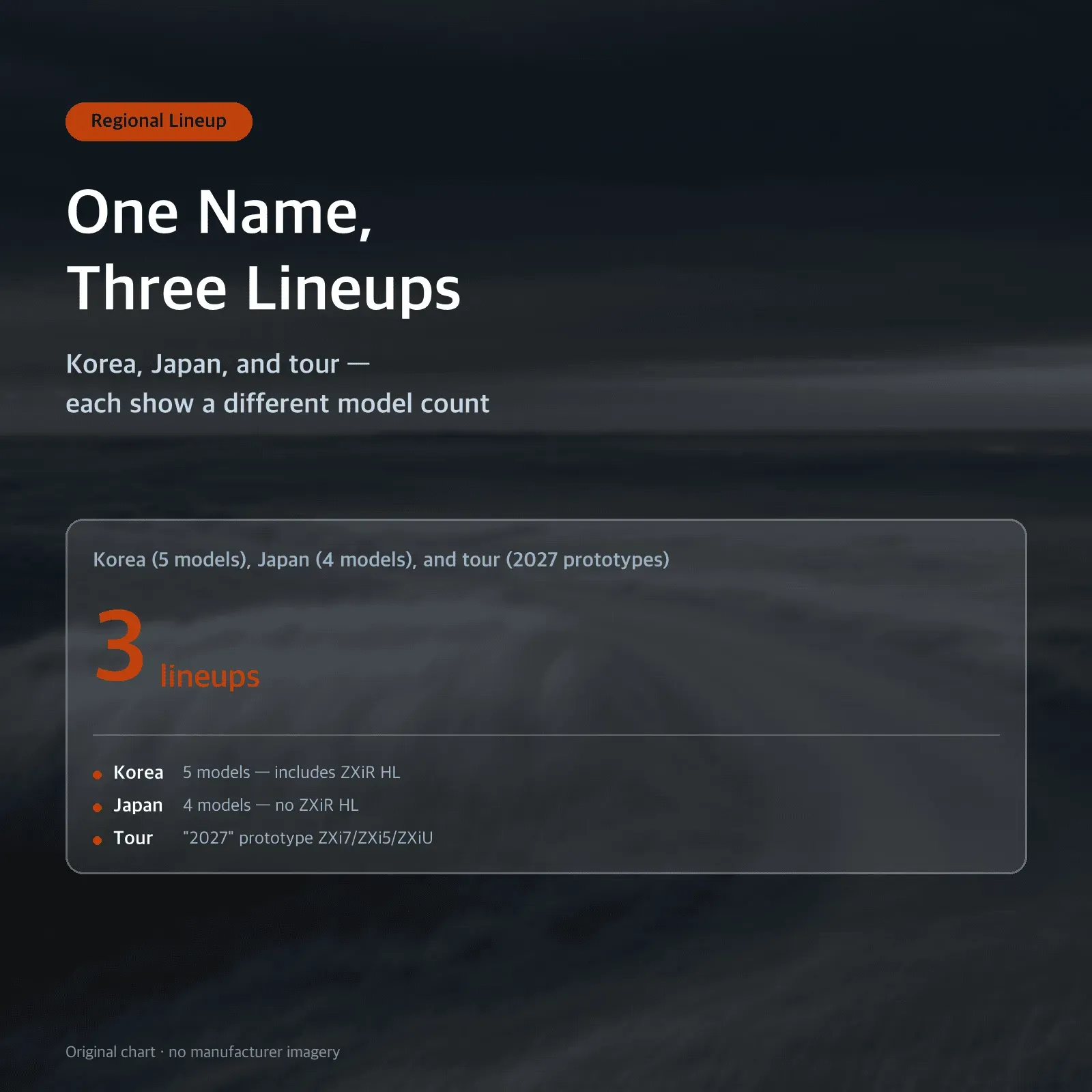
The Srixon ZXi lineup isn't one list. Korea, Japan, and tour each show a different count, and overlaying all three changes what 'current lineup' means.
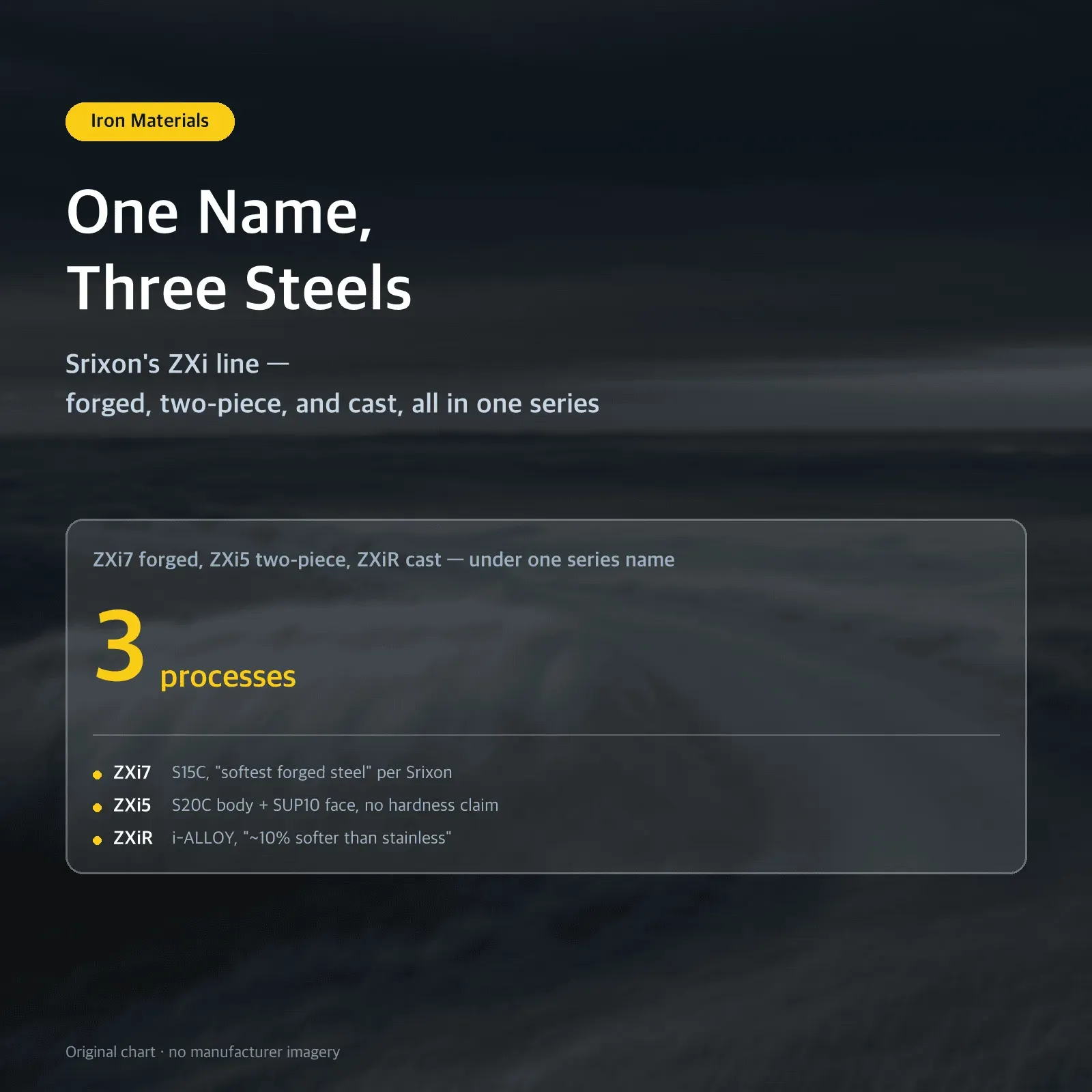
ZXi7, ZXi5, and ZXiR share a name, but forged, two-piece, and cast construction mean three different manufacturing philosophies in one series.
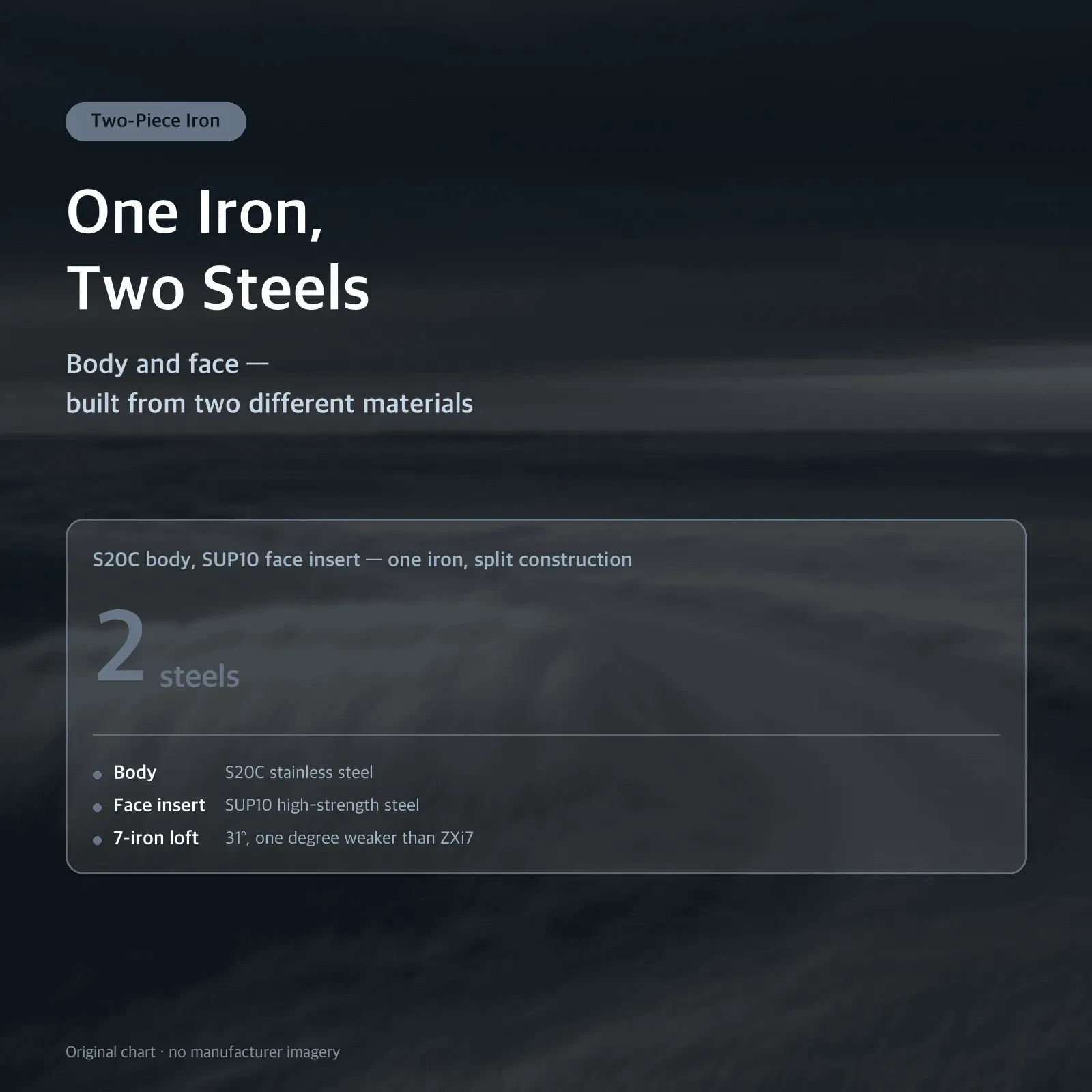
Iron heads are usually one material. ZXi5 splits body and face into two steels, between ZXi7's forged build and ZXiR's cast, new-material approach.