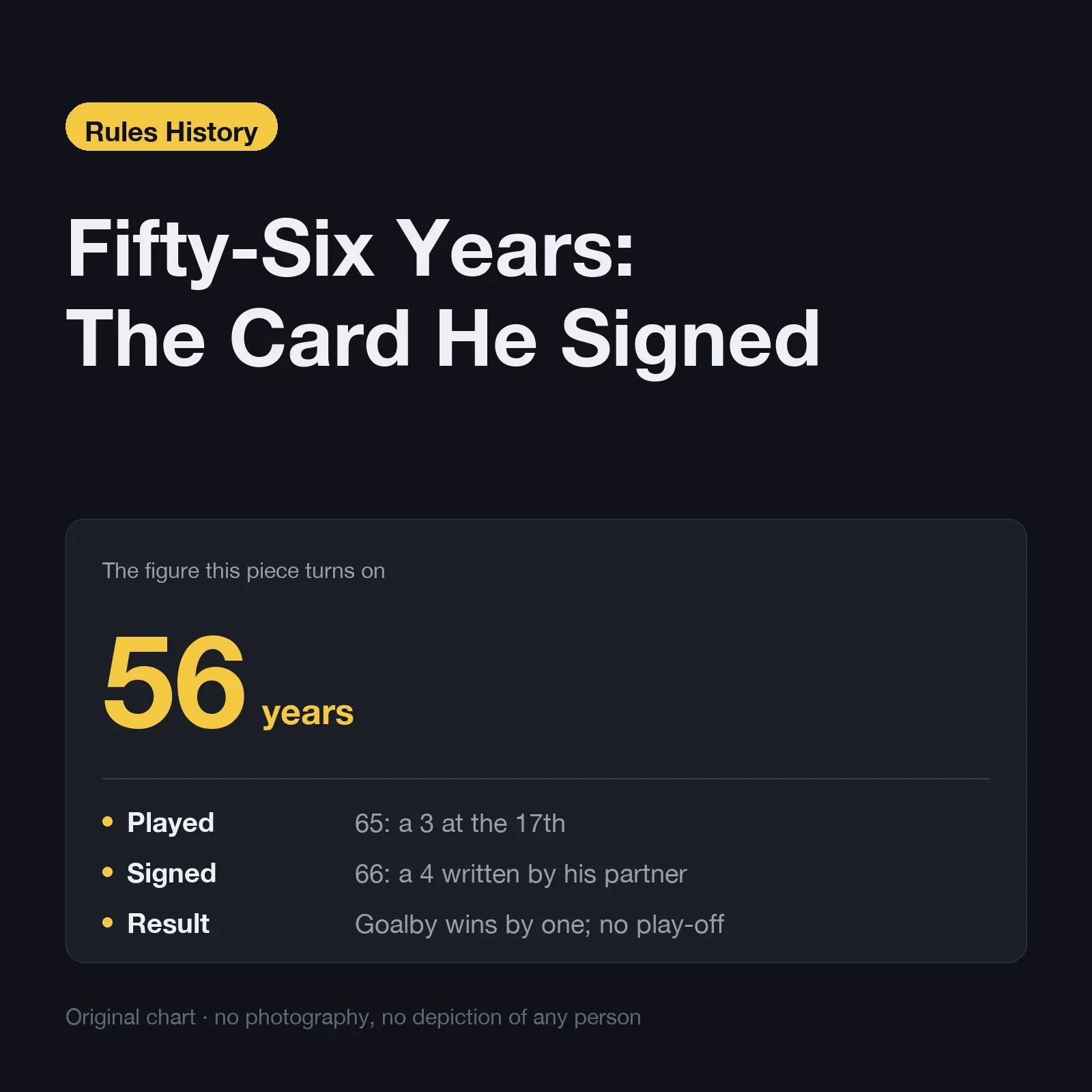
Fifty-Six Years: The Card De Vicenzo Signed
Roberto De Vicenzo shot 65 at the 1968 Masters on his 45th birthday. His partner wrote down a 4 where he had made a 3, and he signed it without looking.
36 posts
Roberto De Vicenzo shot 65 at the 1968 Masters on his 45th birthday. His partner wrote down a 4 where he had made a 3, and he signed it without looking.
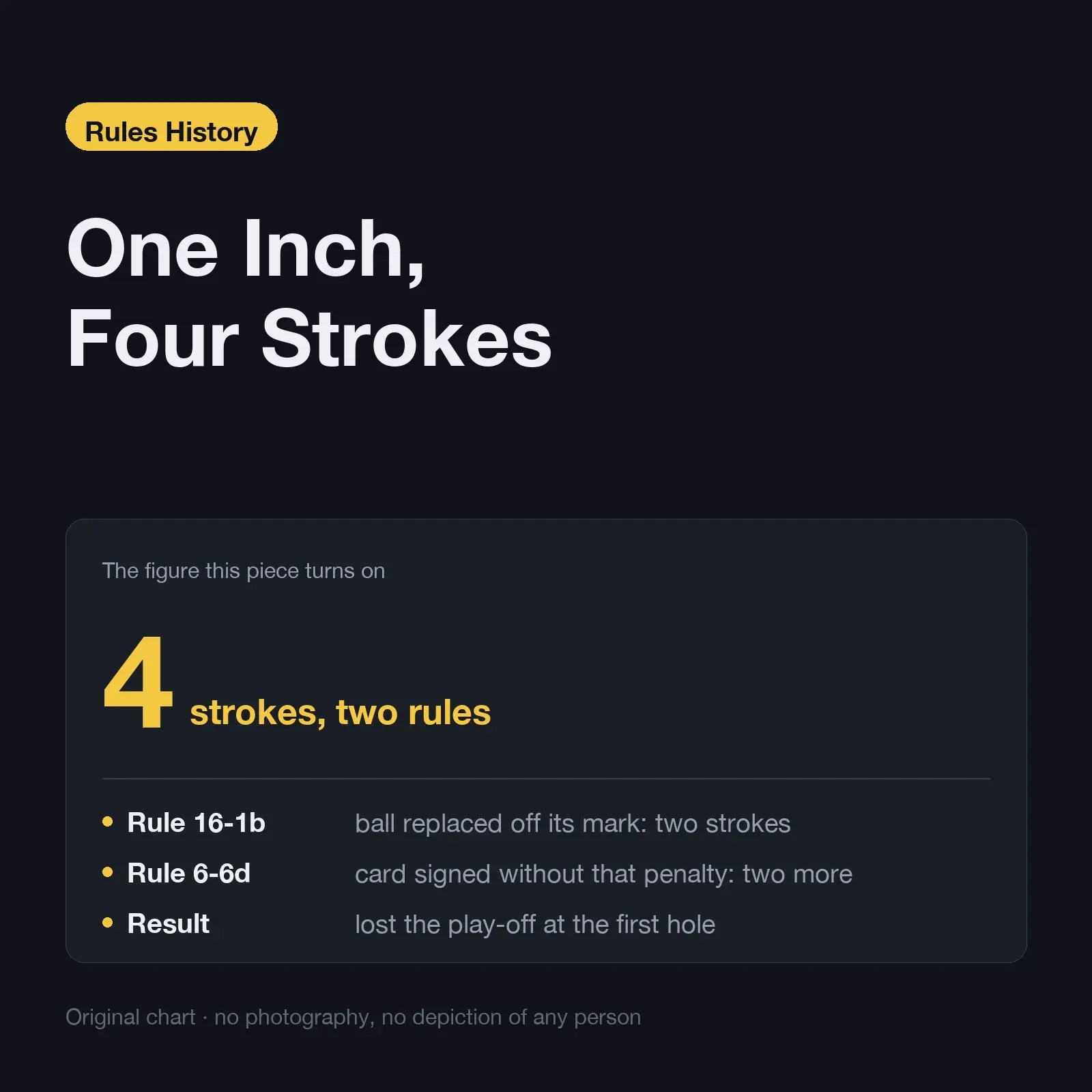
A viewer emailed the LPGA about a ball replaced slightly off its mark the previous day. Thompson learned of the four-stroke penalty walking to the 13th tee.
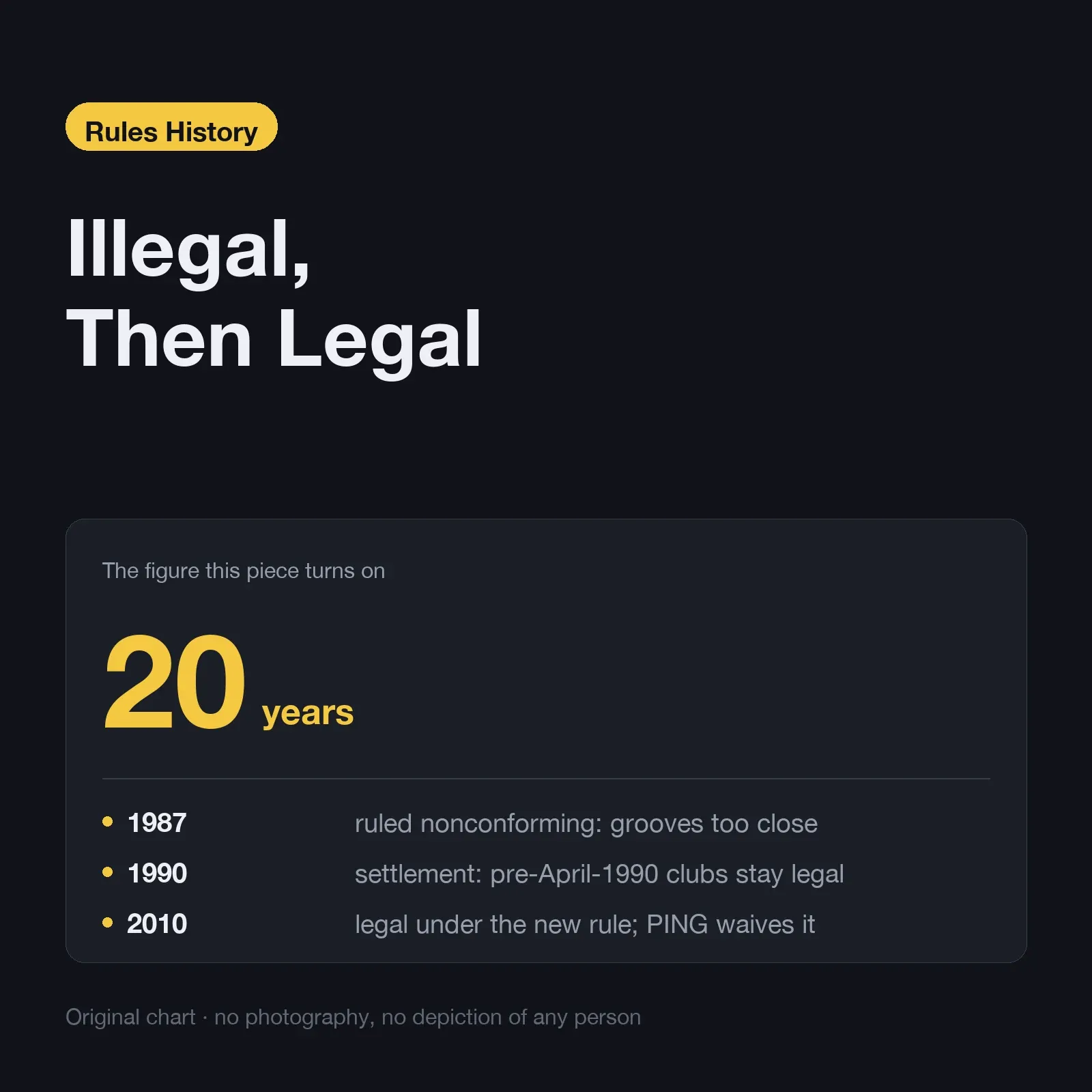
Ruled nonconforming in 1987 for grooves too close together. In 2010 the same club was legal because they were too far apart, and only PING could close it.
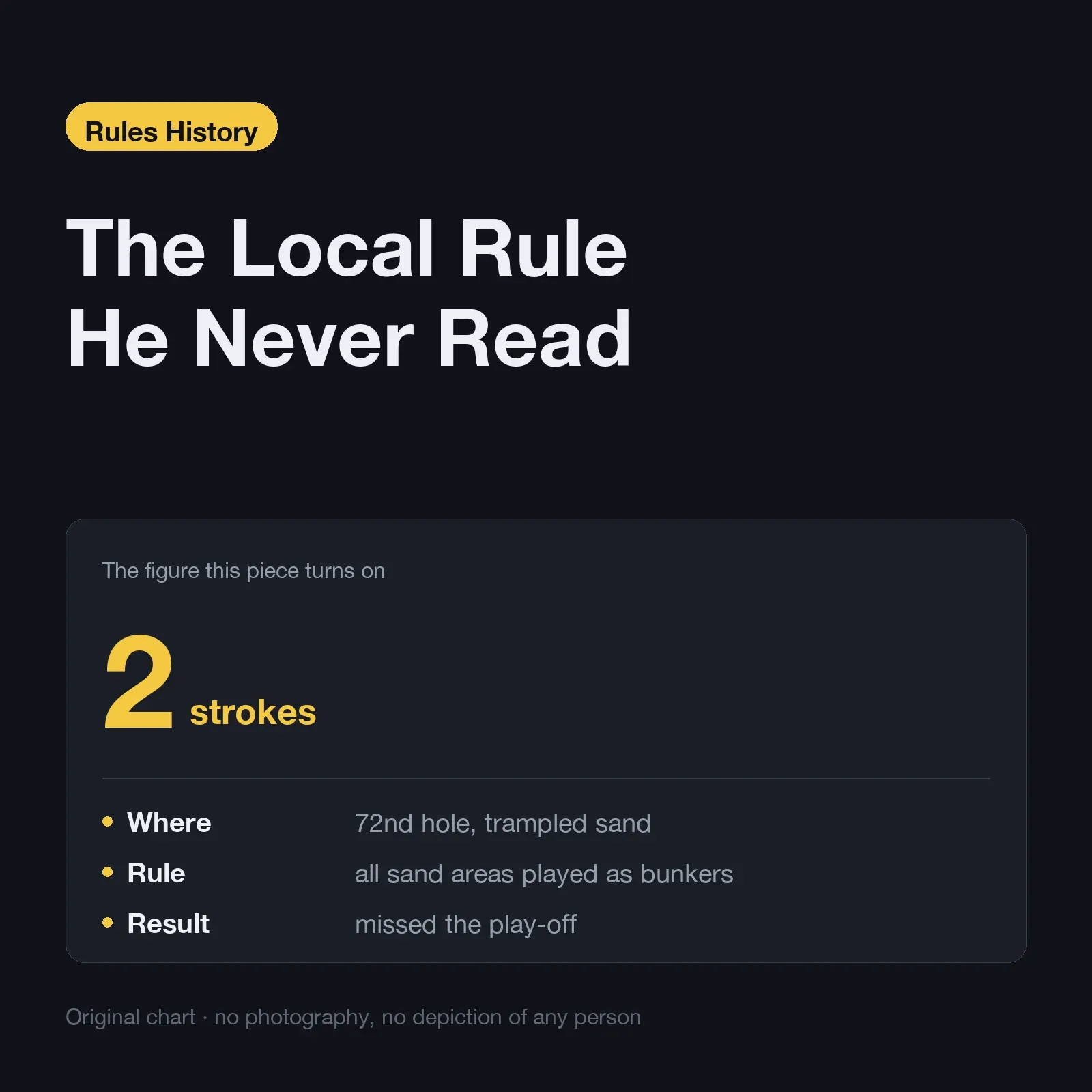
A local rule made every trampled sand patch at Whistling Straits a bunker. Dustin Johnson grounded his club in one and lost his playoff spot.
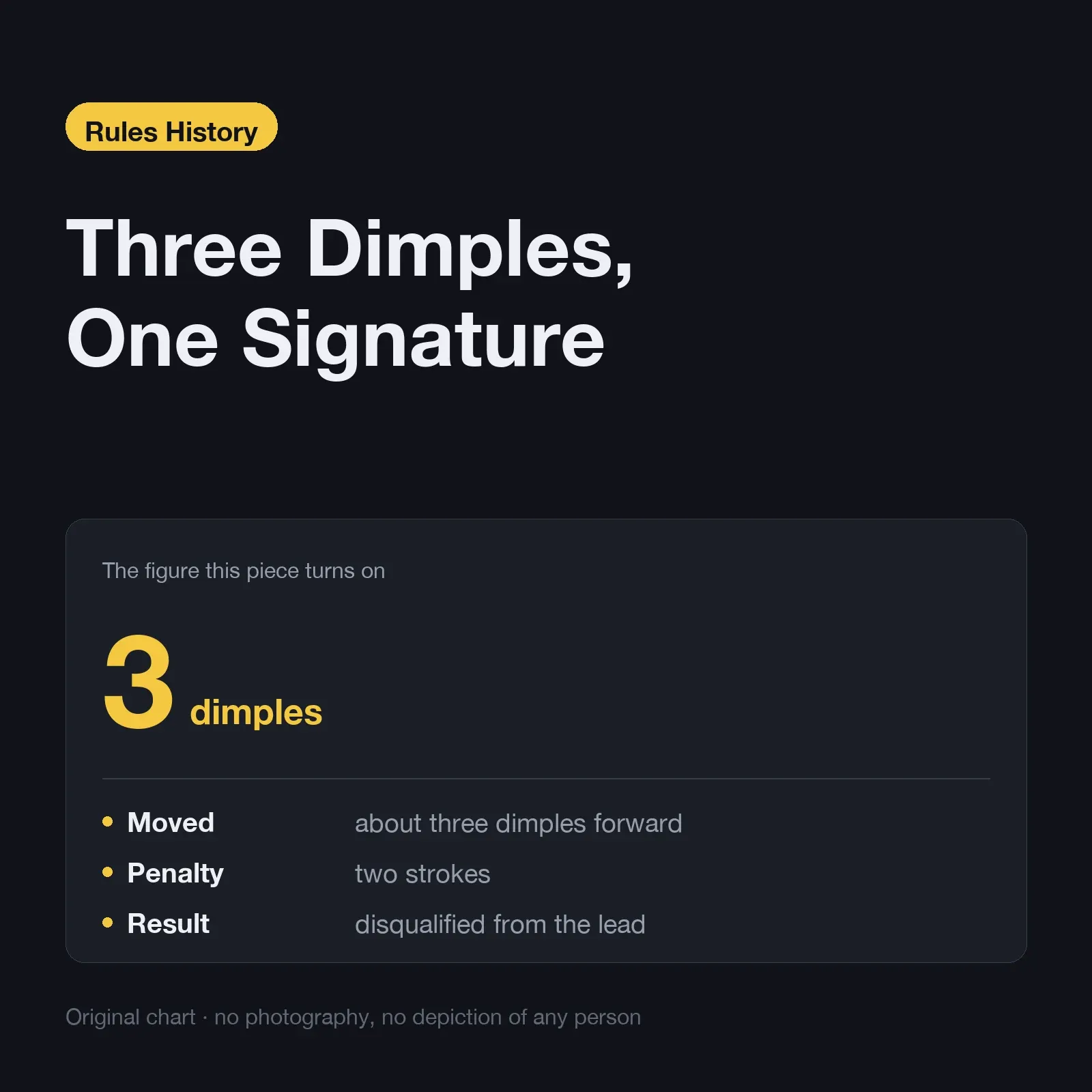
Harrington's hand moved his ball three dimples on replacement. He signed his card unaware — a viewer's email the next morning ended his tournament.
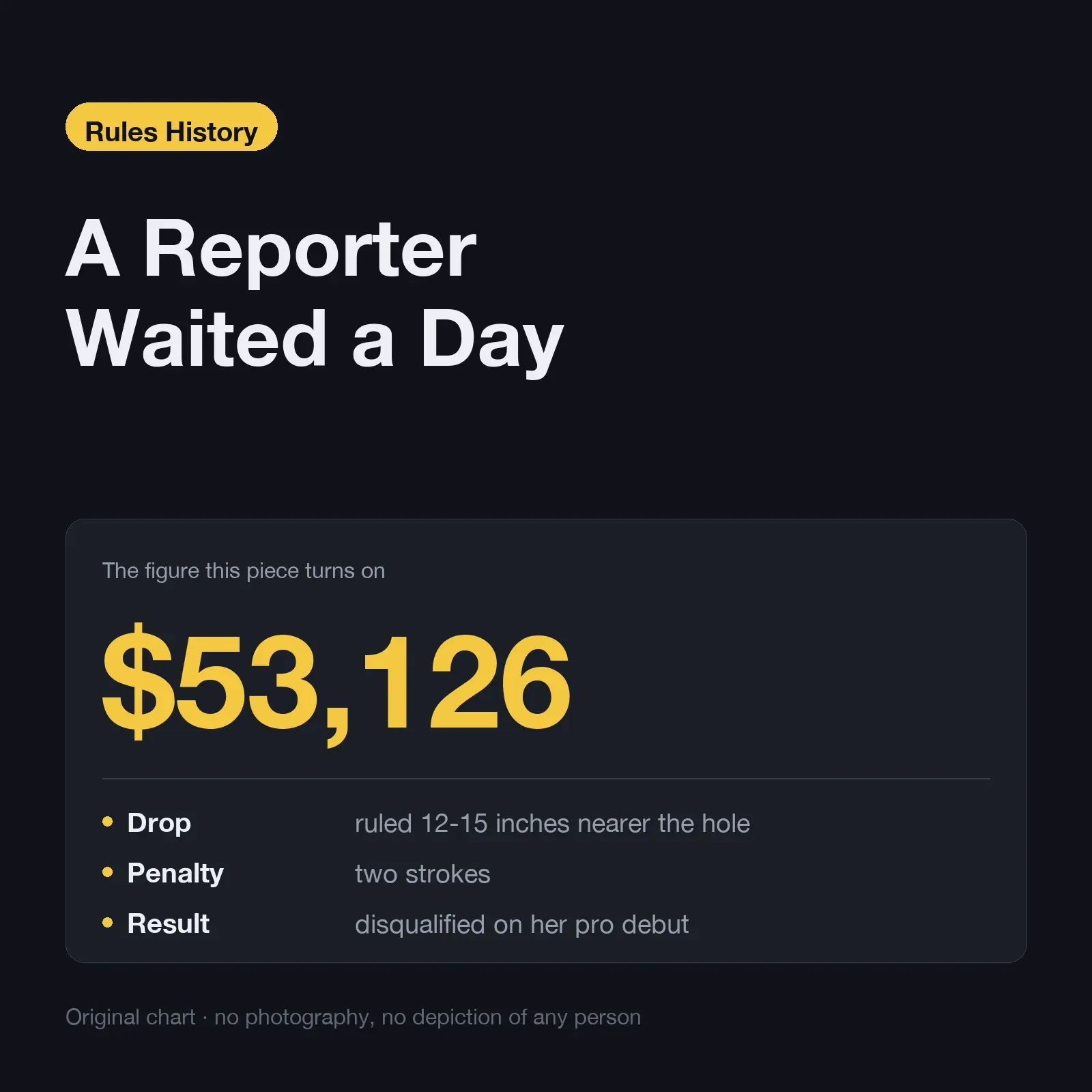
Michelle Wie's ball moved 12-15 inches closer to the hole. A reporter saw it, waited a day, and turned two strokes into a pro-debut disqualification.
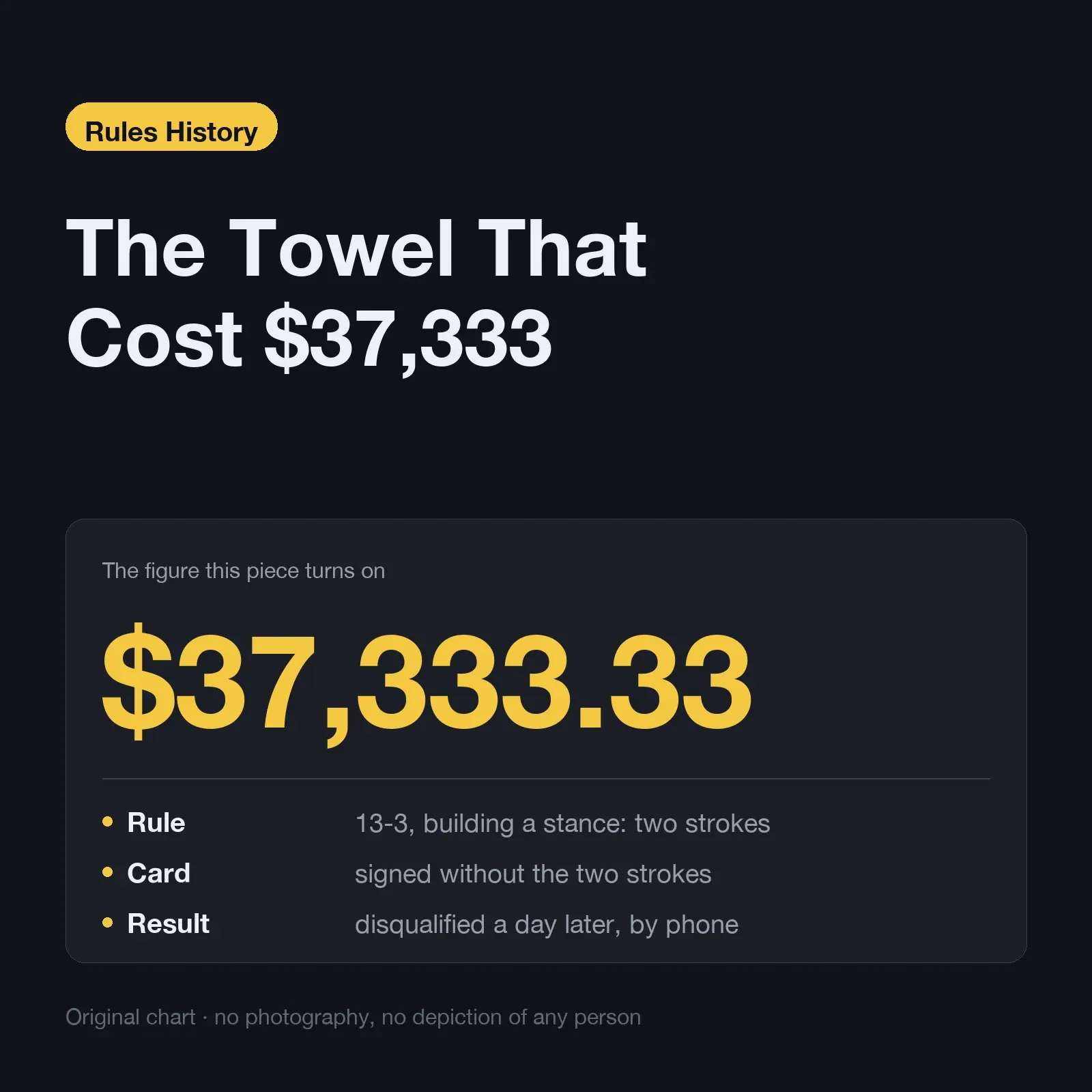
Stadler knelt on a towel to keep his trousers dry. A rule on building a stance made it two strokes — and a caller who had the wrong day made it a DQ.
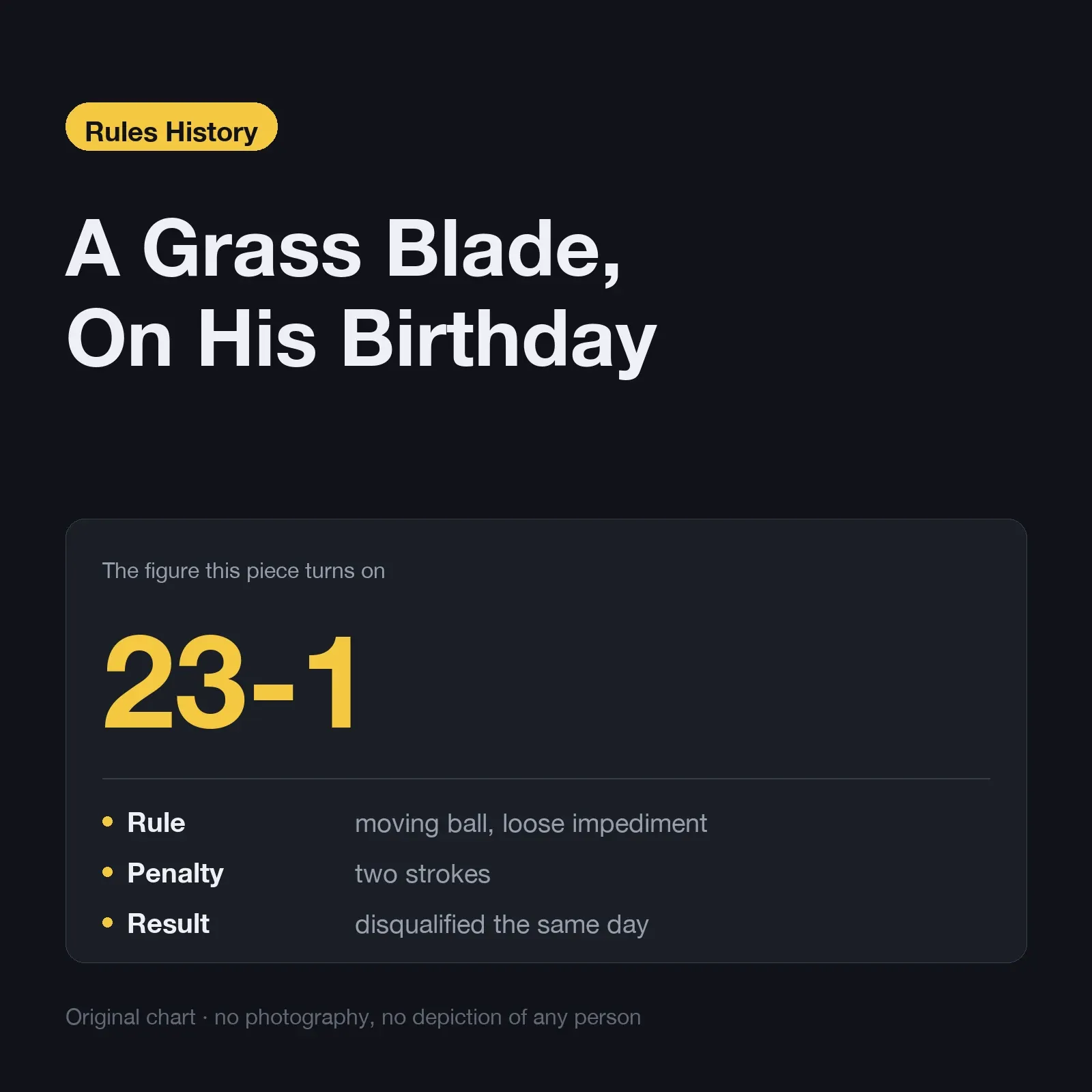
Villegas swatted loose grass from a rolling ball's path on his birthday. A TV viewer called it in. He was disqualified the same day, before he'd even finished.
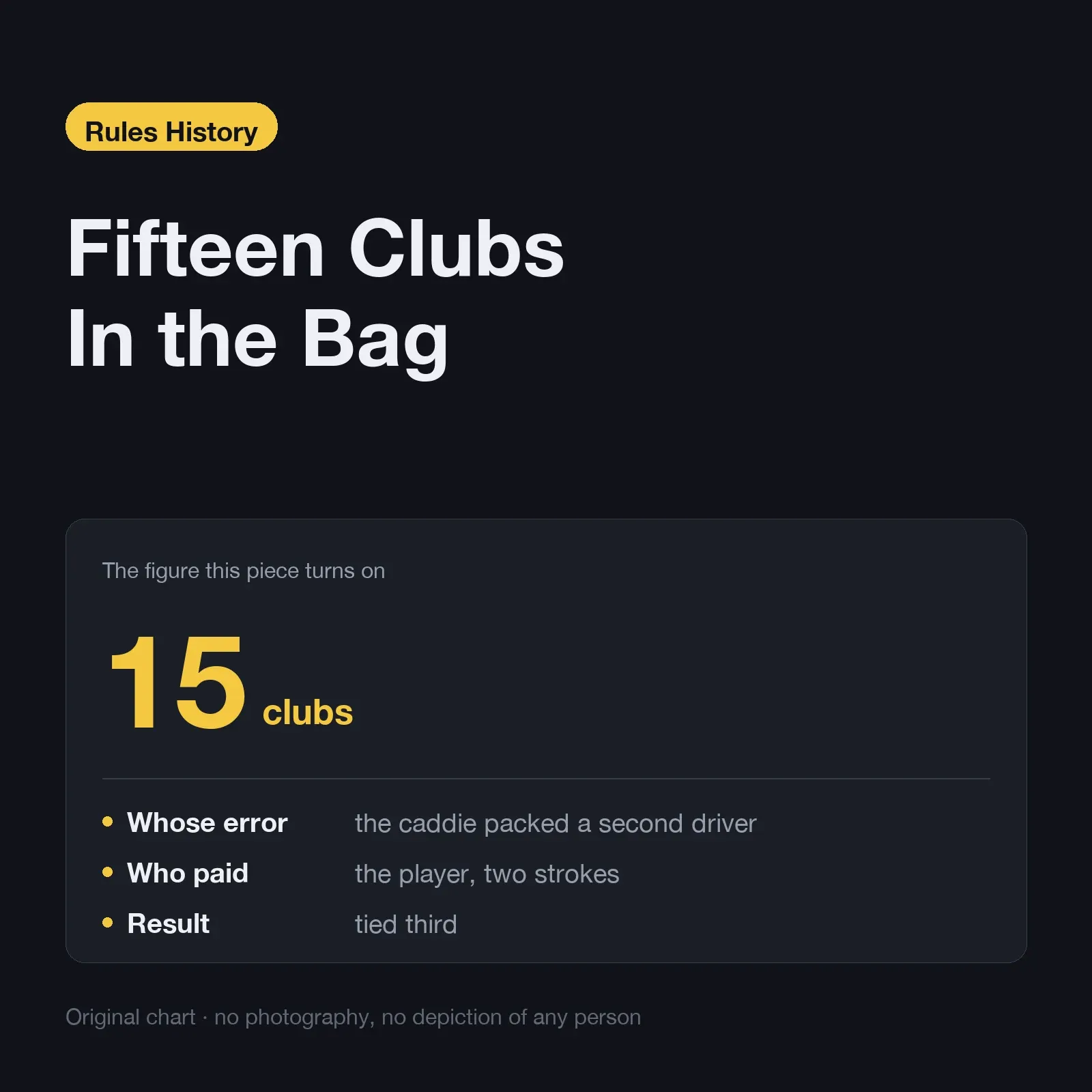
Woosnam led The Open on the first tee in 2001. His caddie had left two drivers in the bag. The penalty went to the player who never touched the extra club.
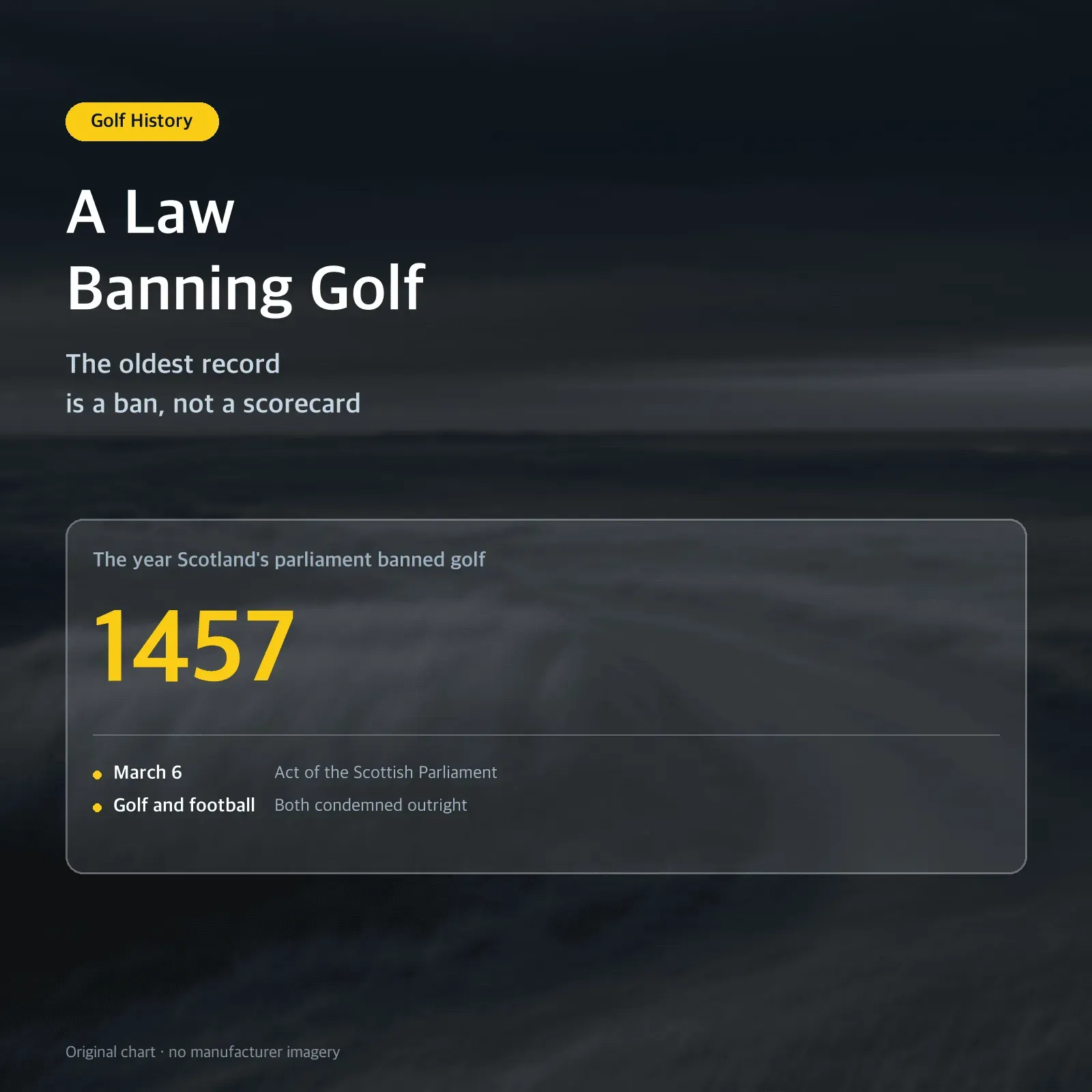
The oldest known document mentioning golf in Scotland isn't a scorecard — it's a 1457 act of parliament banning the game outright. Here is what it says.
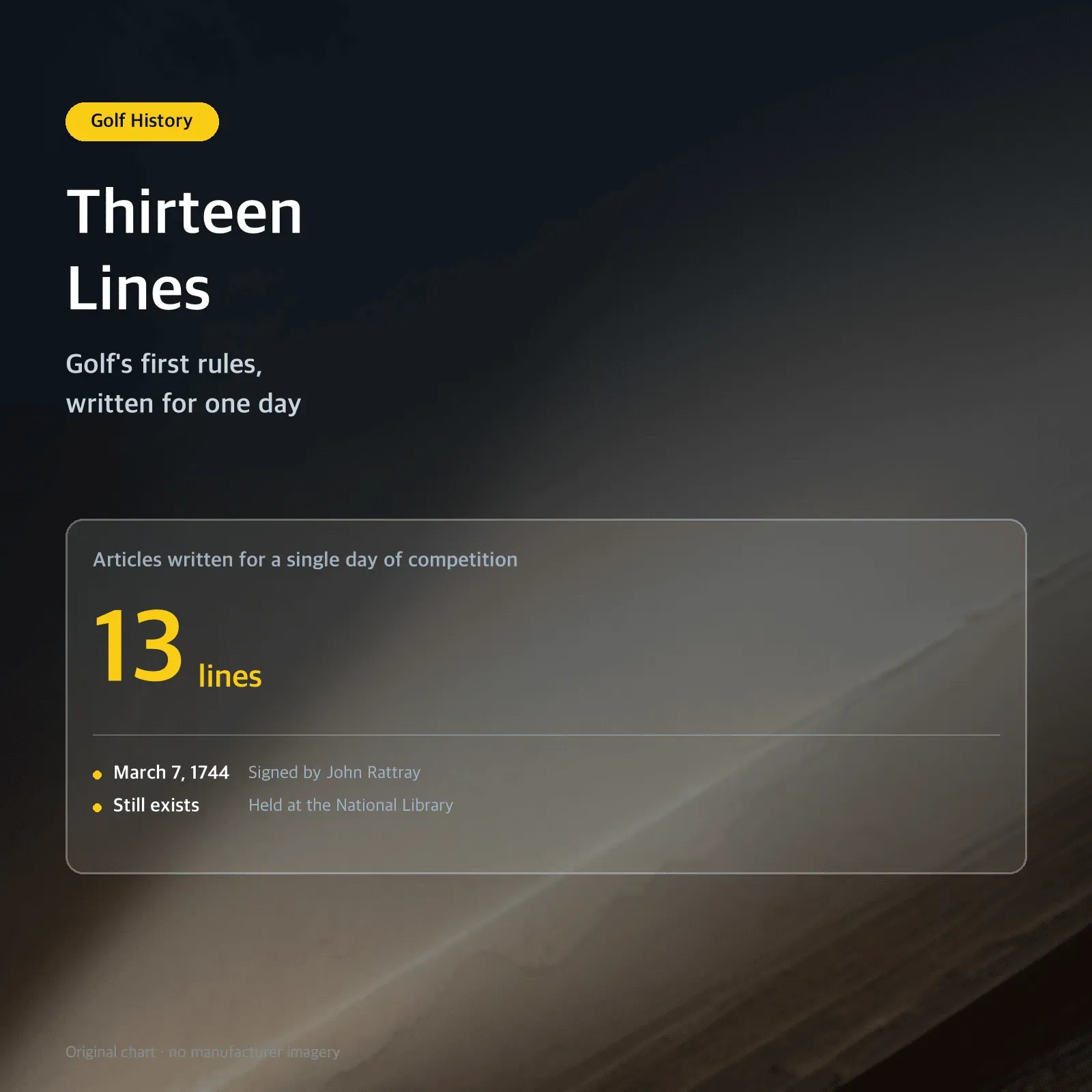
Golf's rulebook now runs hundreds of pages. It started as thirteen lines for one day of competition, signed by John Rattray — the original still exists.
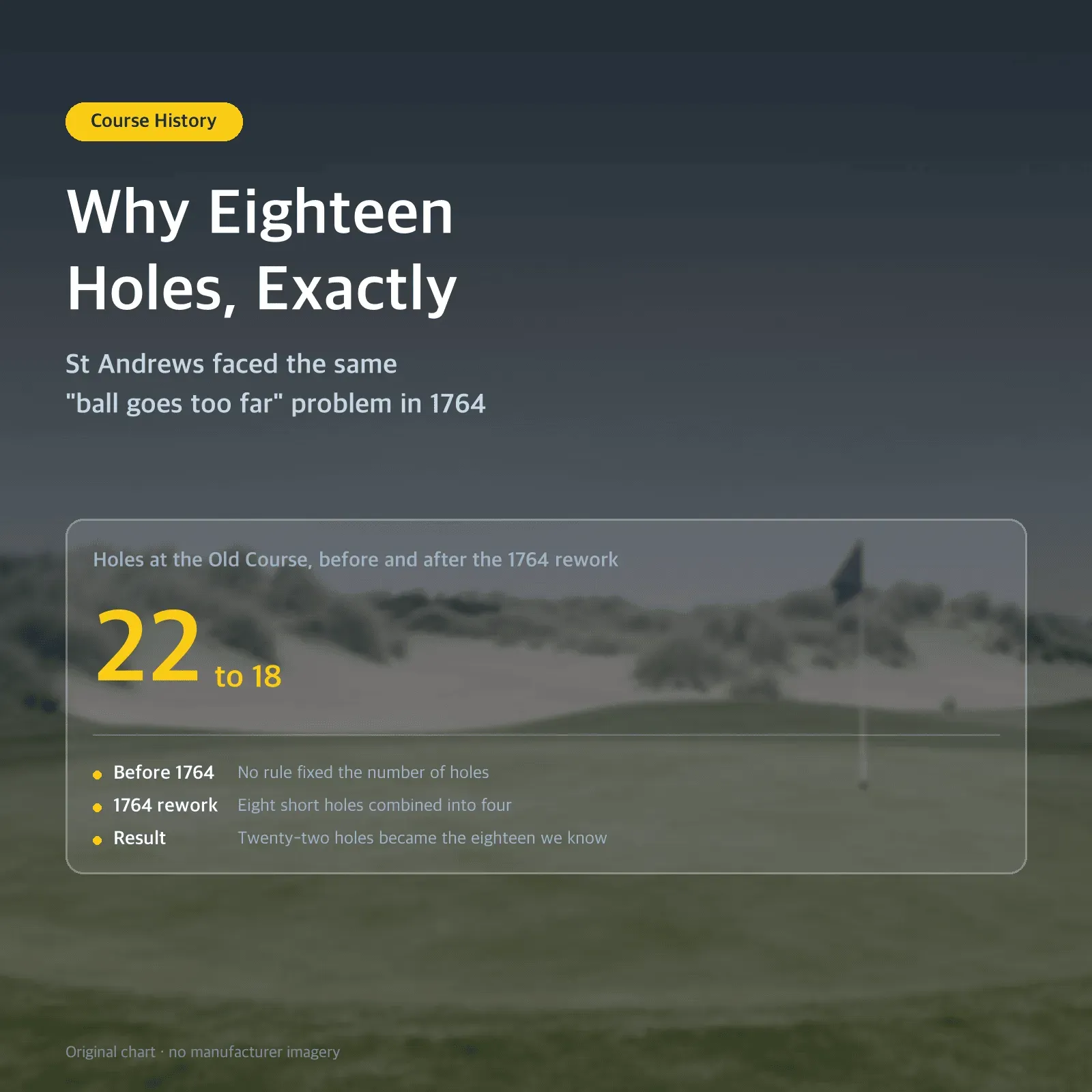
"The ball goes too far" is a live debate today, but St Andrews faced the same problem in 1764. The response that year is why a round of golf is eighteen holes.
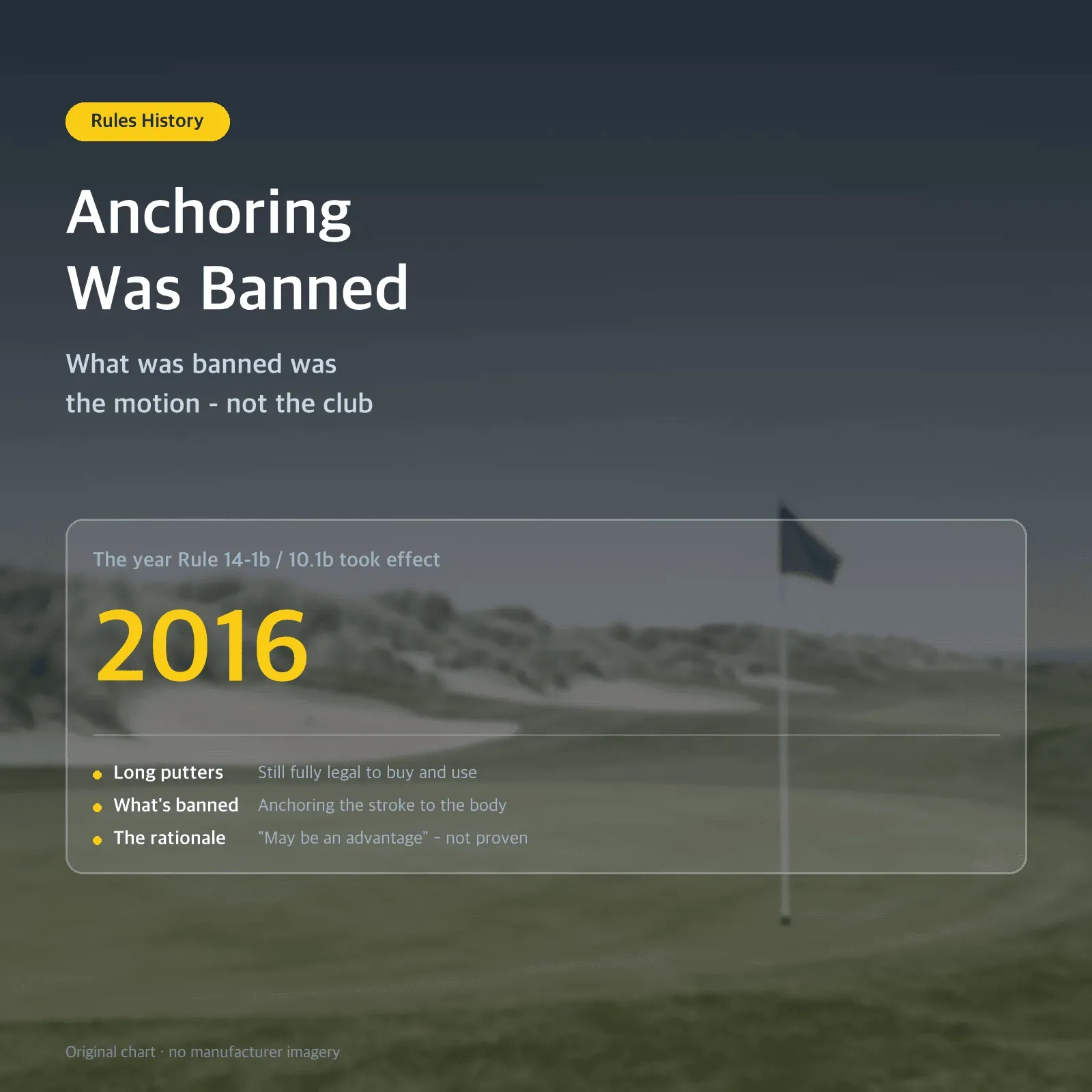
The 2016 anchoring ban is often called a 'long putter ban,' but Rule 10.1b prohibits a stroke, not a club.
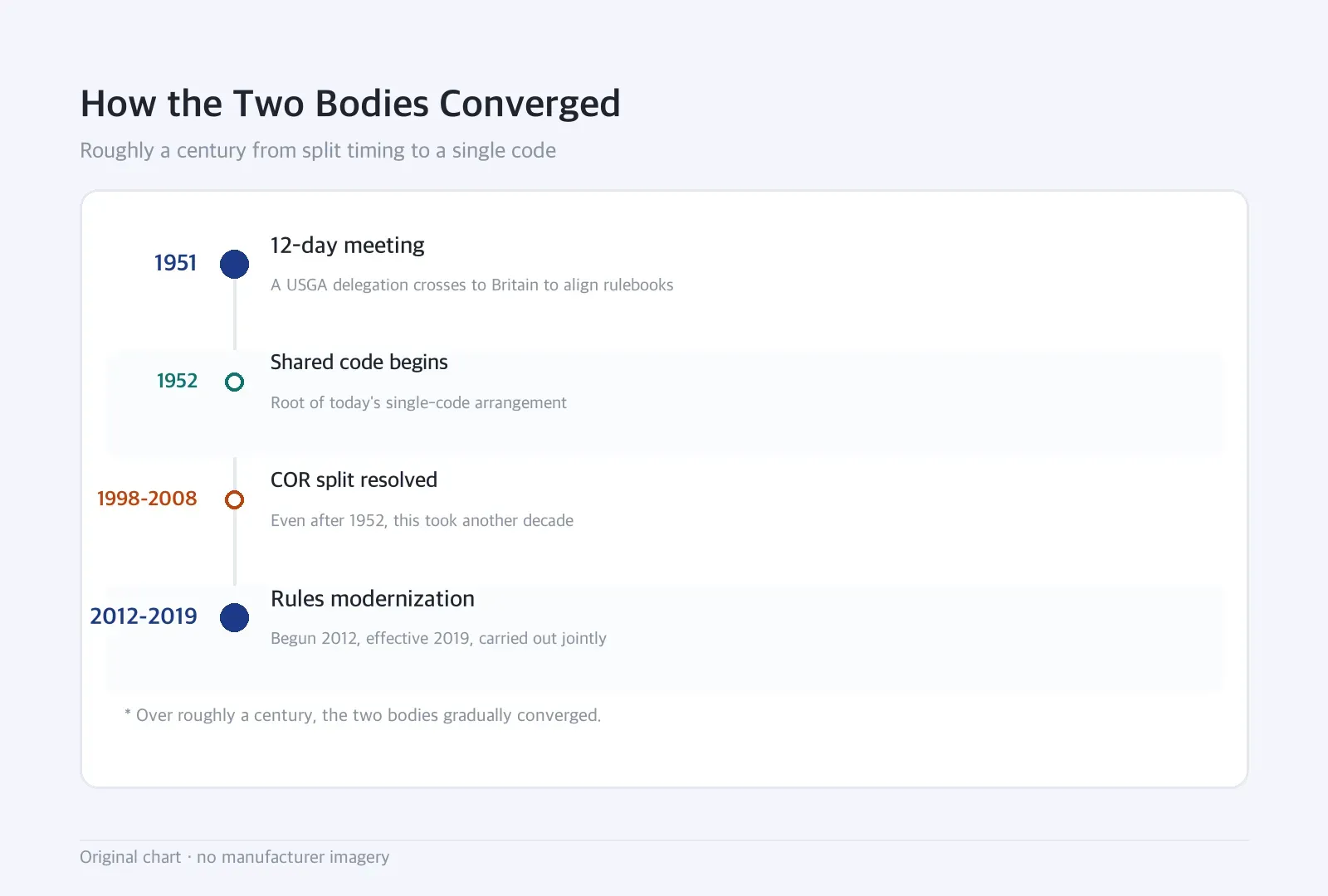
The USGA and R&A have split on timing before: the Schenectady putter, the steel shaft, the coefficient of restitution — and the 14-club limit too.
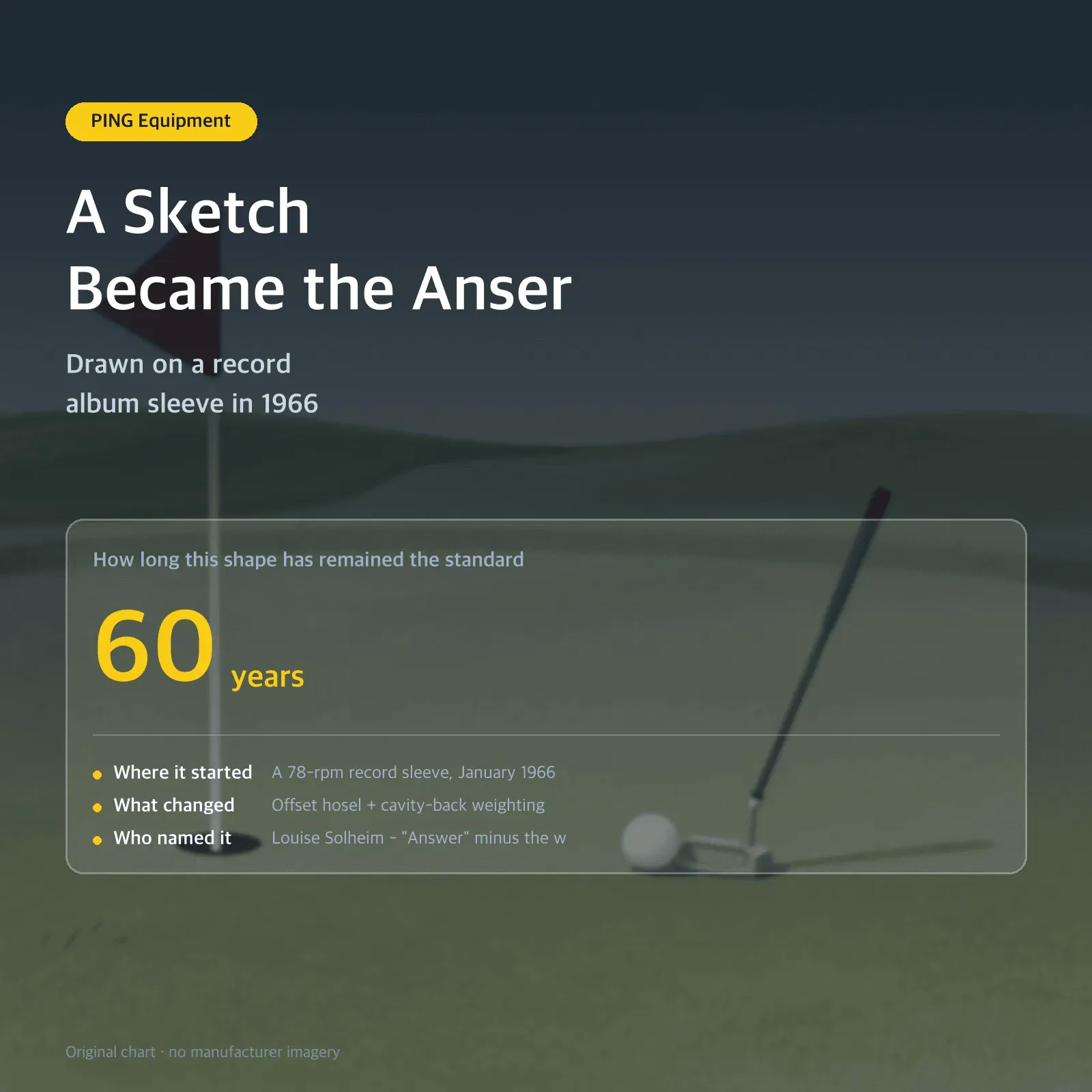
In January 1966, Karsten Solheim sketched a putter on a record sleeve. That sketch became the Anser — still standard 60 years later.
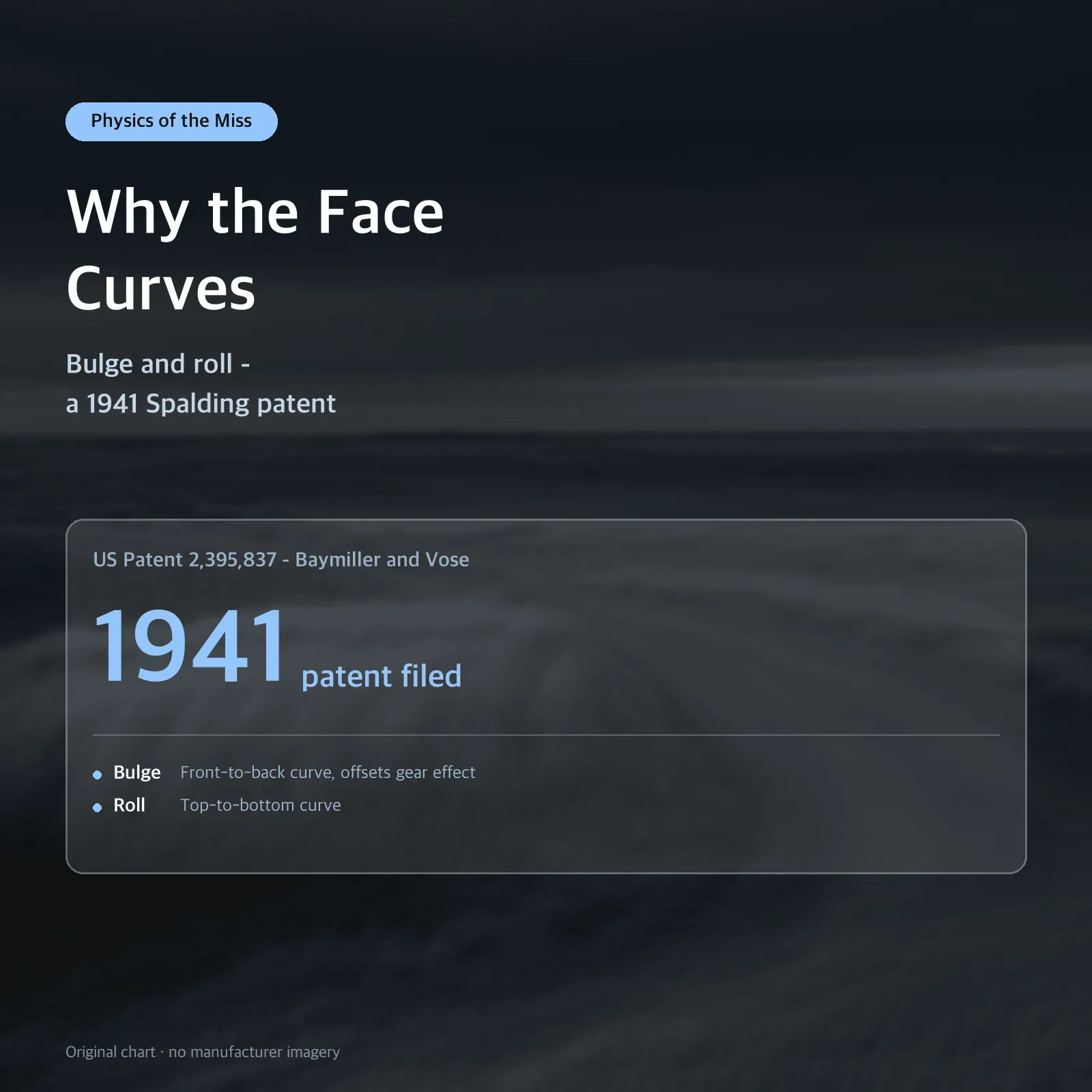
Driver faces curve while iron faces stay flat. The reason is bulge and roll, meant to offset gear effect, formalized in a 1941 Spalding patent.
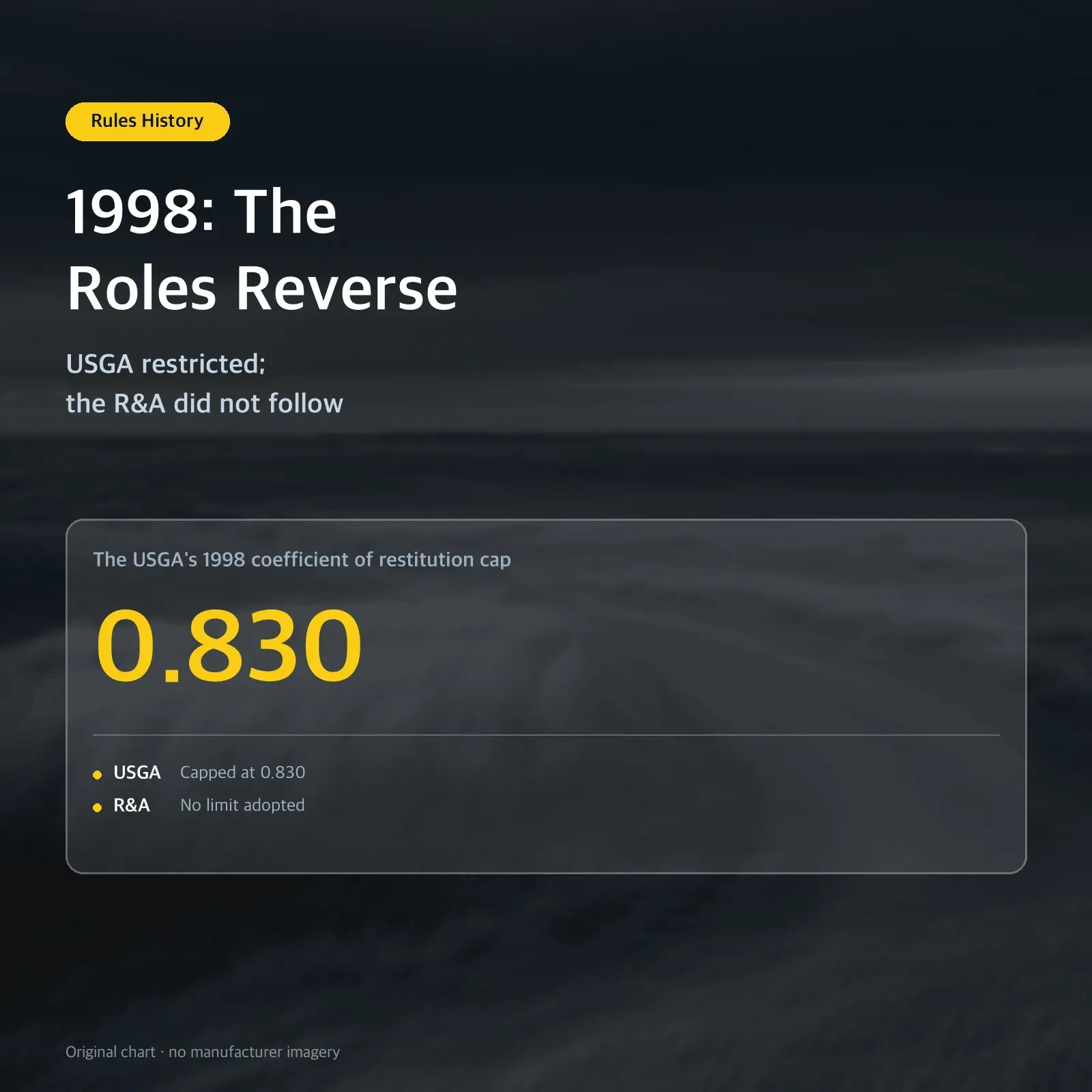
When the USGA capped driver coefficient of restitution at 0.830 in 1998, the R&A didn't follow — one driver was legal here, illegal there.

The PING Eye2 is widely cited as the best-selling iron set in history. Its square grooves also triggered a rules dispute, covered separately.
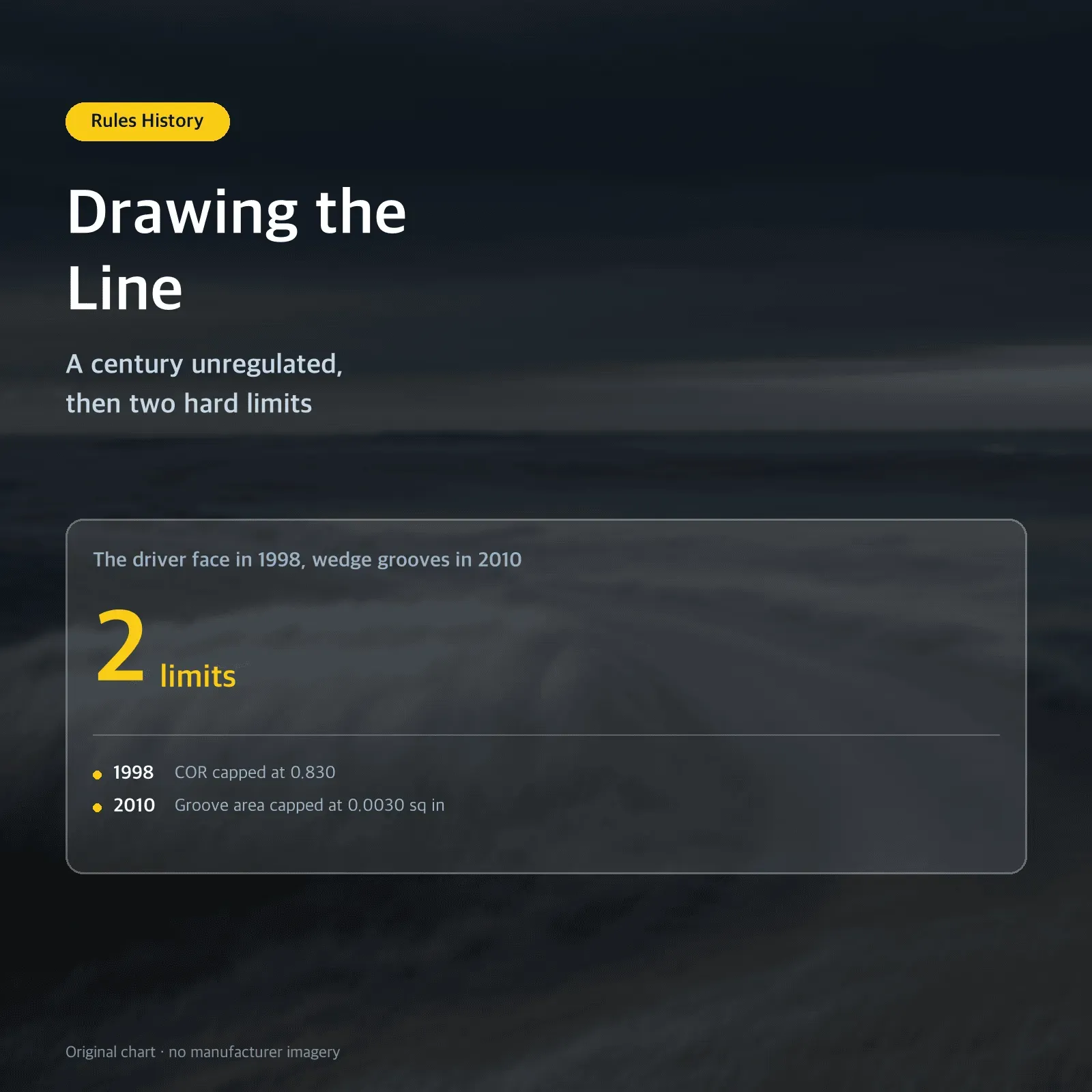
For a century equipment went unregulated. In 1998 the driver face and in 2010 wedge grooves got hard, measurable limits. Here is what changed and why.
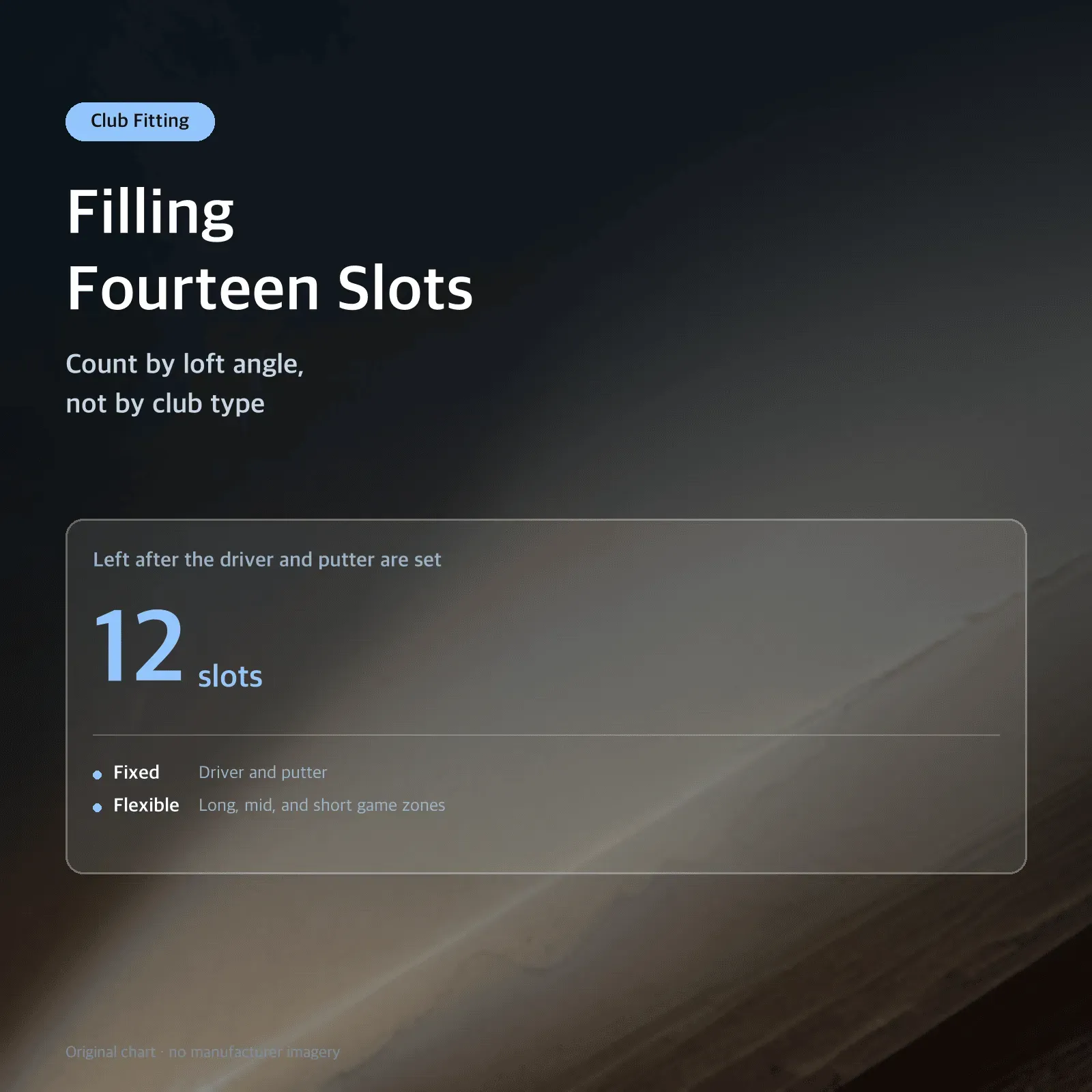
A practical method for building a 14-club setup: count by loft angle, find the gaps and overlaps, and remember fourteen is a ceiling, not a quota.
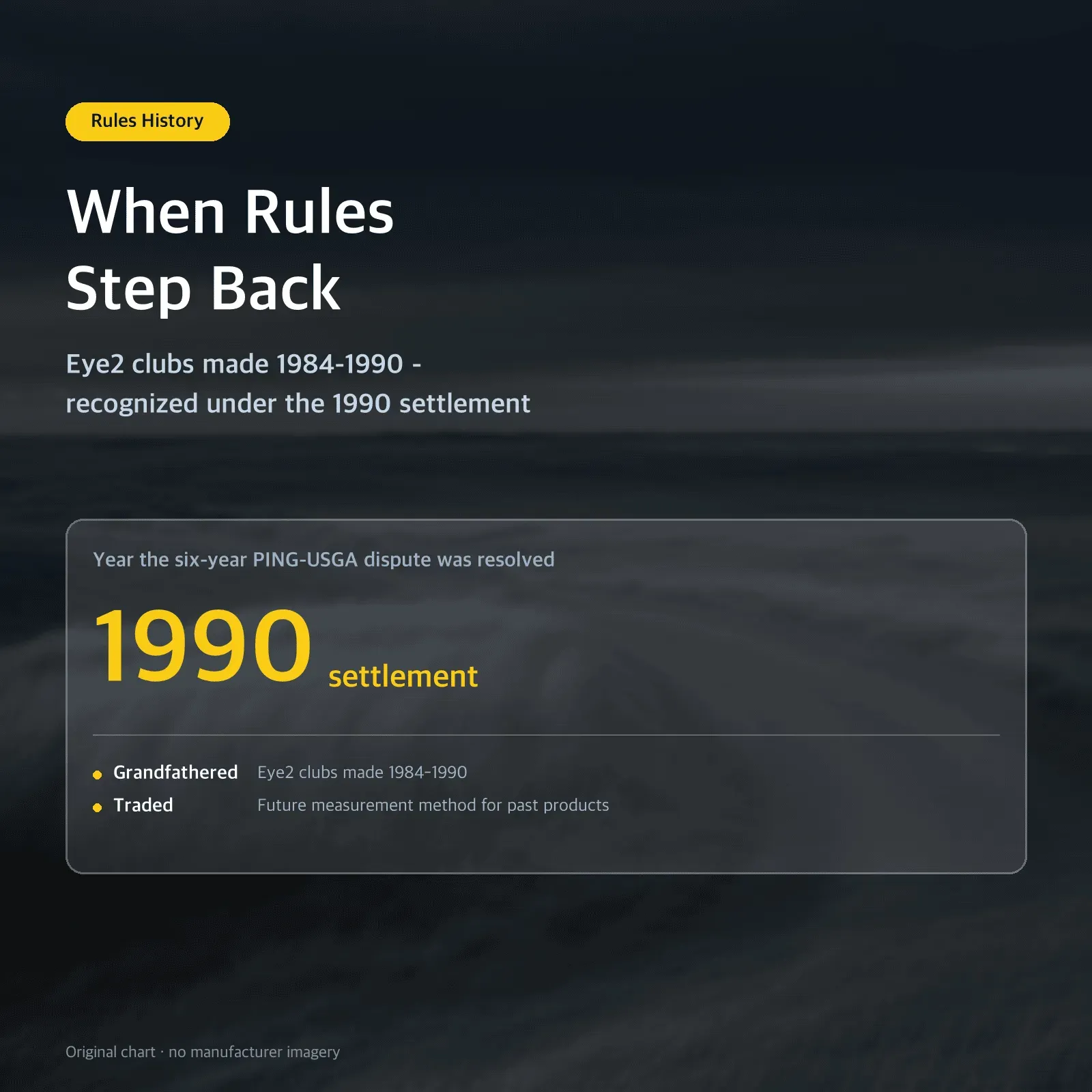
The 1990 PING-USGA settlement recognized Eye2 clubs made 1984-1990 as conforming. What grandfathering is, and why golf's rules use it.
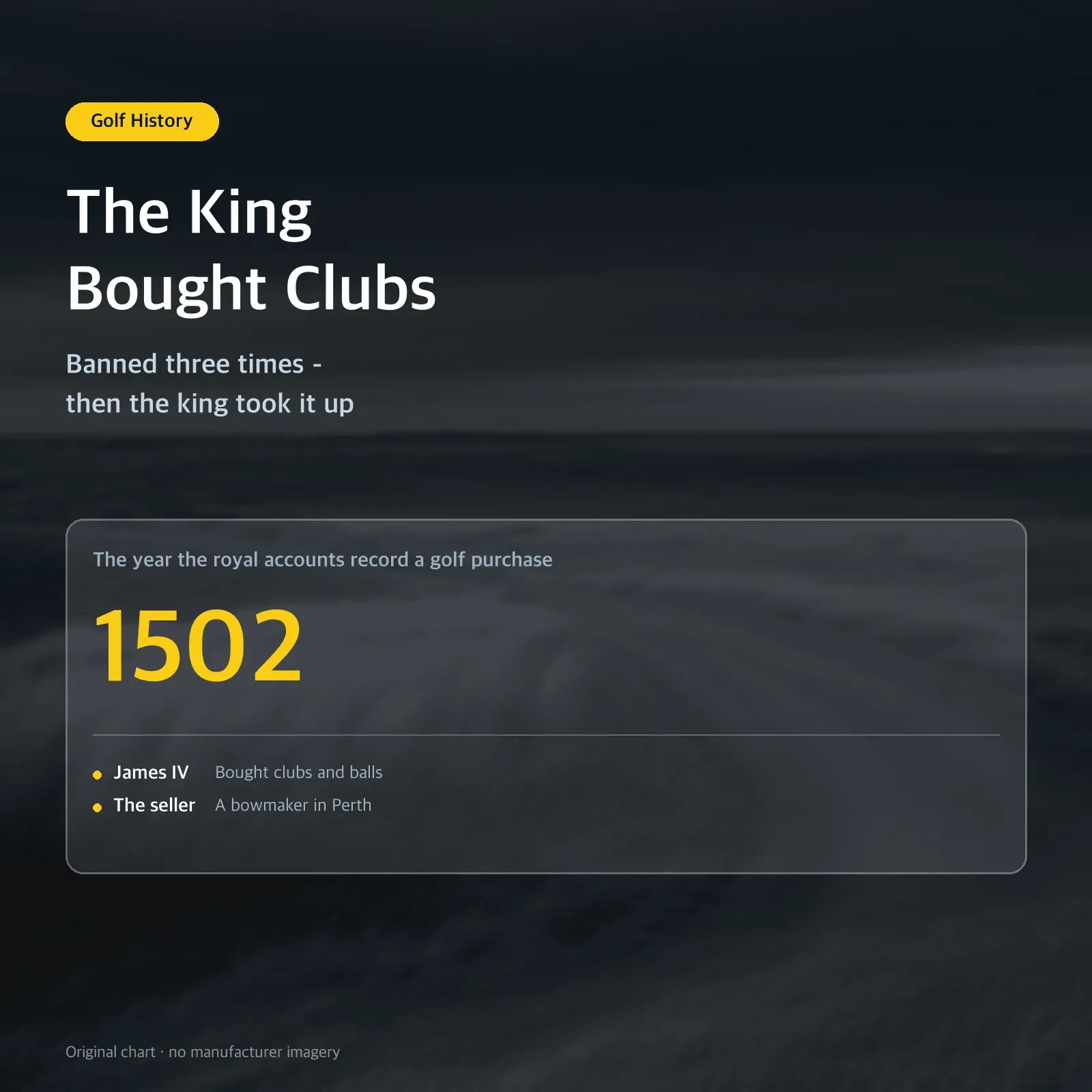
Scotland banned golf in 1457, 1471, and 1491. In 1502 the king bought golf clubs and balls himself. Here is what the royal accounts actually show.

Odyssey, TaylorMade, Scotty Cameron, and PXG have all released zero-torque putters — but the concept originated with a small American brand, L.A.B. Golf.
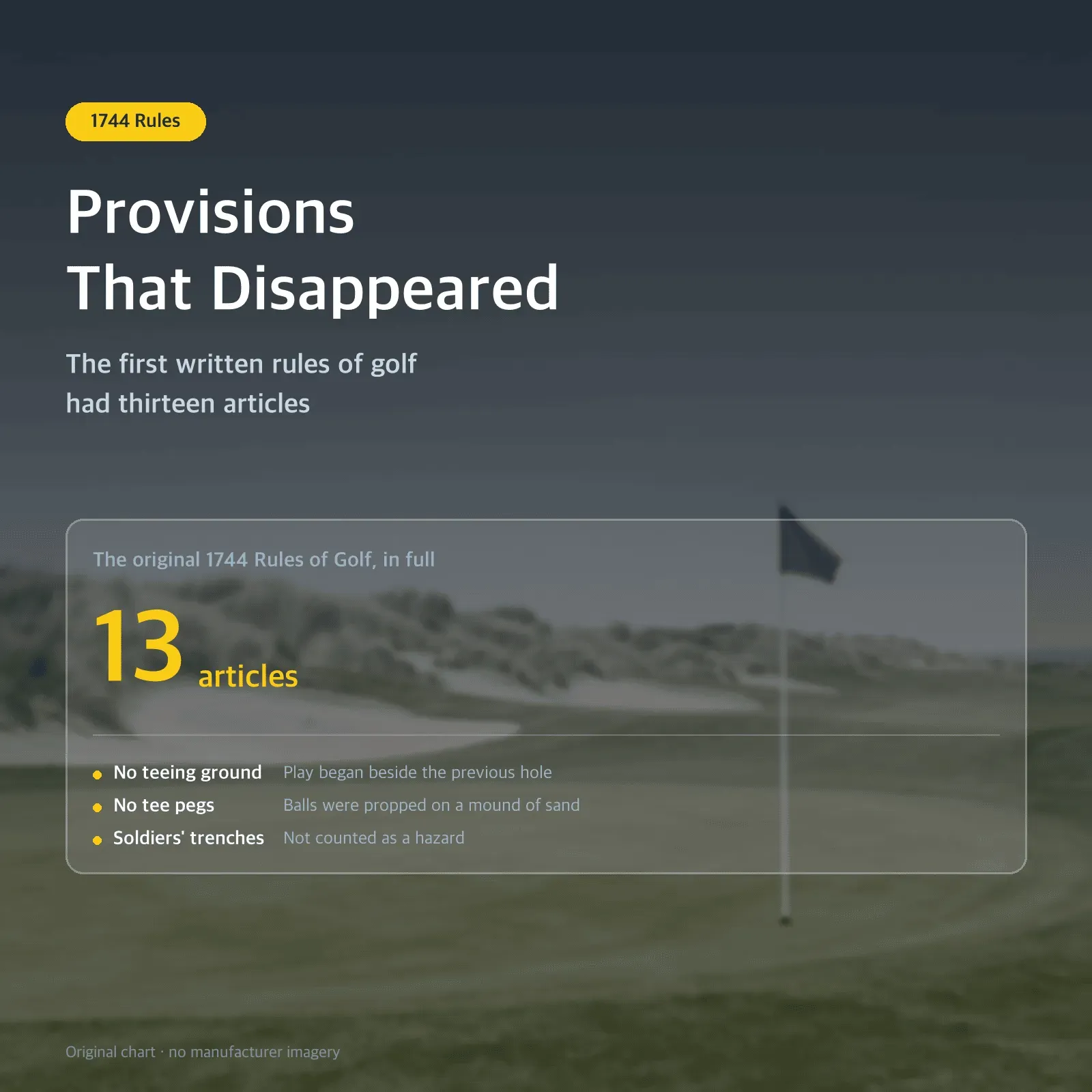
The first written rules of golf, from 1744, had thirteen articles. Some read almost like today's rules. Others describe a game that no longer exists.
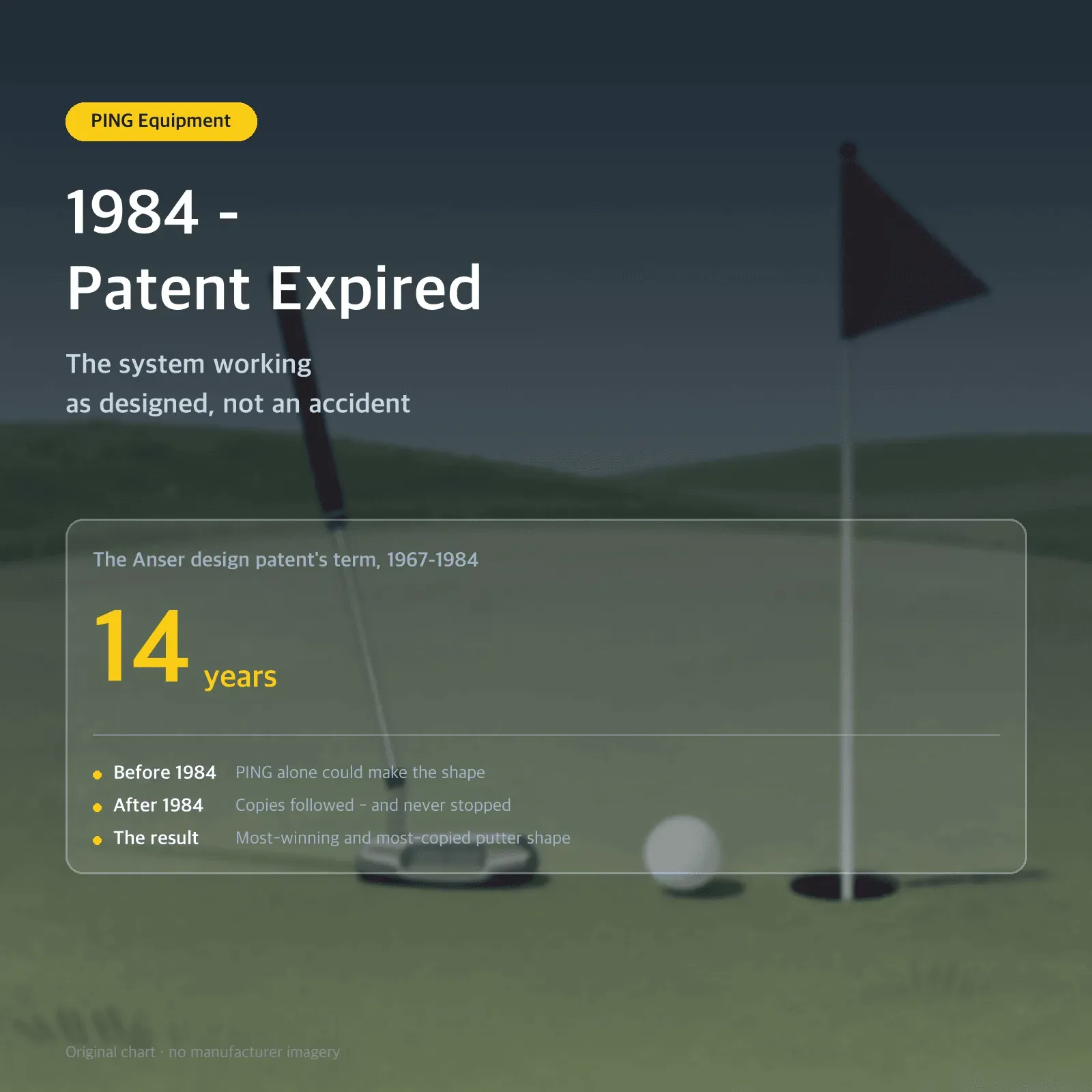
The Anser putter's 14-year patent expired in 1984. What followed made it, by most accounts, the most-copied putter shape in golf.

PING's founder was a missile-guidance engineer who built putters in a California garage from 1959. The name came from the sound of impact.
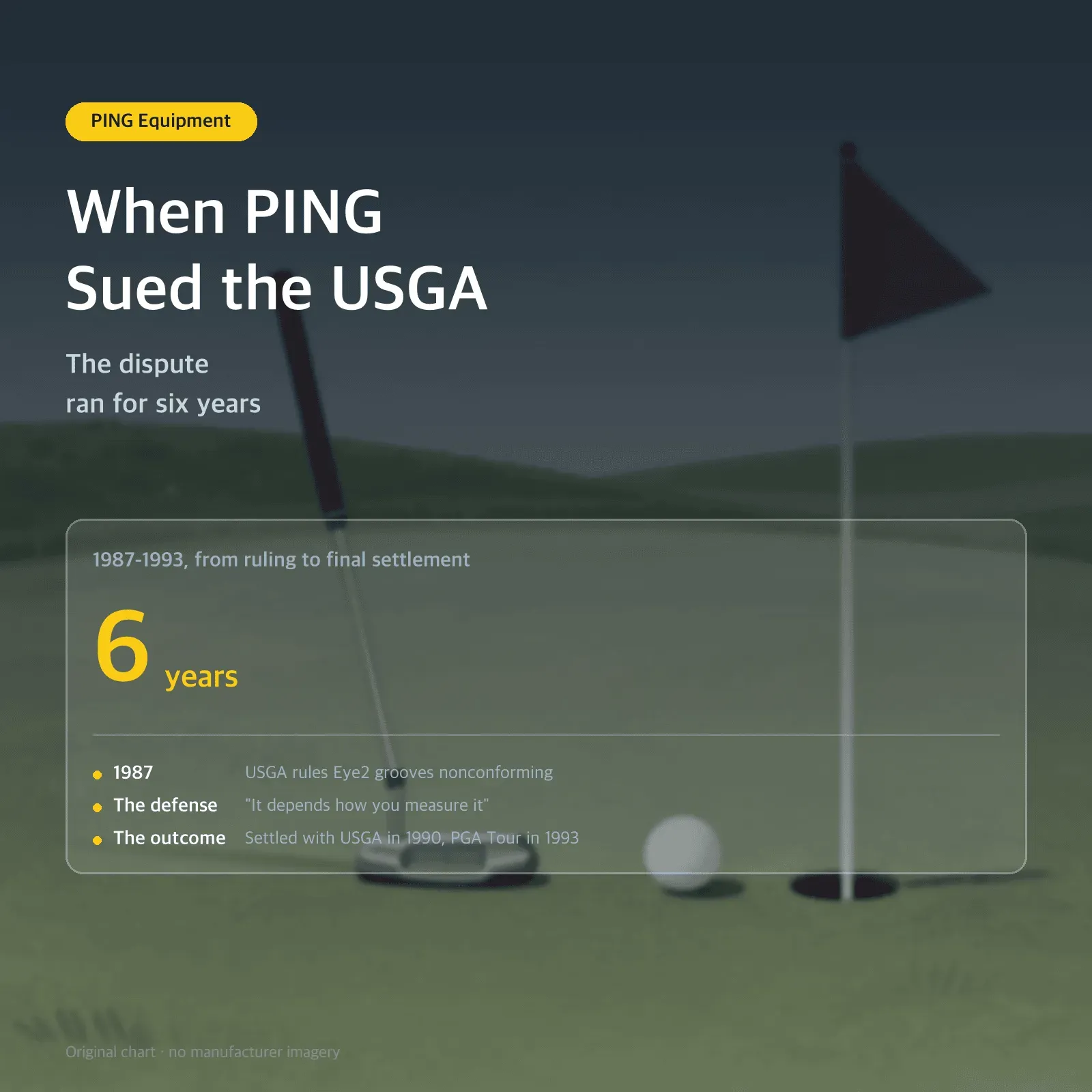
In 1987 the USGA ruled the PING Eye2's grooves nonconforming. PING fought back for six years, arguing groove measurement itself was the real issue.
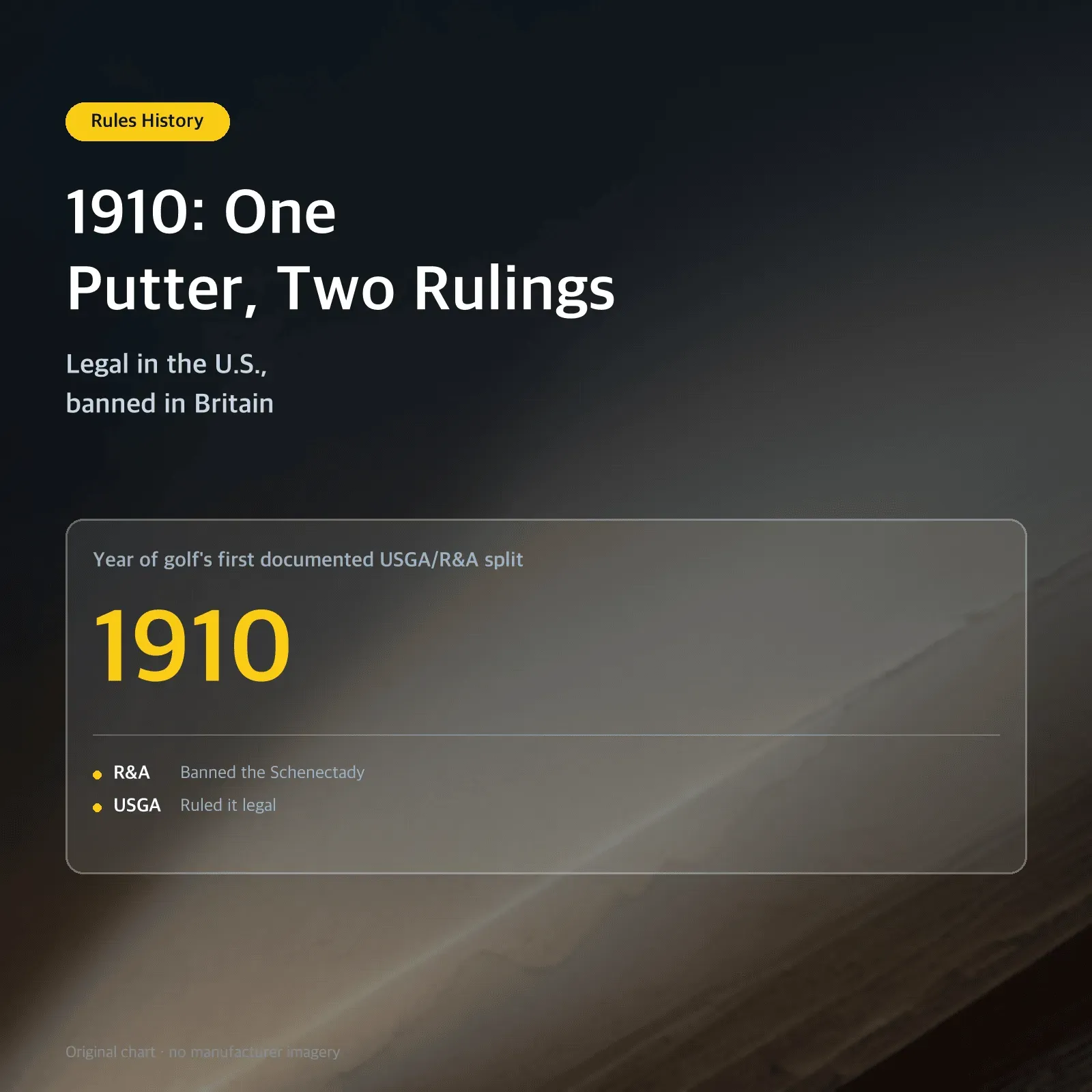
The Schenectady putter, a center-shafted design, was banned by the R&A in 1910. The USGA refused to follow — golf's first documented rules split.
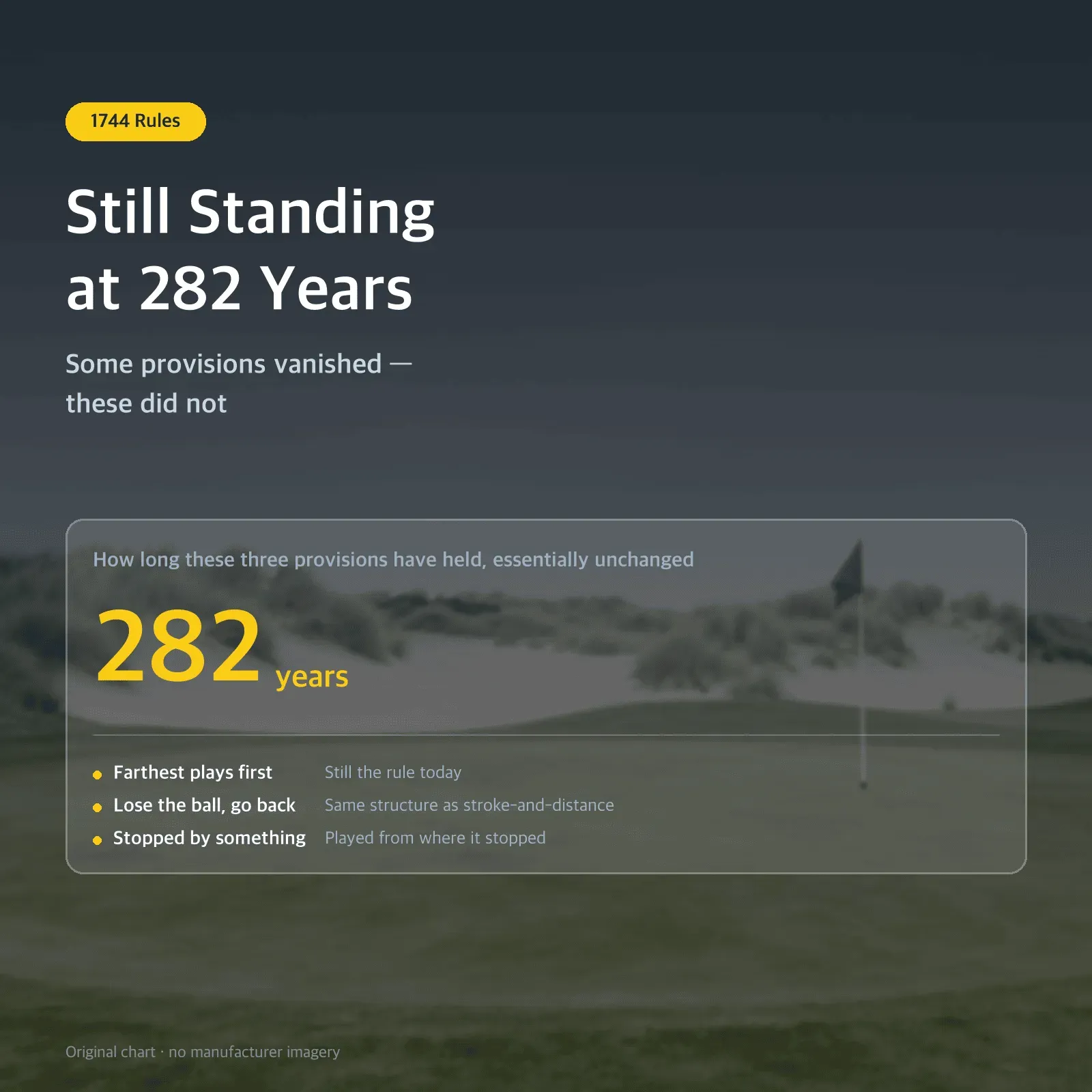
Some 1744 provisions vanished as equipment and courses changed. Others, dealing with fairness, are essentially unchanged 282 years later.

After the USGA and R&A split over driver coefficient of restitution in 1998, unification took a decade — and testing shifted to a 239-microsecond standard.

Before the 14-club limit, golf had no cap on how many clubs you could carry. Some players carried thirty or more — and the average was eighteen.

The 14-club limit traces to three concerns raised in the 1930s: skill, fairness, and — unusually for a rule — the caddie's physical burden.
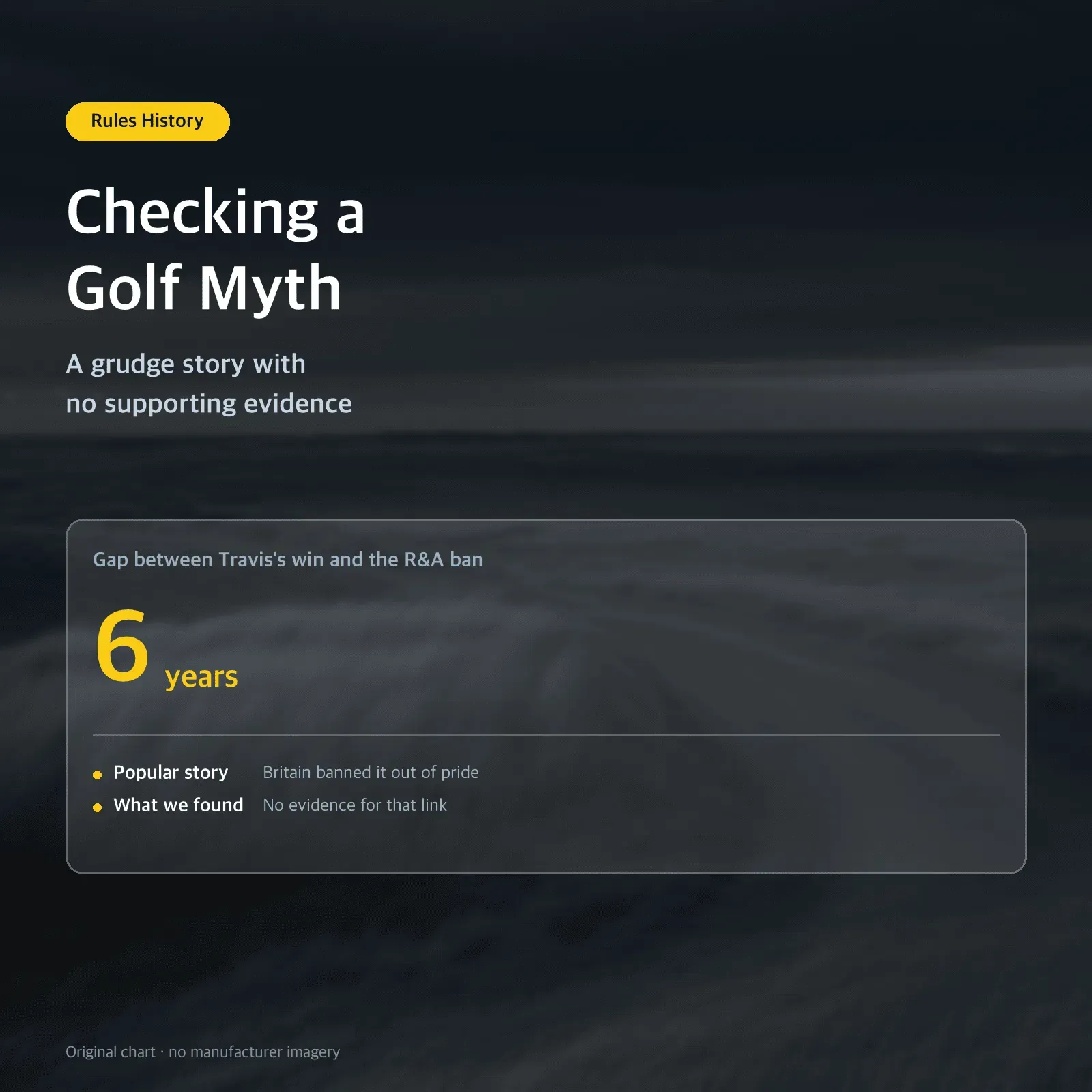
A well-known story says Britain banned the Schenectady putter out of wounded pride after Walter Travis won with it. We looked for evidence. We found none.
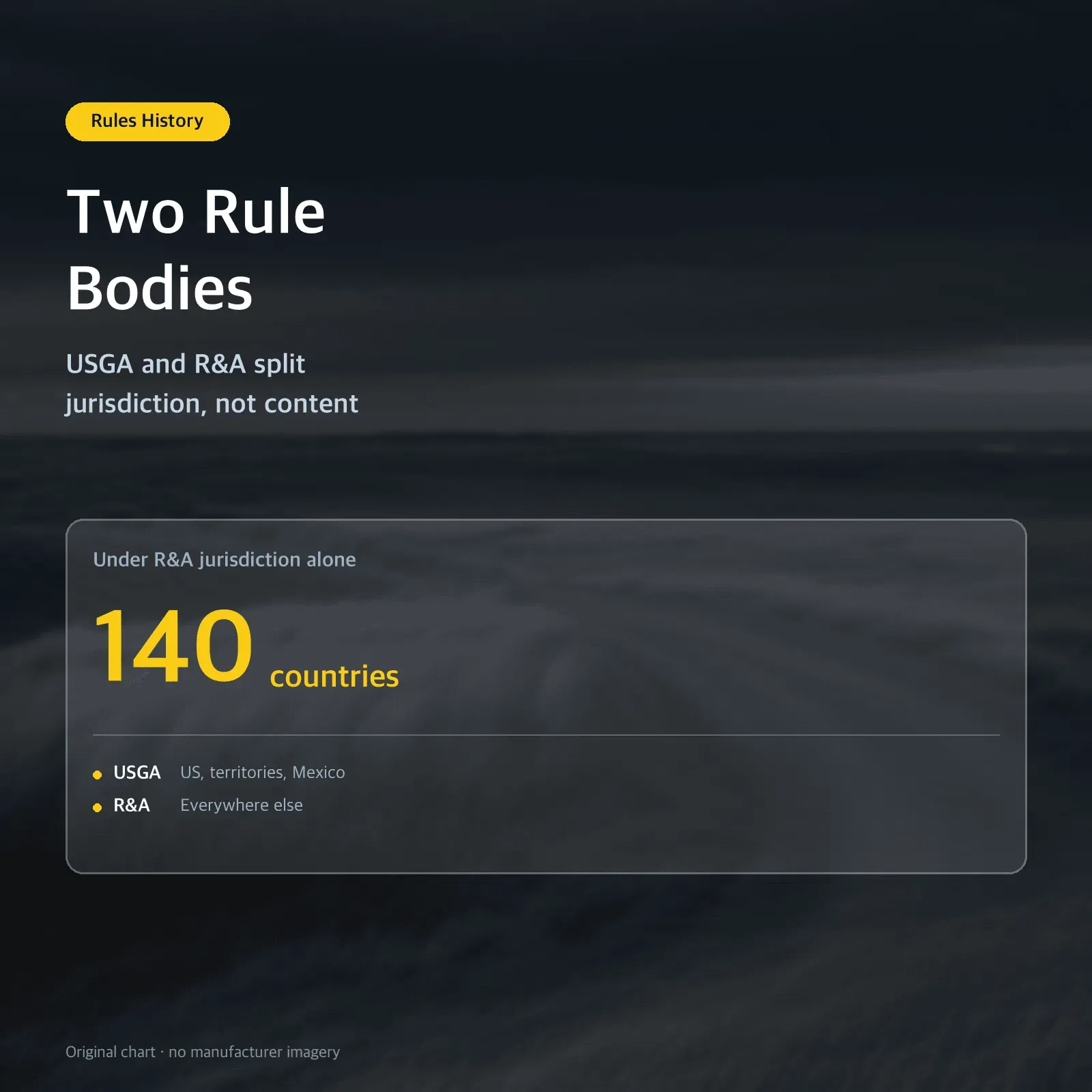
The USGA and the R&A split the world by jurisdiction: USGA covers the U.S. and Mexico, R&A covers everywhere else. Here's how that split came about.
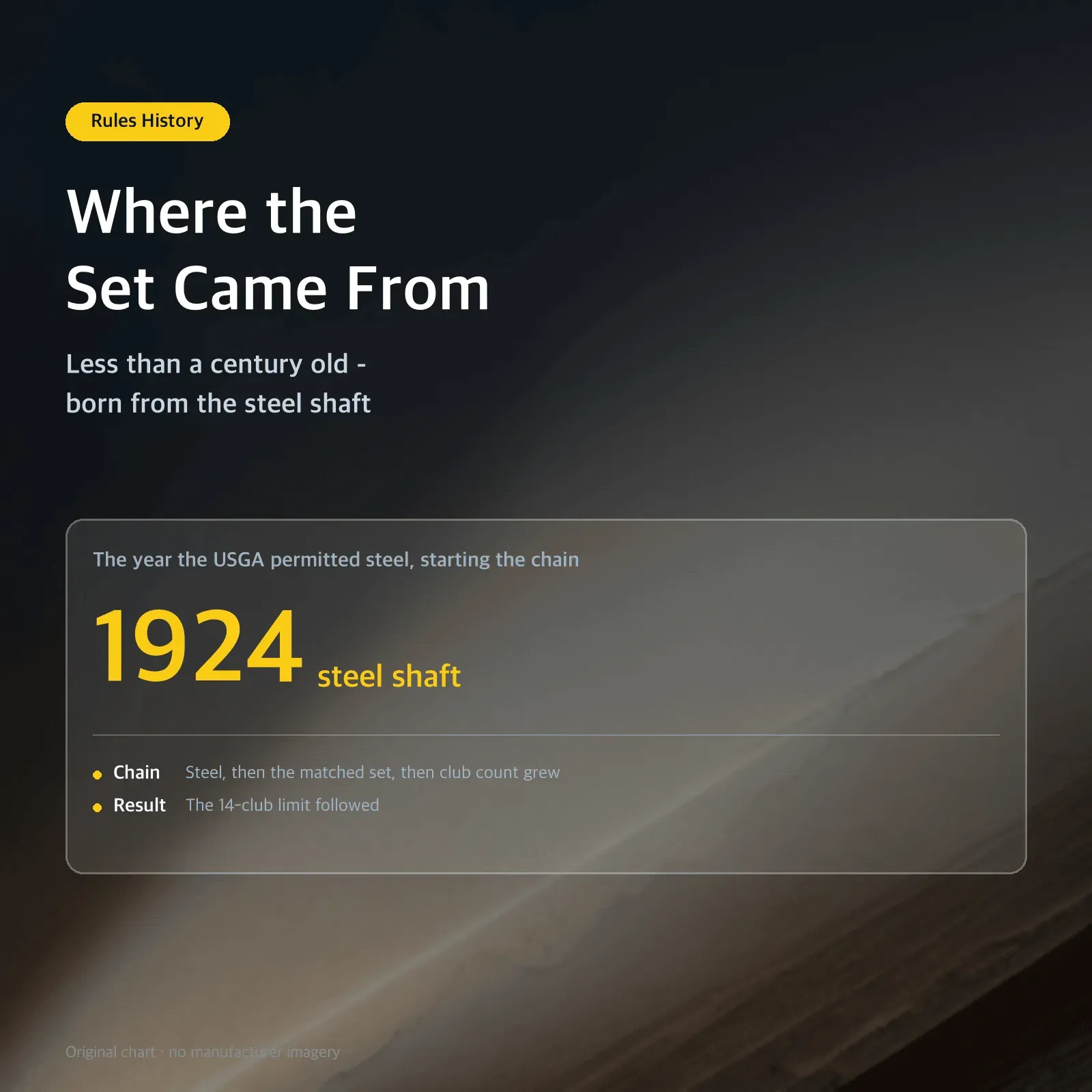
The matched iron set is less than a century old. It came from the steel shaft, and created the club-count problem behind the 14-club limit.

Two explanations circulate for golf's 14-club limit — a set-composition theory and a story about Bobby Jones and Tony Torrance. Only one has support.