
Illegal, Then Legal: The PING Eye2 Loophole
Ruled nonconforming in 1987 for grooves too close together. In 2010 the same club was legal because they were too far apart, and only PING could close it.
124 posts
Ruled nonconforming in 1987 for grooves too close together. In 2010 the same club was legal because they were too far apart, and only PING could close it.
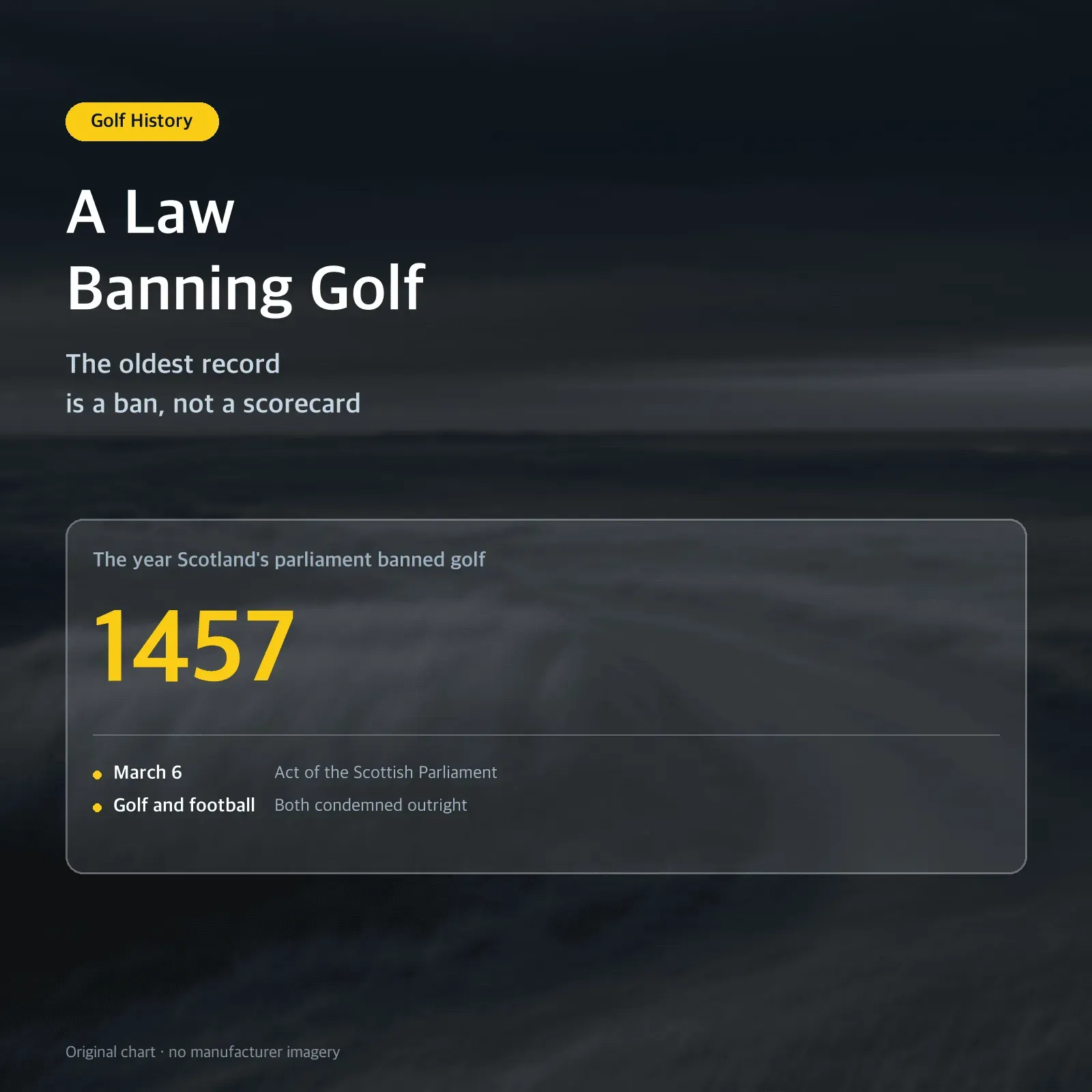
The oldest known document mentioning golf in Scotland isn't a scorecard — it's a 1457 act of parliament banning the game outright. Here is what it says.
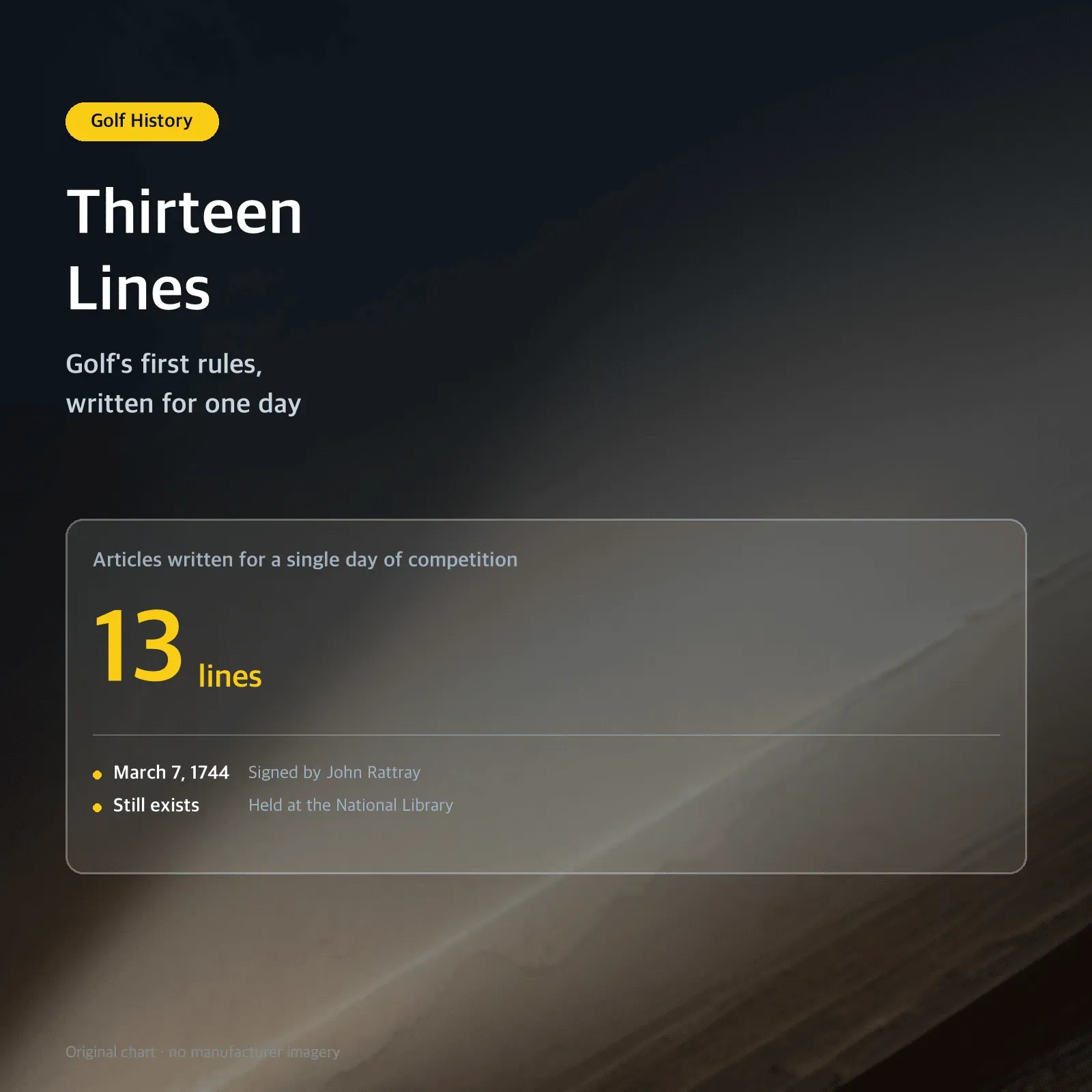
Golf's rulebook now runs hundreds of pages. It started as thirteen lines for one day of competition, signed by John Rattray — the original still exists.
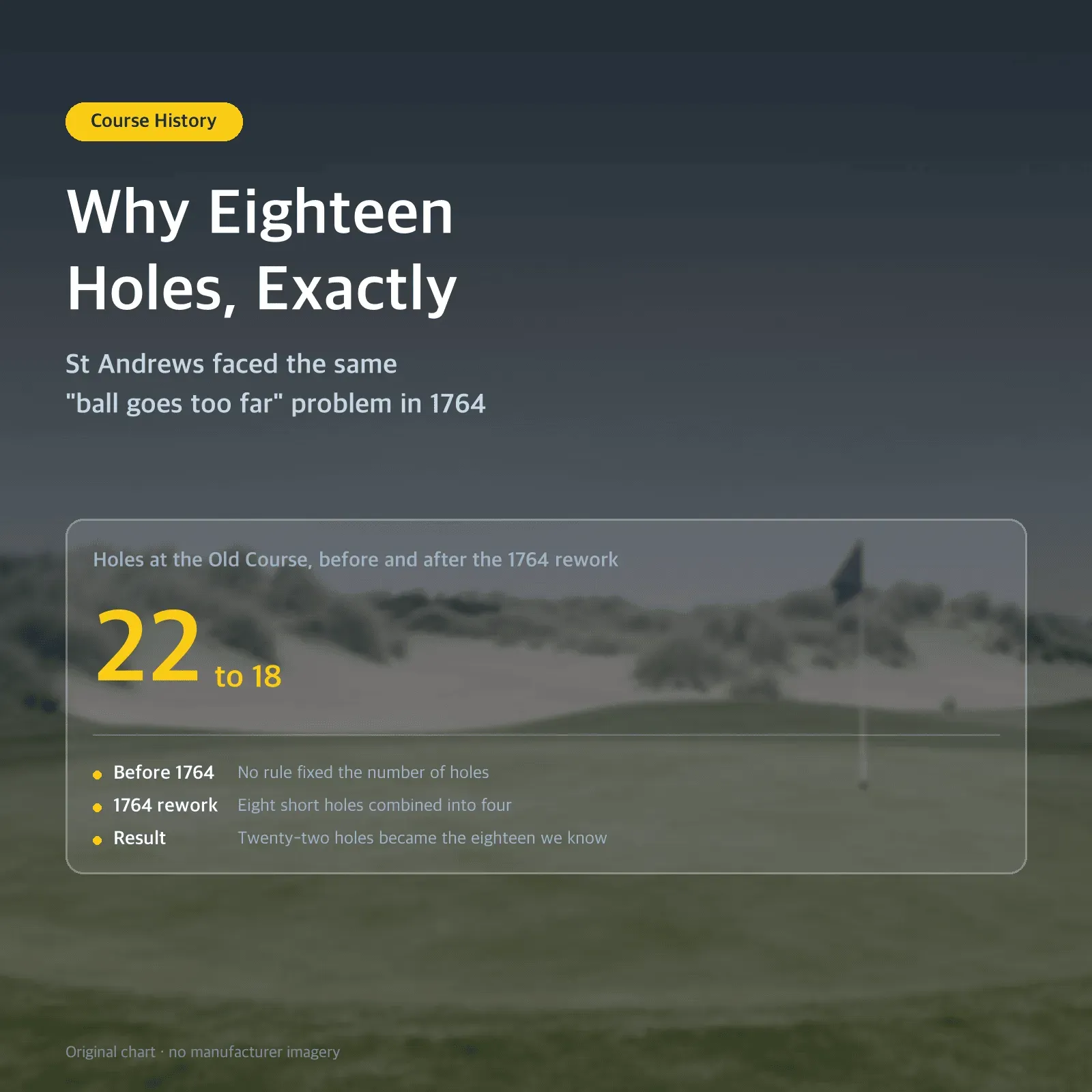
"The ball goes too far" is a live debate today, but St Andrews faced the same problem in 1764. The response that year is why a round of golf is eighteen holes.
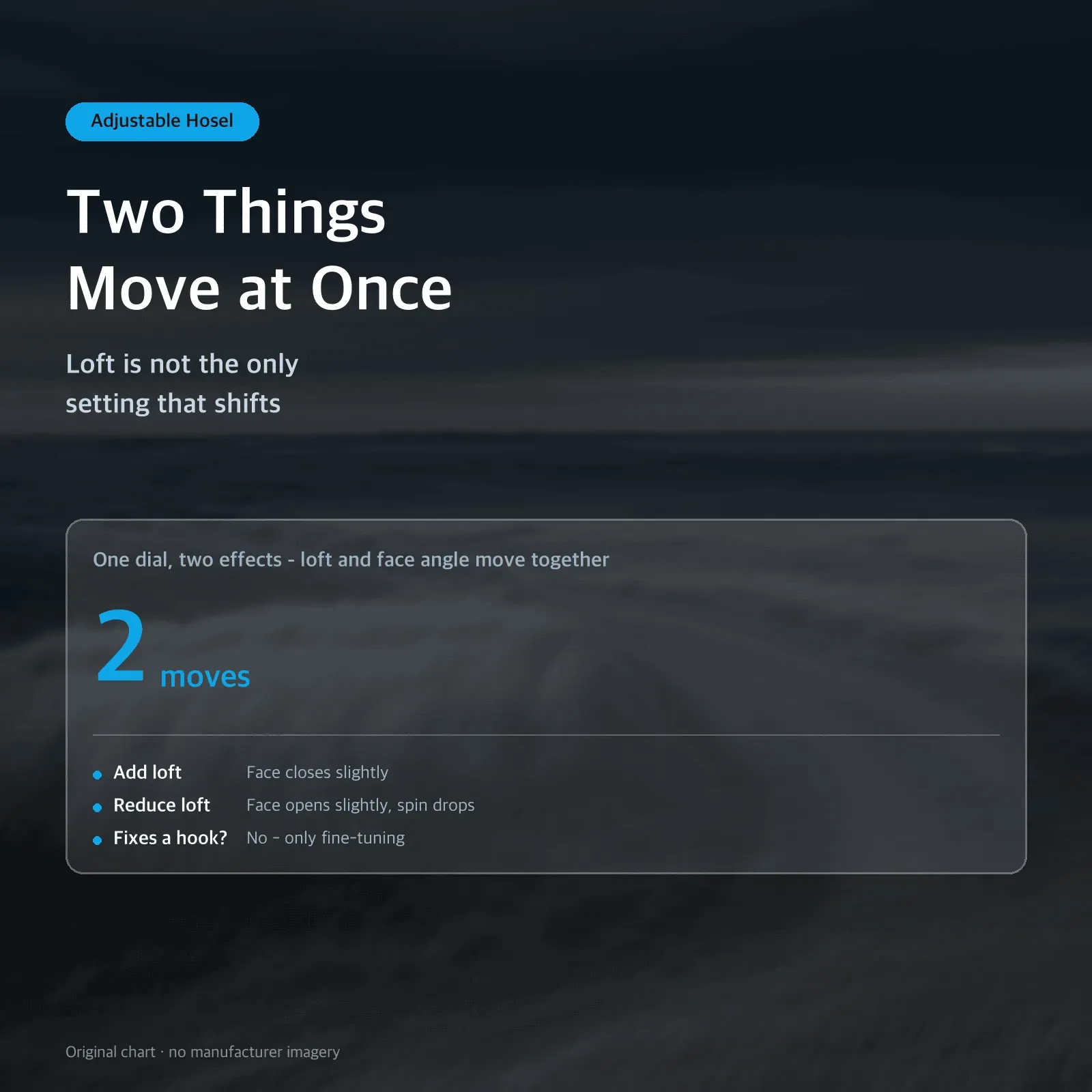
Adjustable hosels change loft, but on most modern designs they change face angle too — a fact that trips up golfers chasing a fix for their hook.

The 2016 anchoring ban is often called a 'long putter ban,' but Rule 10.1b prohibits a stroke, not a club.
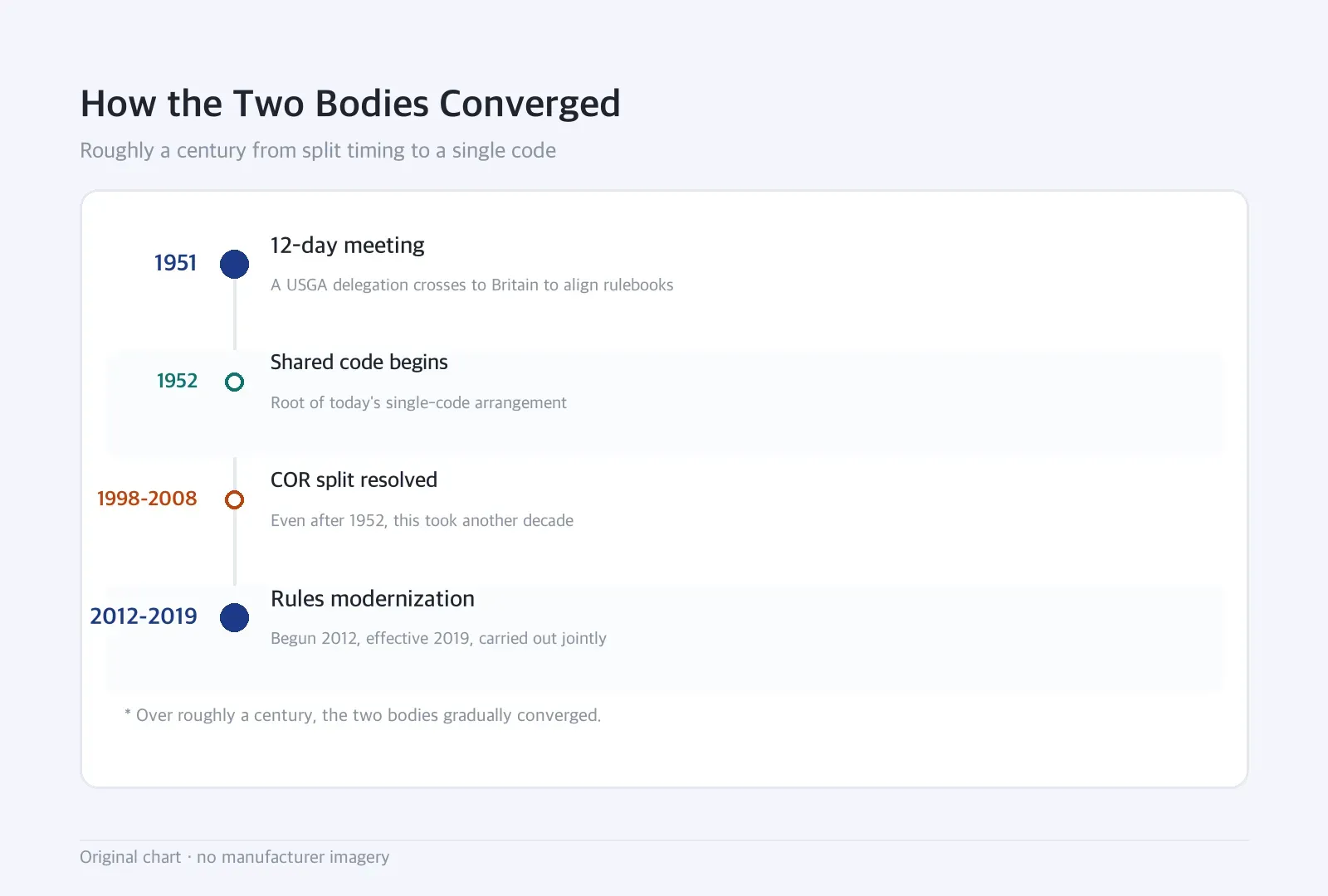
The USGA and R&A have split on timing before: the Schenectady putter, the steel shaft, the coefficient of restitution — and the 14-club limit too.

In January 1966, Karsten Solheim sketched a putter on a record sleeve. That sketch became the Anser — still standard 60 years later.

Titleist, TaylorMade, Callaway, Srixon, and Bridgestone all sell a flagship tour ball. Layer counts and compression differ more than marketing suggests.
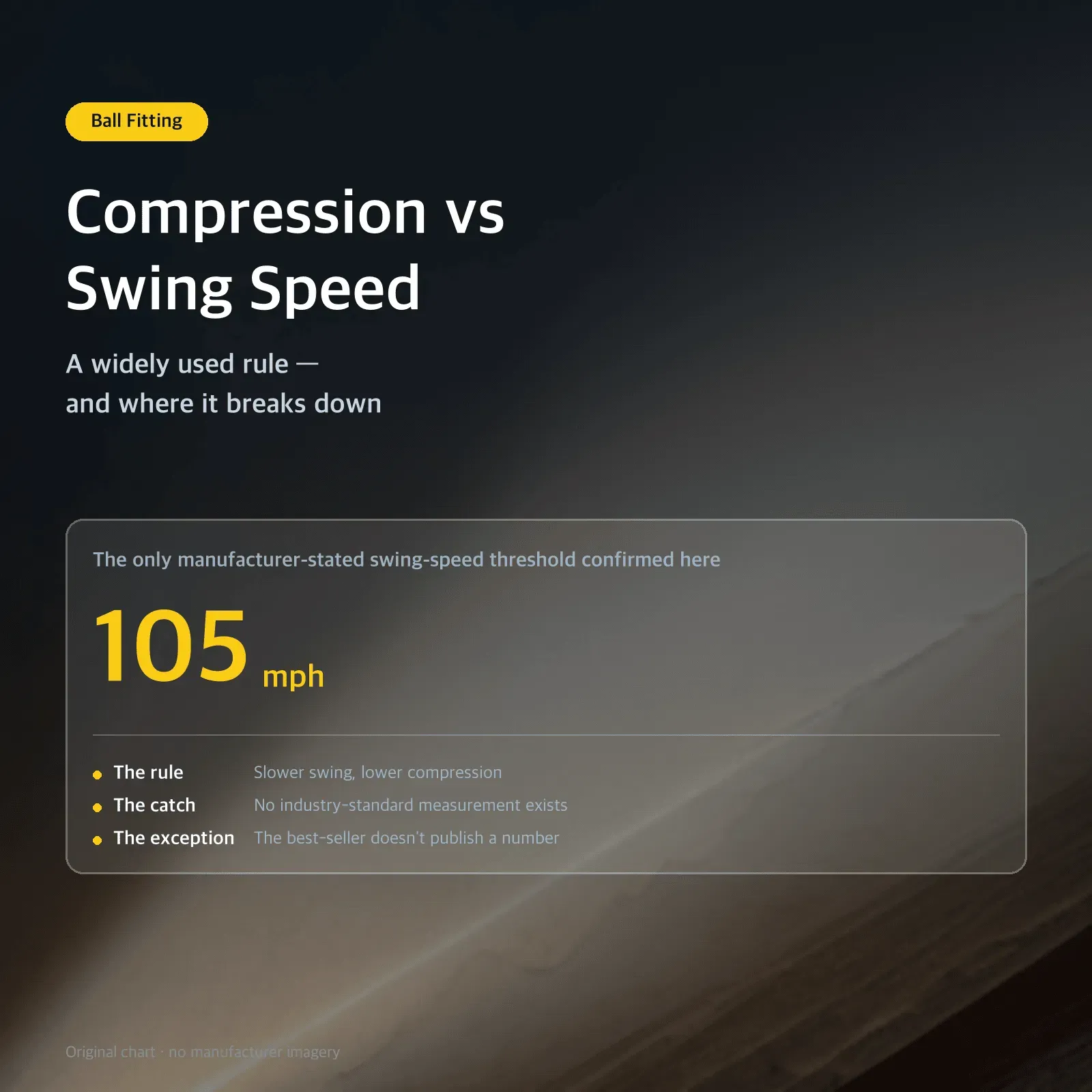
Manufacturers disagree on whether swing speed should drive compression choice. Here's where the speed-to-compression chart holds up, and where it fails.

For decades, teaching held that path determines start direction and face determines curve. Measurement overturned that in the late 2000s.
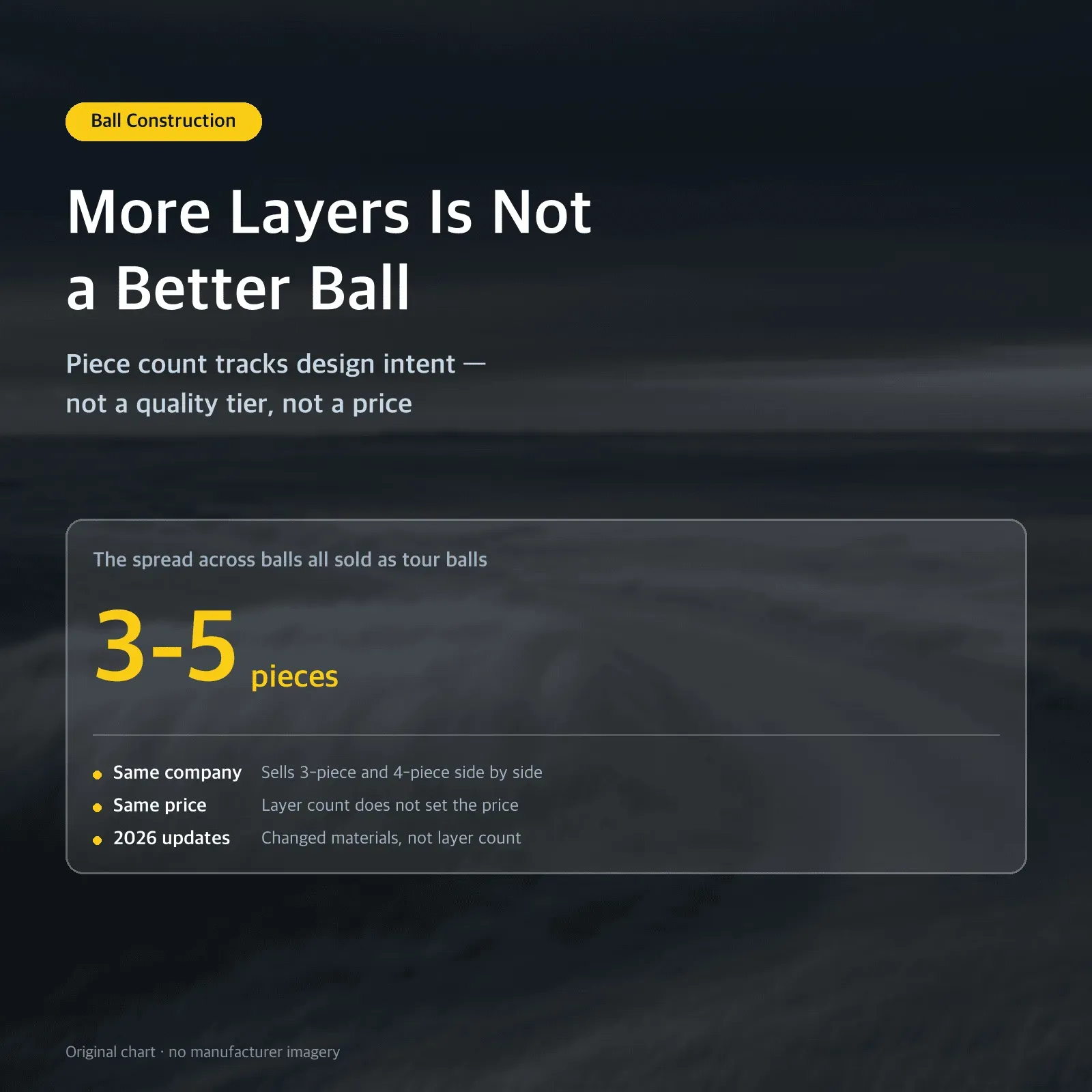
Boxes advertise 3-piece or 5-piece as a quality tier. Lining up current tour balls shows layer count tracks design intent, not price or rank.

In December 2023 golf's governing bodies set a 2028 date for rolling back ball distance. In June 2026 they merged it into 2030 and reopened the question.

Most makers publish compression without drawing a speed line. Bridgestone splits its four-model TOUR B lineup at a stated 105 mph threshold.
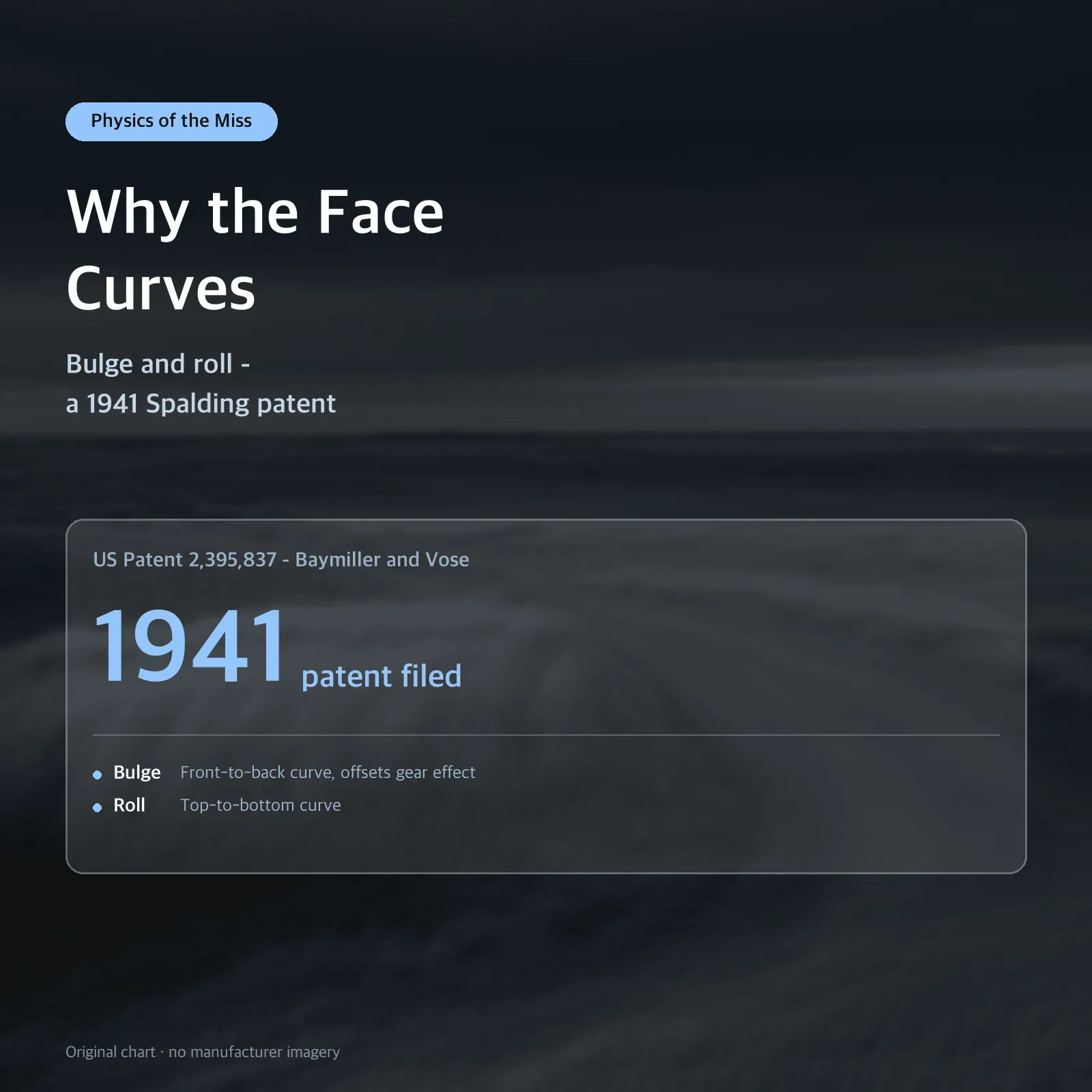
Driver faces curve while iron faces stay flat. The reason is bulge and roll, meant to offset gear effect, formalized in a 1941 Spalding patent.

Callaway's 2026 Chrome Tour stays four-piece. What changed is the mantle material, a stiffness increase the company says took over four years.
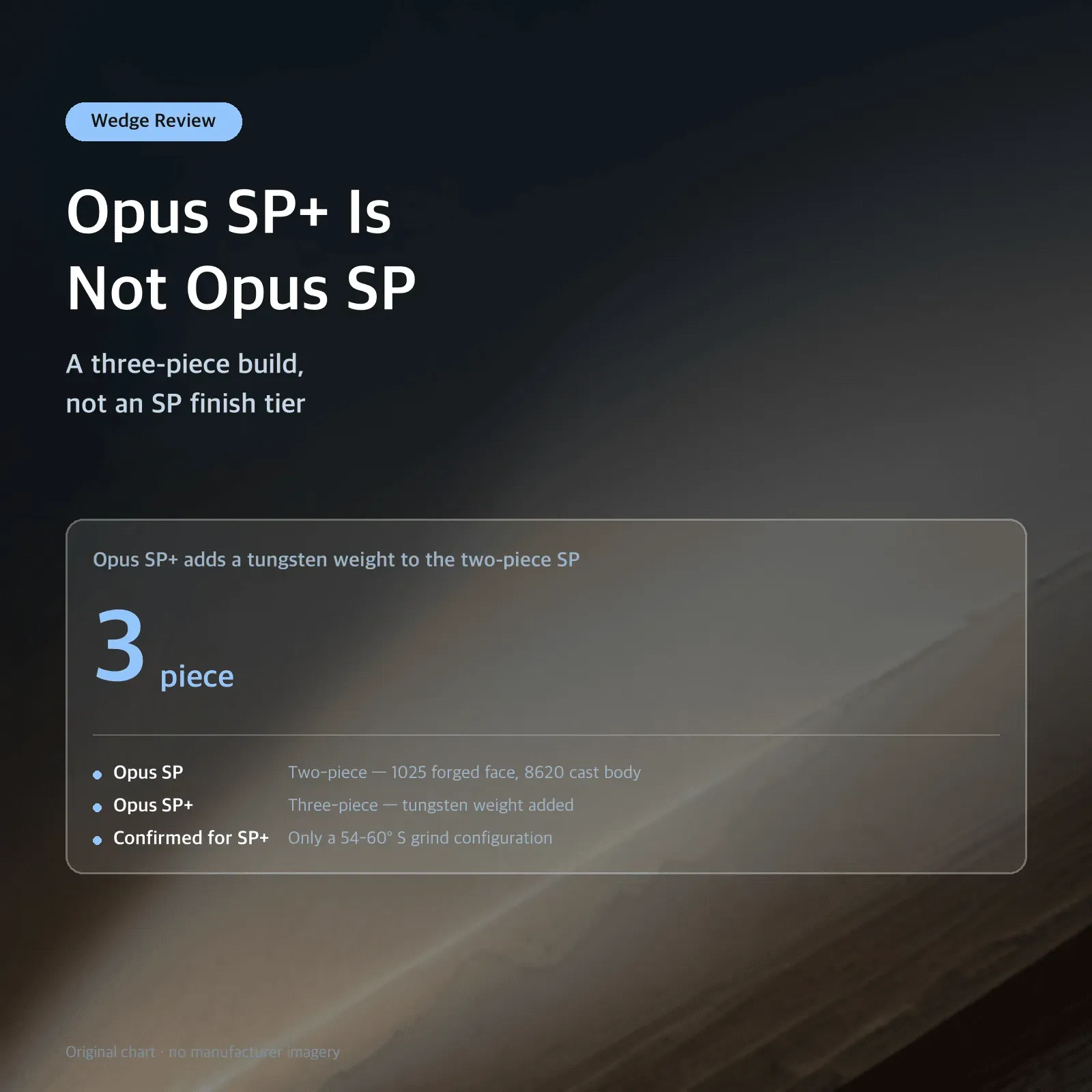
Opus SP+ sounds like an SP update but is a different three-piece build. The full spec table we found belongs to SP, not SP+.

Callaway's current driver is the Quantum. Of its five models, only Max and Triple Diamond let you move the weight; the rest are fixed or skip the system.
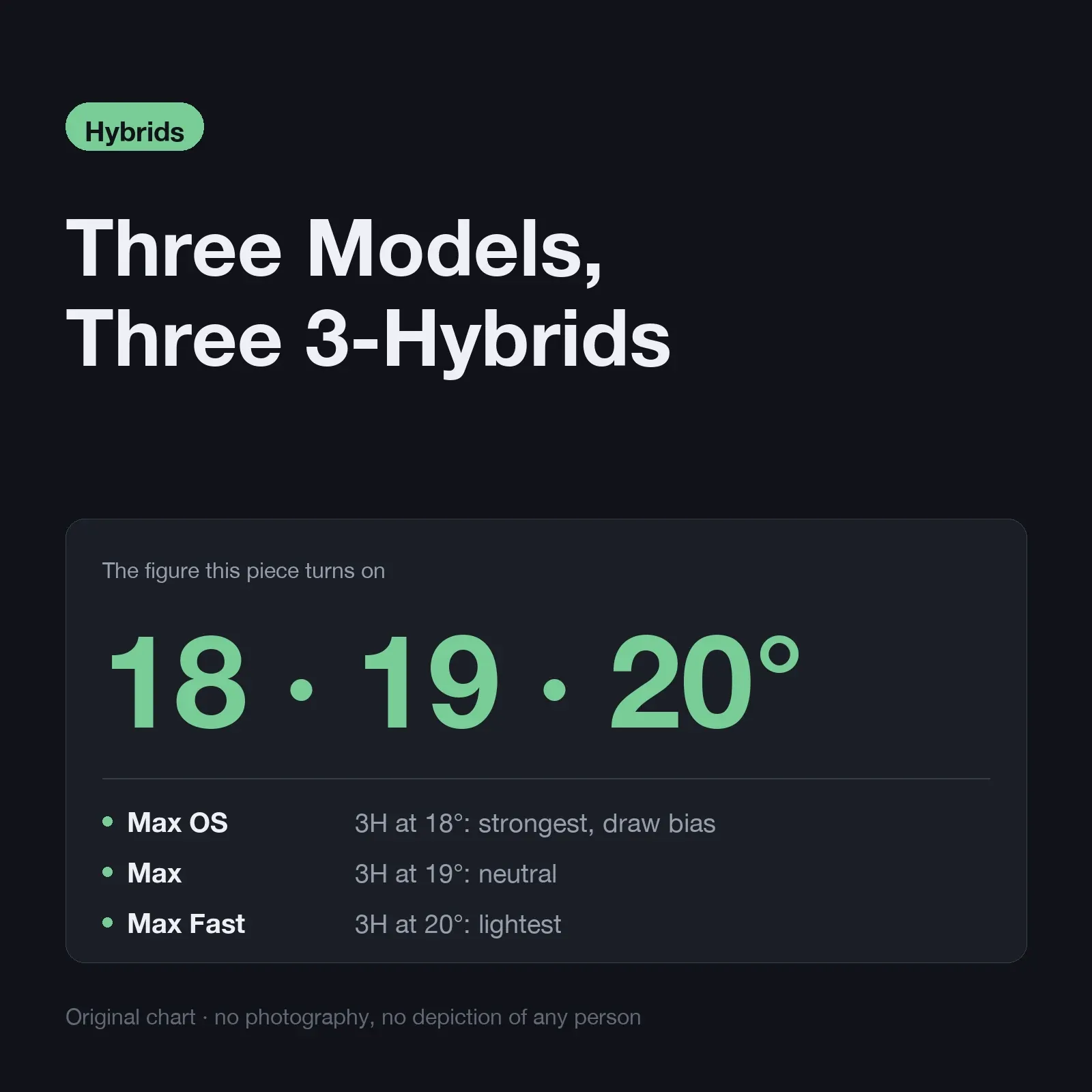
All three Quantum Max hybrids offer a 3H — at 18, 19 and 20 degrees — and that offset holds the whole way up each set. Checked against Callaway's spec sheets.
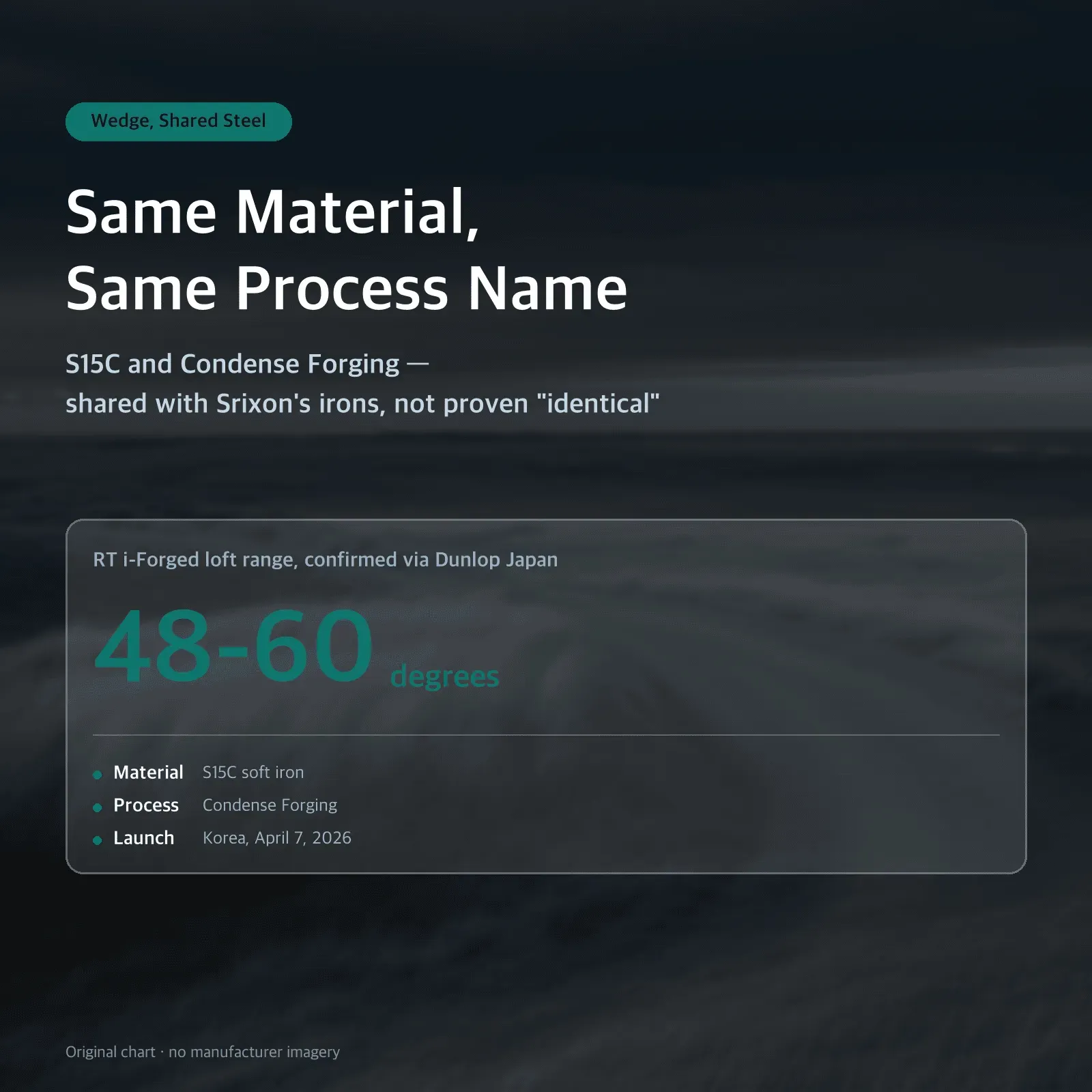
Cleveland's RT i-Forged wedge shares a material and process name with Srixon's i-Forged irons — sharing names isn't sharing technology.
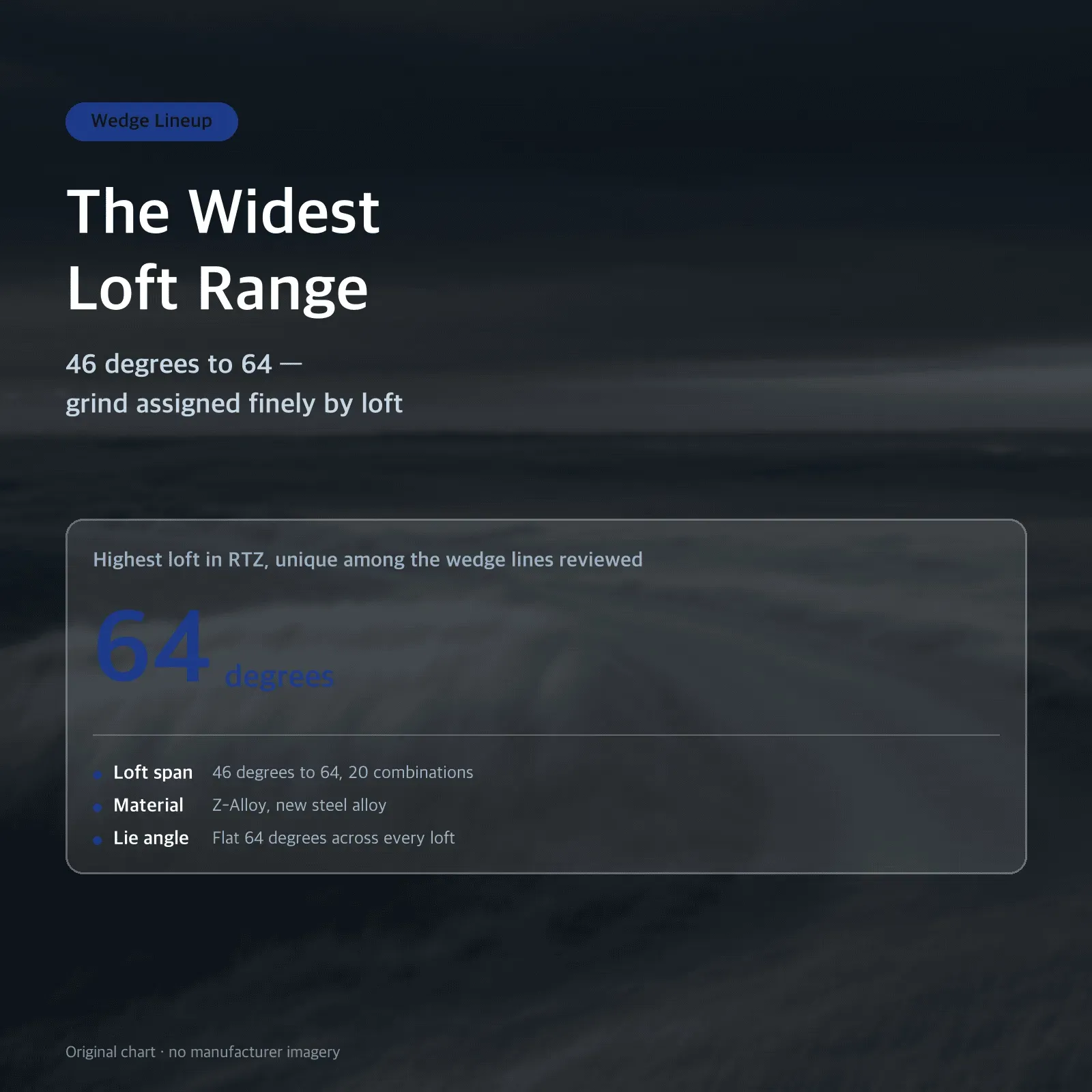
RTZ runs 46-64 degrees across 20 loft/grind combos, the widest spread here, but names on its spec table often lack supporting explanation.
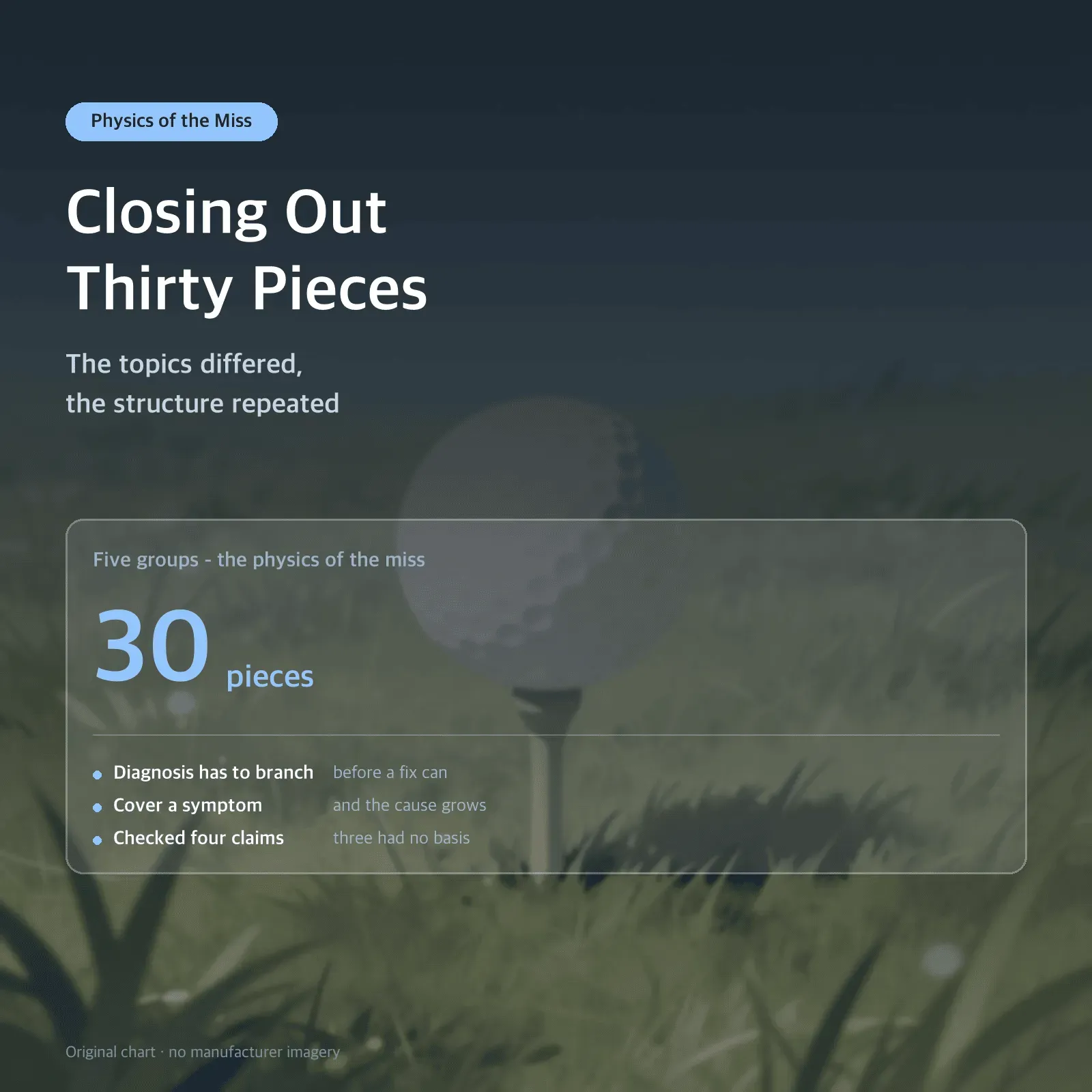
Closing out thirty pieces on the physics of the miss — the patterns that recurred across the branches, and the claims that did not survive checking.
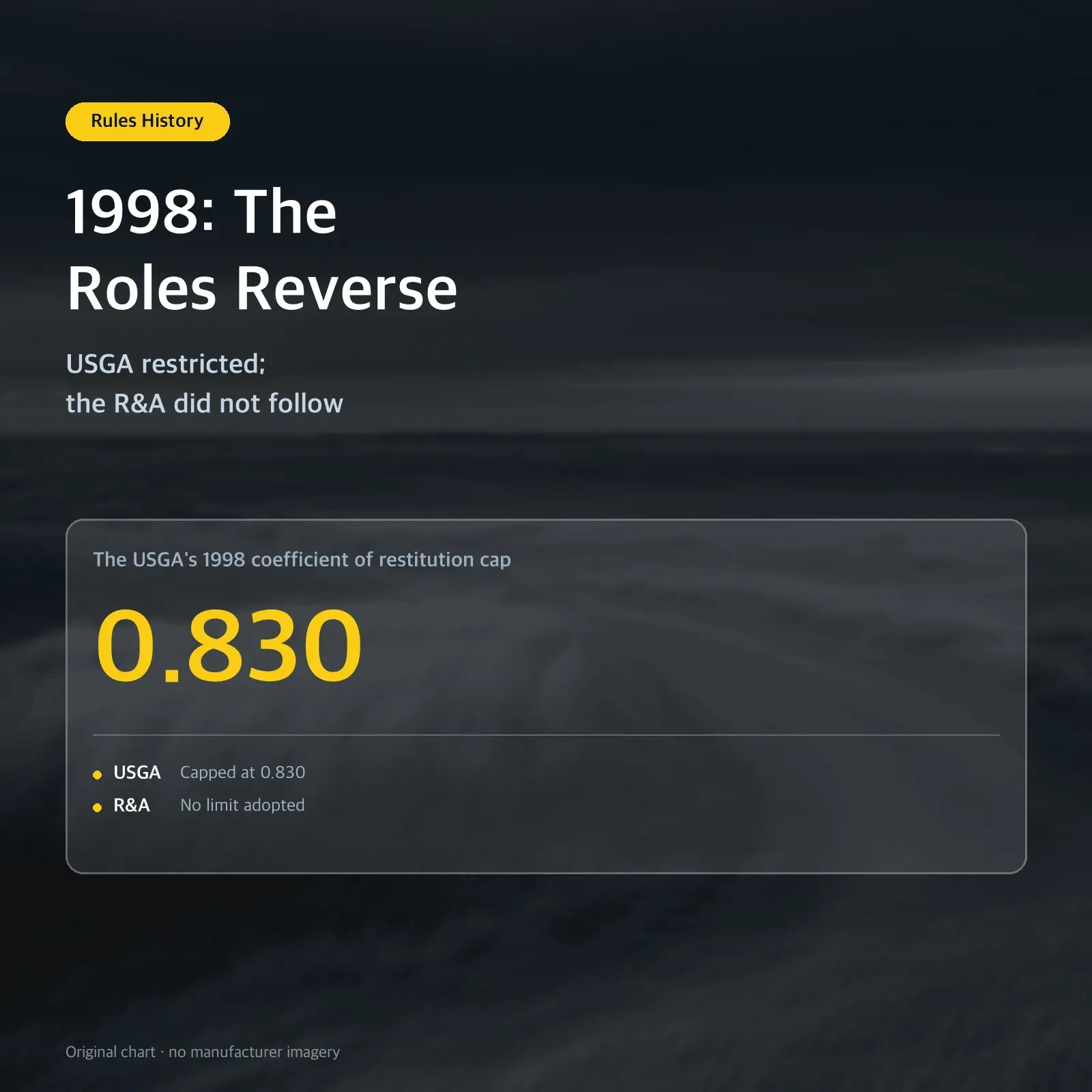
When the USGA capped driver coefficient of restitution at 0.830 in 1998, the R&A didn't follow — one driver was legal here, illegal there.

PING, TaylorMade, Titleist, and Callaway's 2026 flagship drivers all share the 460cc cap. What separates them is who lets you move weight around.
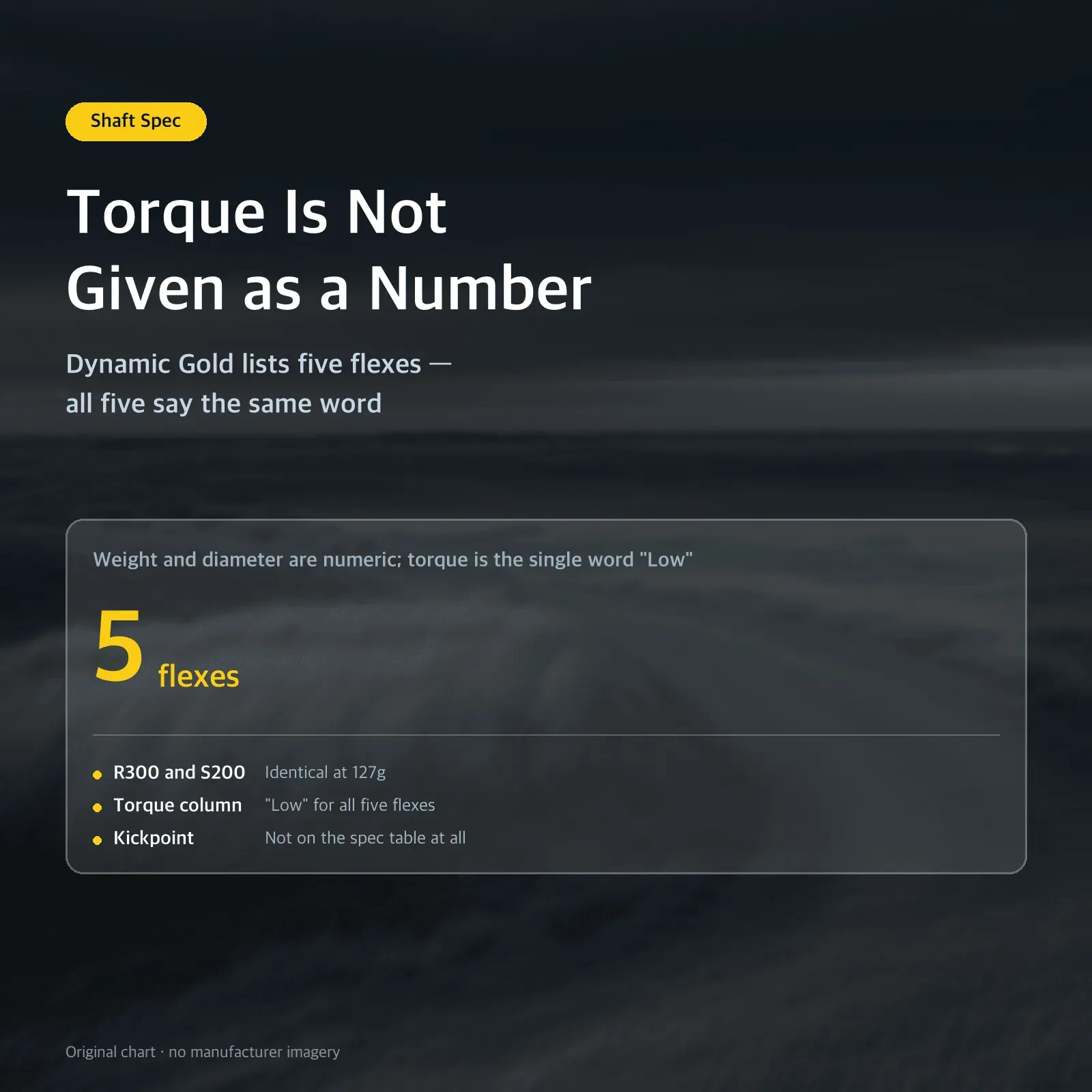
Dynamic Gold publishes weight and diameter for five flexes, but torque reads 'Low' for every one of them, and kickpoint is not on the table at all.

The PING Eye2 is widely cited as the best-selling iron set in history. Its square grooves also triggered a rules dispute, covered separately.
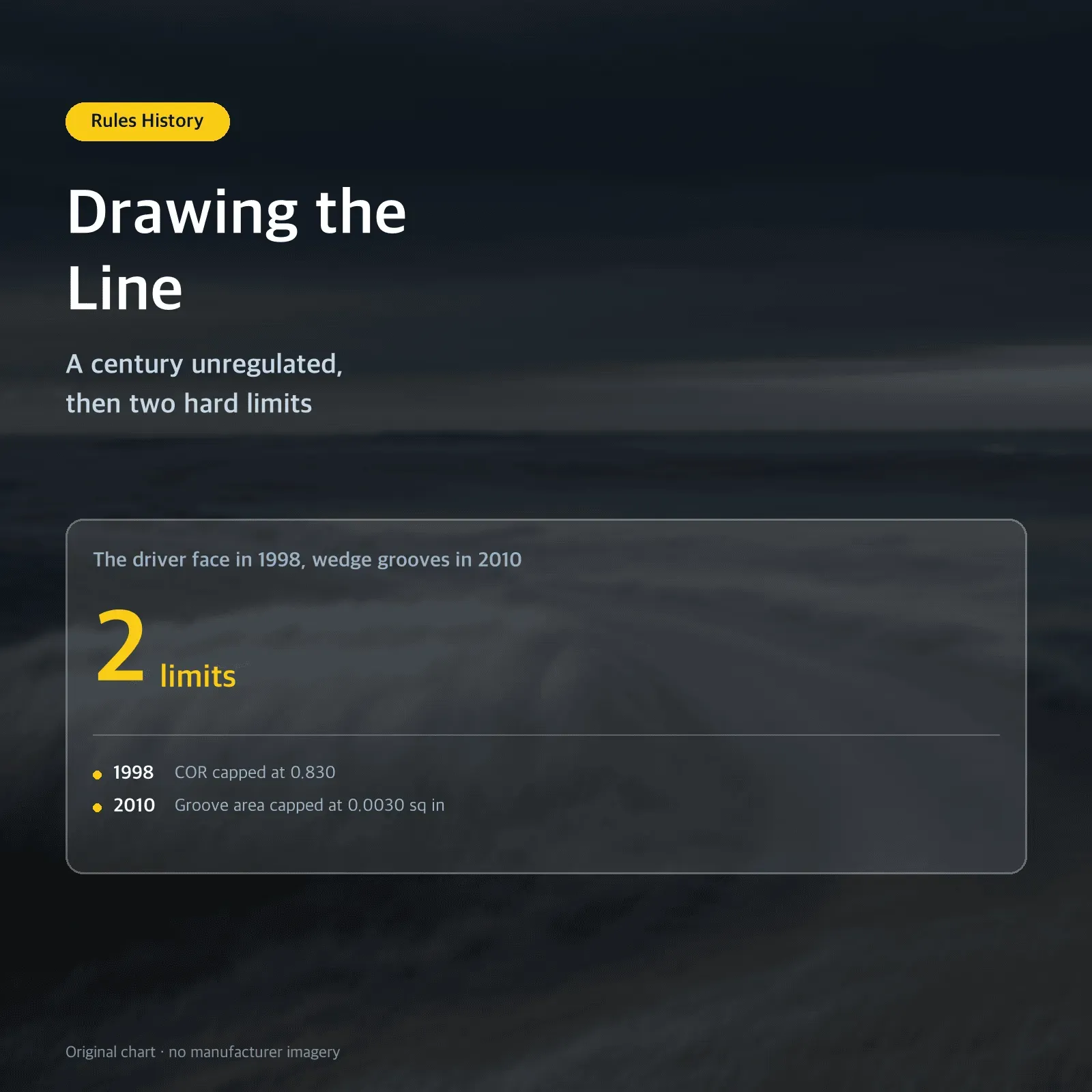
For a century equipment went unregulated. In 1998 the driver face and in 2010 wedge grooves got hard, measurable limits. Here is what changed and why.
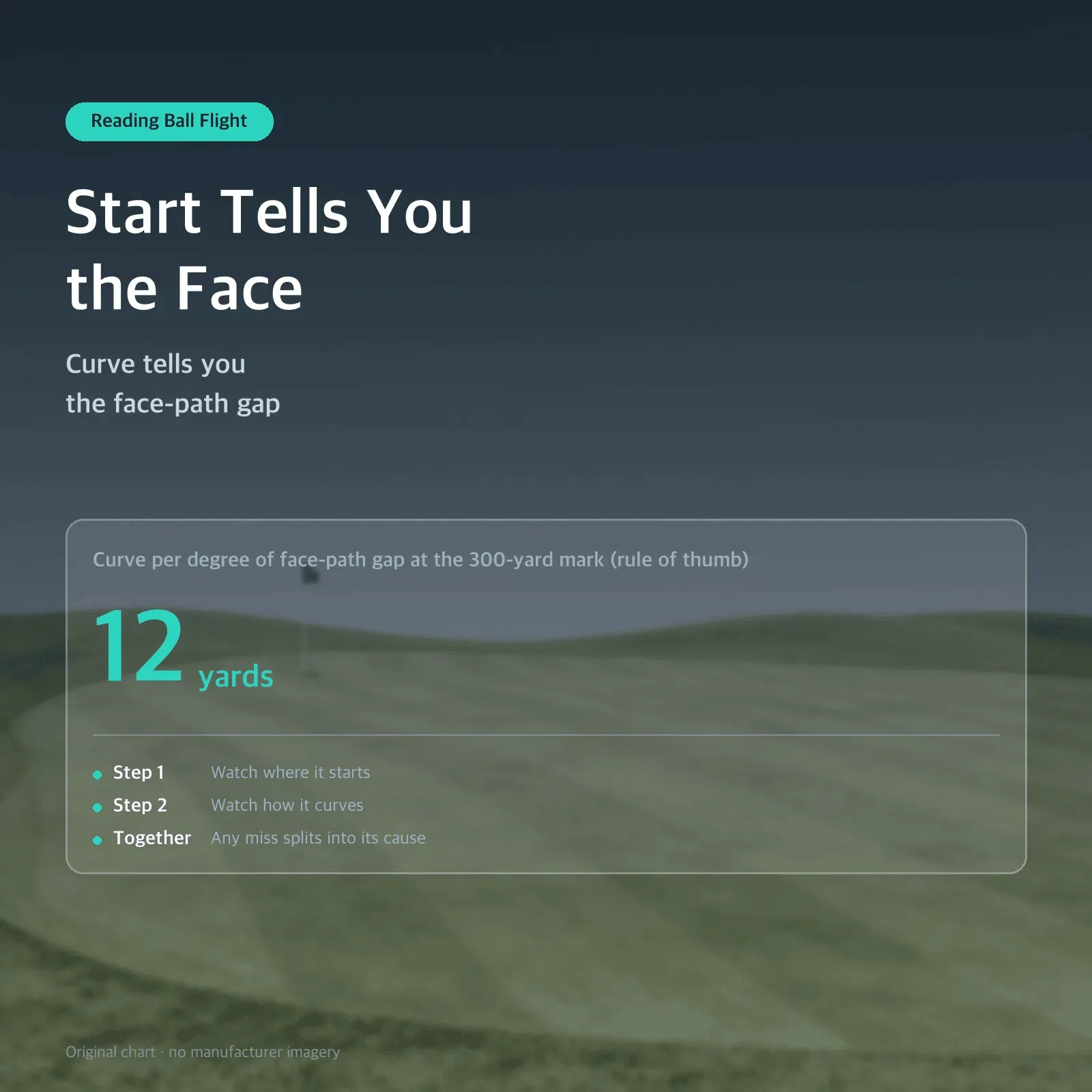
A practical guide to reading what happened at impact from ball flight alone, using the corrected face-path relationship — no launch monitor required.

Two centuries ago, a golf ball often cost more than a club. Understanding how the featherie was made explains why.
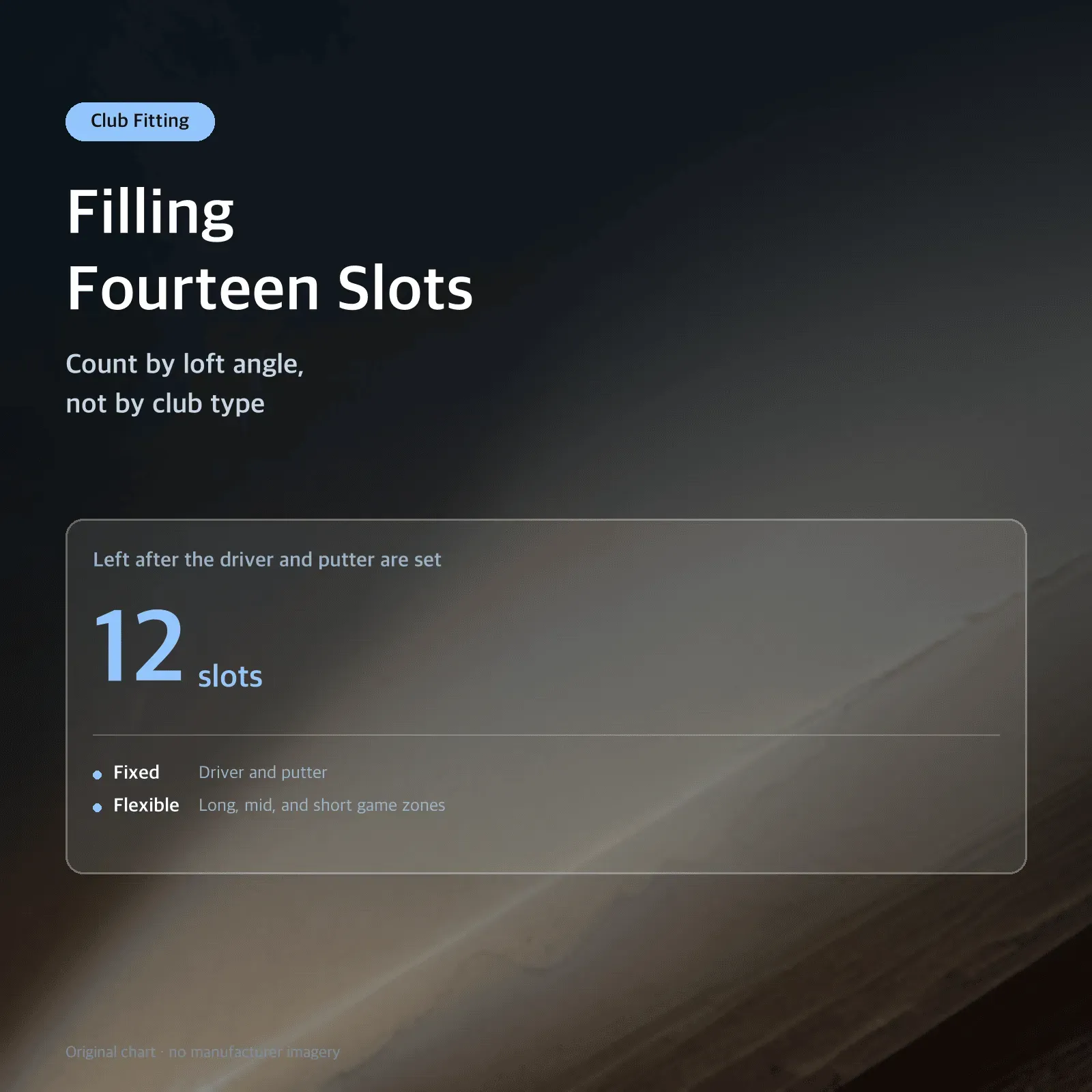
A practical method for building a 14-club setup: count by loft angle, find the gaps and overlaps, and remember fourteen is a ceiling, not a quota.
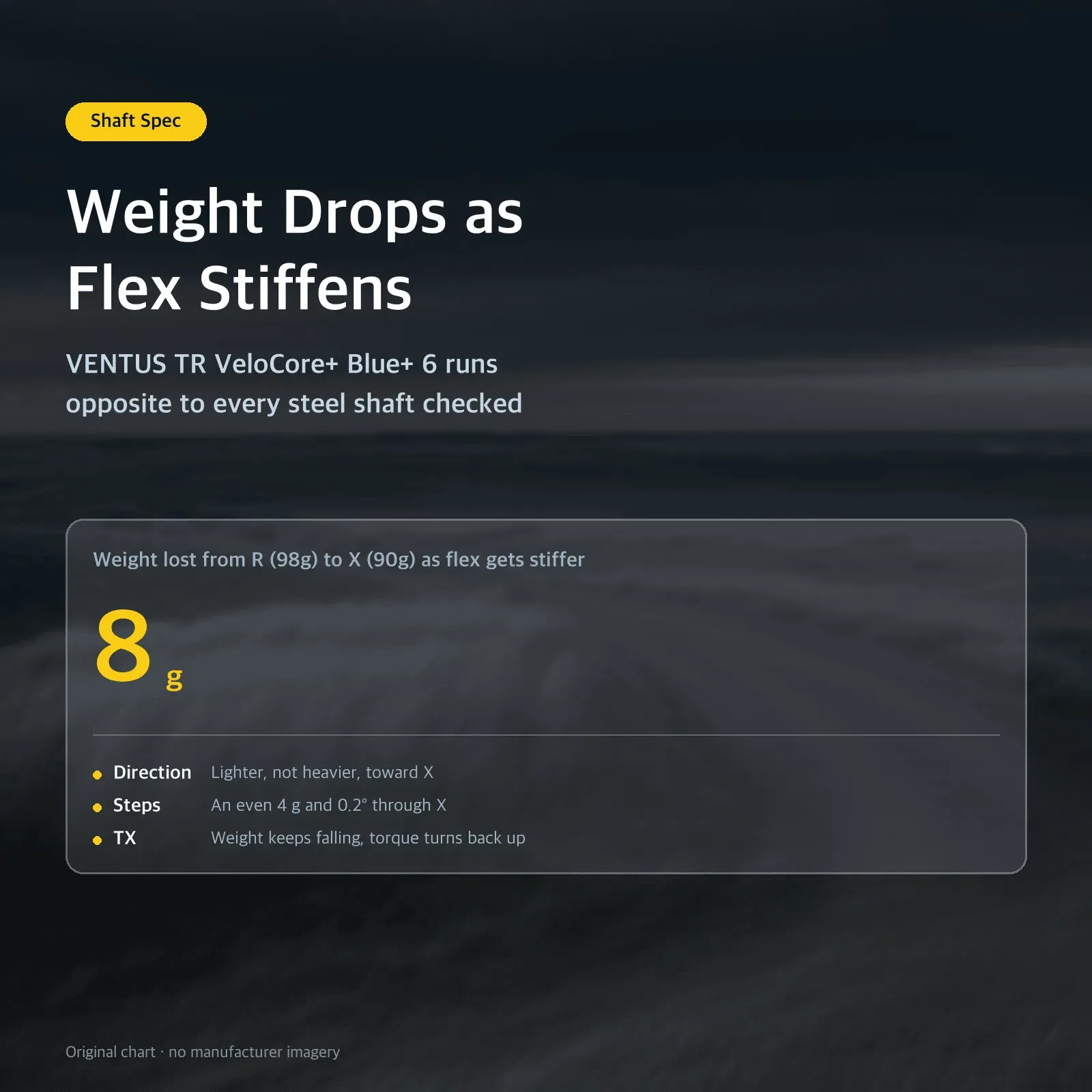
Fujikura's VENTUS TR VeloCore+ Blue+ 6 runs opposite current steel shafts: weight falls as flex stiffens, and torque reverses at the top flex.
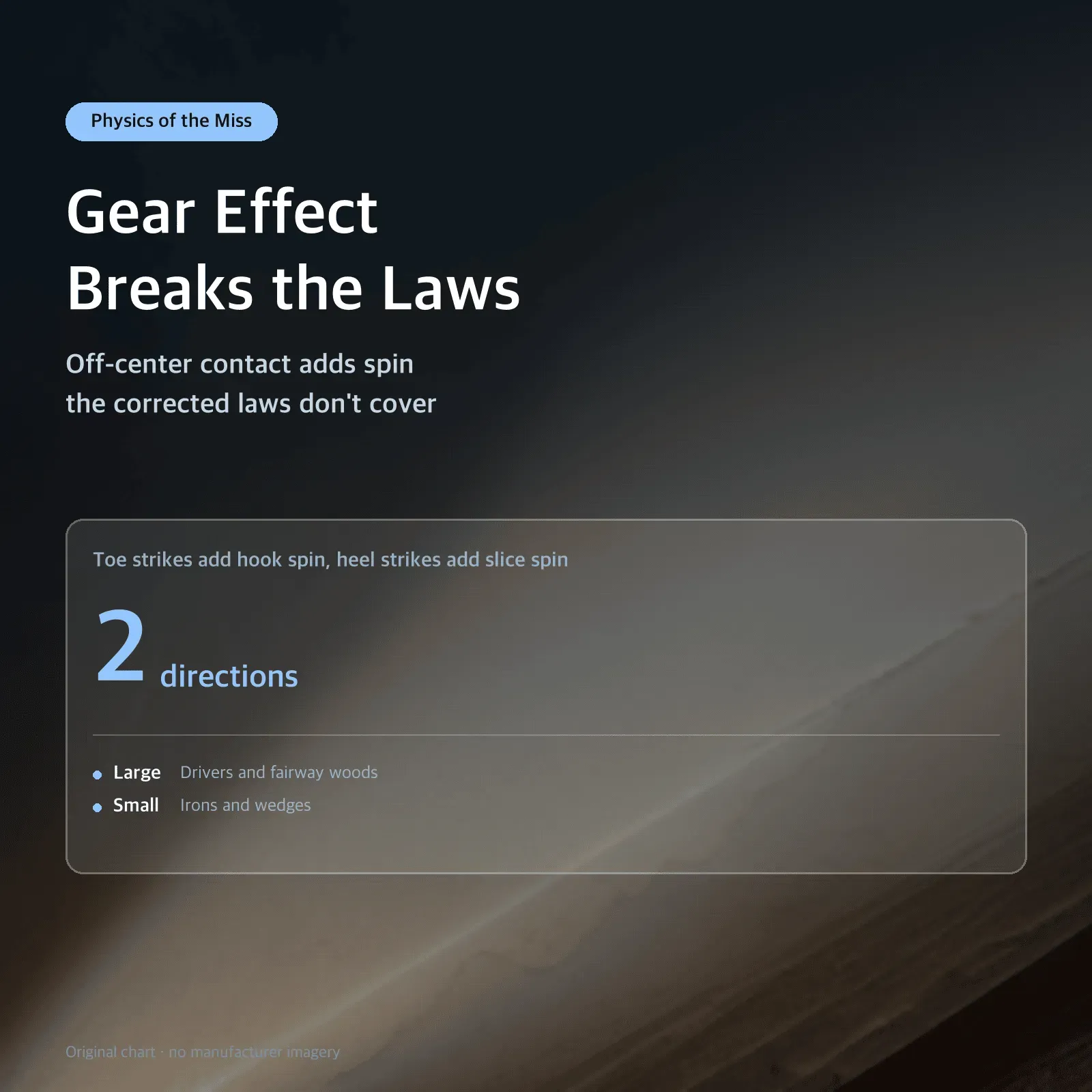
The corrected ball-flight laws assume center contact. Off-center hits add gear-effect spin the laws don't cover — far bigger with a driver than an iron.

Driving irons, hybrids, and fairway woods fill the 185-240+ yard gap, but head structure and launch behavior differ completely. A decision framework.
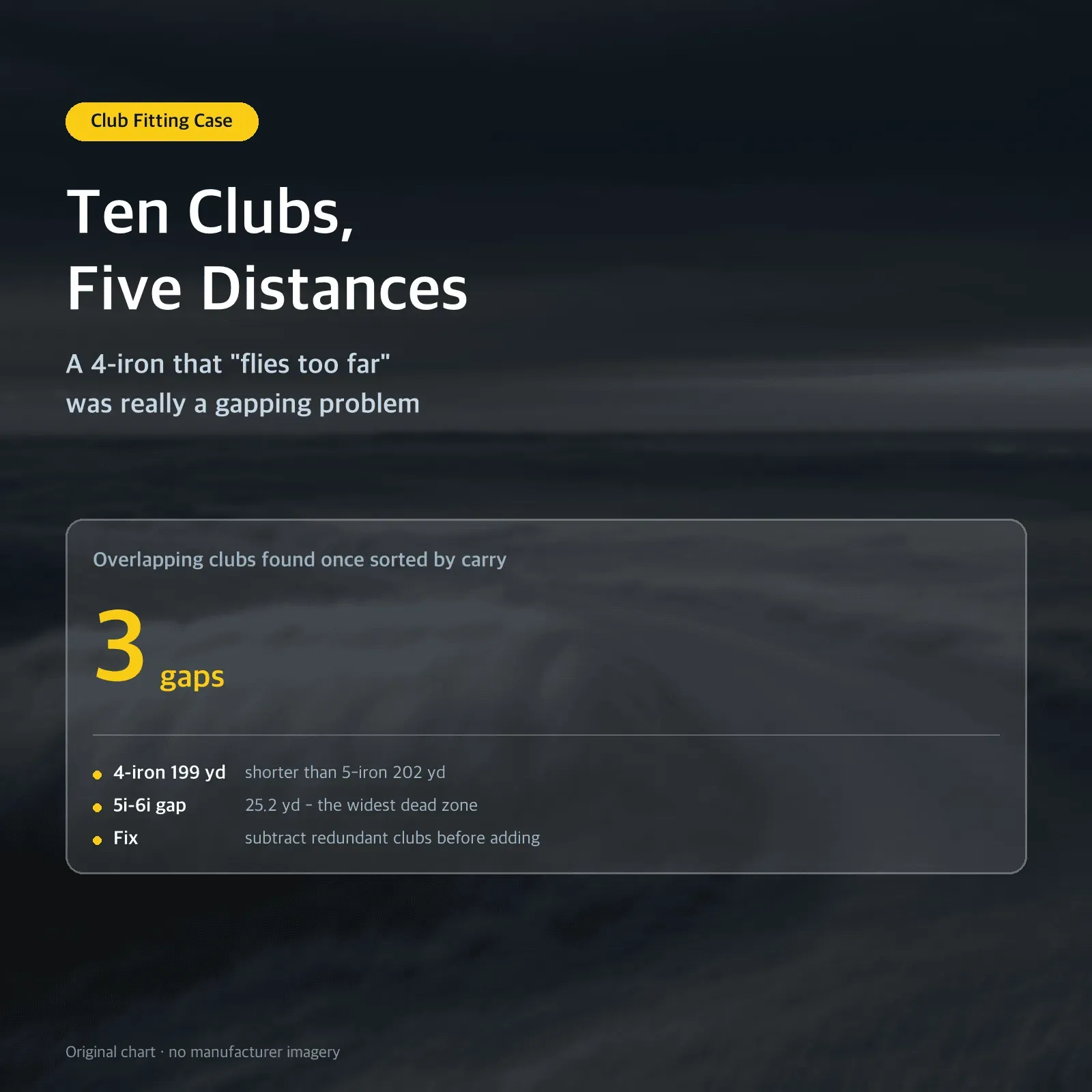
A golfer suspected his long irons flew too far. The real problem was gapping: two clubs overlapped almost exactly, and his set had three dead zones.

The 1990 PING-USGA settlement recognized Eye2 clubs made 1984-1990 as conforming. What grandfathering is, and why golf's rules use it.
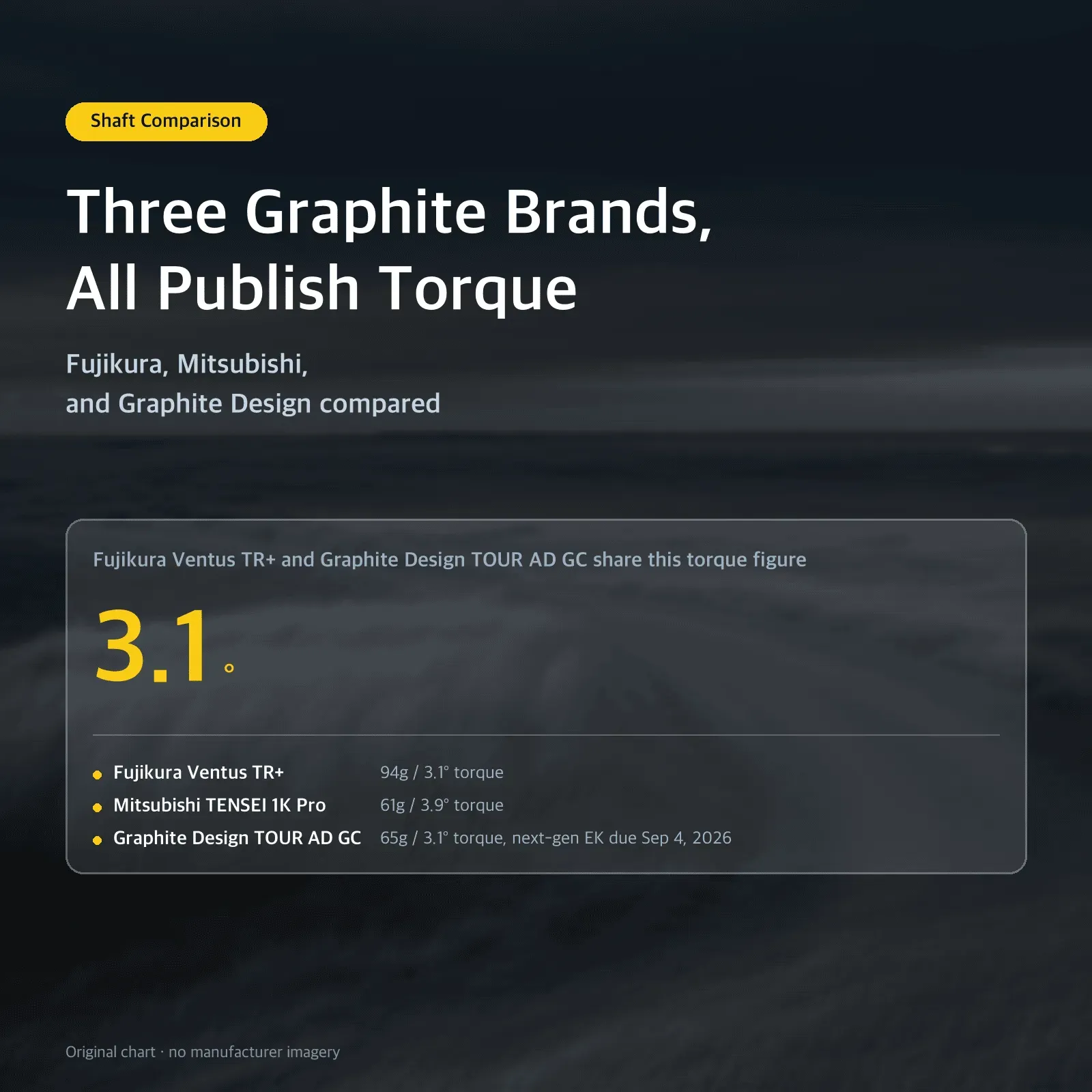
Fujikura Ventus TR, Mitsubishi TENSEI 1K Pro Blue, and Graphite Design TOUR AD GC all publish torque to a decimal point, unlike steel shaft brands.

The gutta-percha ball cut the price of playing to roughly a quarter. What that did to who could play, and how quickly the change spread.
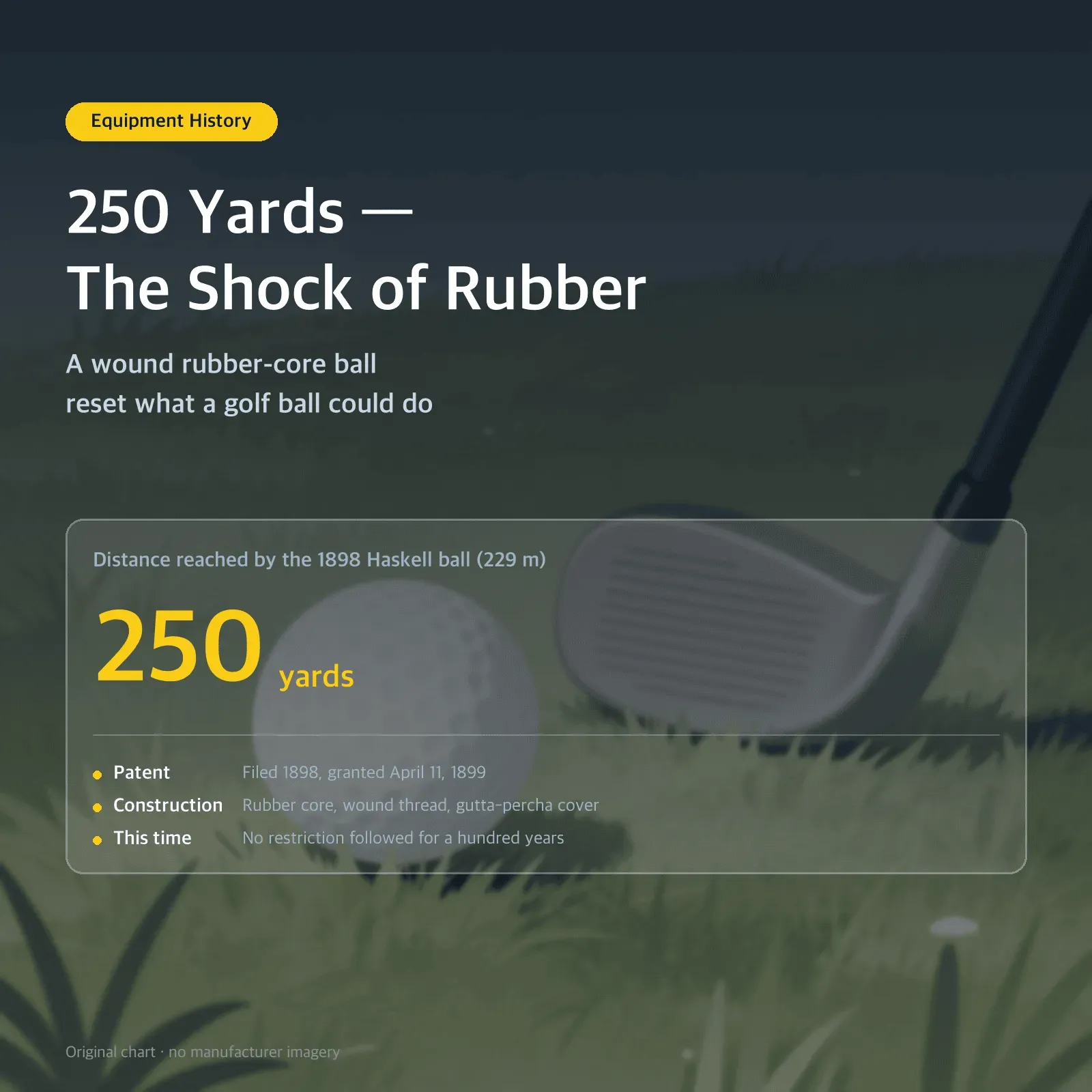
In 1898 a wound rubber-core ball flew 250 yards and reset what a ball could do — yet unlike earlier distance jumps, it drew no rule for a century.

Ben Hogan compared the hook to a rattlesnake in your pocket. Unlike other golf legends we checked, this one has a dated, verifiable source.
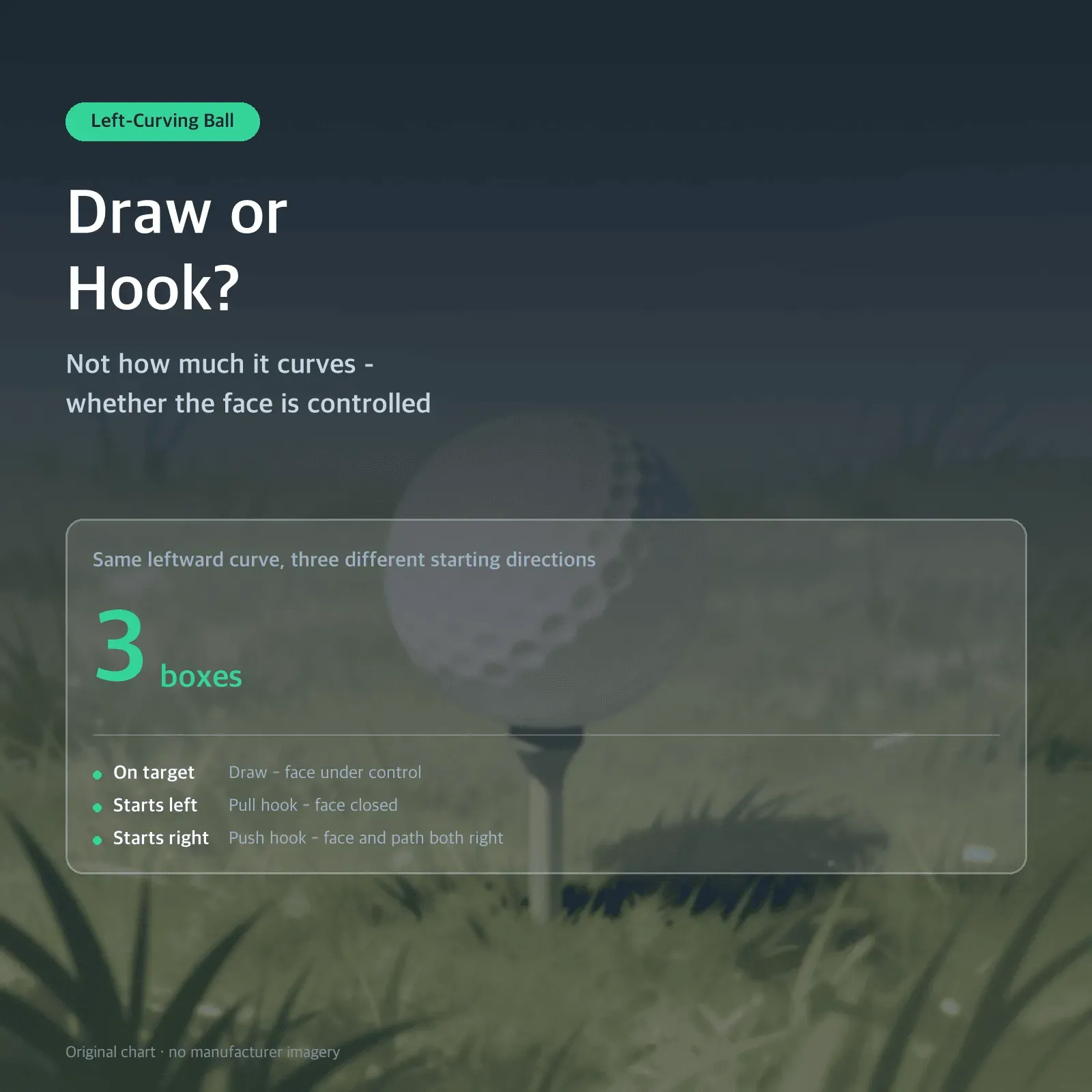
A draw and a hook both curve right to left, but the boundary between them isn't how much the ball curves — it's whether the face is under control.
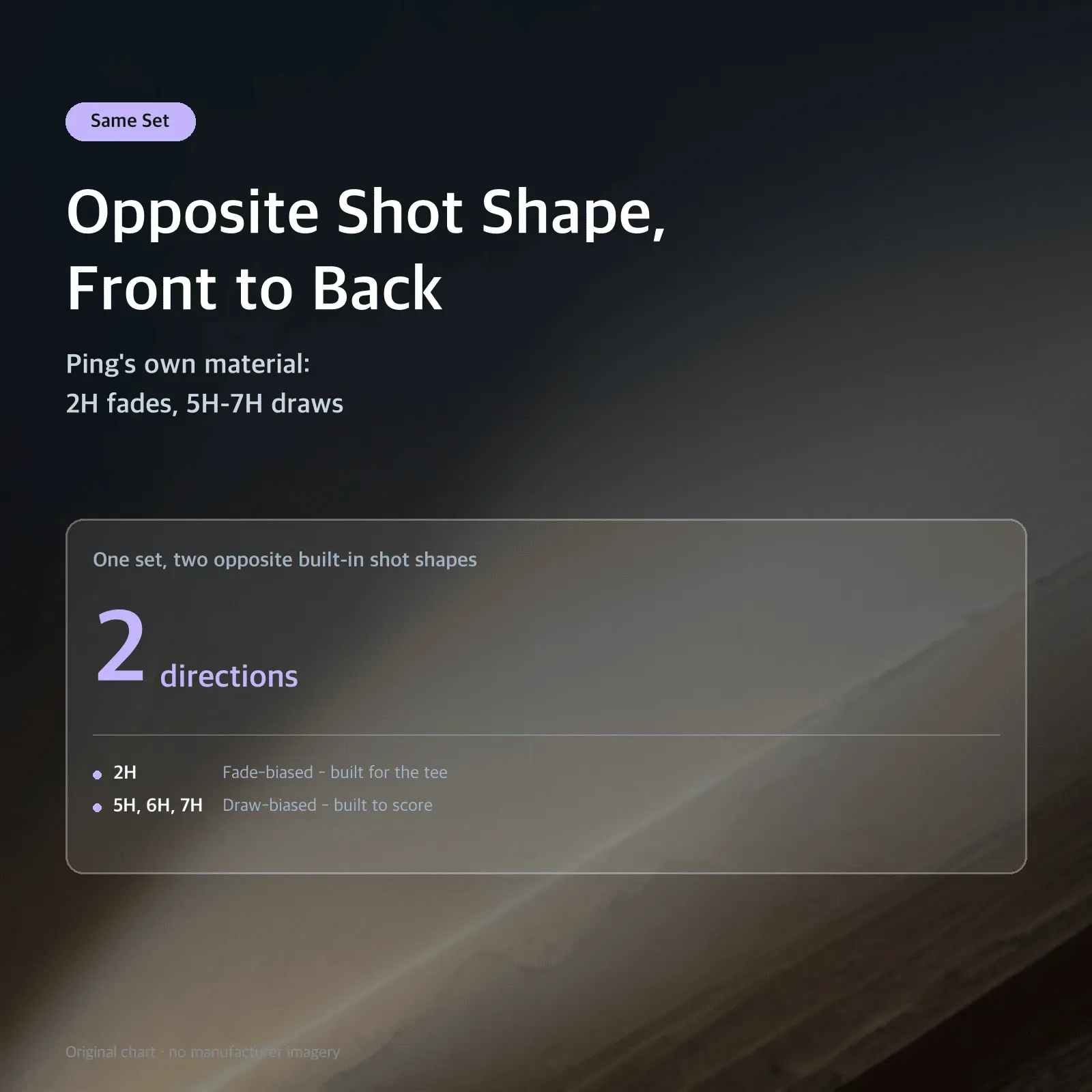
Ping states its 2-hybrid is fade-biased while the 5-, 6-, and 7-hybrids are draw-biased — one set, built in opposite directions by number.
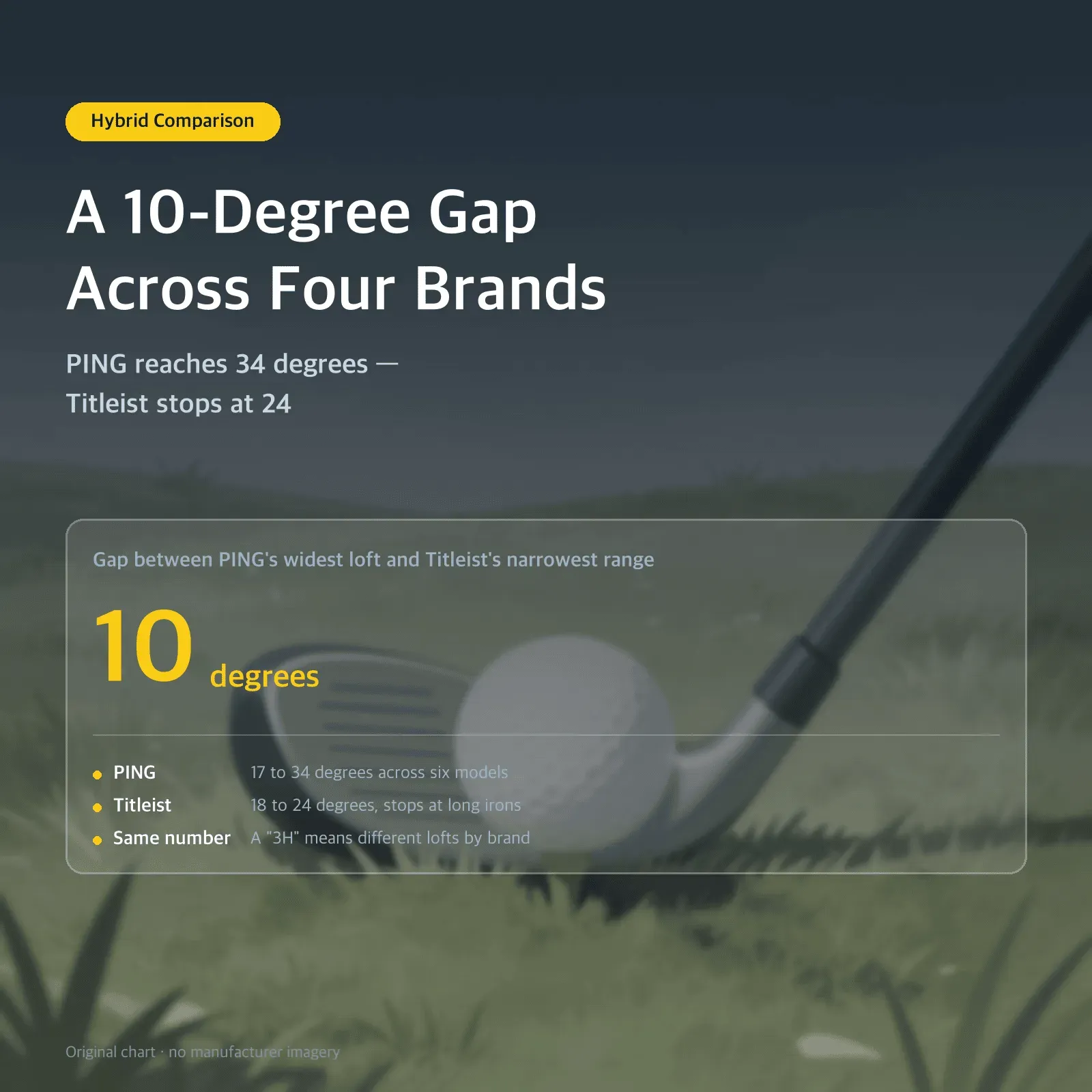
PING, Titleist, TaylorMade, and Callaway all sell hybrids, but where each brand draws the category's boundary differs by more than 10 degrees of loft.
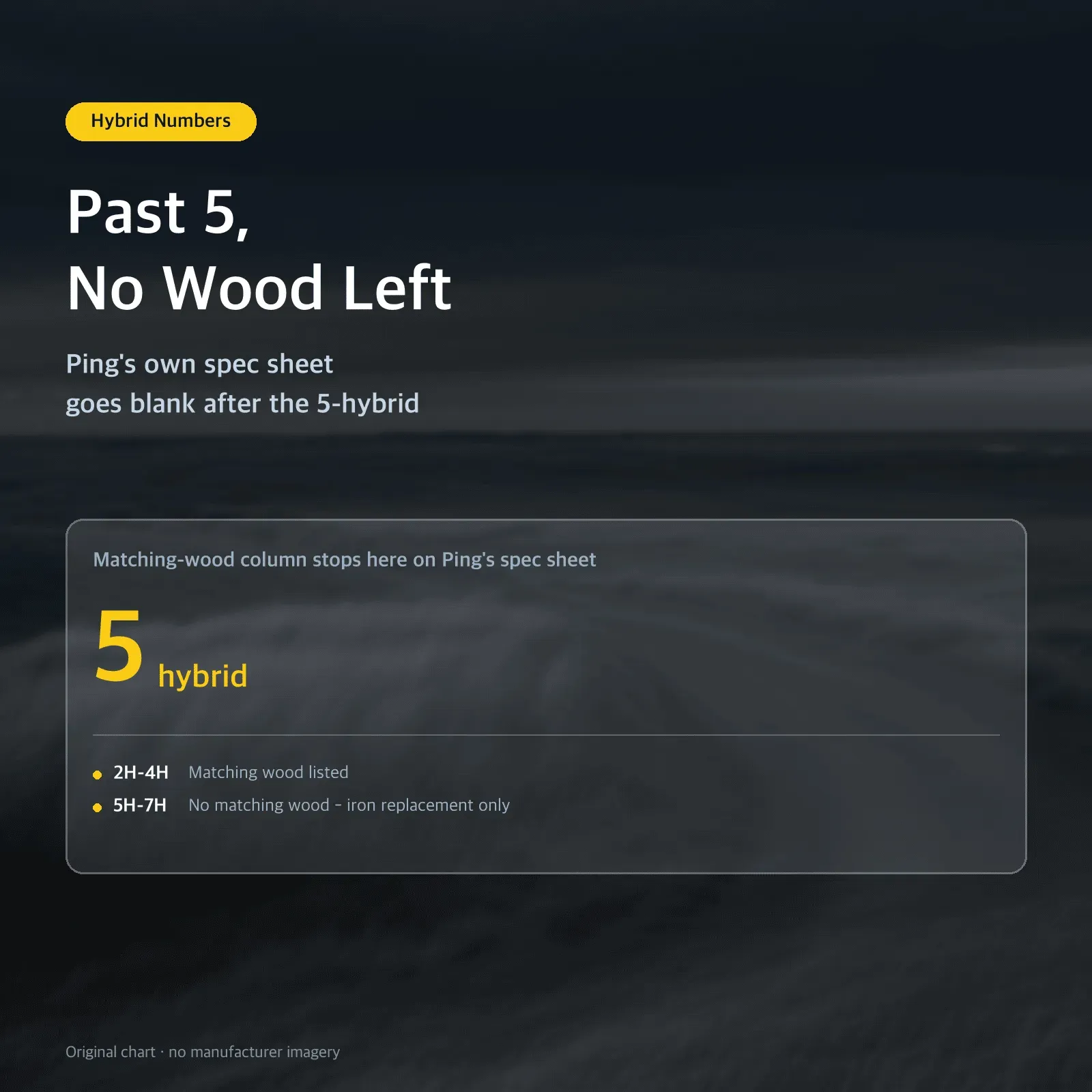
Ping's spec sheet lists a matching wood for the 2H through 4H — then the column goes blank at 5H. Past that loft, no fairway wood exists to fill the gap.
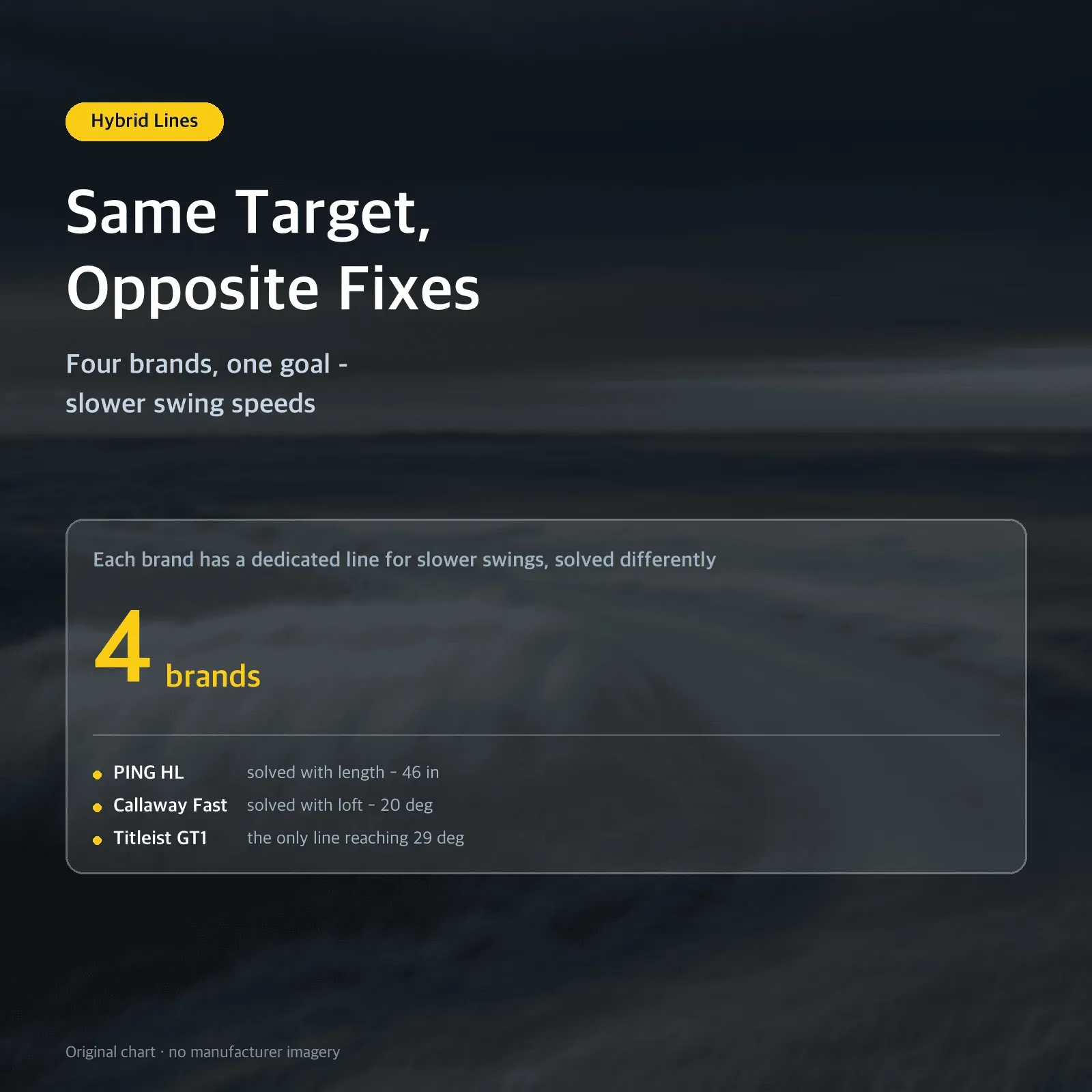
PING's HL, Callaway's Max Fast, TaylorMade's Max Lite, and Titleist's GT1 target slower swings — one adds length, another adds loft, opposite trade-offs.
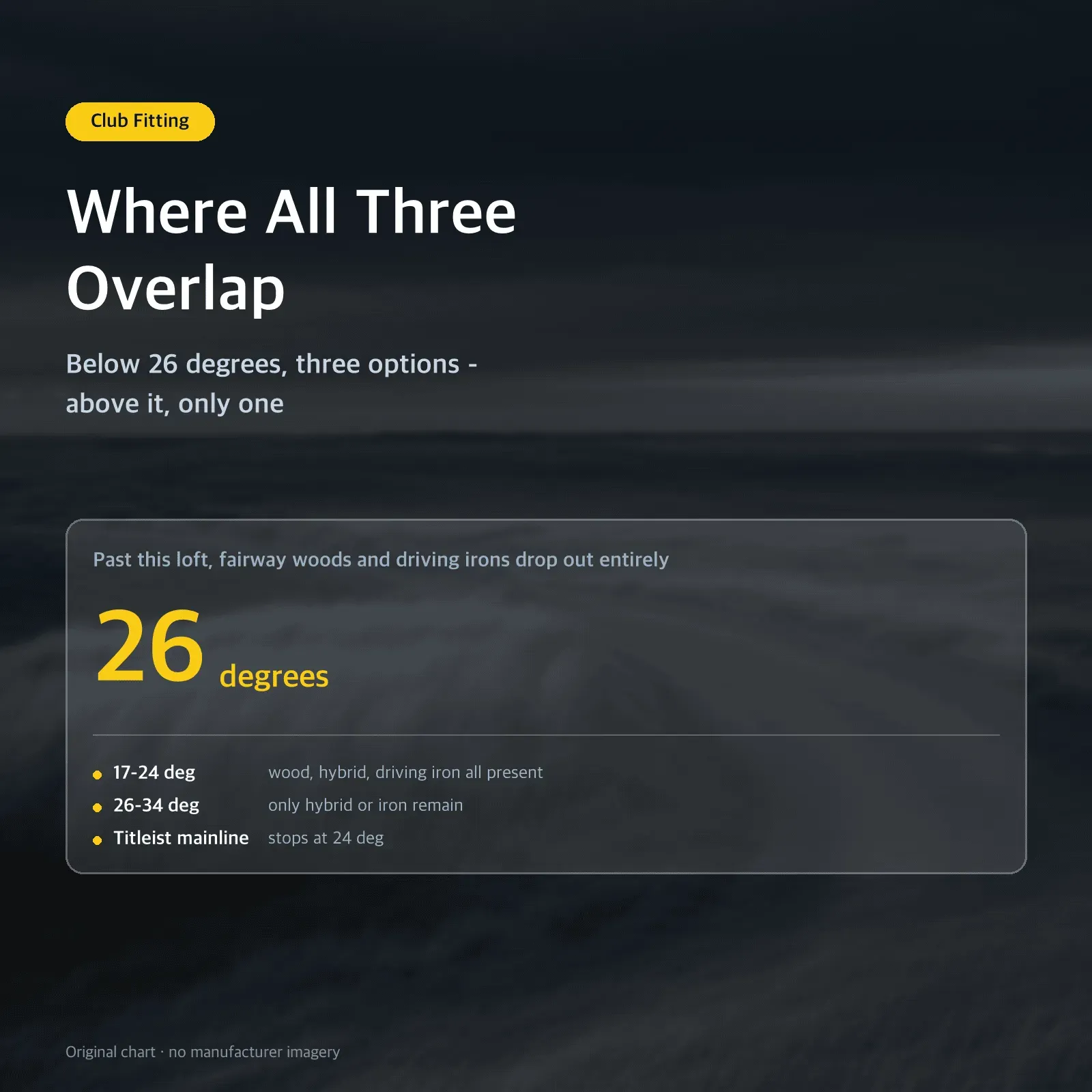
Overlaying official lofts for hybrids, fairway woods, and driving irons shows a zone all three overlap, and a higher zone where only the hybrid remains.

Golfers avoid the word because they believe it spreads. That belief is real and documented. Whether it actually spreads is a separate, unconfirmed claim.

The D-Plane model behind modern launch monitors wasn't built by TrackMan. A physicist described it in 1994, twelve years before radar could confirm it.
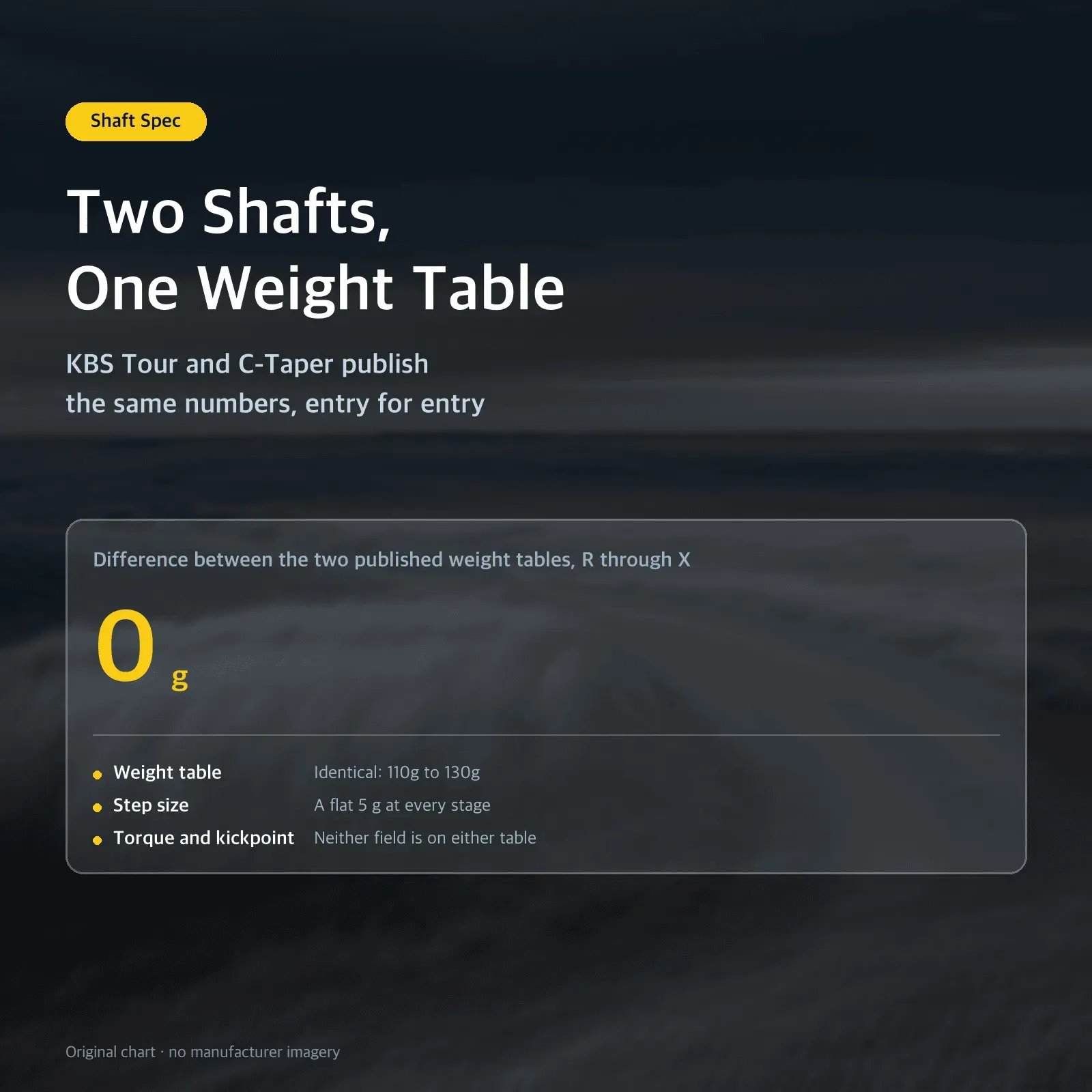
KBS sells Tour and C-Taper as distinct shafts, yet their published weight tables are identical from R to X, and neither lists torque or kickpoint.
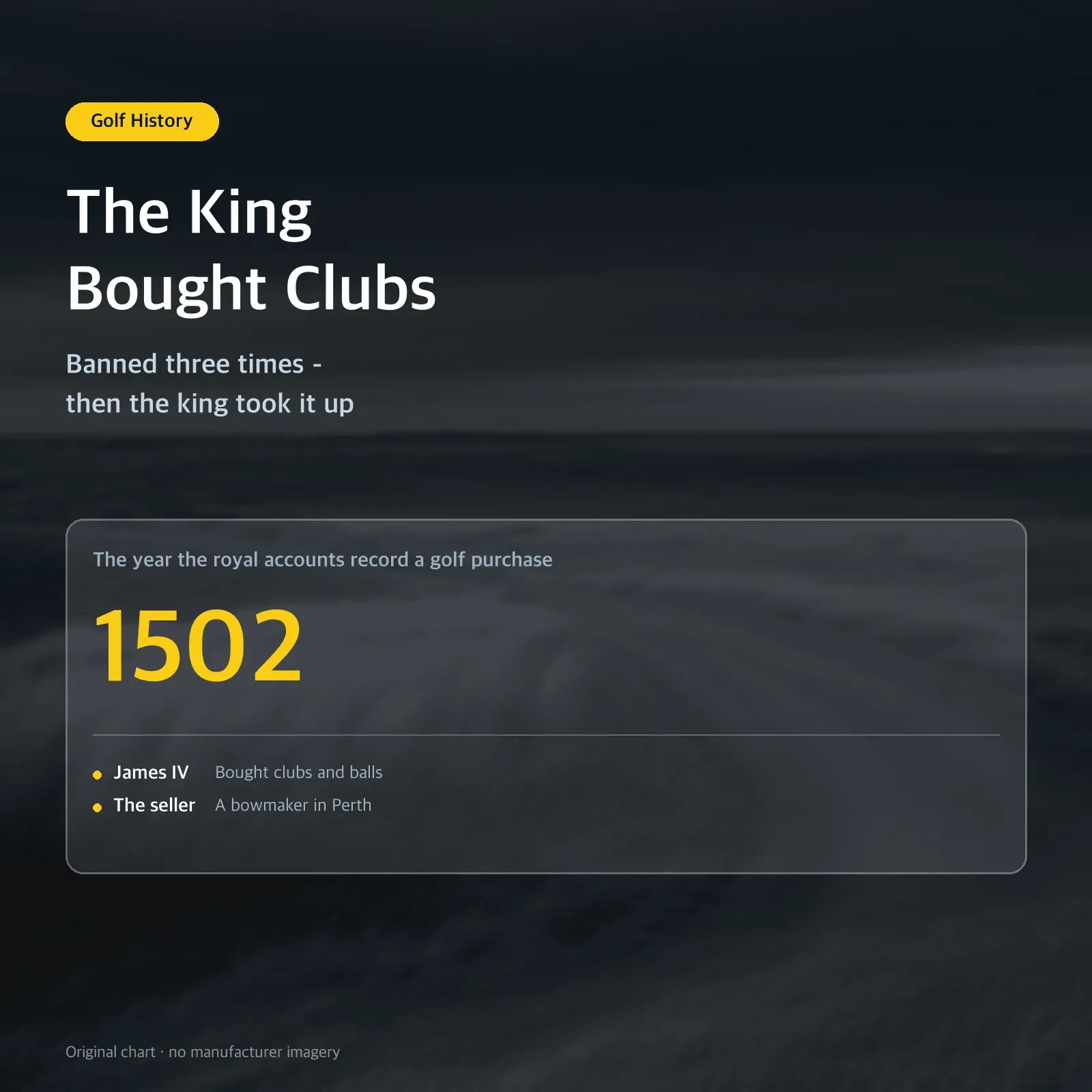
Scotland banned golf in 1457, 1471, and 1491. In 1502 the king bought golf clubs and balls himself. Here is what the royal accounts actually show.
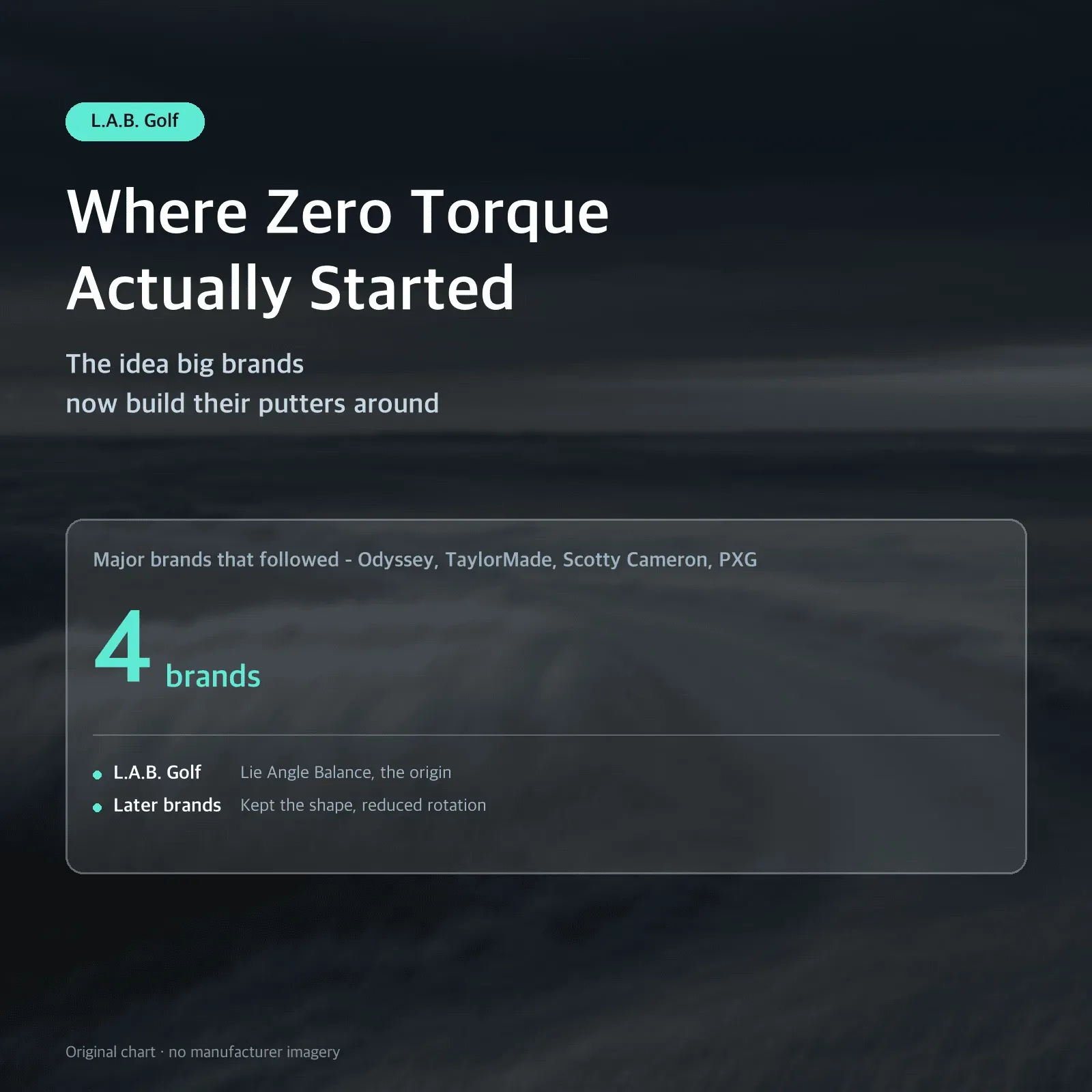
Odyssey, TaylorMade, Scotty Cameron, and PXG have all released zero-torque putters — but the concept originated with a small American brand, L.A.B. Golf.

The first written rules of golf, from 1744, had thirteen articles. Some read almost like today's rules. Others describe a game that no longer exists.
A fat shot and a topped shot look opposite but sit on one axis — where the low point falls relative to the ball. How to check it, and why a mat hides it.
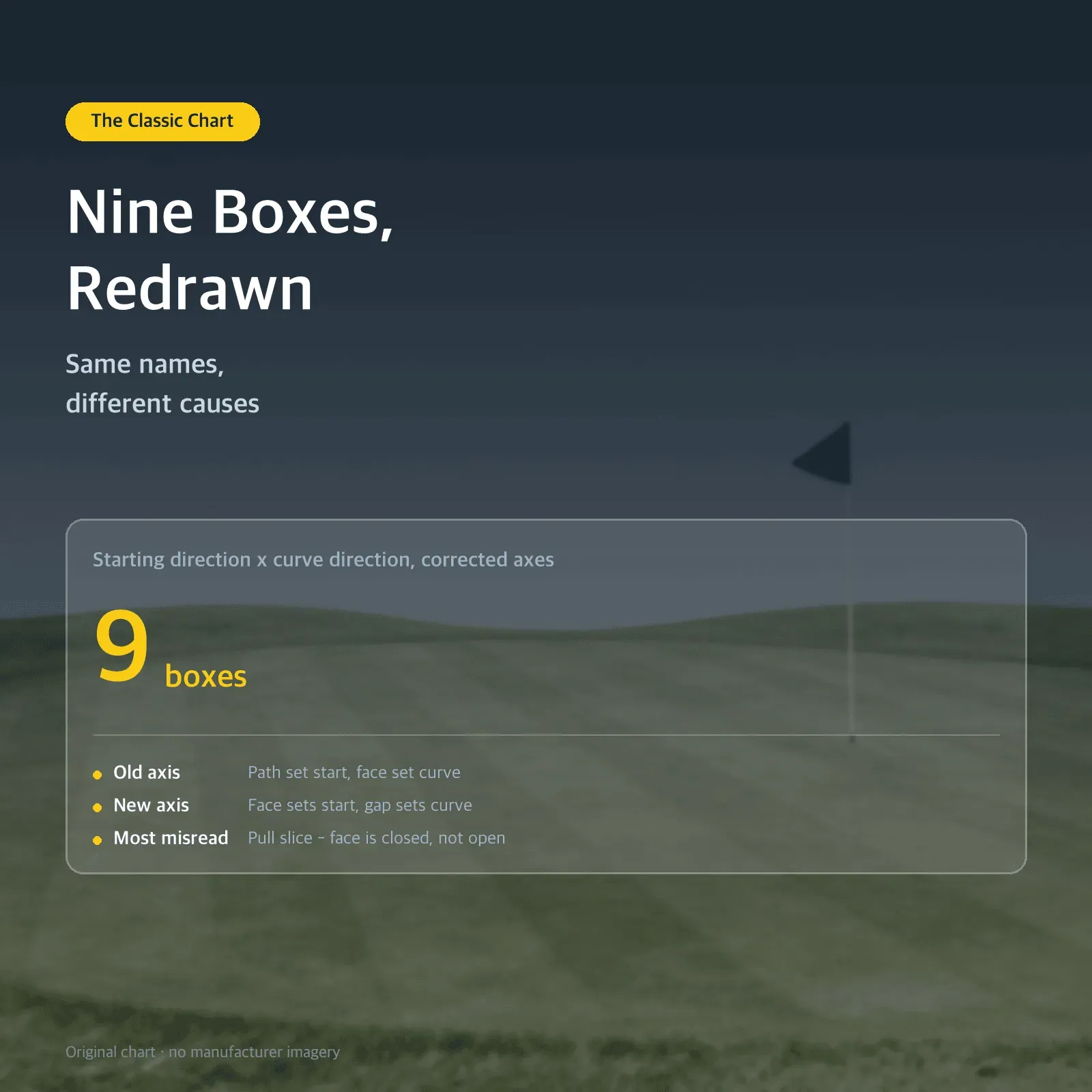
The classic nine-shot ball flight chart still holds, but the old explanation of what causes each box is wrong. Here it is redrawn around face and path.
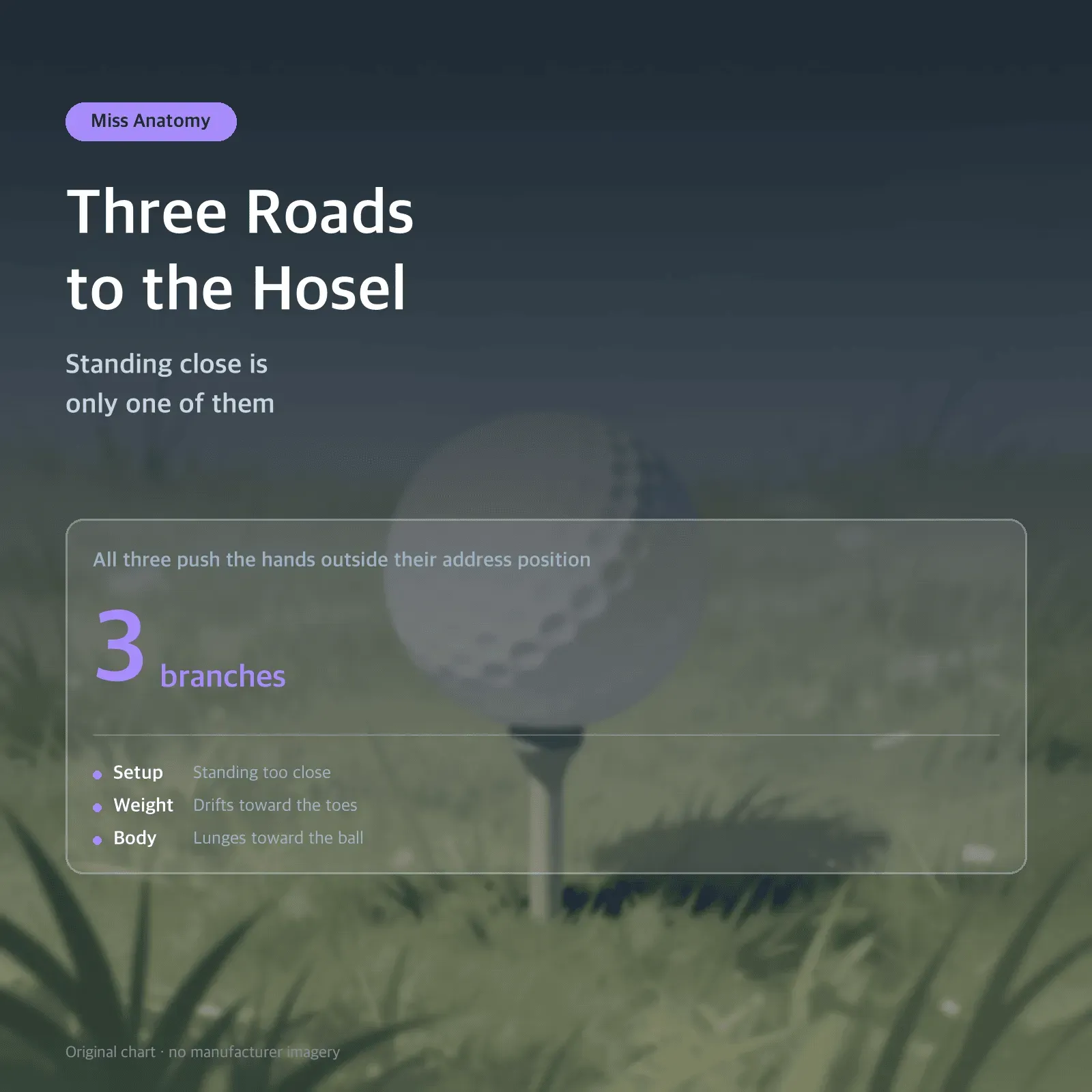
Standing close is only one of three ways the hands end up outside address position at impact — weight drift and lunging produce the same result.
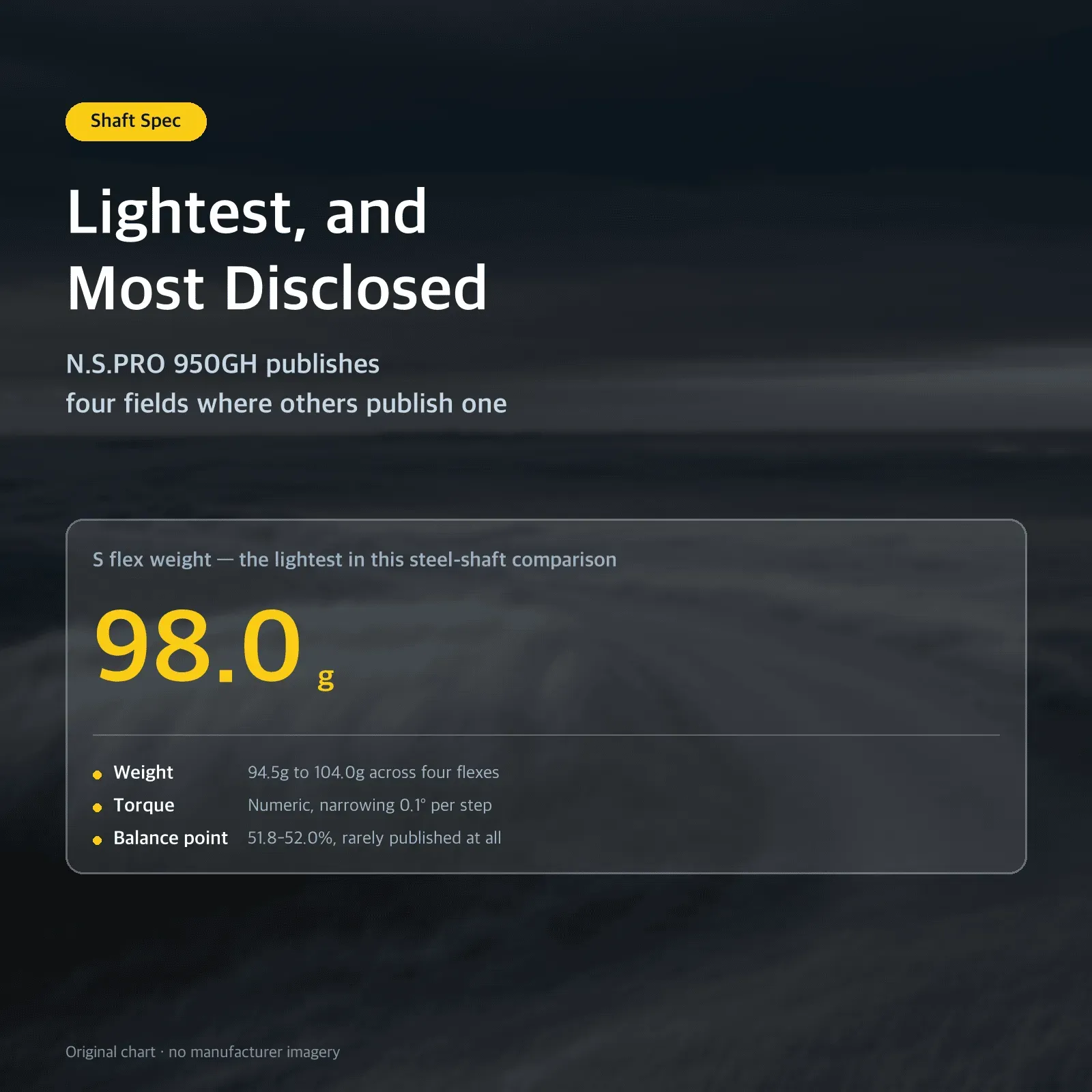
N.S.PRO 950GH is the lightest current steel shaft we checked, and the only one publishing torque, kickpoint, and balance point in full.

MODUS³ TOUR 120 shares a maker with N.S.PRO 950GH but sits 16 grams heavier at the same S flex, and adds a TX flex the 950GH does not offer.

Most putter inserts are a story about material. Odyssey's Ai-ONE is a story about surface geometry, shaped from analysis of mishit patterns.

First aid and a real fix are different things. What narrows a bad outcome mid-round, separated from what only feels better while the miss stays.
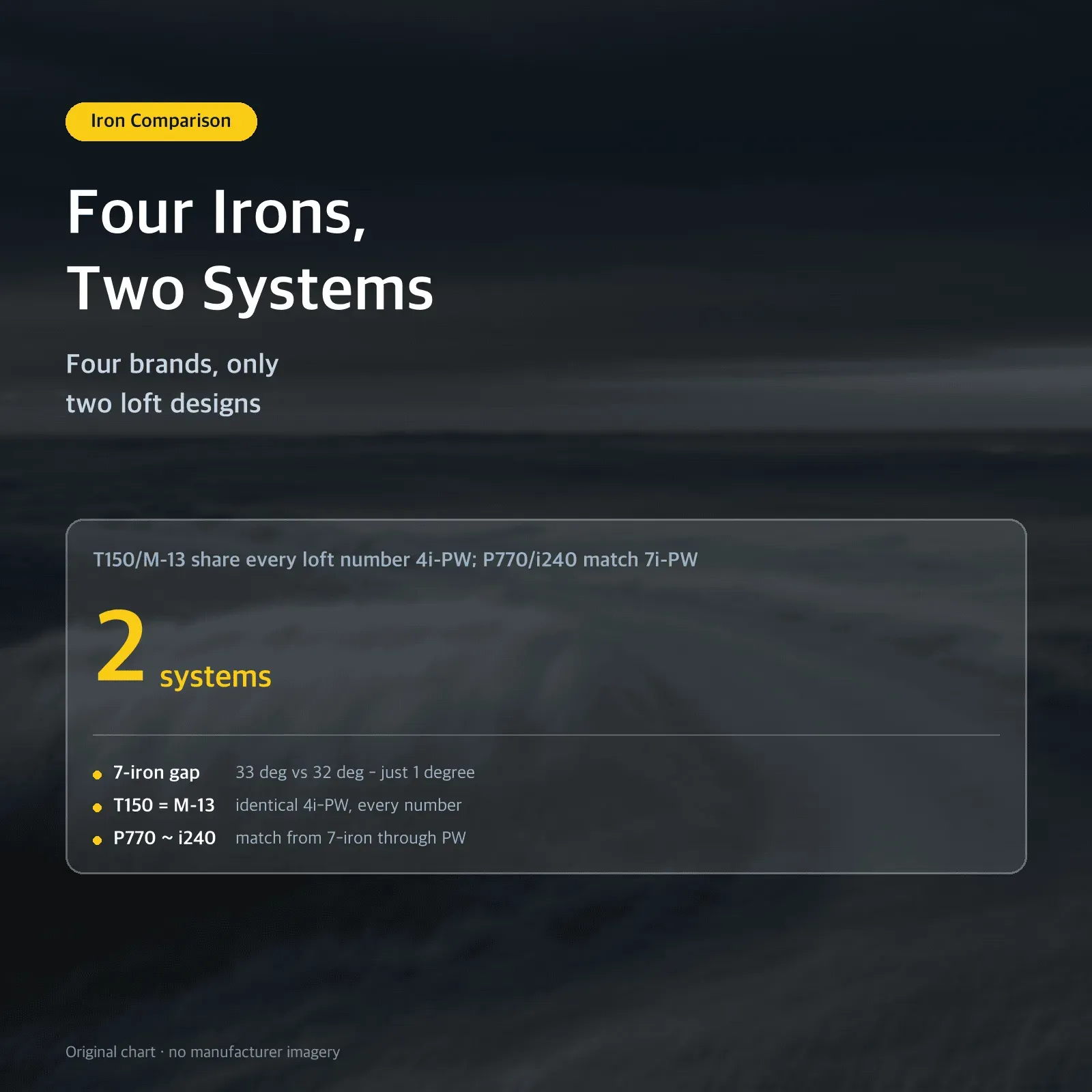
Four brands each build a compact-yet-long iron for the same bag slot. Overlay the official specs and four lines collapse into two, just 1 degree apart.
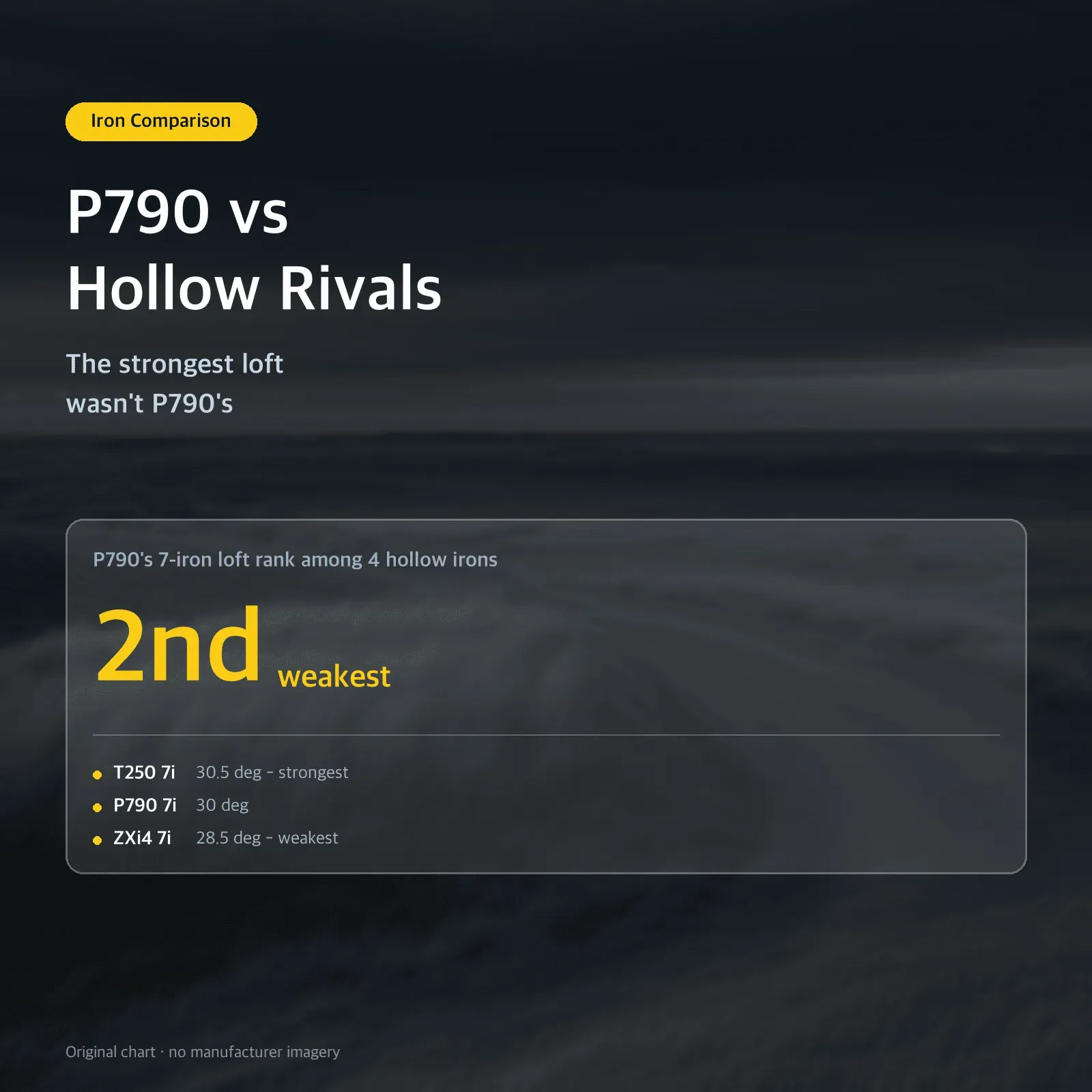
Line up P790 against three rival hollow-body irons on official spec, and 'flies far because it's strong-lofted' falls apart — it's not even the strongest.

P7MC isn't TaylorMade's only forged tour cavity-back. Lay it against three rivals and the real story is who publishes which spec, not who flies longer.
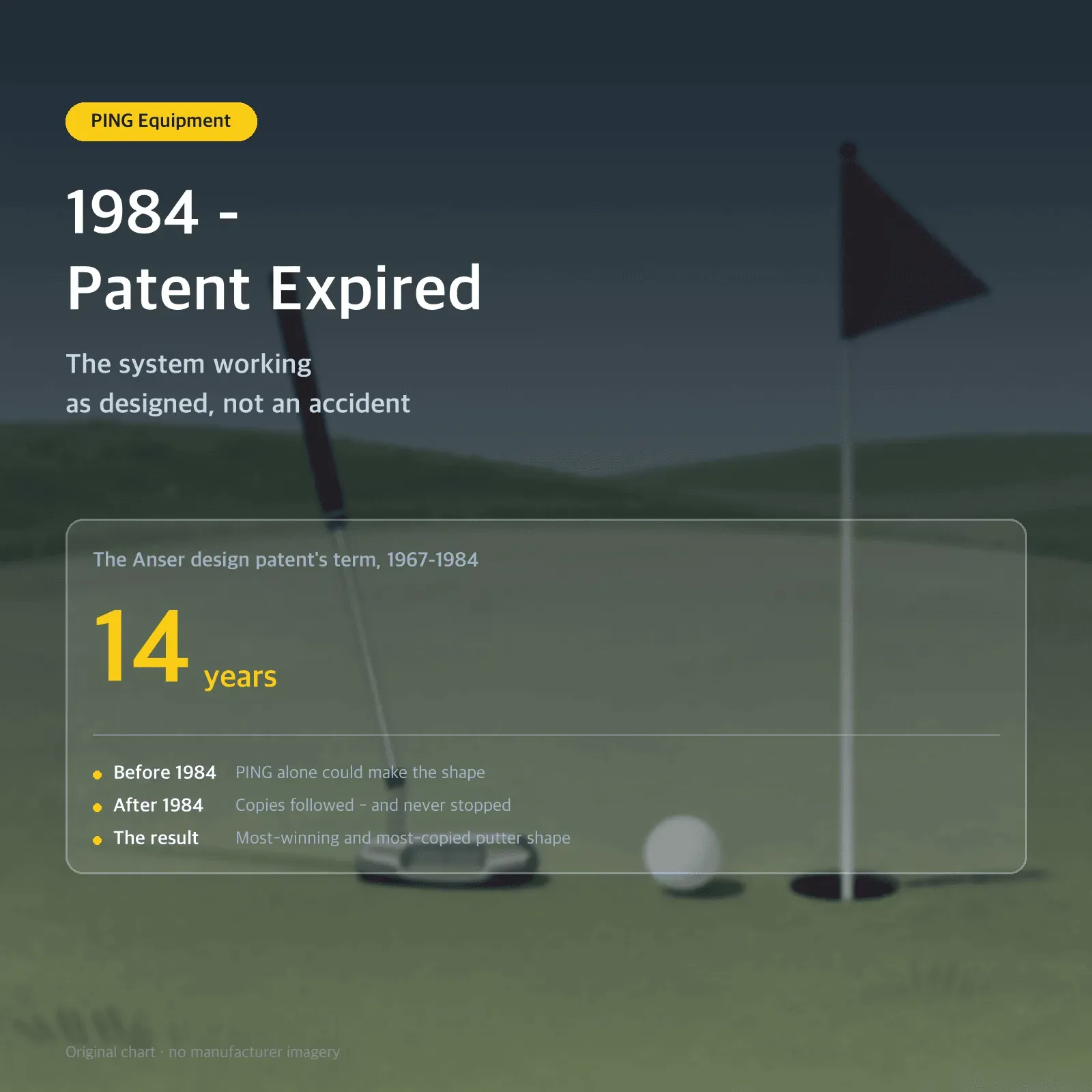
The Anser putter's 14-year patent expired in 1984. What followed made it, by most accounts, the most-copied putter shape in golf.
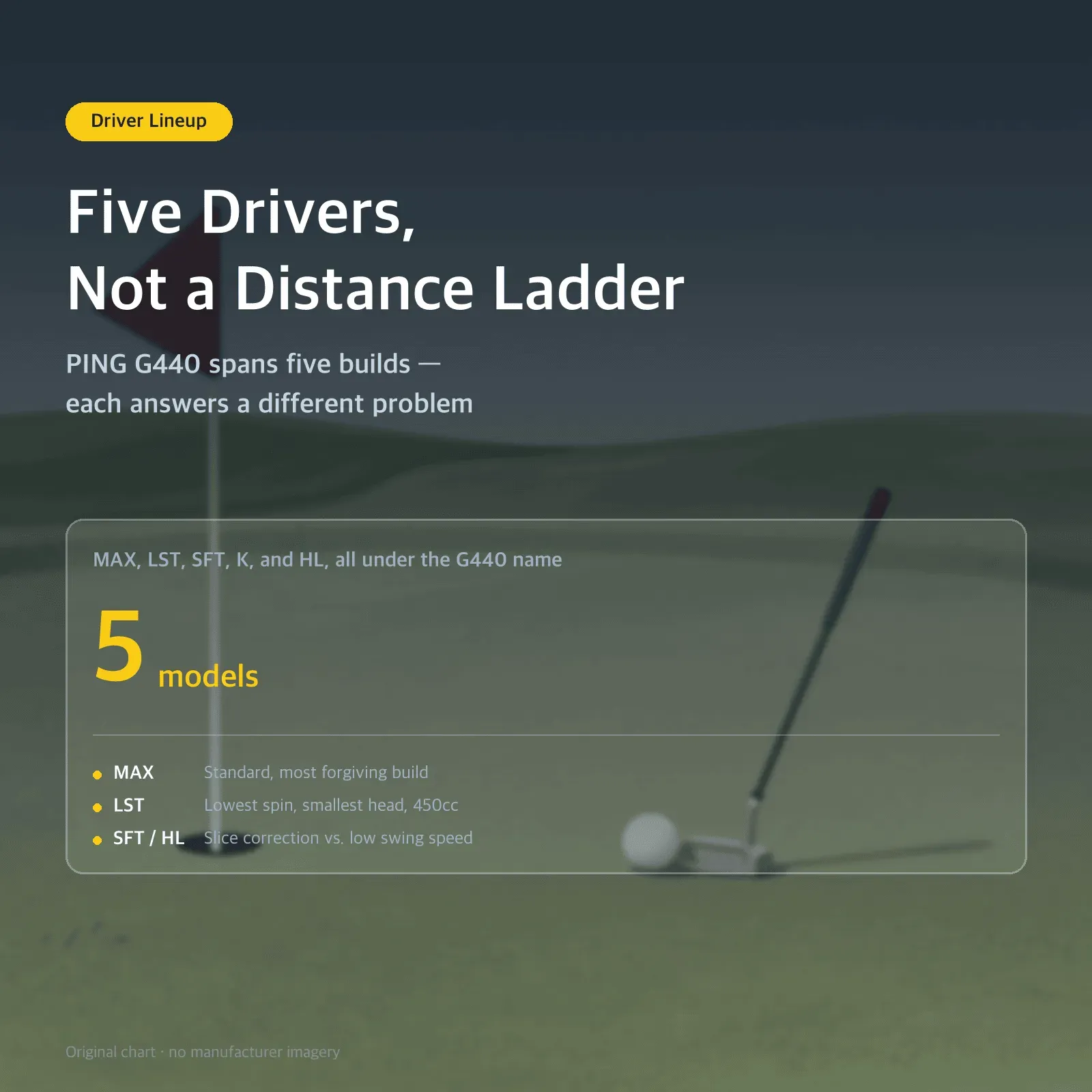
PING's G440 platform spans five models — MAX, LST, SFT, K, HL. Official specs show they aren't a distance ladder, but five answers to five problems.
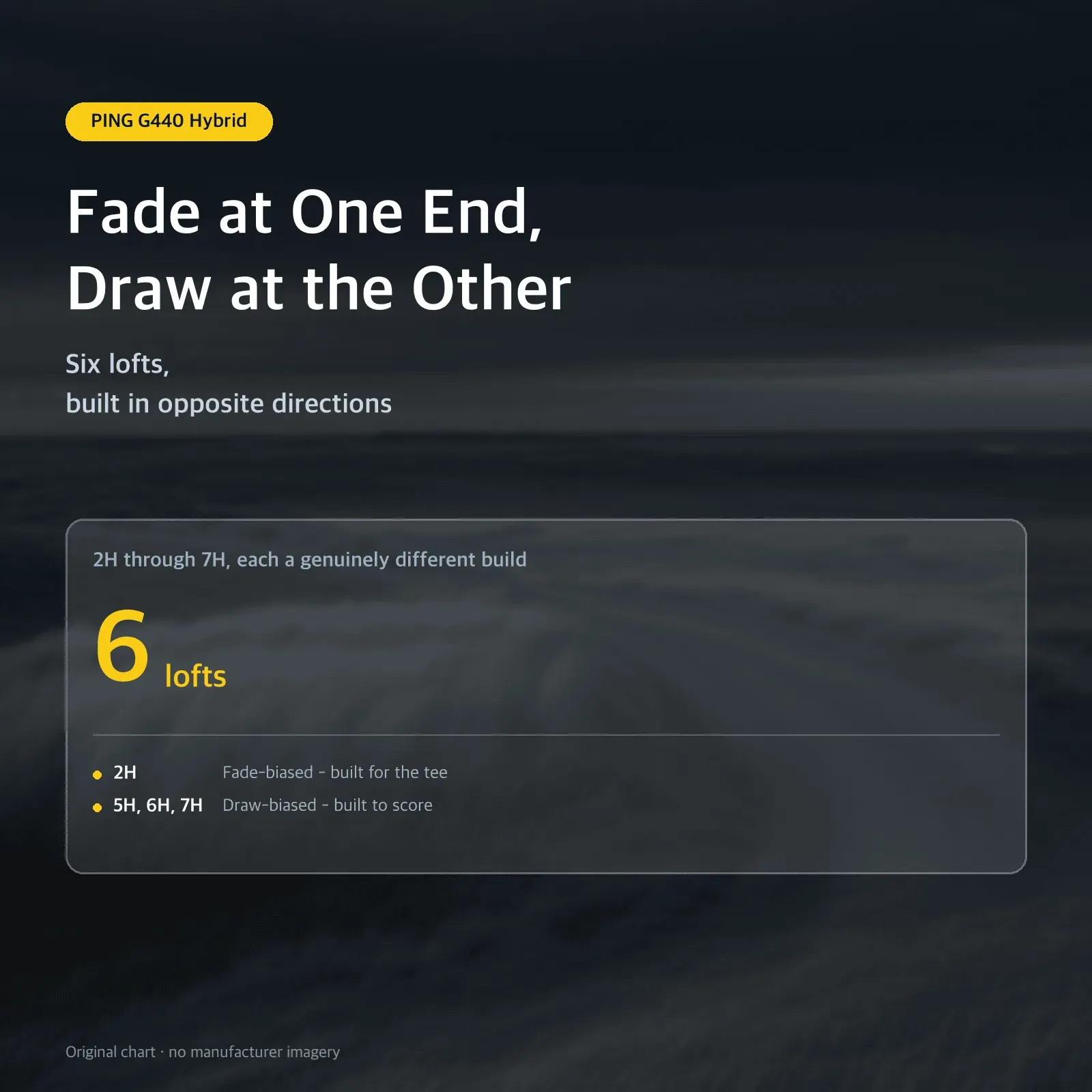
PING's G440 isn't six versions of one club — the low-numbered heads are built fade-biased, the high-numbered heads draw-biased. Full spec table and why.

PING's founder was a missile-guidance engineer who built putters in a California garage from 1959. The name came from the sound of impact.
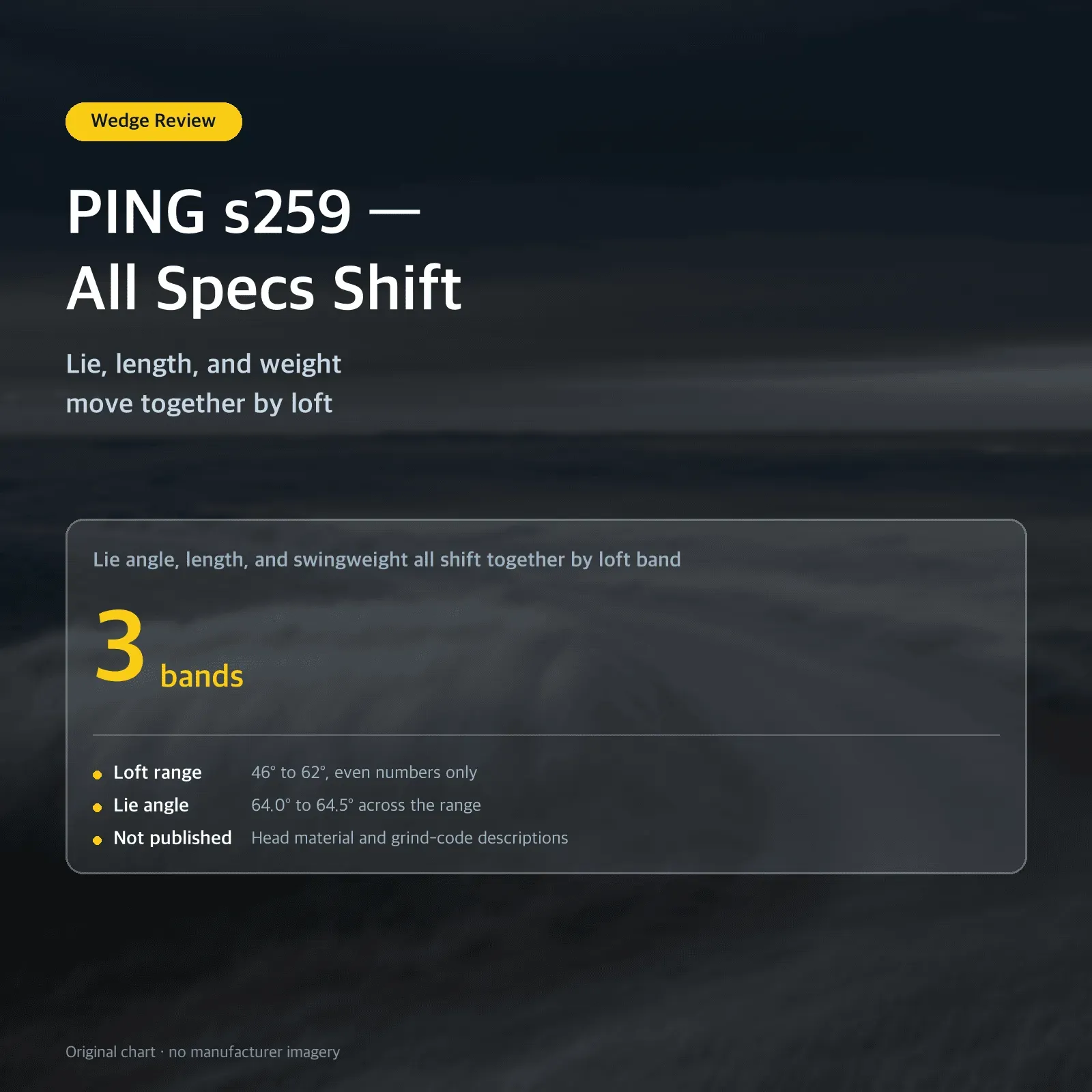
PING s259 publishes a full spec table, and it's the only wedge line checked where lie angle, length, and swingweight all shift with loft.
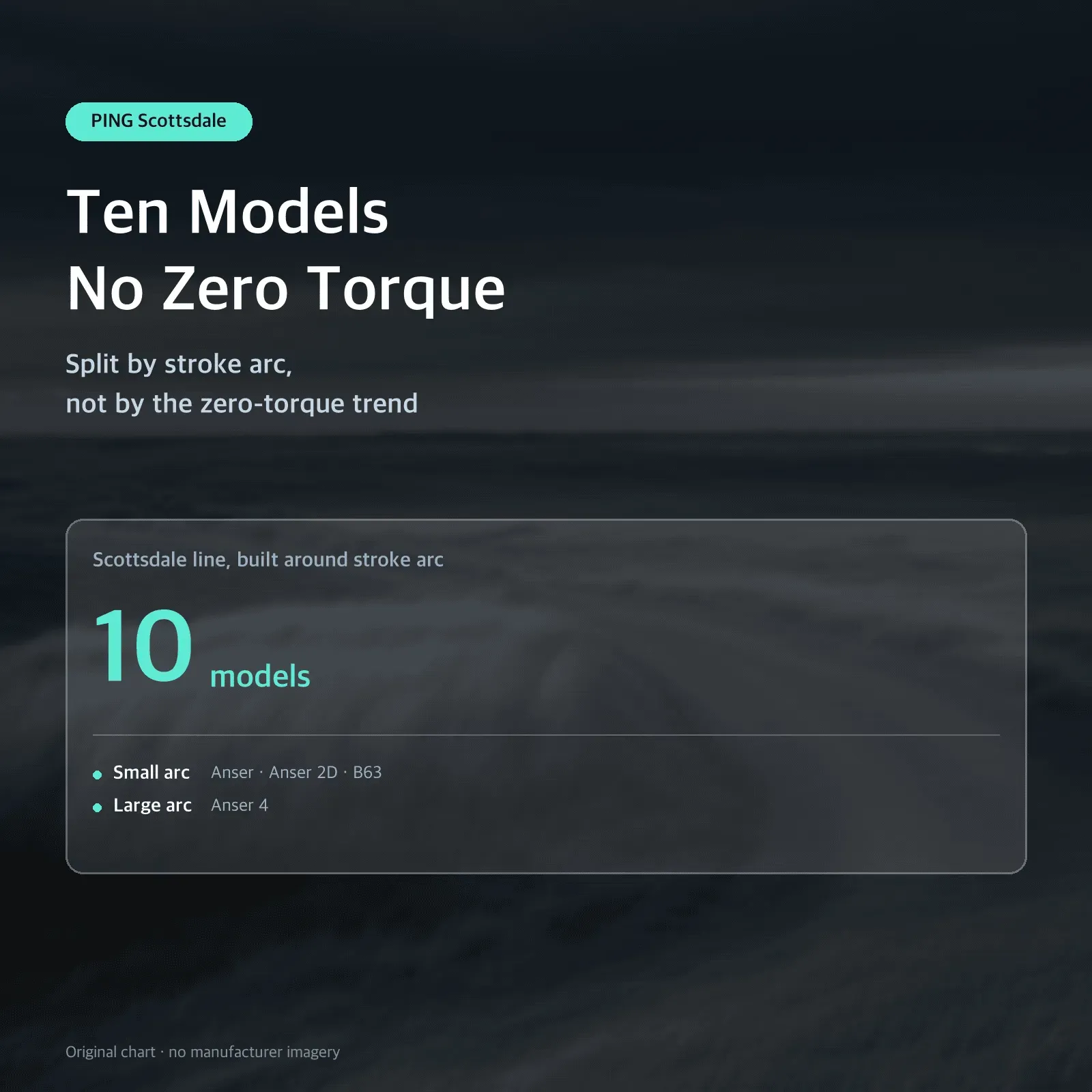
Zero torque is 2026's putter trend, but PING built a ten-model Scottsdale line around stroke arc instead and says outright why it skipped it.

In 1987 the USGA ruled the PING Eye2's grooves nonconforming. PING fought back for six years, arguing groove measurement itself was the real issue.

Slice fixes push face and path the same direction, and it's common to overshoot into a hook. Here are the three overshoot routes, and how to spot them.

Left Dash costs the same as a standard Pro V1x, but RCT costs more for a ball Titleist says performs identically. What each variant changes.
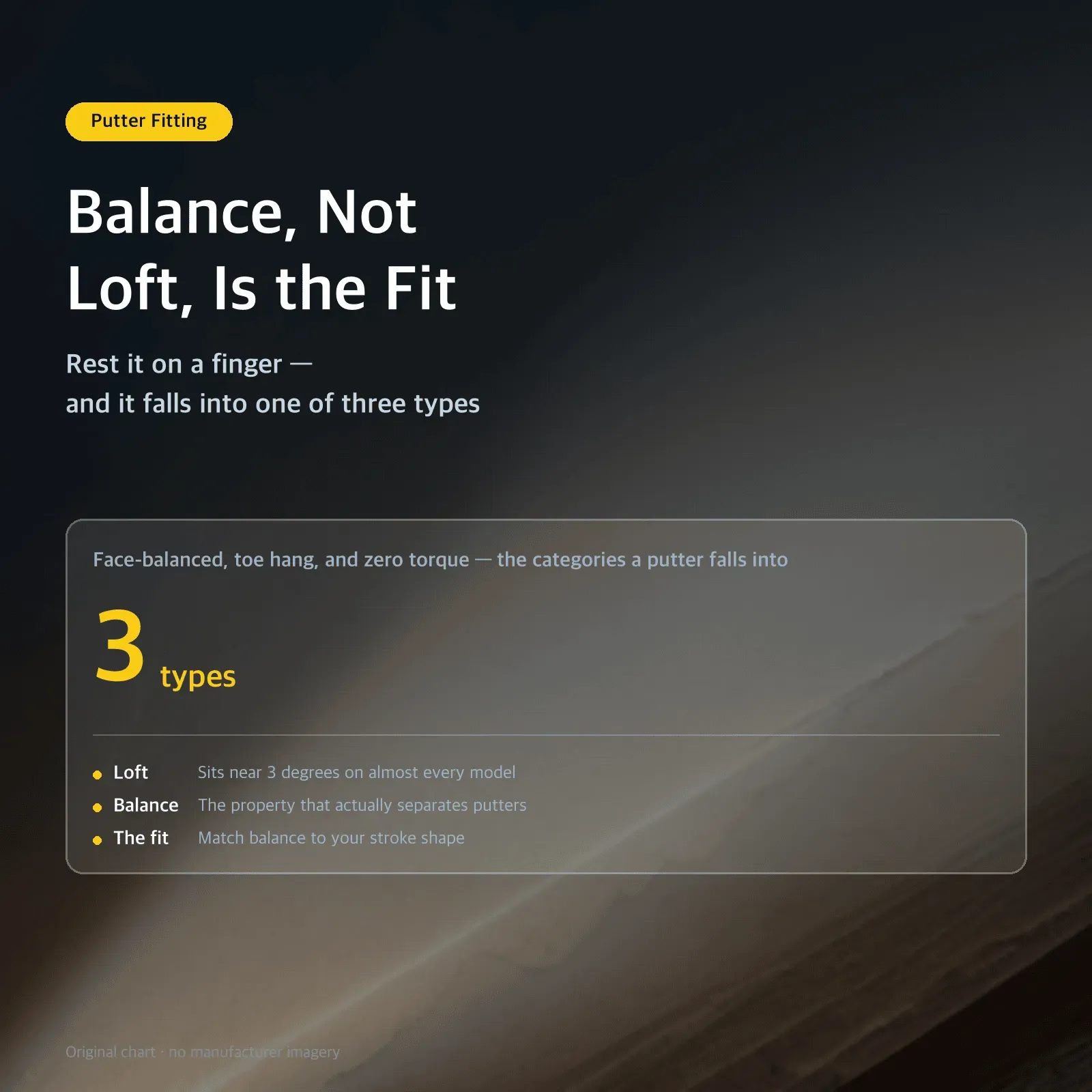
Putters are chosen by balance type, not loft. How face-balanced, toe-hang and zero-torque putters match different stroke shapes, and how to find yours.
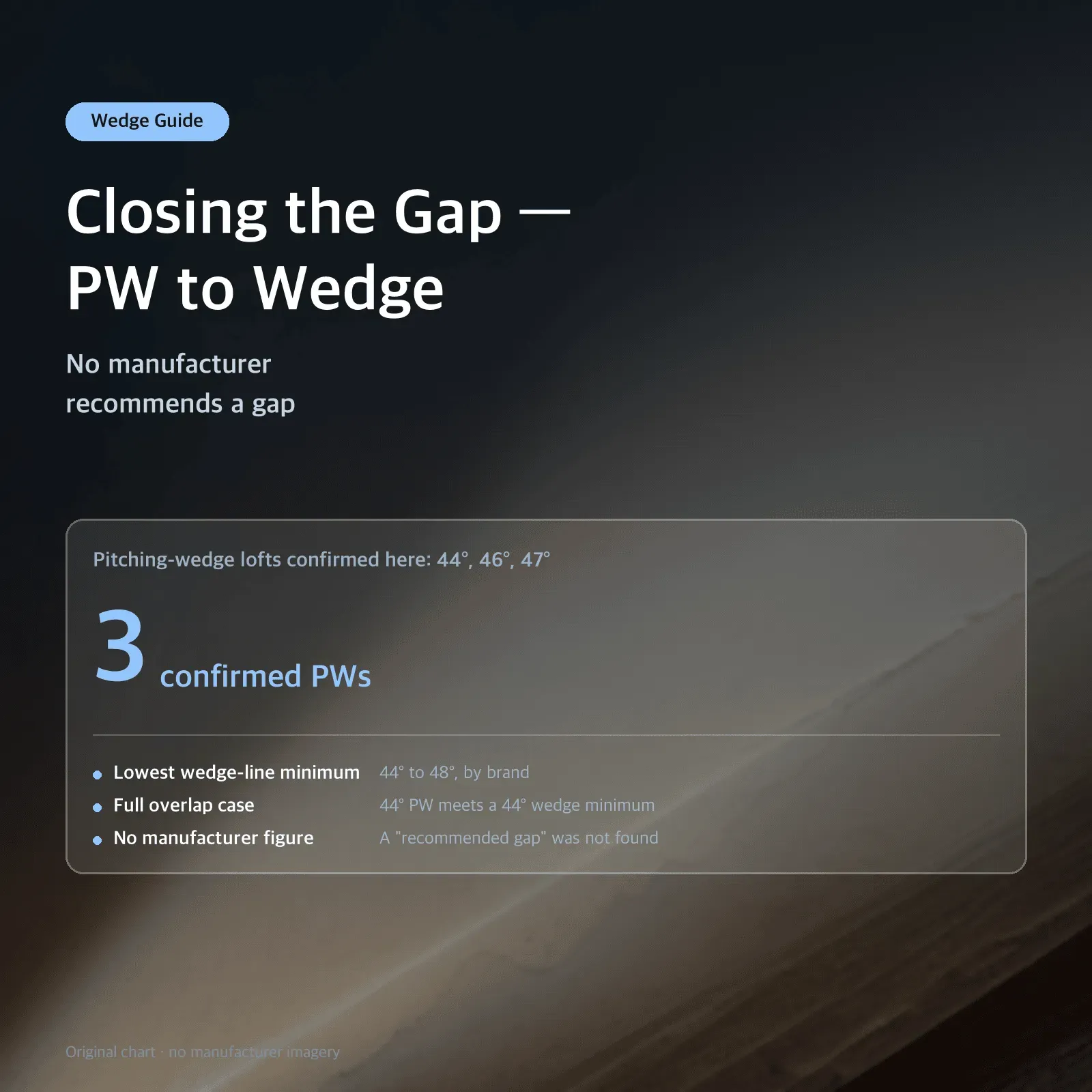
Iron sets stop at the PW and the gap to your wedges must be filled separately. Four brands publish full wedge spec tables; none of them recommends a gap.
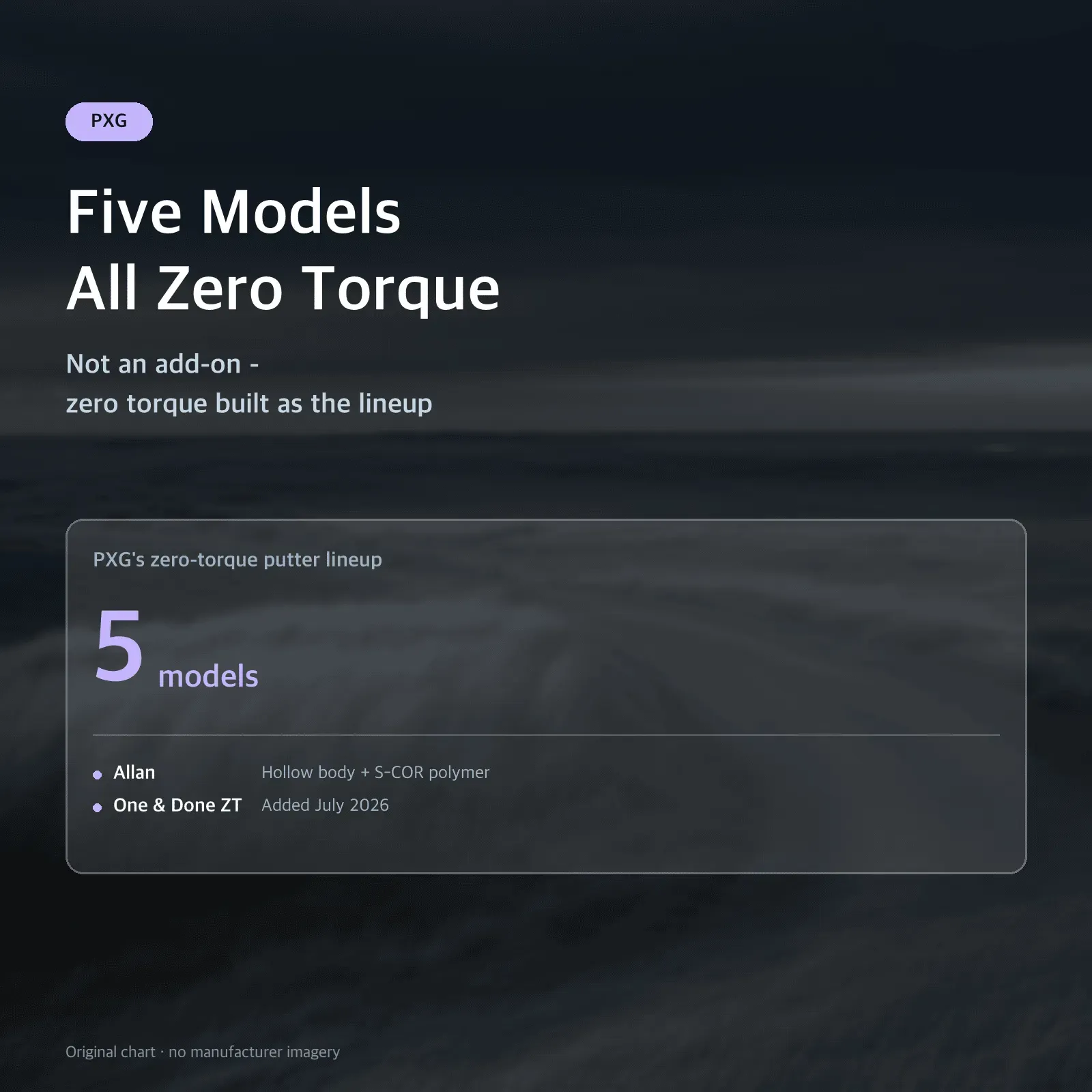
Most brands bolt one or two zero-torque models onto an existing line. PXG built six from the start, including a center-shafted Hot Rod ZT.
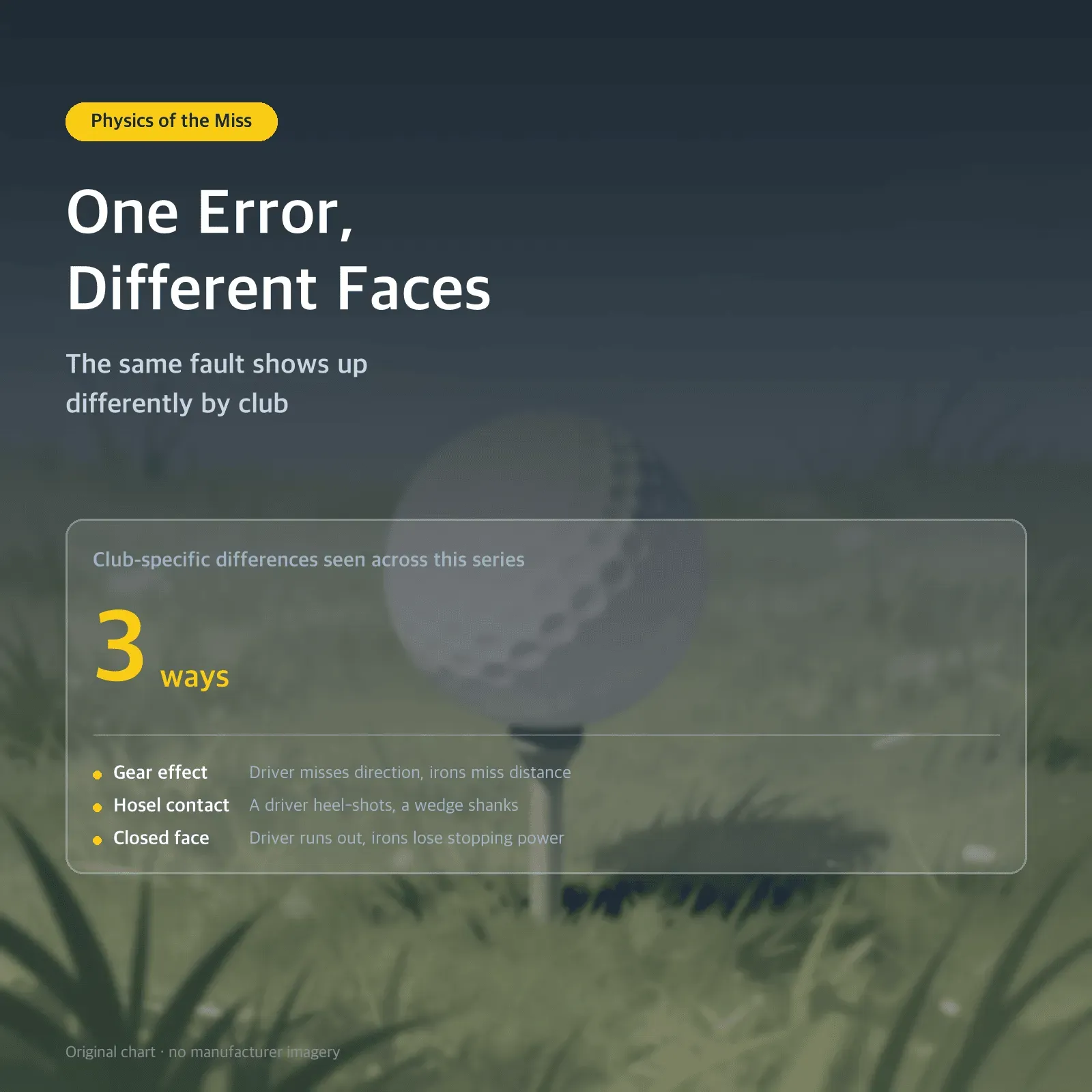
One swing fault shows up as a direction miss with a driver and a distance miss with an iron. Three earlier threads pulled together by club, not miss type.

The Schenectady putter, a center-shafted design, was banned by the R&A in 1910. The USGA refused to follow — golf's first documented rules split.

The 2026 Phantom line launched eight mallet putters worldwide on one day — except the low-torque model, which arrived a month later.
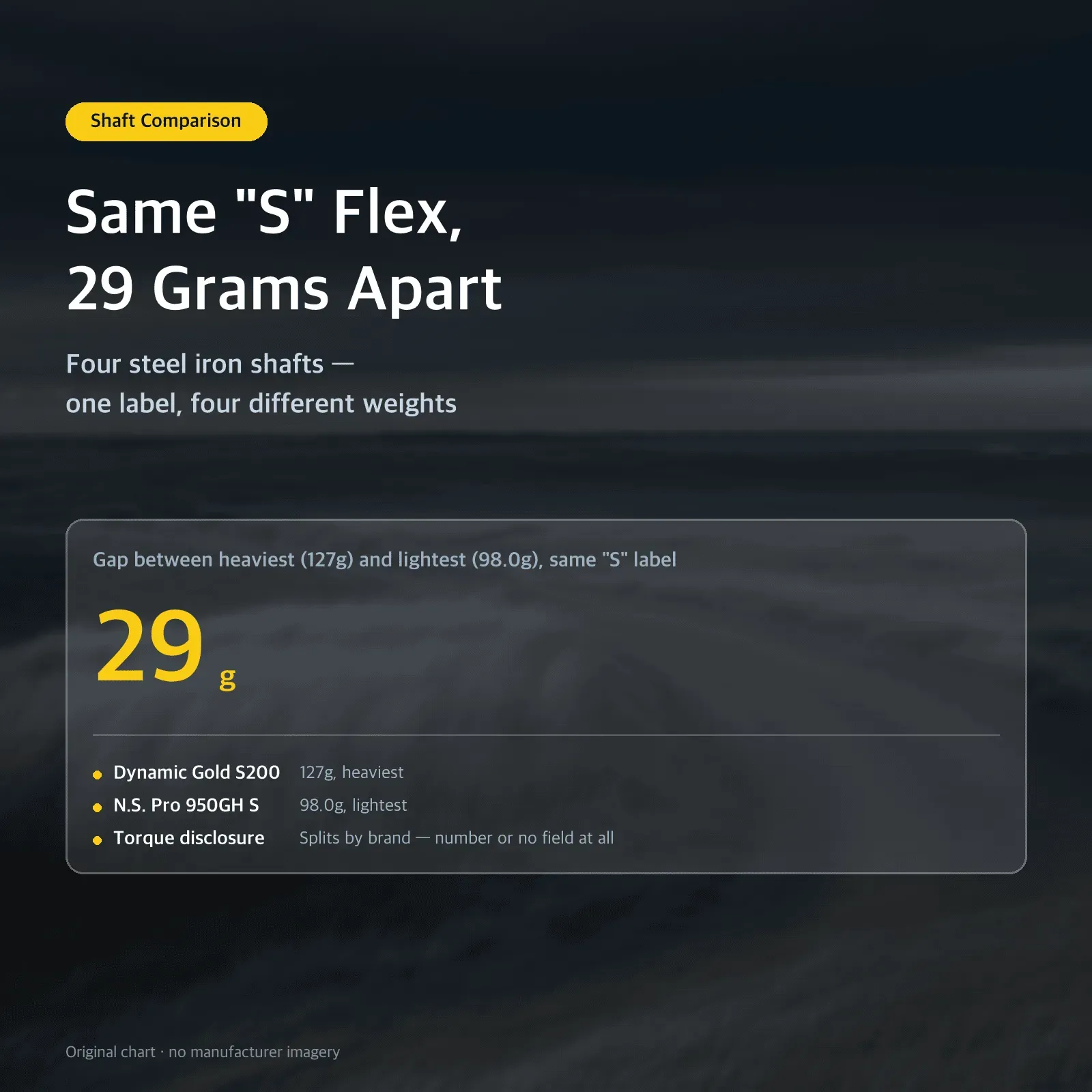
True Temper, KBS Tour, N.S. Pro 950GH, and MODUS3 TOUR 120 all carry an 'S' flex label — but their actual weights span a 29-gram range.
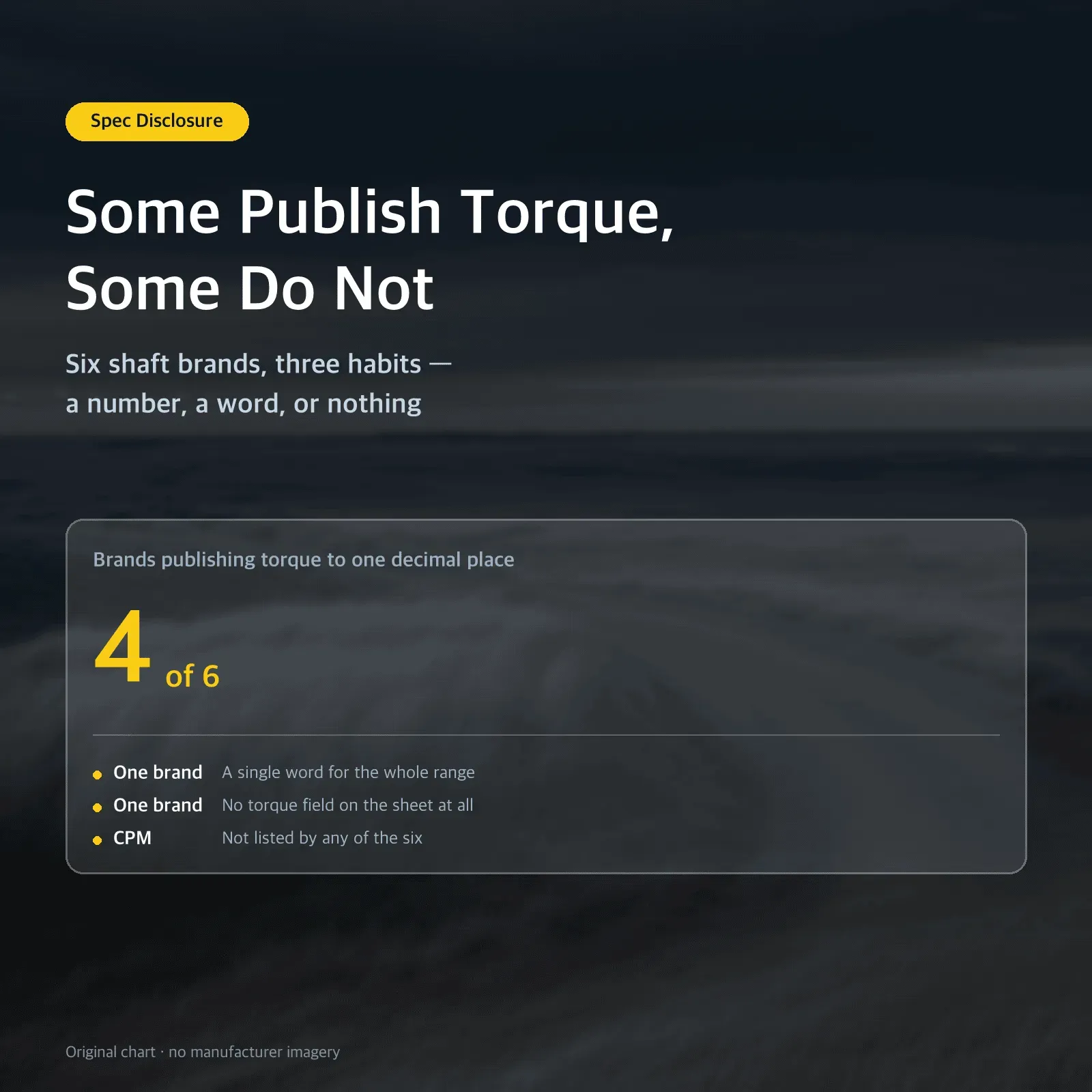
Across six shaft brands, torque is published to one decimal by four, given only as the word Low by True Temper, and left off the sheet entirely by KBS.
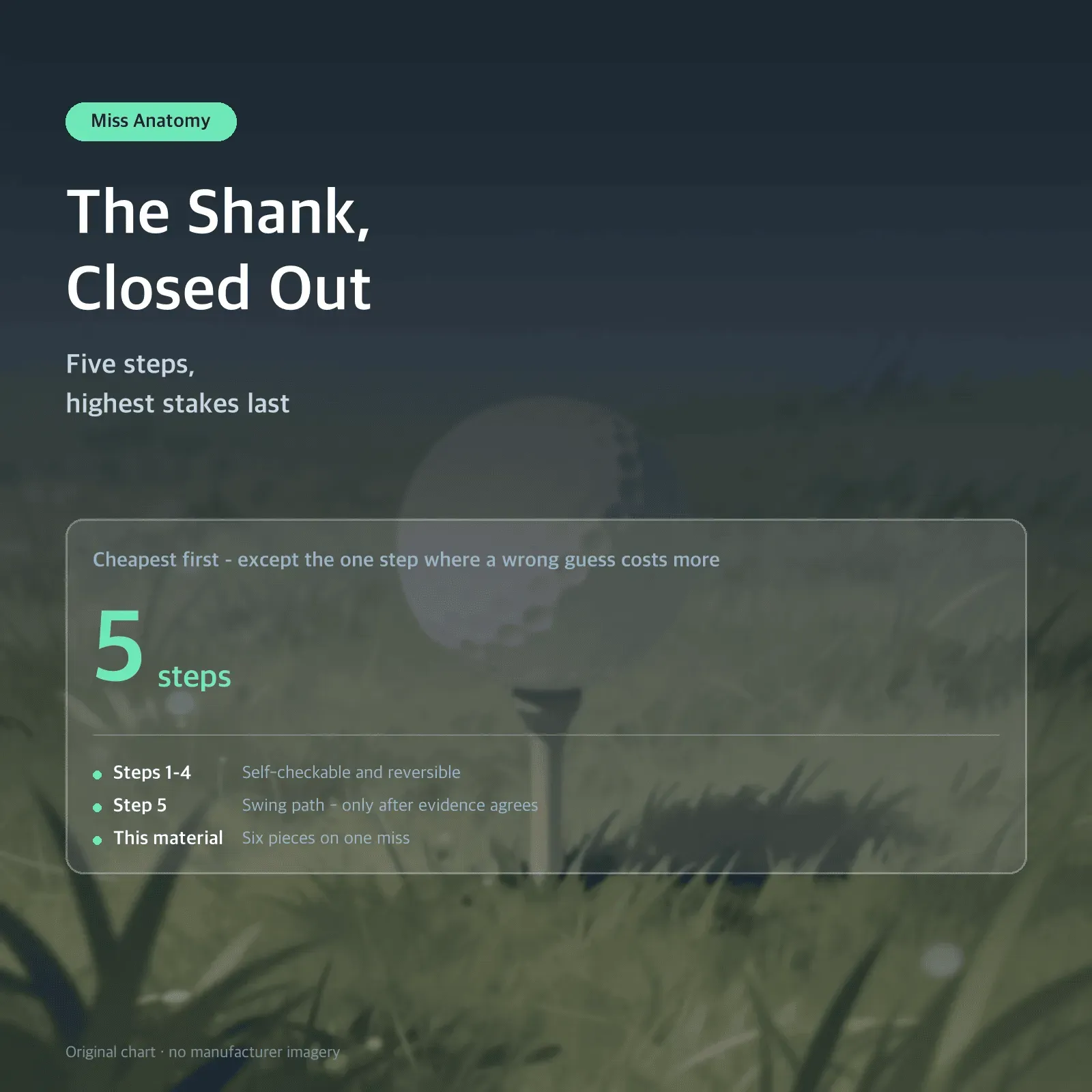
A five-step sequence for isolating a shank's cause, with a twist on 'cheapest first': the highest-stakes step comes last, on purpose.
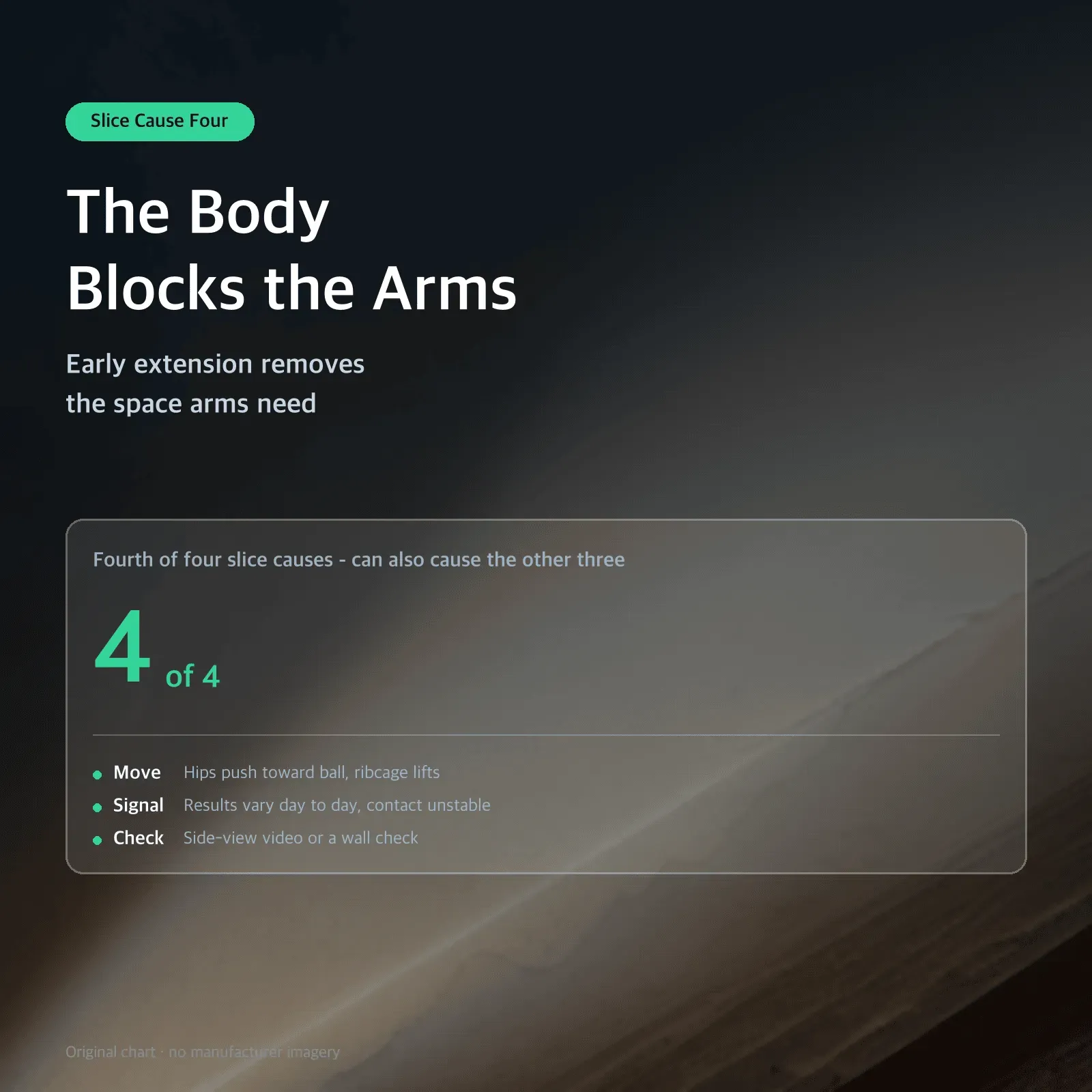
Early extension, the most common fault in amateurs, doesn't break the face or path directly — it removes the space the arms need.
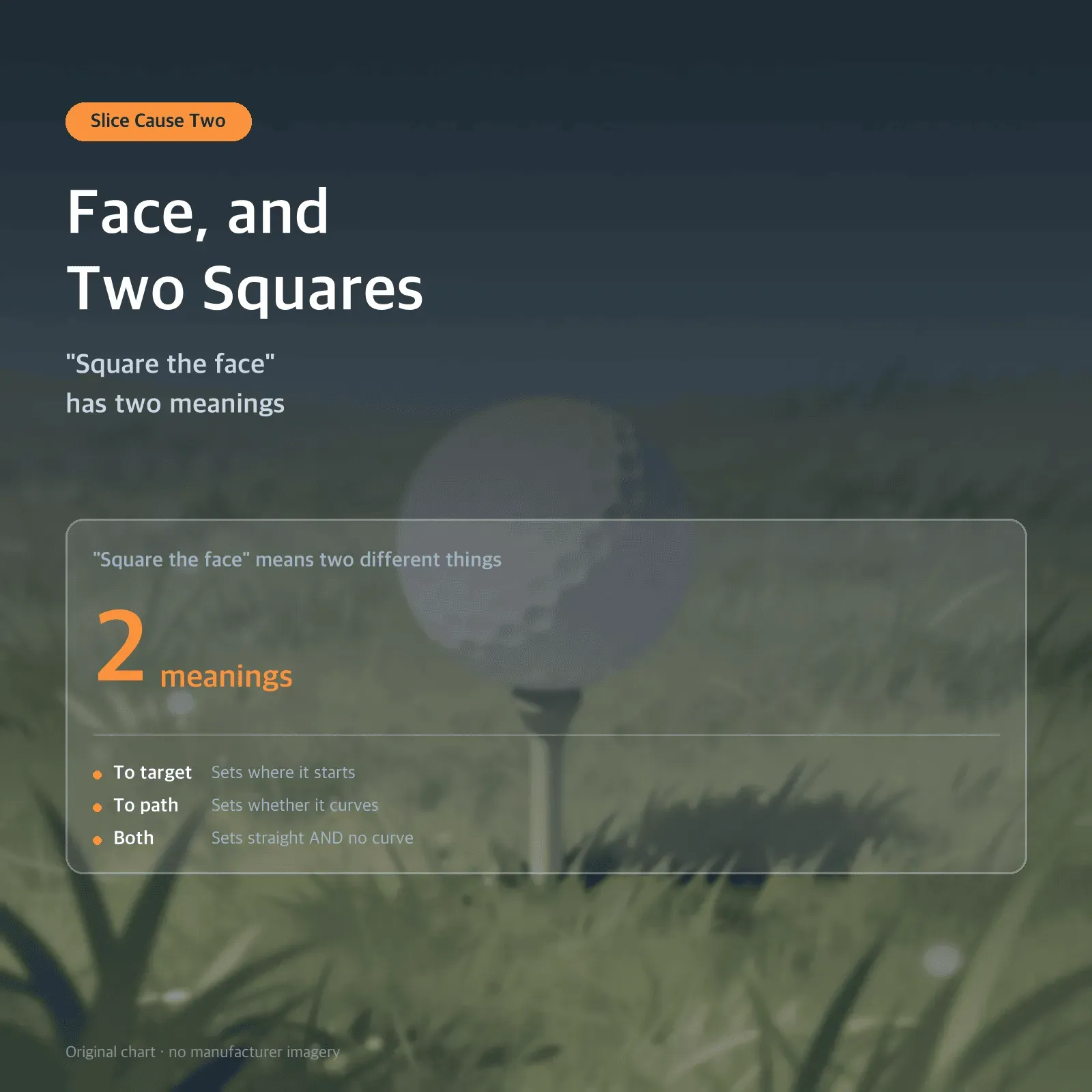
'Square the face' usually means square to the target — but the curve is set by square to the path. That distinction changes diagnosis and the fix.

A weak grip forces the forearms to rotate more than downswing time allows, so the face often arrives open. Here's how to check it in under a minute.
An out-to-in path isn't a slice by itself, and this branch shows the opposite starting direction from the first two. Here's how to tell, and the fix.
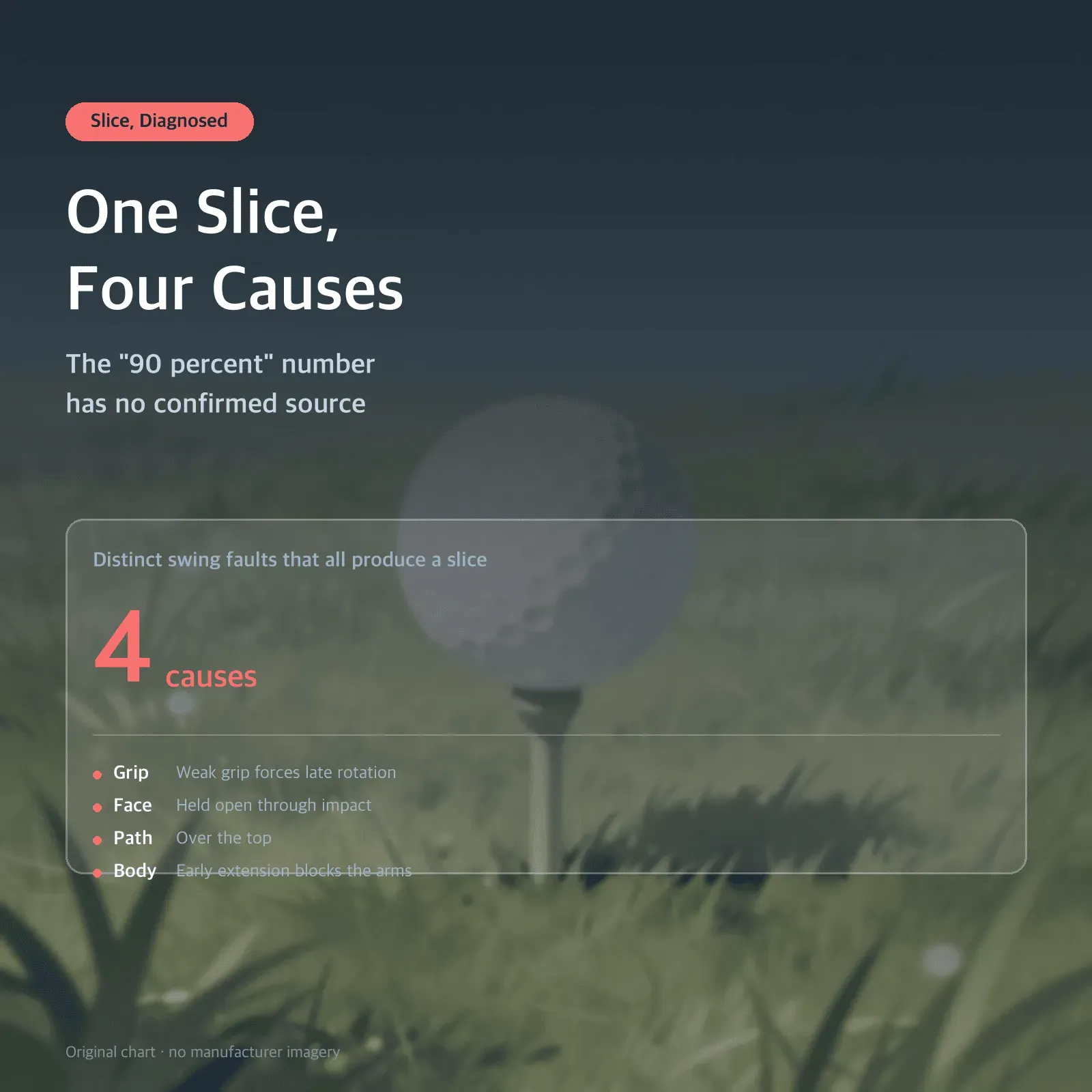
A slice always shares the same definition, but not the same cause. Four distinct faults produce it, and the '90% of golfers slice' claim doesn't hold up.
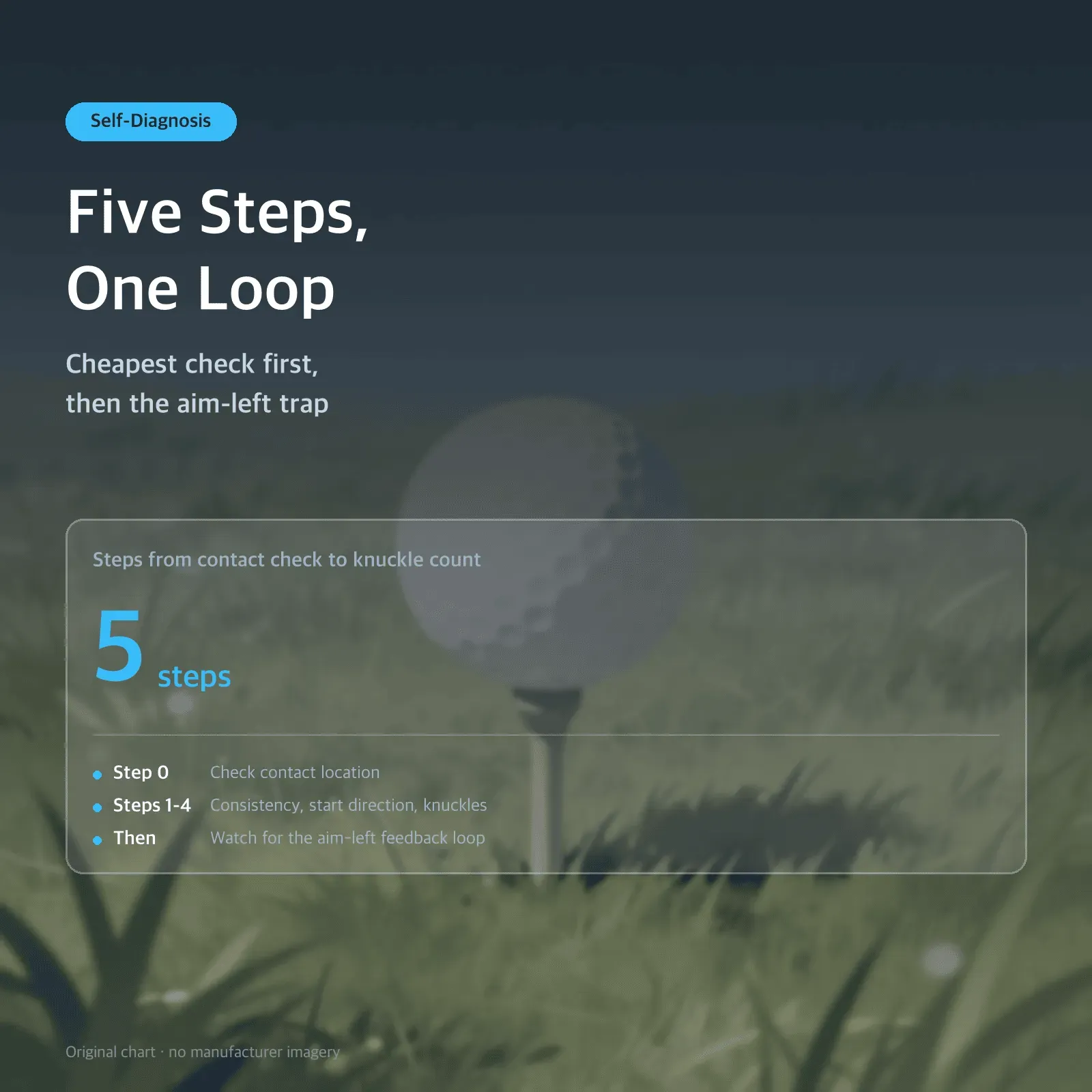
A five-step order for sorting a slice into one of four branches, plus why aiming left to survive a round quietly makes the underlying problem worse.
A snap hook looks different from a regular hook: sudden, low, short. The common mechanism is a rotation that stalls, forcing the hands to catch up fast.

Srixon's i-Forged and i-ALLOY share an 'i-' prefix and get confused for one technology. One is a process, the other a material, applied to different irons.

Srixon's ball is sold in Korea as Z-STAR9 and in global materials as Z-STAR. Same ball, different naming, plus what changed this generation.
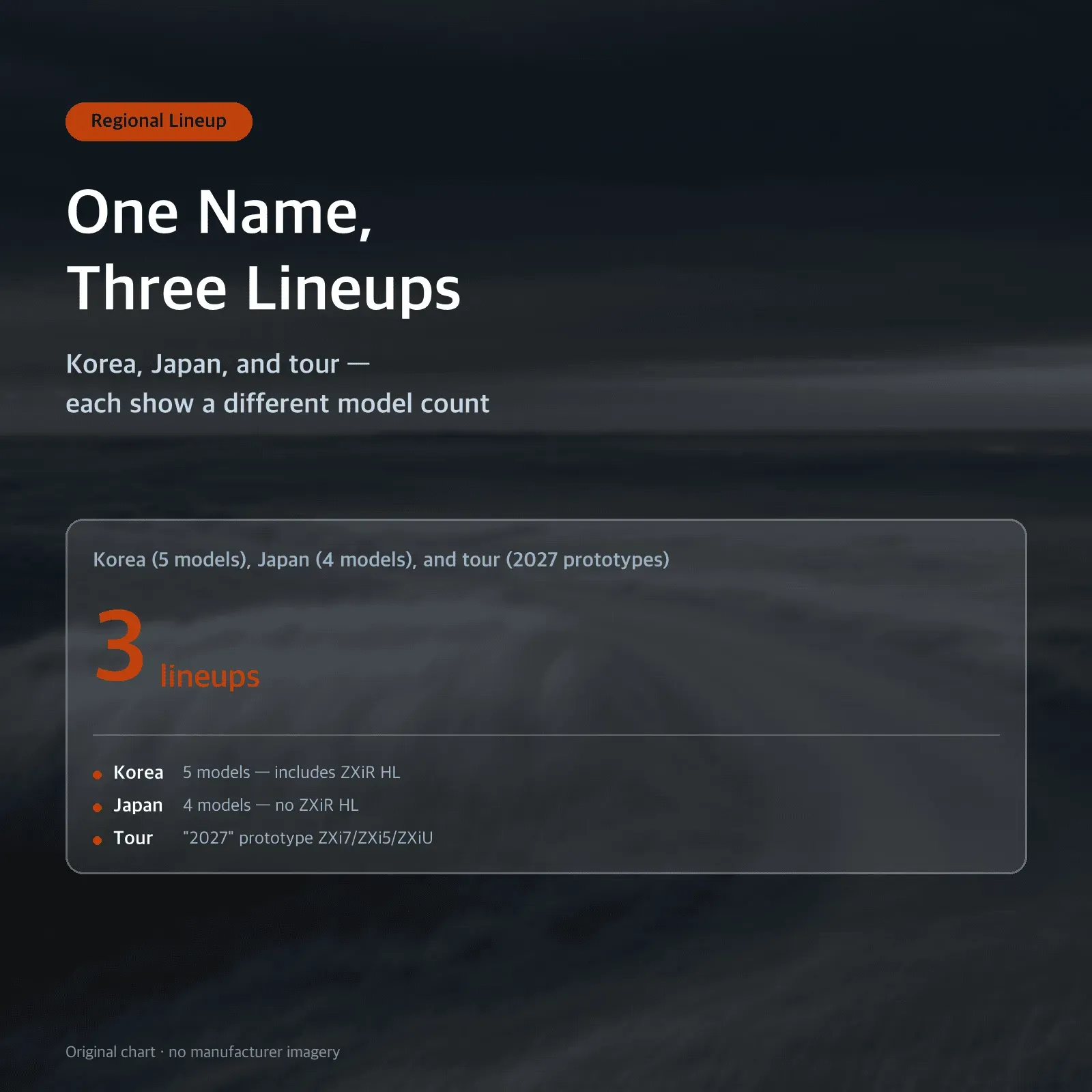
The Srixon ZXi lineup isn't one list. Korea, Japan, and tour each show a different count, and overlaying all three changes what 'current lineup' means.
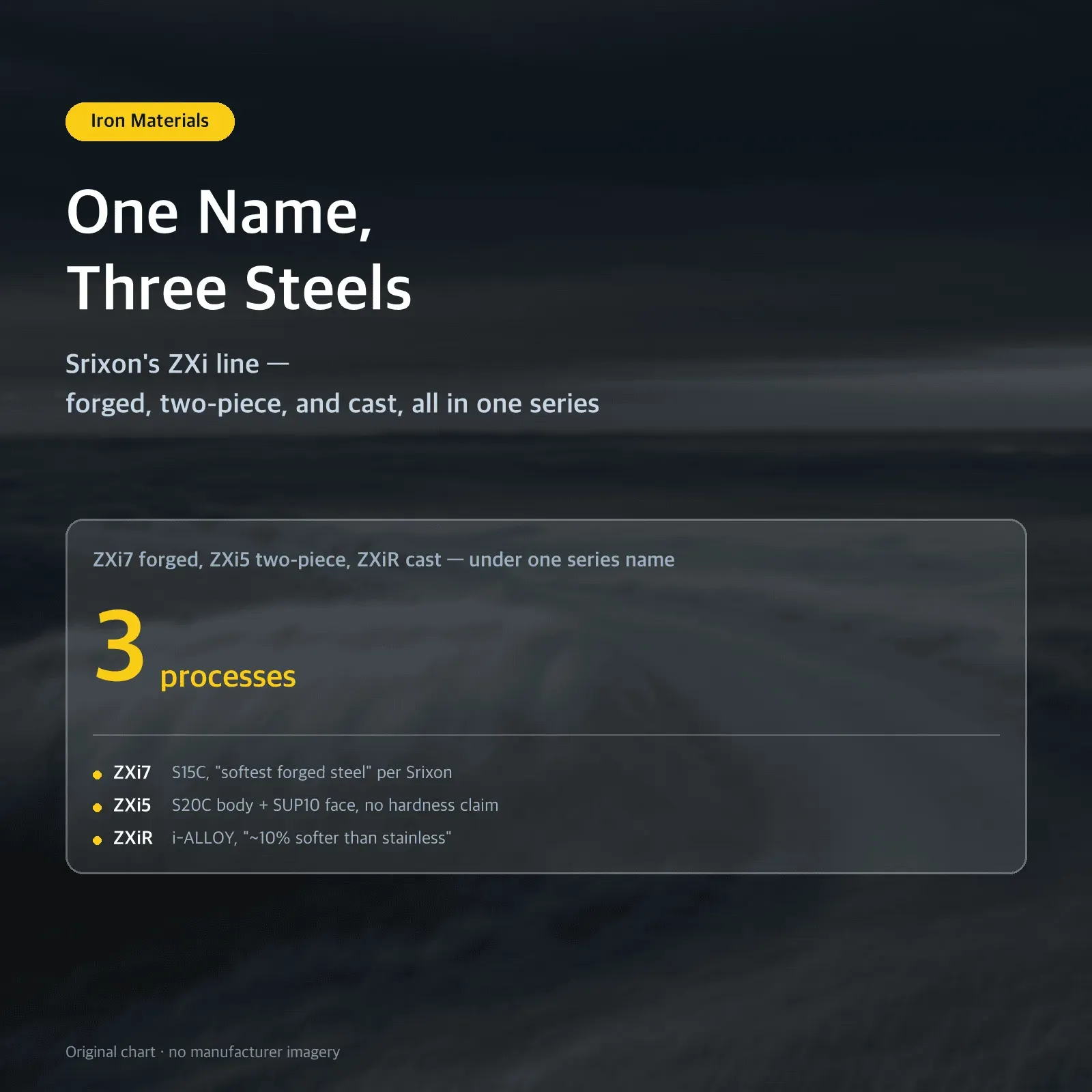
ZXi7, ZXi5, and ZXiR share a name, but forged, two-piece, and cast construction mean three different manufacturing philosophies in one series.
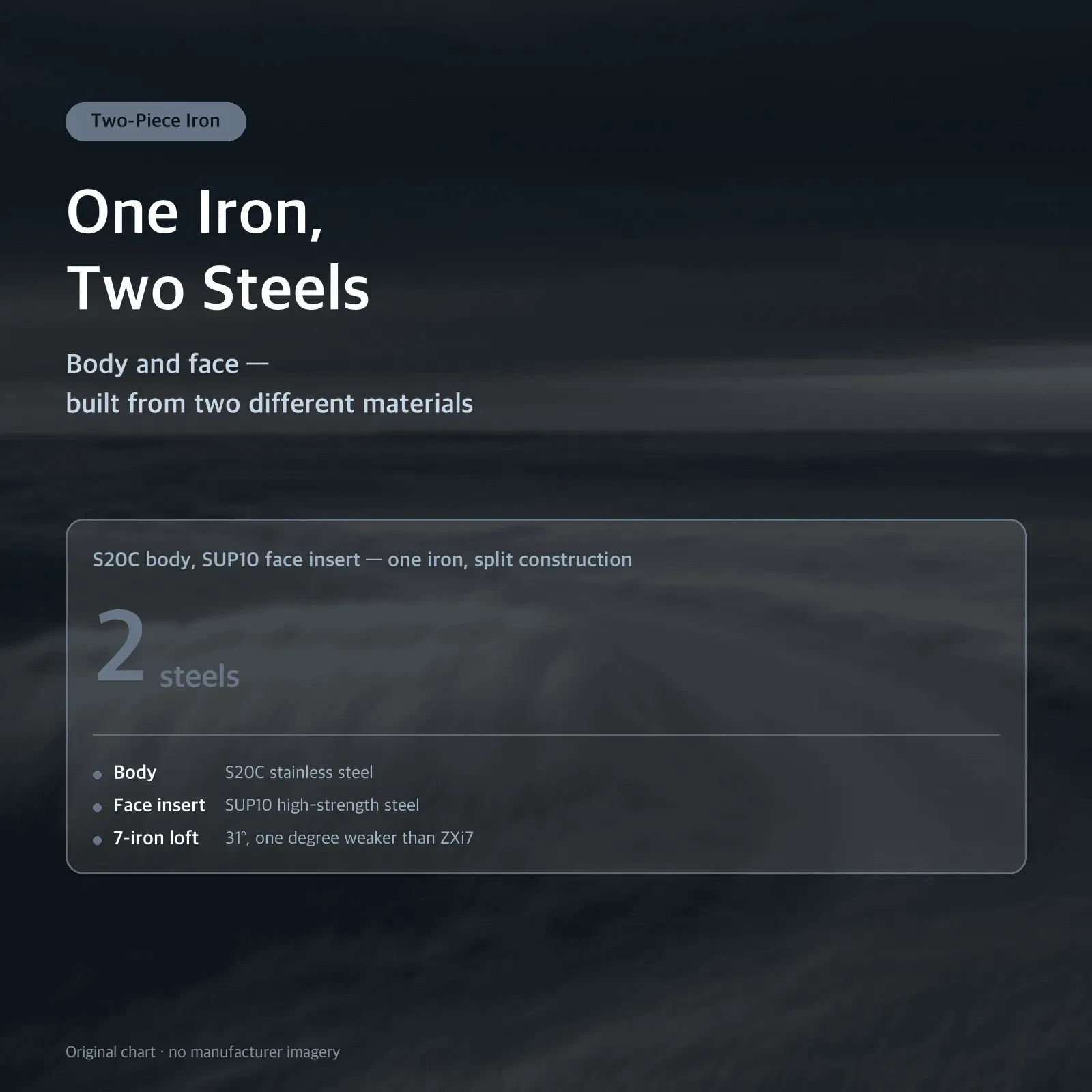
Iron heads are usually one material. ZXi5 splits body and face into two steels, between ZXi7's forged build and ZXiR's cast, new-material approach.
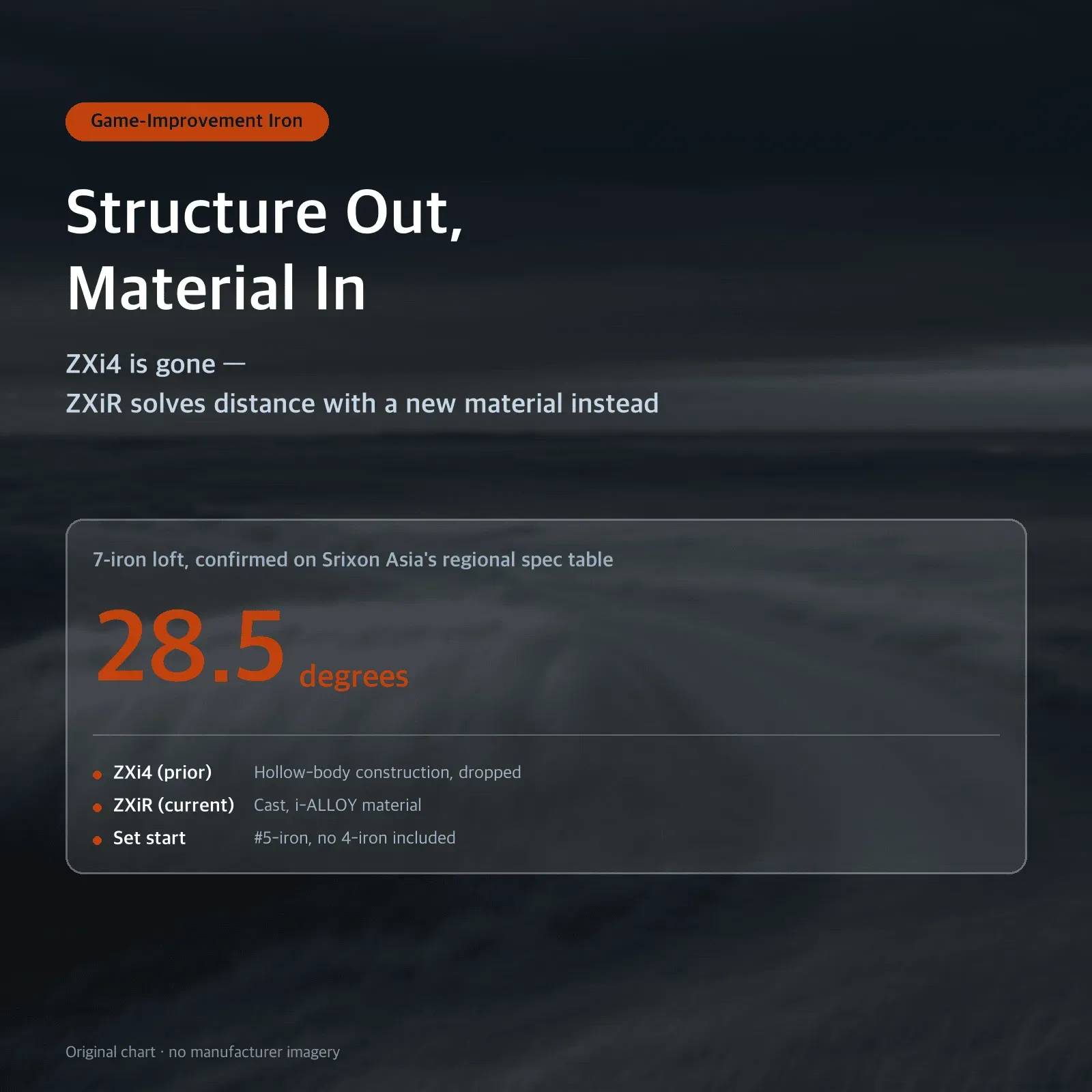
Srixon's ZXi4, a hollow-body iron, dropped from the lineup. Its replacement, ZXiR, adds distance via a new material instead of a hollow structure.

Steel shafts became legal under the USGA in 1924 but not the R&A until 1929. The five-year gap is a case study in how golf's two rule bodies diverge.

Some 1744 provisions vanished as equipment and courses changed. Others, dealing with fairness, are essentially unchanged 282 years later.
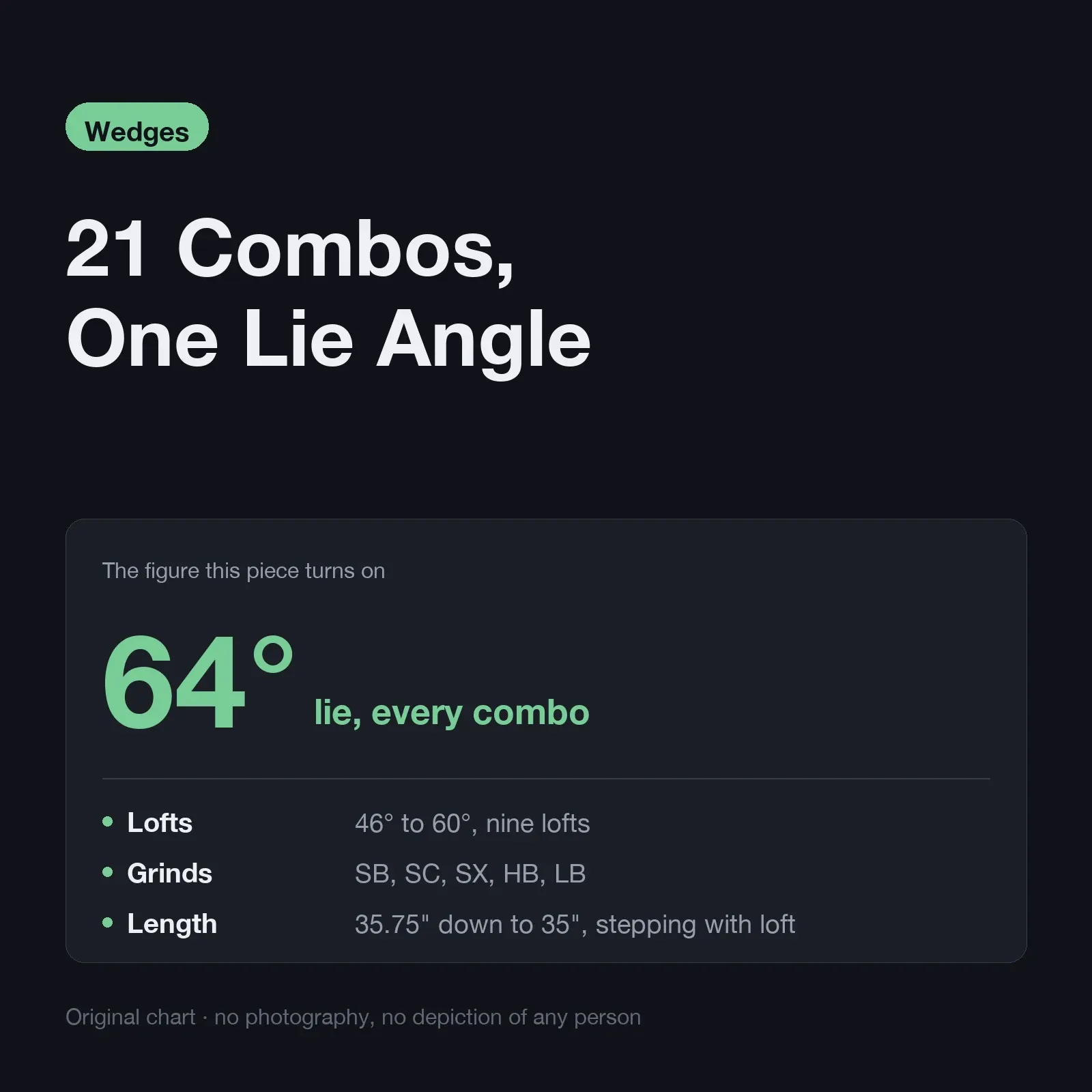
TaylorMade MG5 spans 21 combos across five grinds — and the published table shows lie is a flat 64 degrees on every one of them.
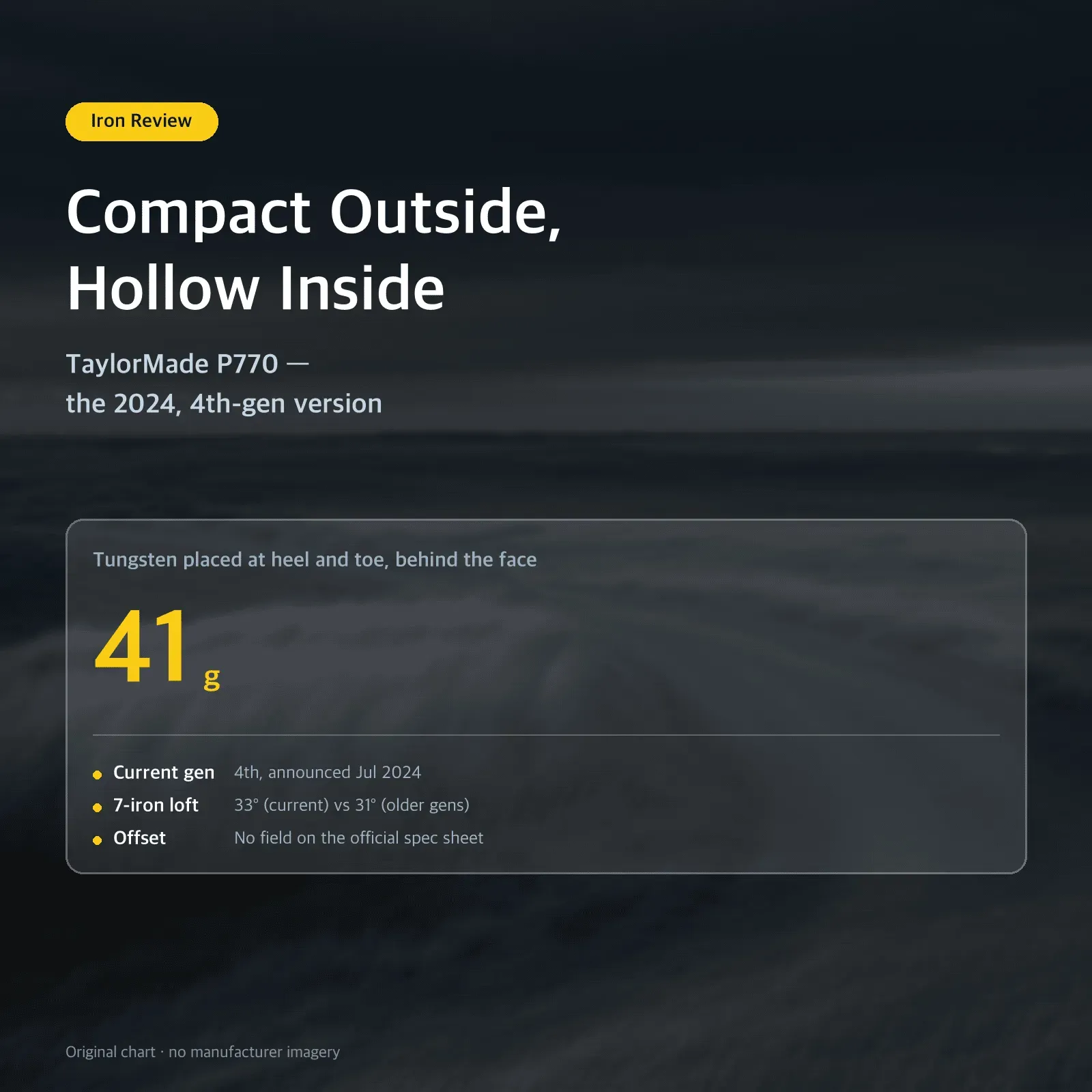
P770 looks like a pure player iron, but it is hollow with tungsten inside. See the confirmed specs and the 2-degree loft gap between generations.
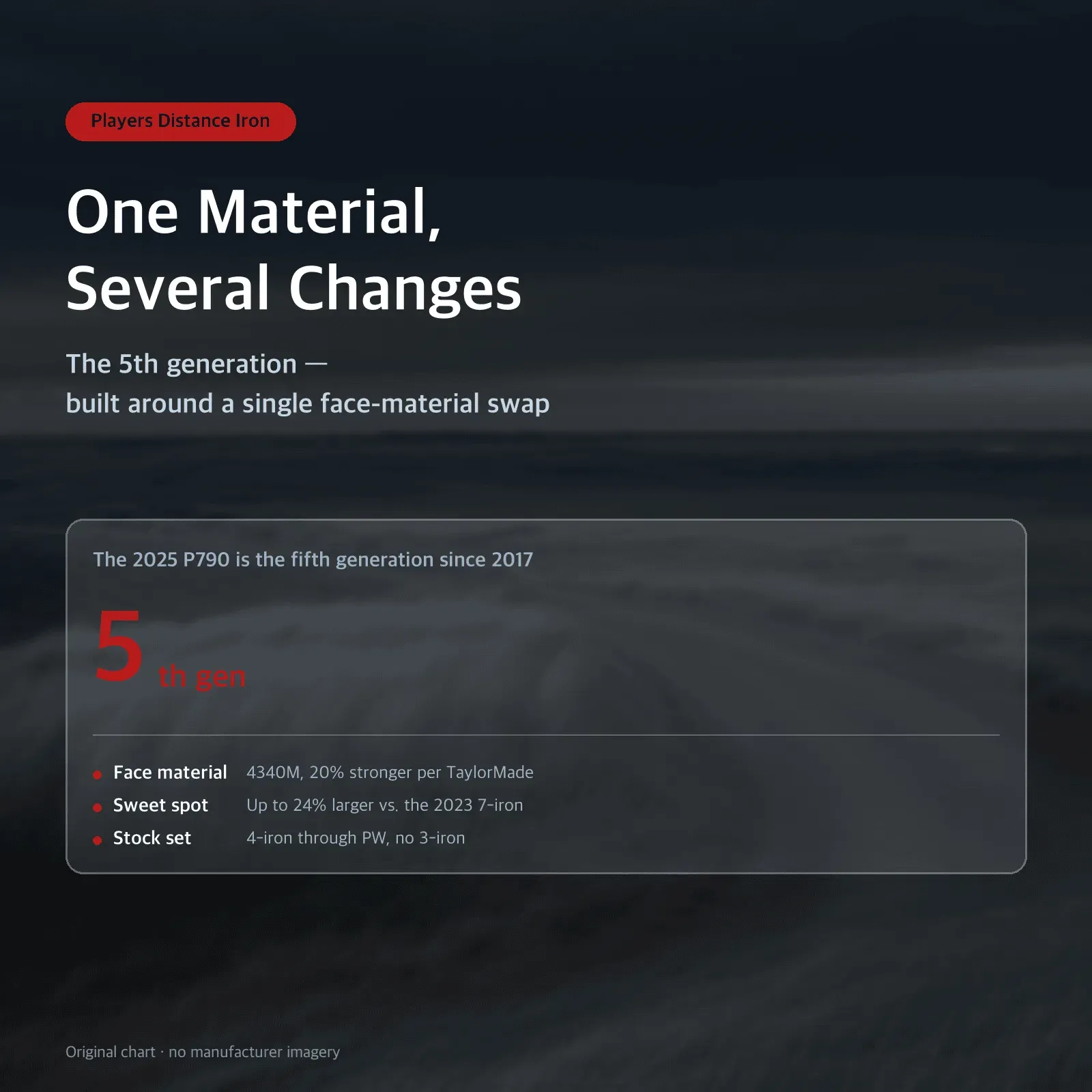
The P790 popularized the 'players distance iron.' The 2025 5th-gen changed one thing at its core — face material — and that pulled several others with it.
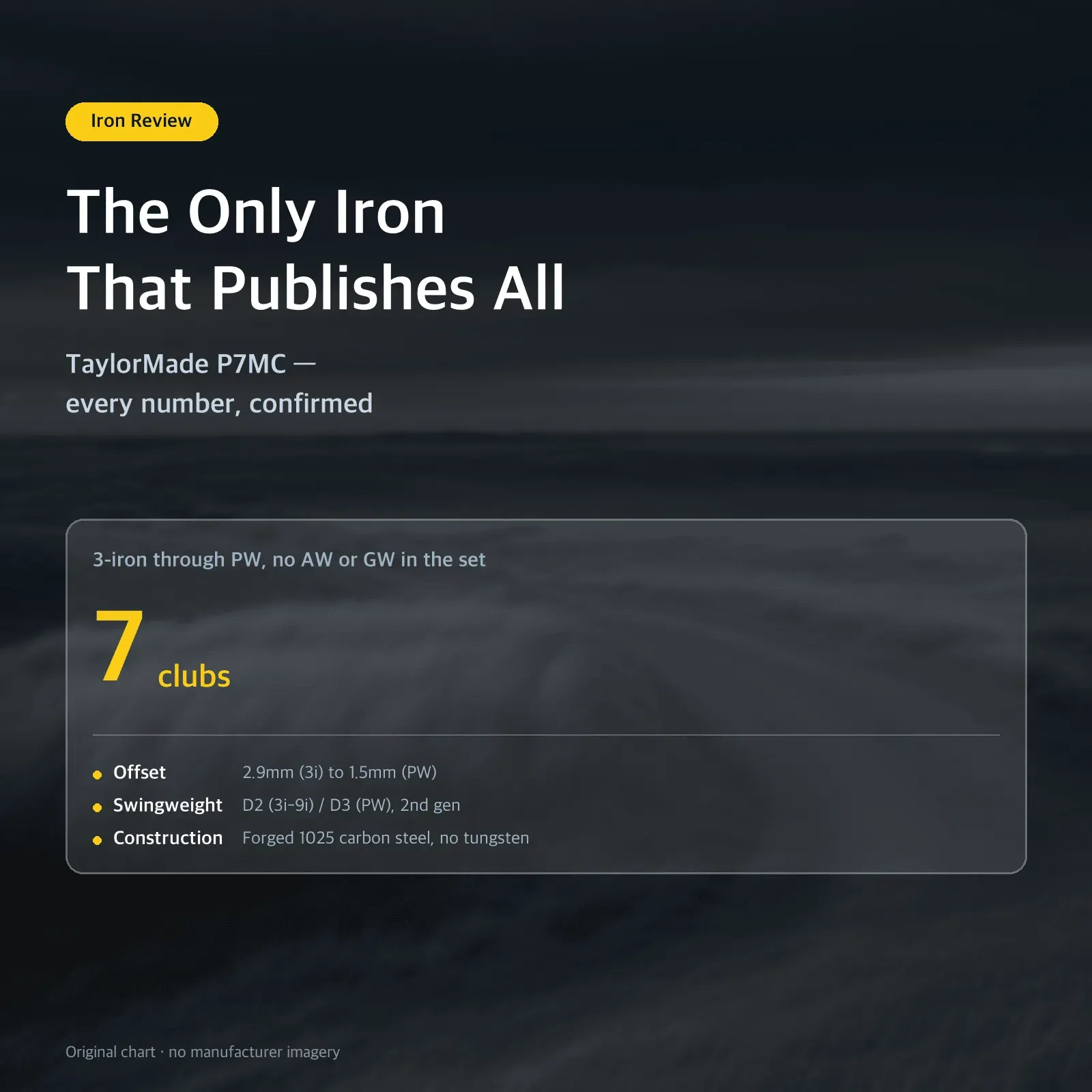
P7MC specs online mix two generations with conflicting claims. This piece separates what is confirmed on official spec sheets from what is not.
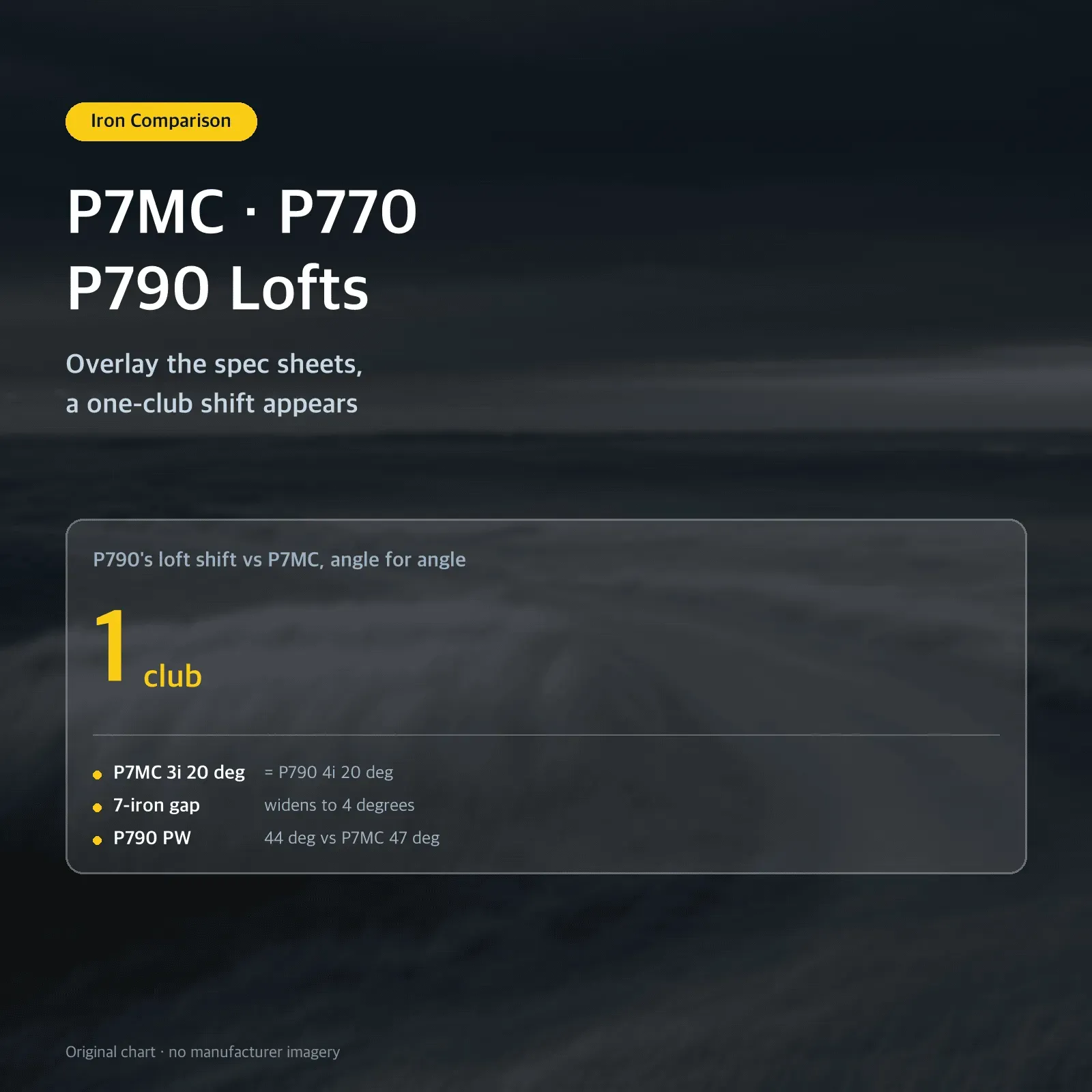
Overlay TaylorMade's official P7MC, P770, and P790 spec sheets and one pattern emerges: the loft gap isn't performance, it's a one-club shift.
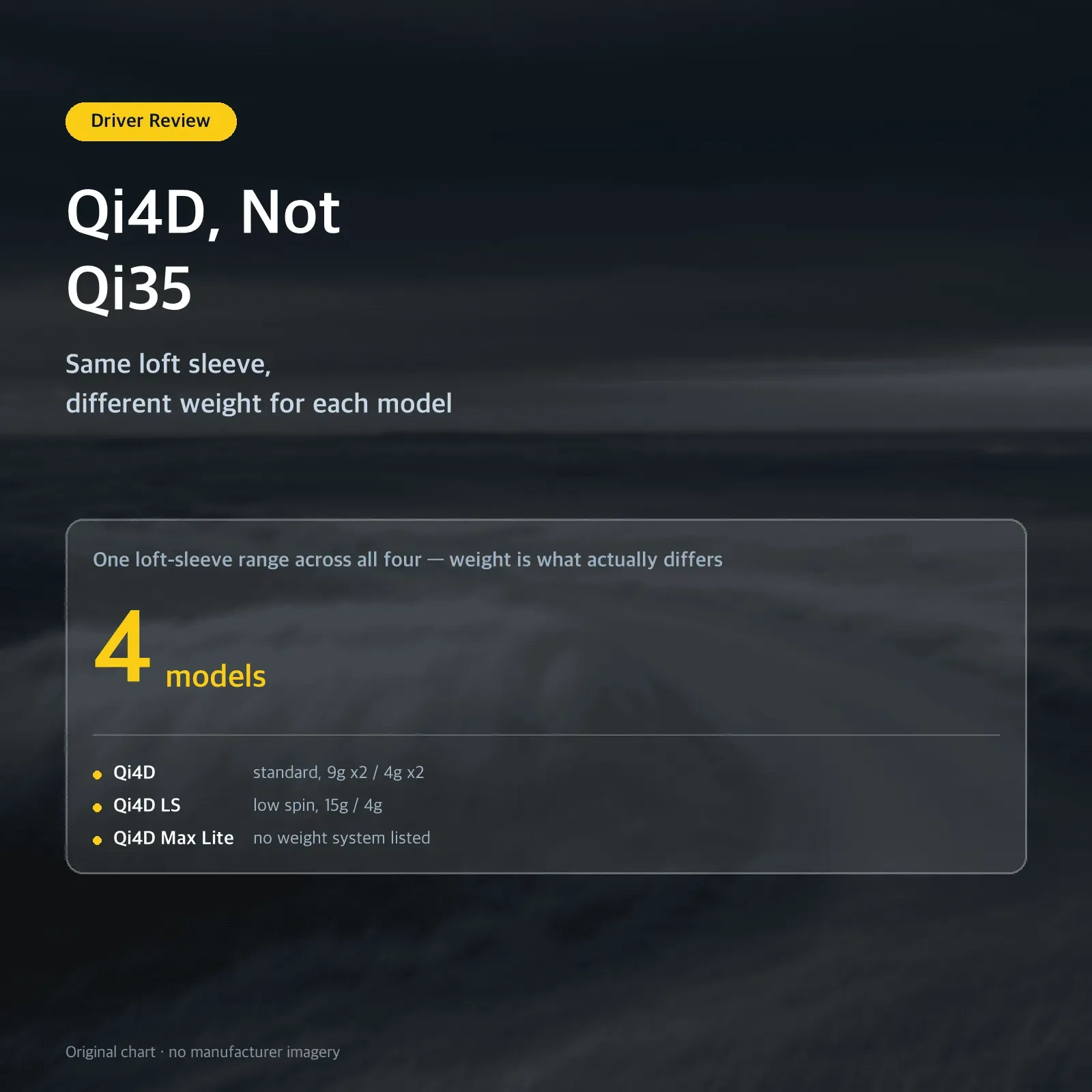
TaylorMade's current driver is the Qi4D, not the Qi35. All four models share one loft-sleeve range; weight, 9g to 15g, is what separates them.
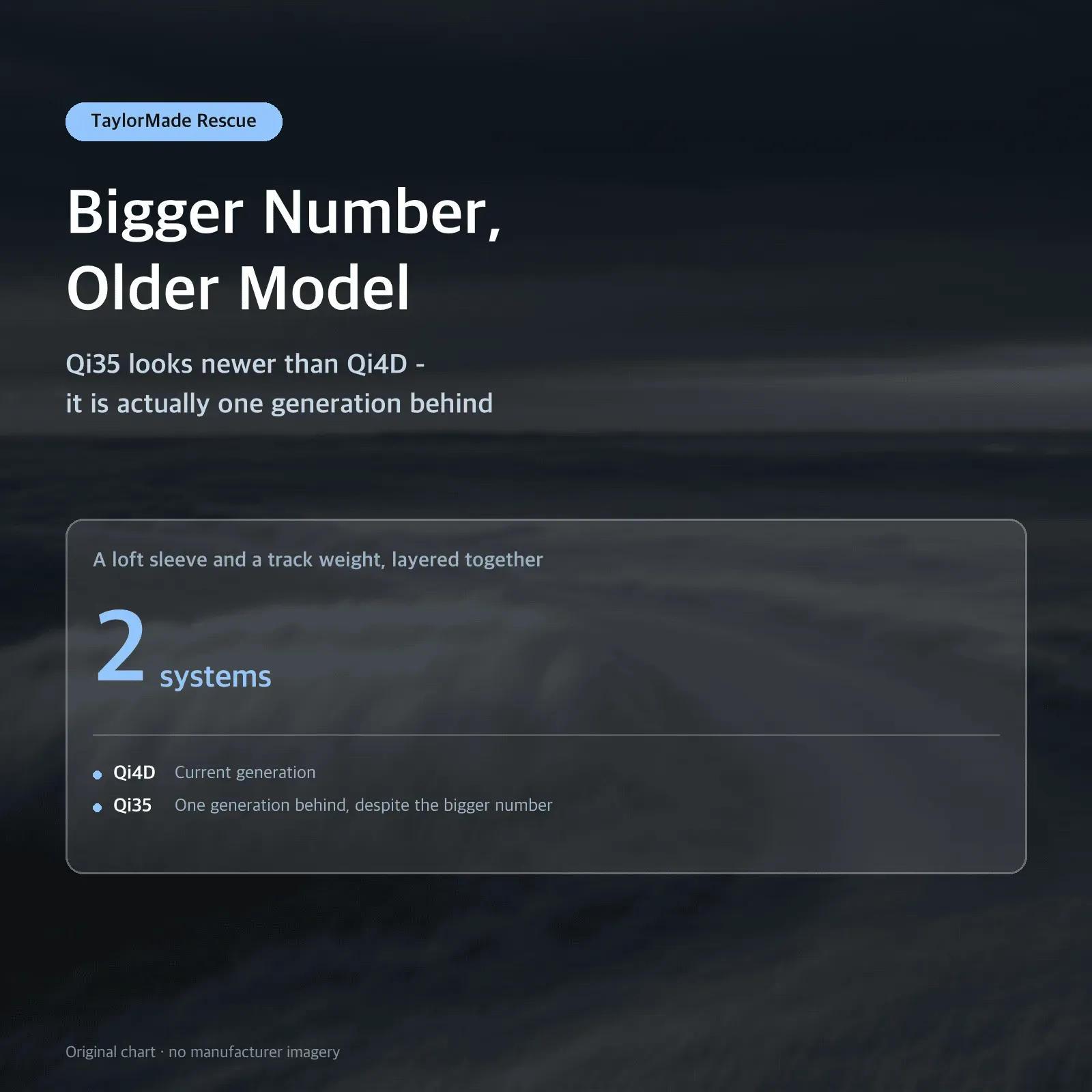
The Qi4D Rescue layers a loft sleeve on a moveable weight — but the bigger risk when buying one is mistaking the older Qi35 for the newer model.
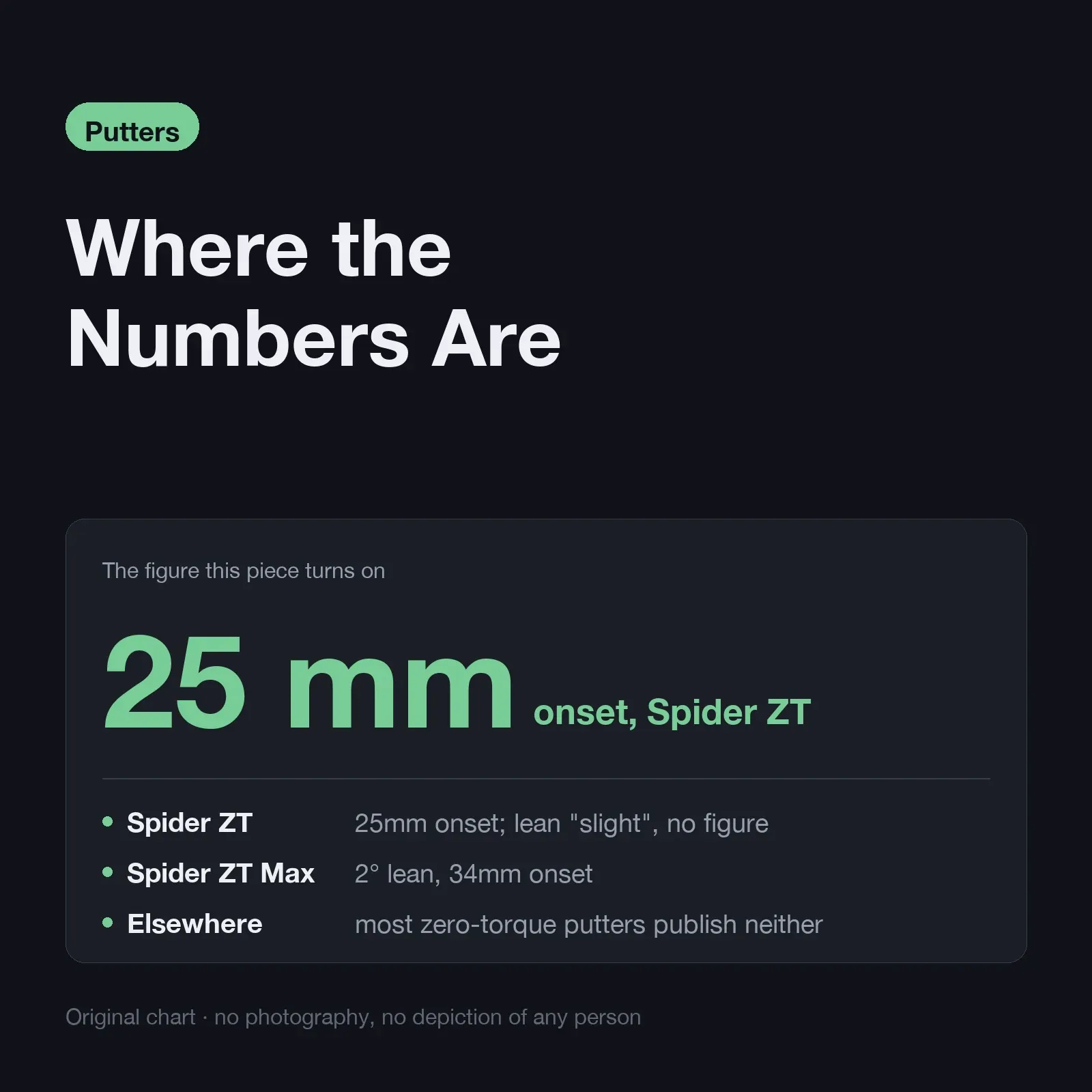
Zero-torque putters rarely publish figures. TaylorMade does — 25mm of onset on the Spider ZT, and 2 degrees of lean with 34mm on the ZT Max.
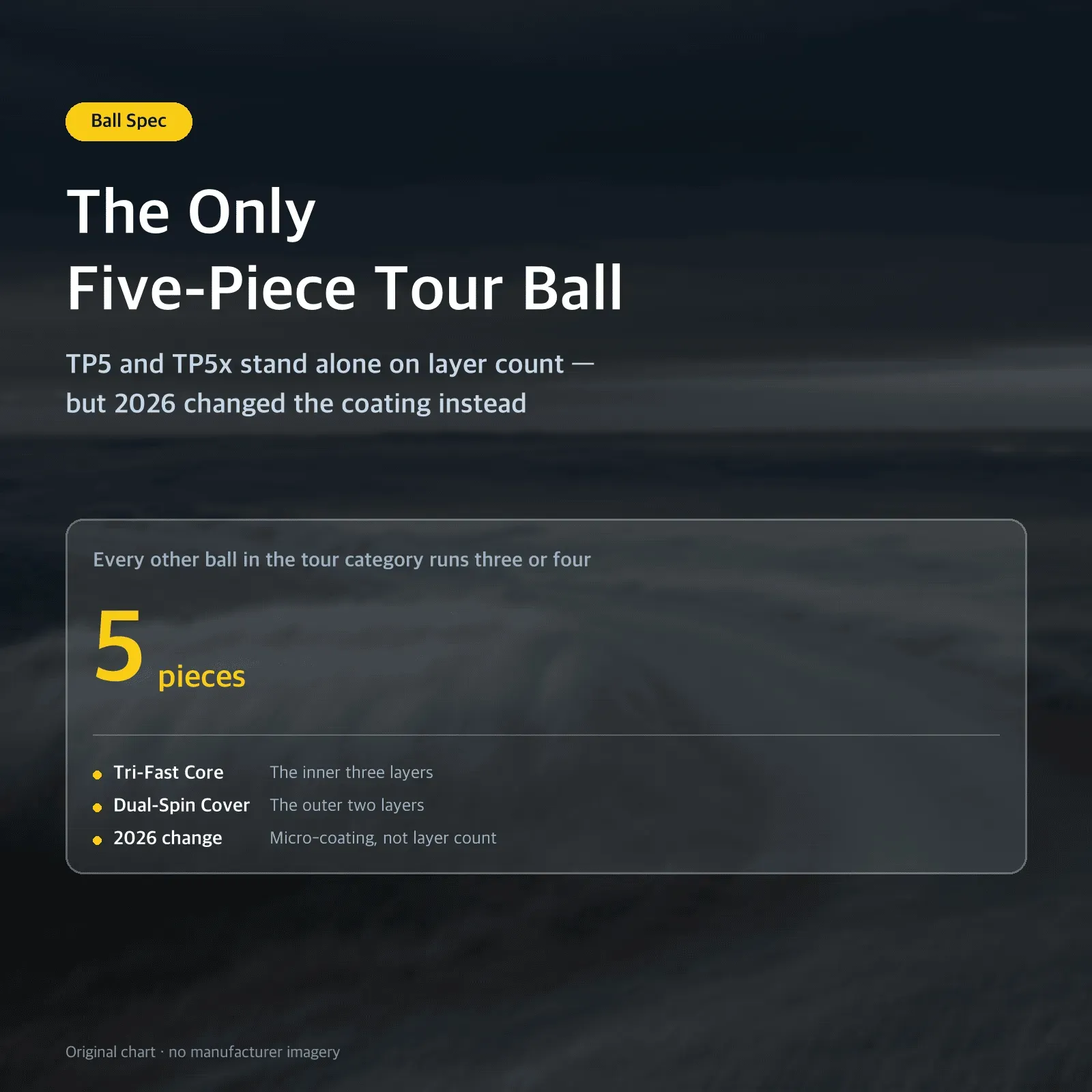
TP5 and TP5x are the only five-piece balls in the tour category. The 2026 update changed the coating, not the layer count.

After the USGA and R&A split over driver coefficient of restitution in 1998, unification took a decade — and testing shifted to a 239-microsecond standard.

Before the 14-club limit, golf had no cap on how many clubs you could carry. Some players carried thirty or more — and the average was eighteen.

The 14-club limit traces to three concerns raised in the 1930s: skill, fairness, and — unusually for a rule — the caddie's physical burden.
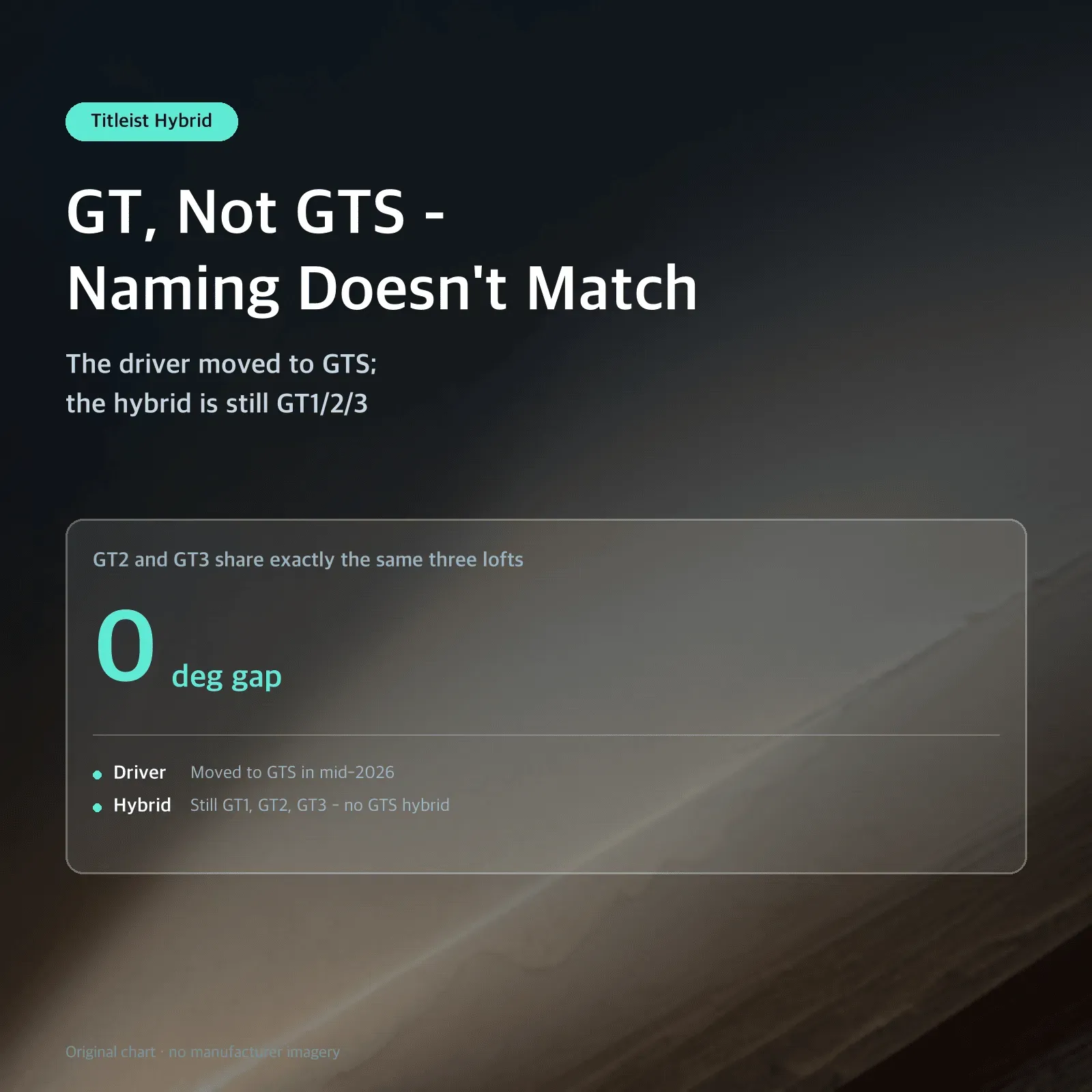
Titleist's driver switched to GTS in 2026, but the hybrid is still GT1/GT2/GT3 — and GT2/GT3 share identical lofts. Here's what separates them.
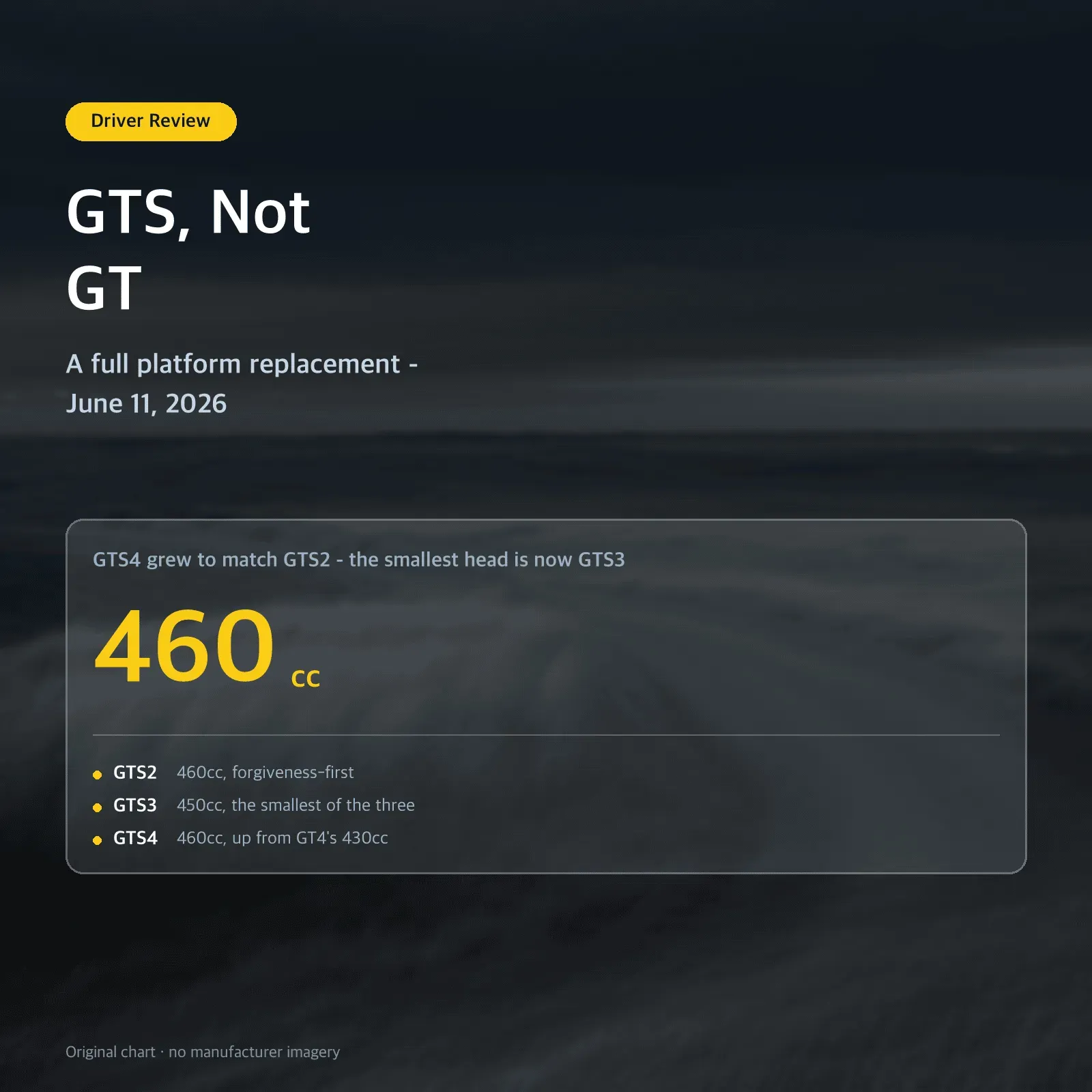
Titleist replaced GT with GTS in June 2026. The low-spin model got bigger, not smaller — the opposite of what the prior generation's pattern predicts.
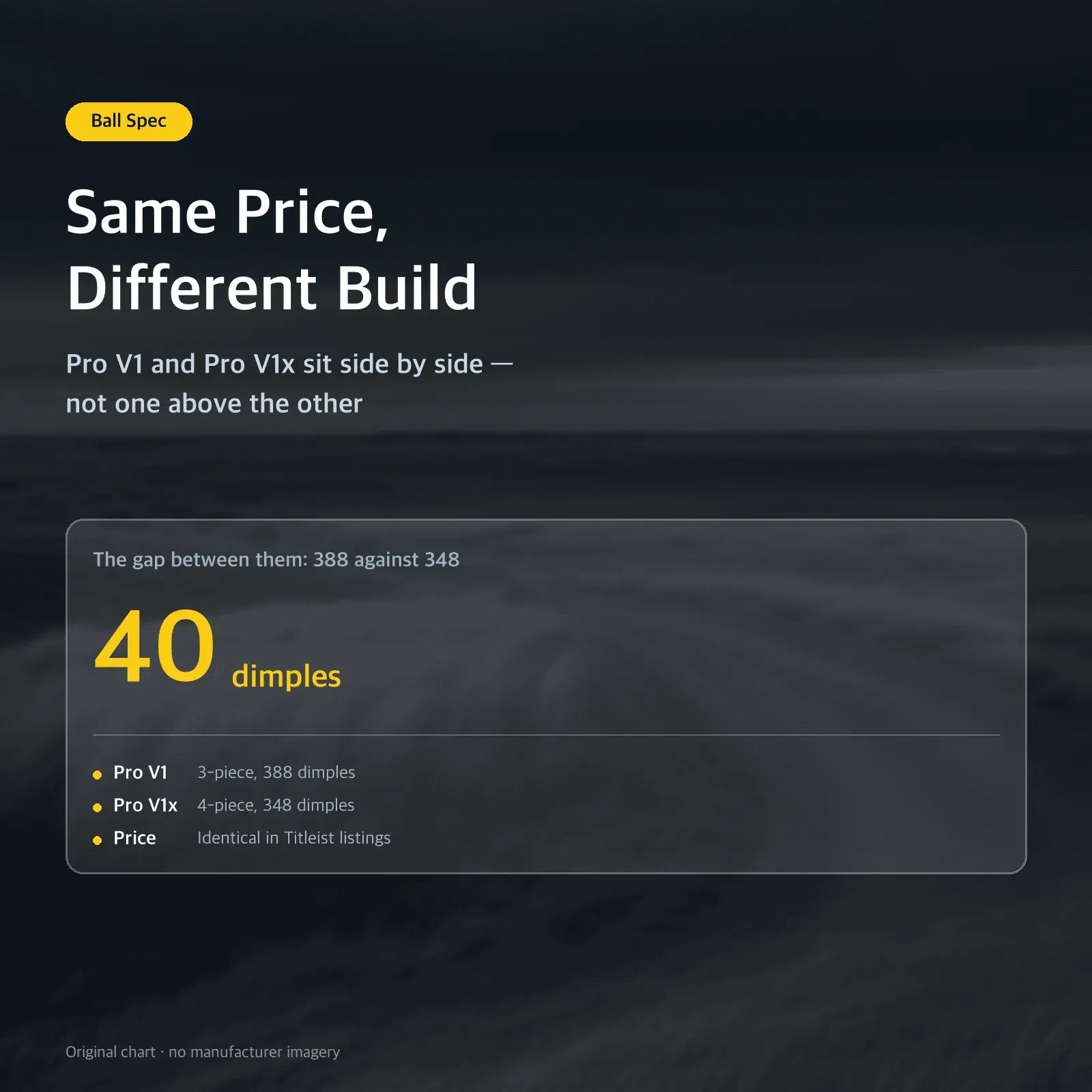
Pro V1 and Pro V1x read as an upgrade pair, but Titleist prices them the same. The difference is layer count and dimple pattern, not rank.

A well-known story says Britain banned the Schenectady putter out of wounded pride after Walter Travis won with it. We looked for evidence. We found none.

The USGA and the R&A split the world by jurisdiction: USGA covers the U.S. and Mexico, R&A covers everywhere else. Here's how that split came about.
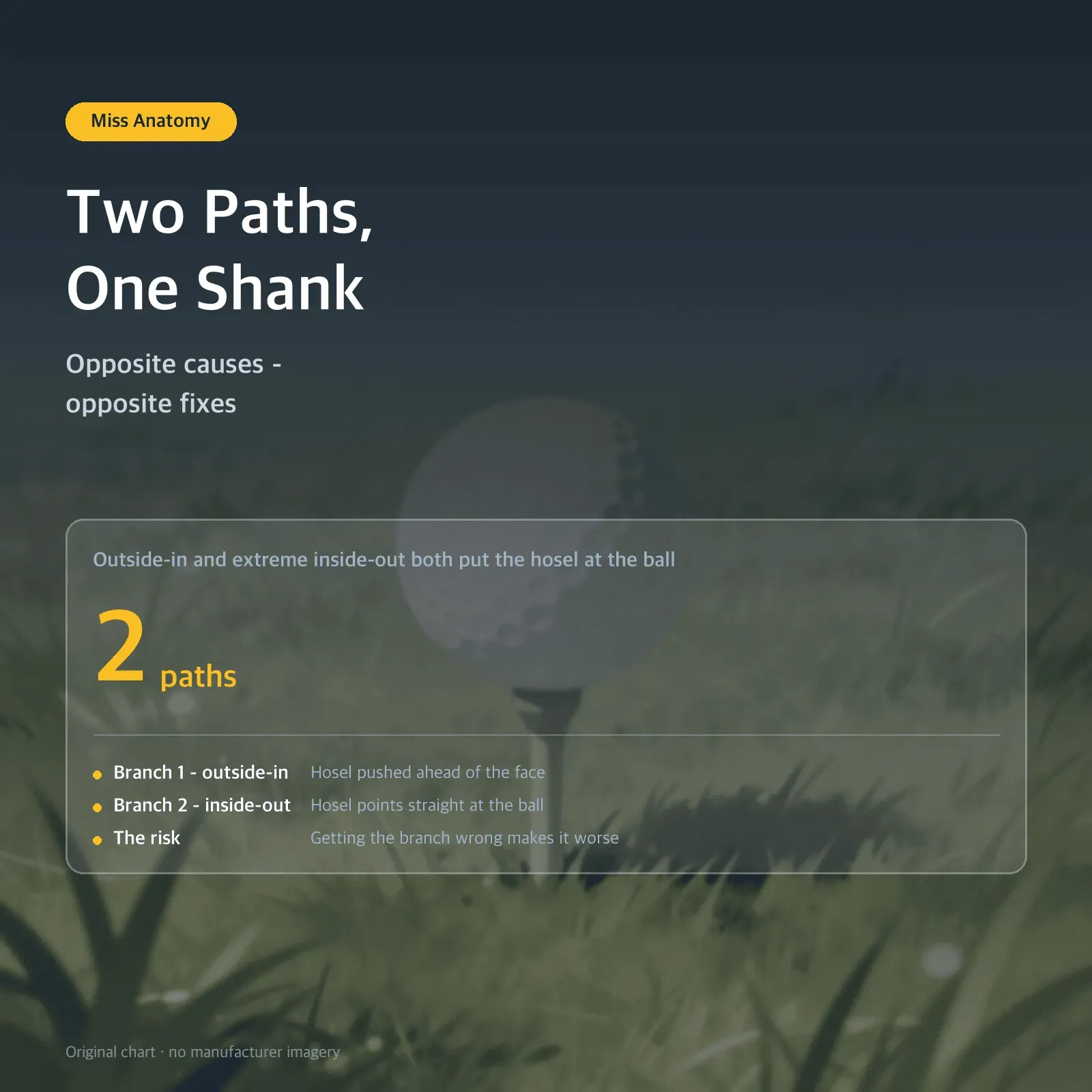
An over-the-top move and an extreme in-to-out path both produce the same shank, so standard advice can make one group of golfers worse.
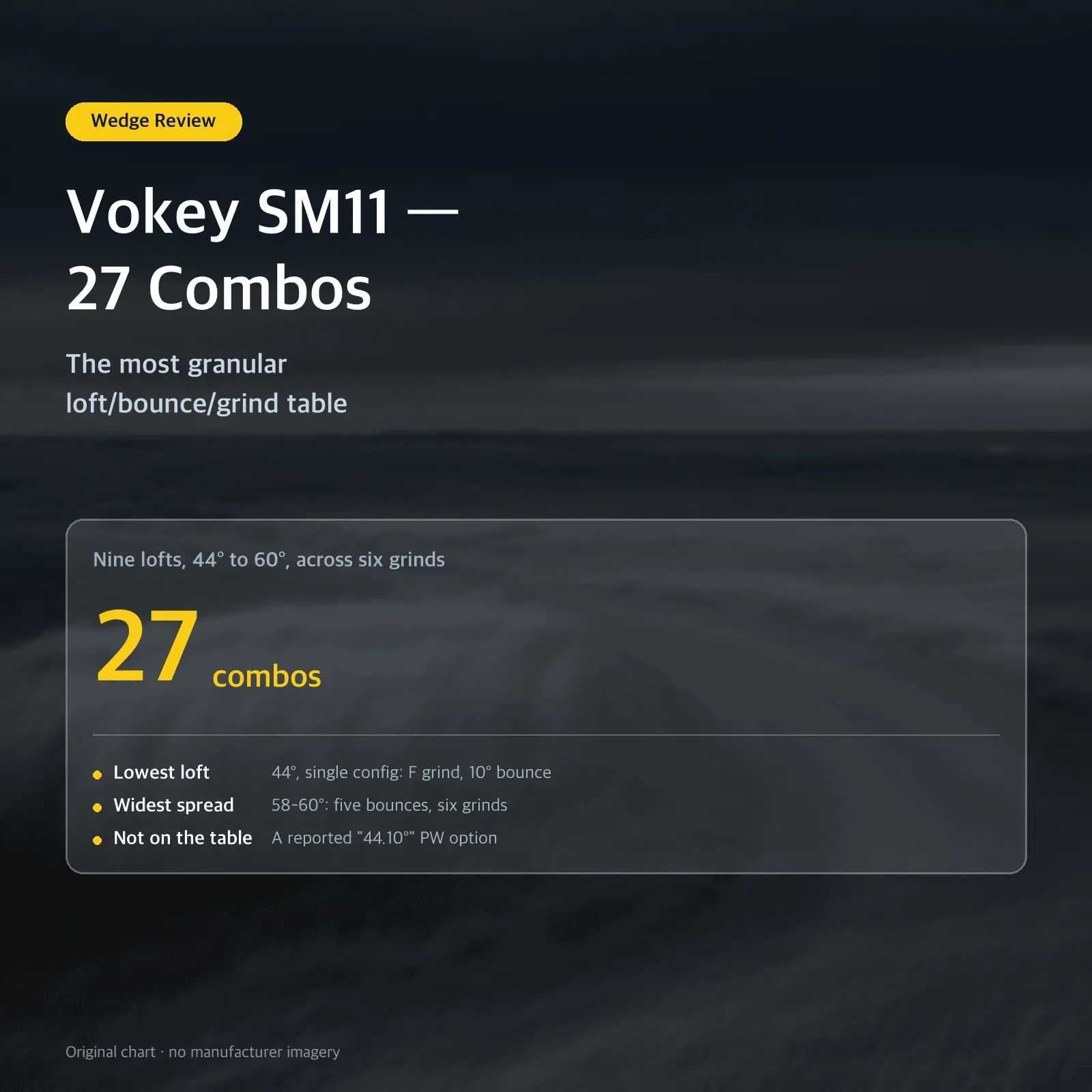
Vokey SM11 spans 27 official loft/bounce/grind combos across nine lofts — and 44.10 is not a new option, it is the model code for the 44 degree wedge.

Vokey SM11, MG5, Opus SP+, PING s259, and Cleveland RTZ overlaid on loft range and spec disclosure — the real gap is what each brand publishes.
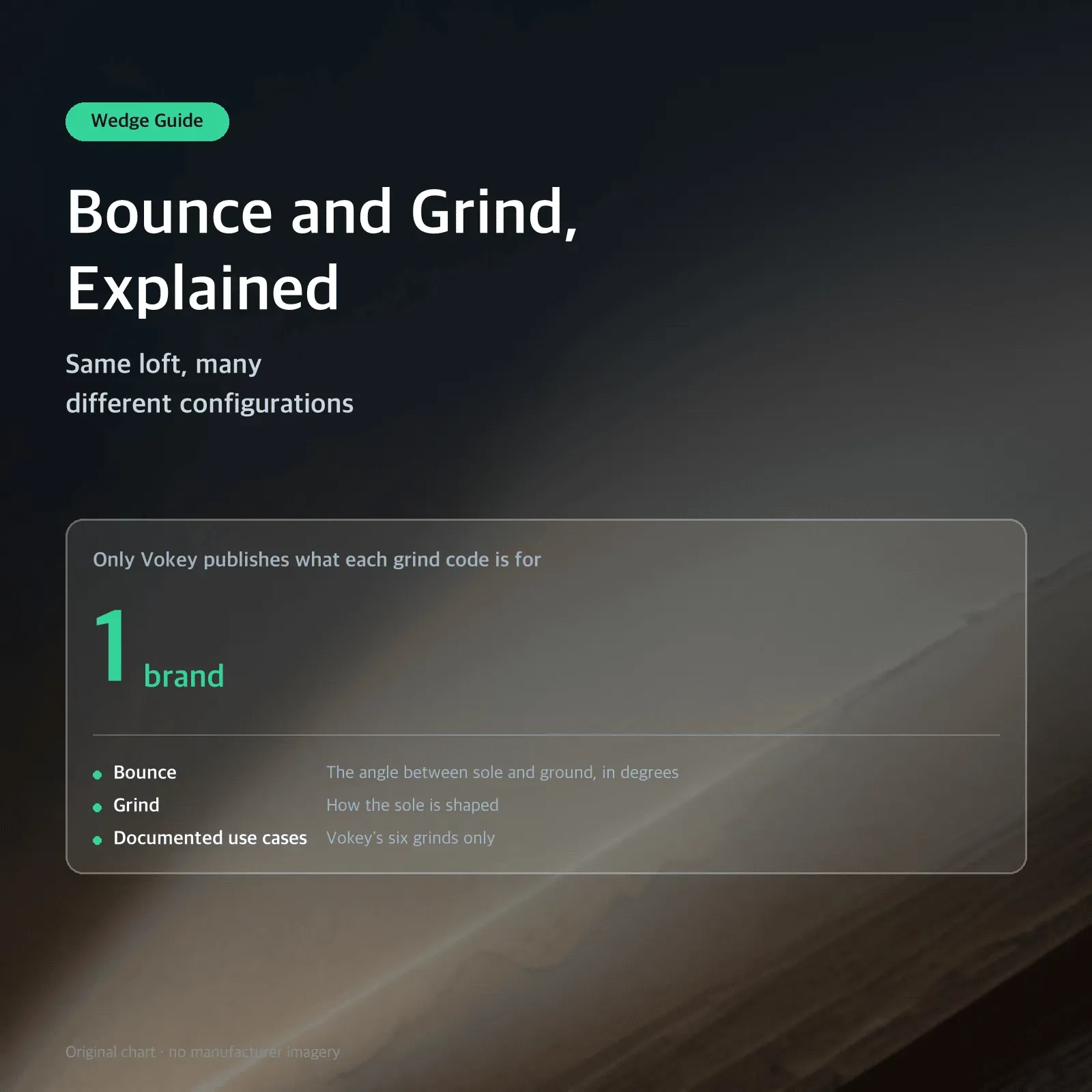
Same loft, many configurations: bounce and grind are the two axes behind it. Only Vokey publishes what each grind code is for.
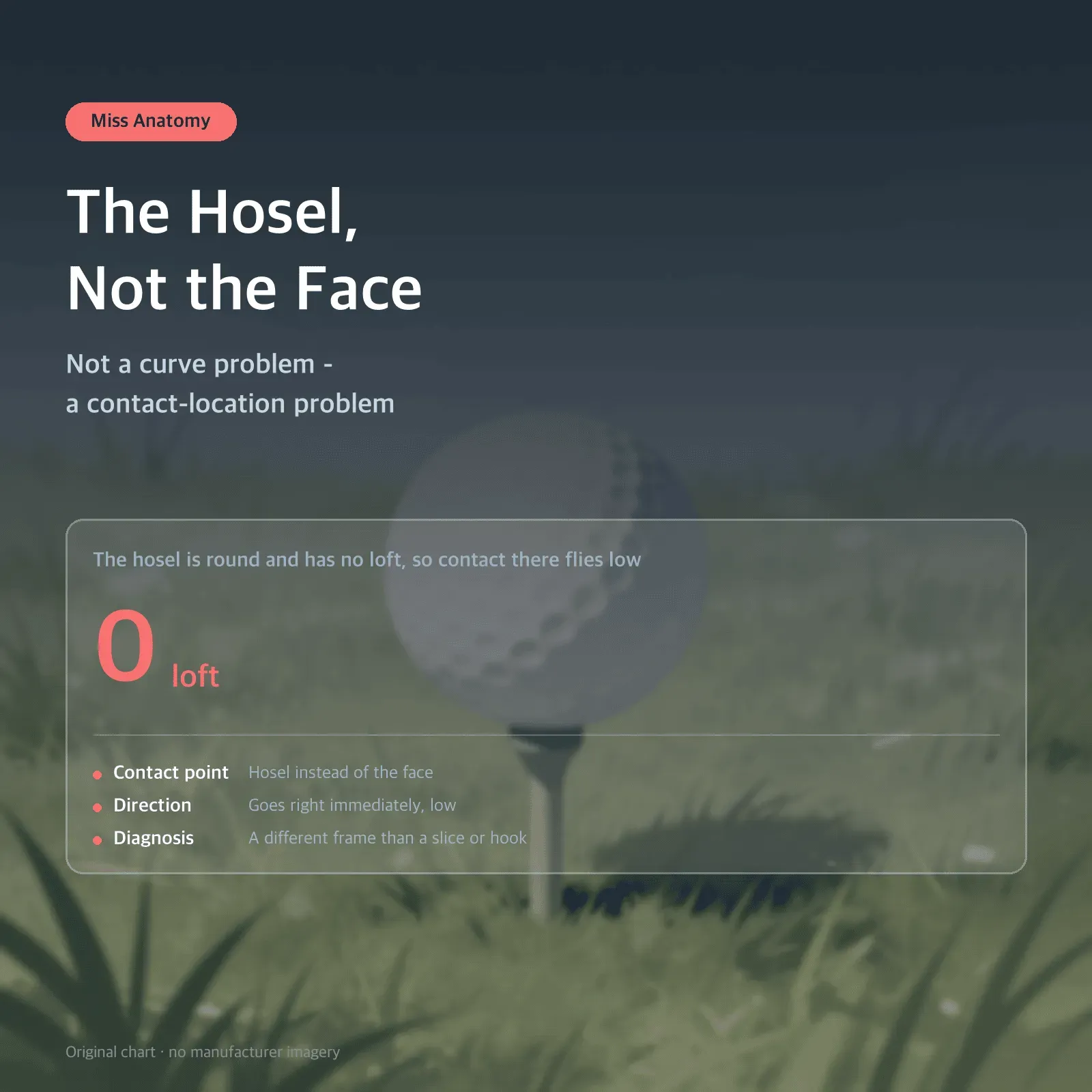
A shank isn't a curving miss like a slice or hook — it's a ball that never contacts the face. Why it flies low and right, and why usual diagnosis fails.
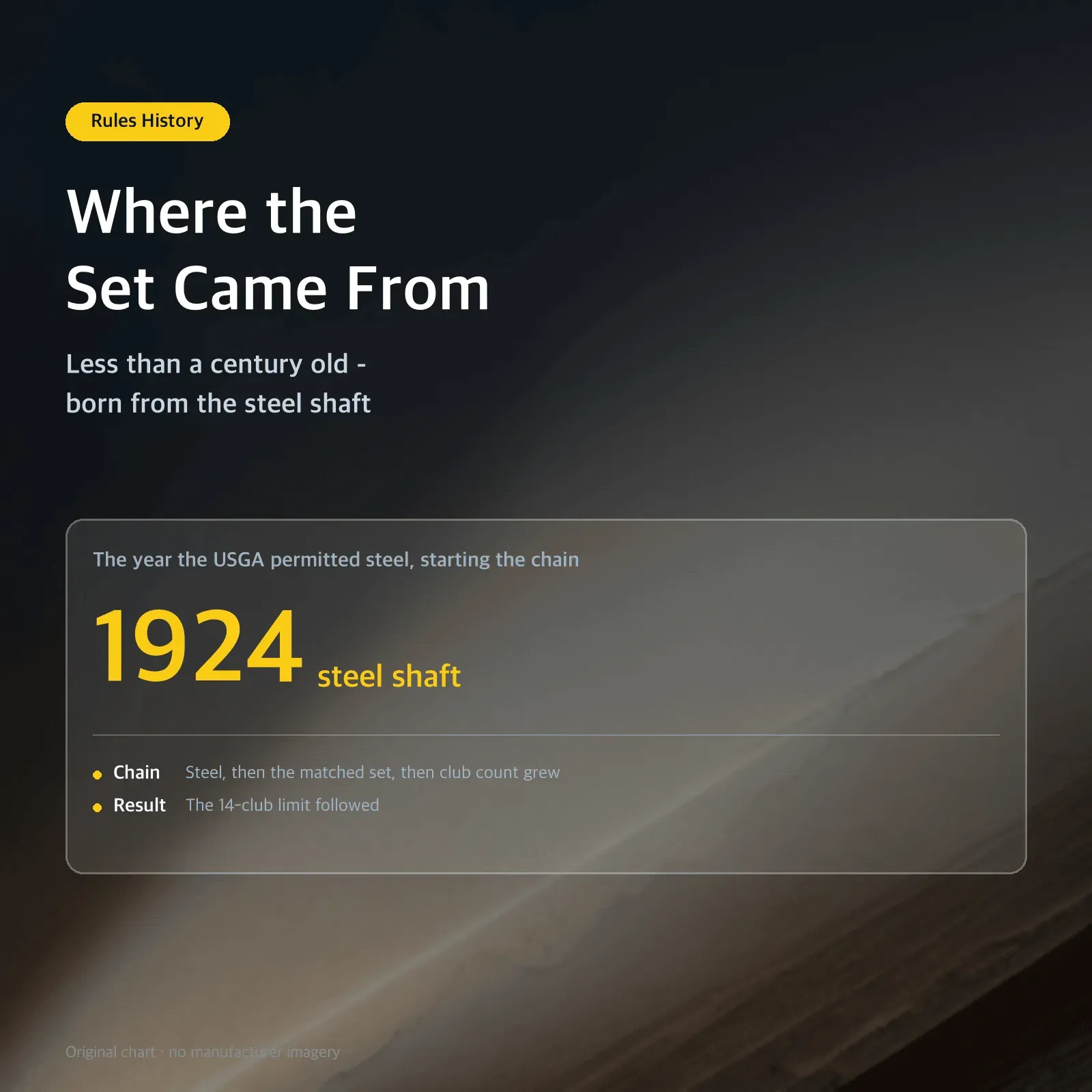
The matched iron set is less than a century old. It came from the steel shaft, and created the club-count problem behind the 14-club limit.

Two explanations circulate for golf's 14-club limit — a set-composition theory and a story about Bobby Jones and Tony Torrance. Only one has support.
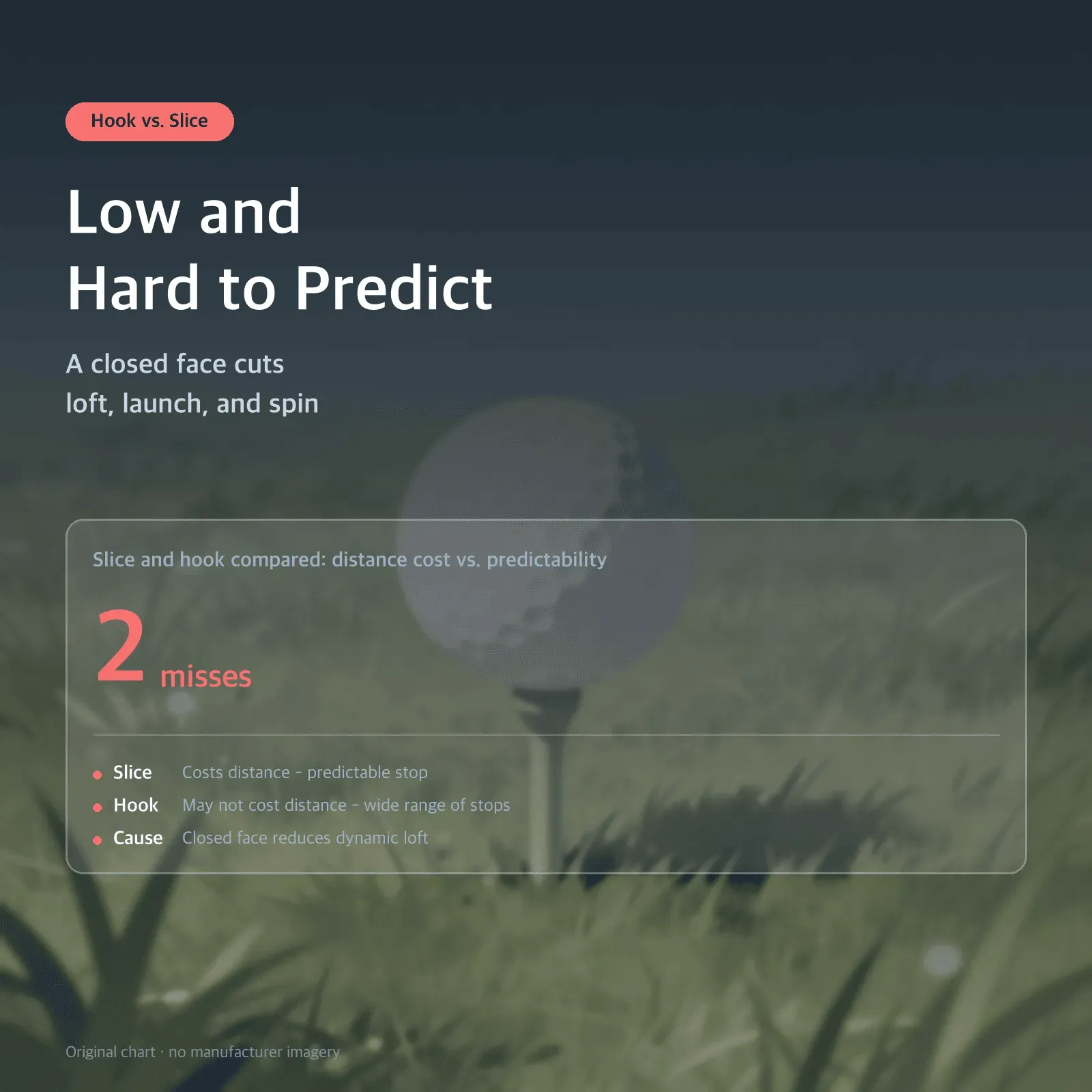
A closed face reduces dynamic loft, which lowers launch and spin. That makes a hook's stopping point far less predictable than a slice's.
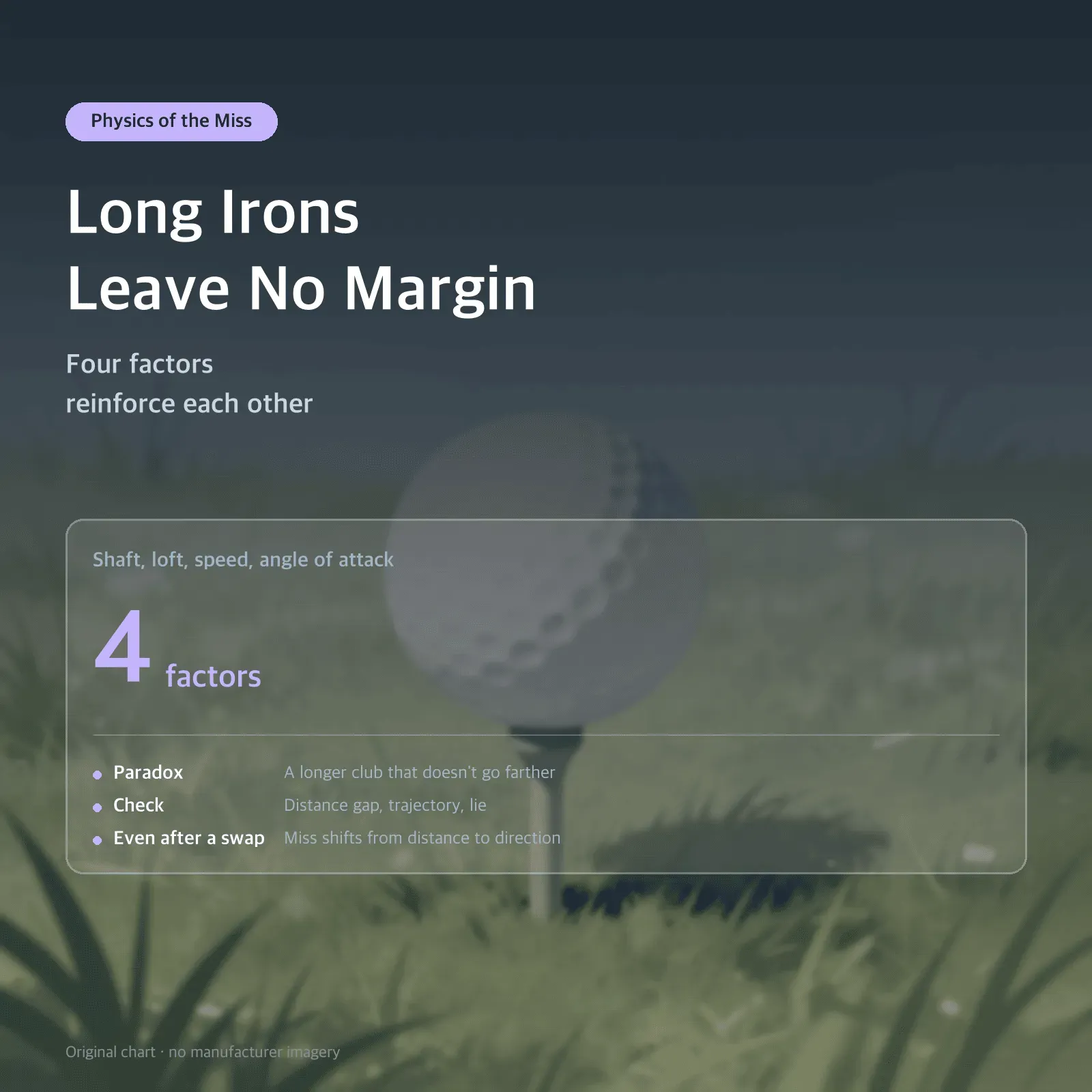
Four factors stack in the same direction to make long irons difficult. Hybrids ease it, but the miss does not disappear — it changes shape.
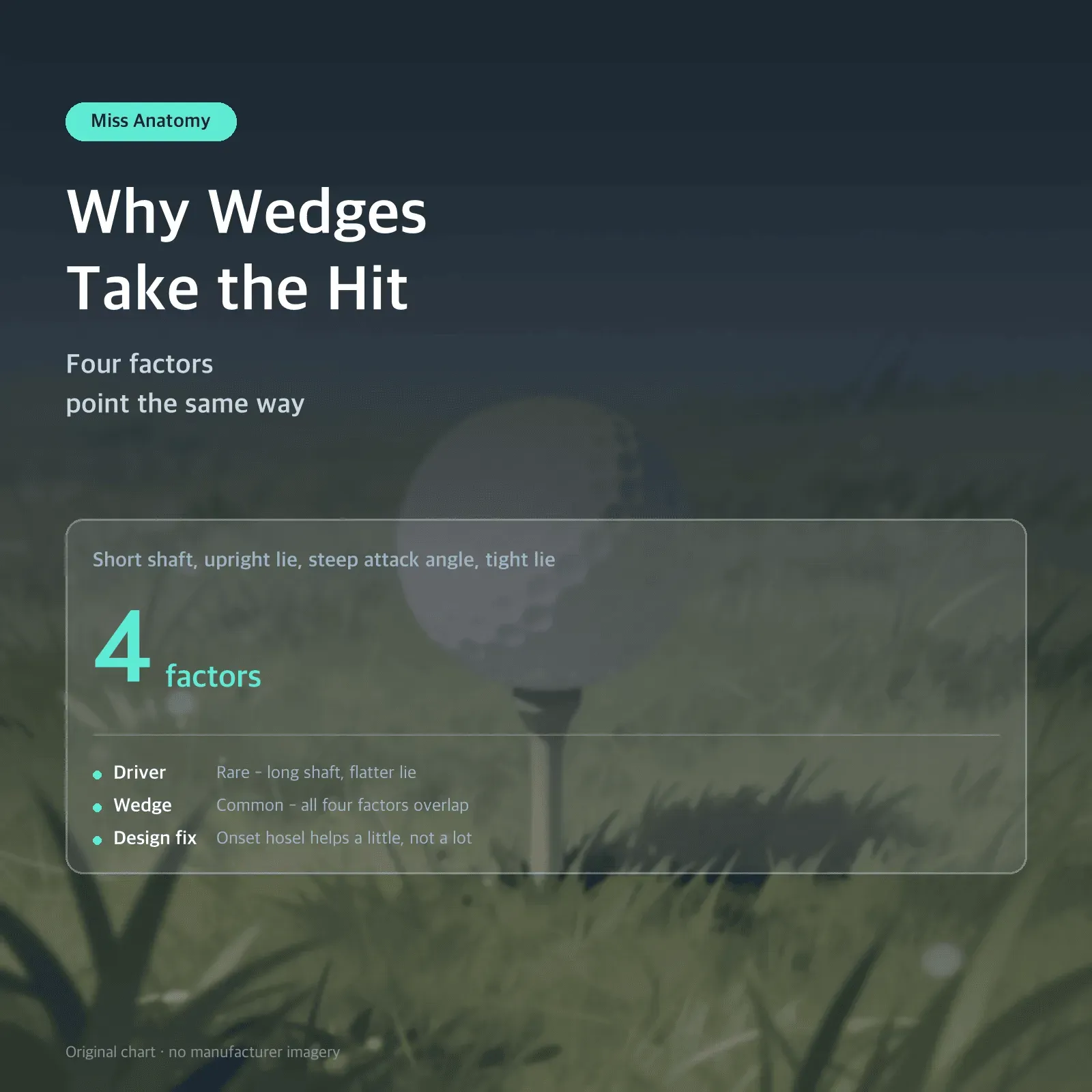
A shank clusters around wedges and short irons because four factors align. Some club designs push back, but the effect stays small.
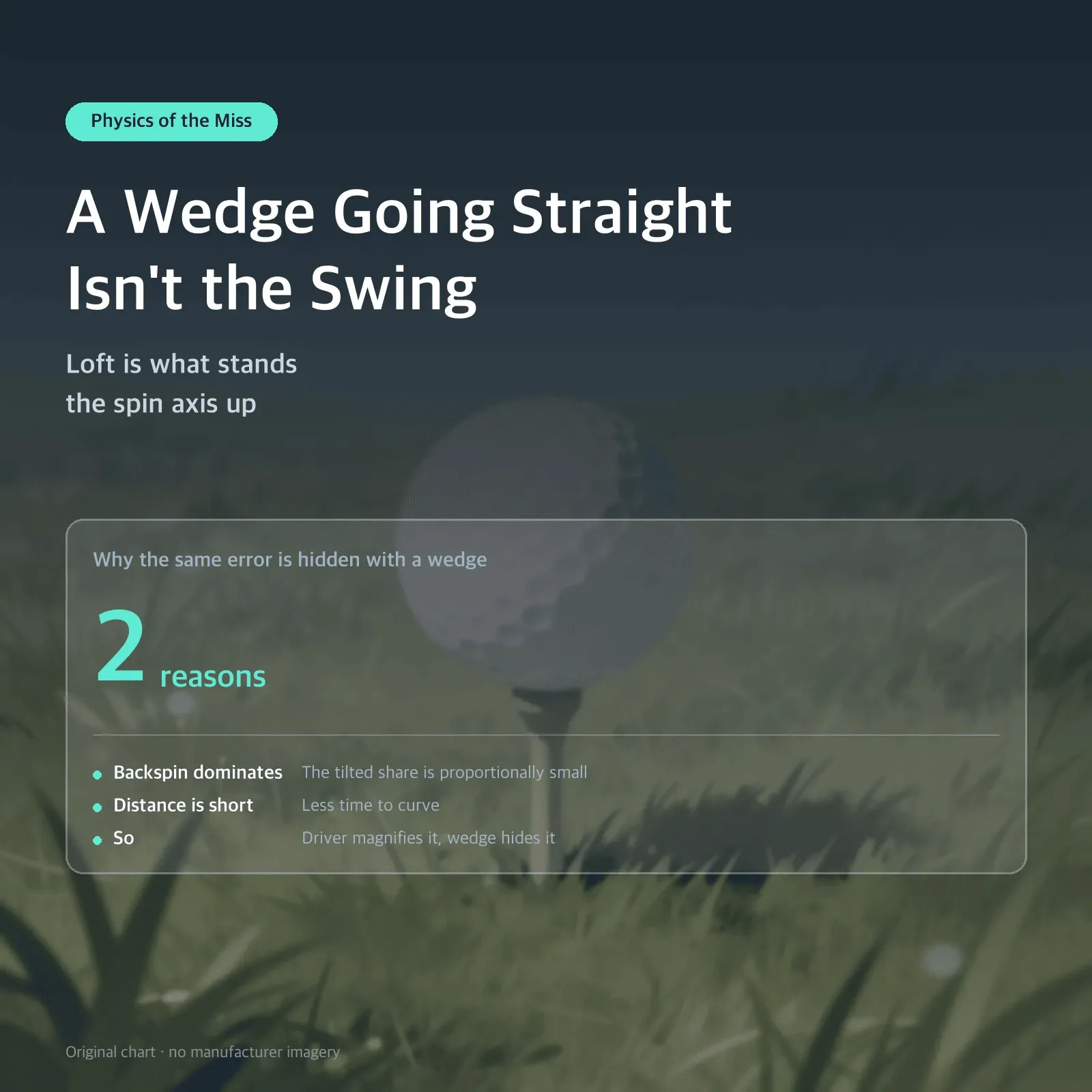
A wedge going straight is no proof of a good swing. Higher loft raises backspin, shrinking how much a tilted spin axis shows as curve — physics, not skill.
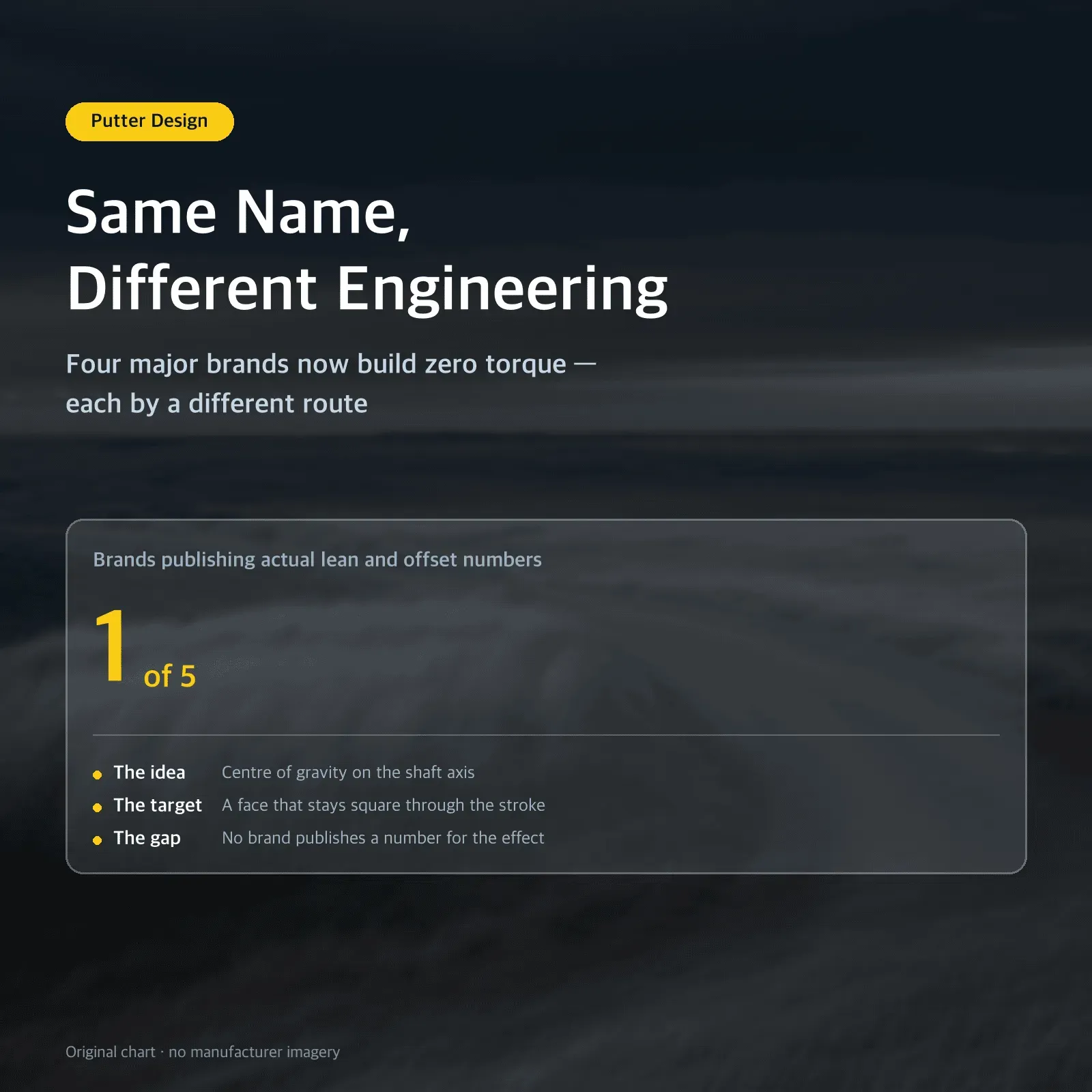
Zero torque was one small brand's idea. Now Odyssey, TaylorMade, Scotty Cameron, and PXG all build it, each solving the same physics differently.
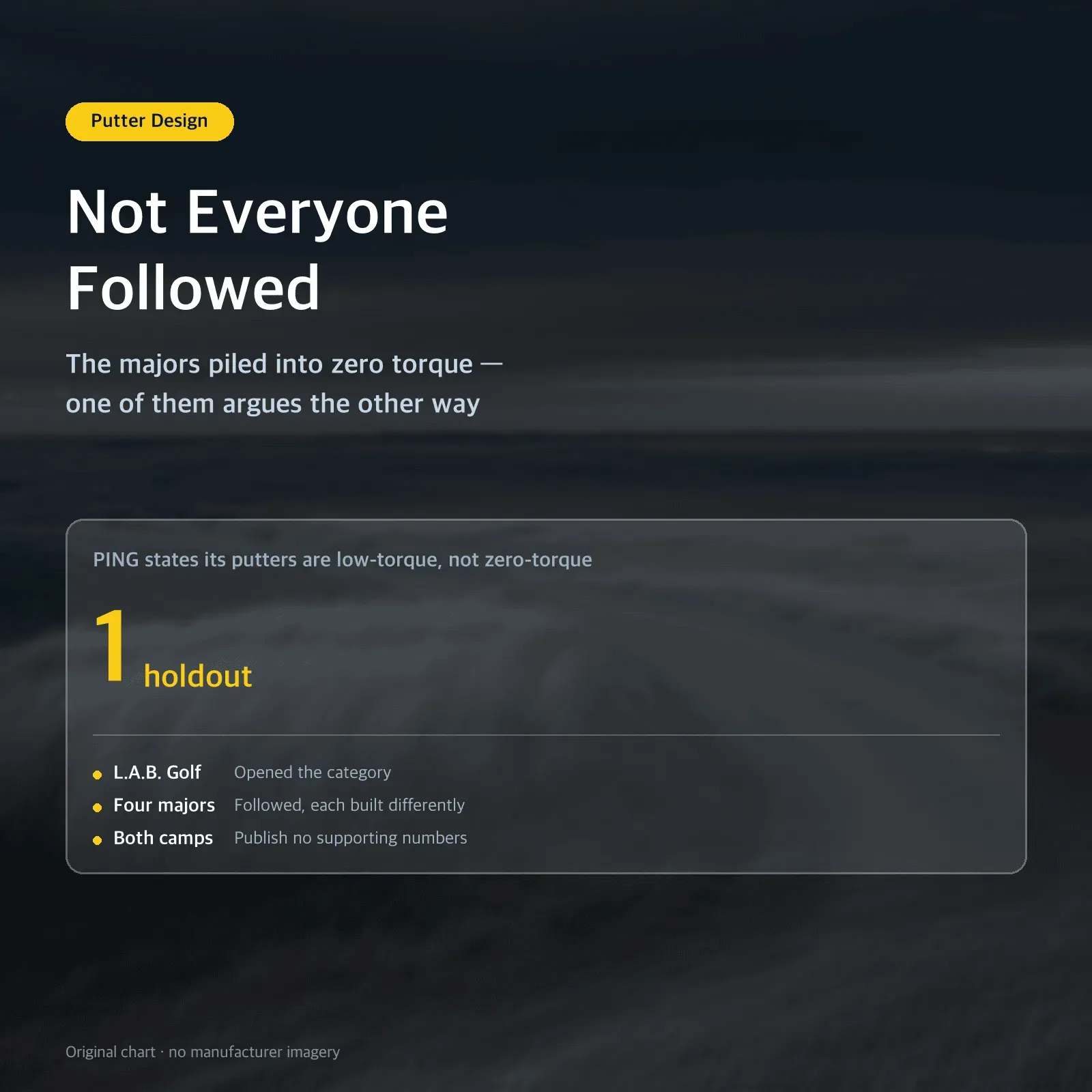
Most major brands built a zero-torque putter after L.A.B. Golf pioneered the design. One notable brand did not, and says its approach is better.